Quick answer
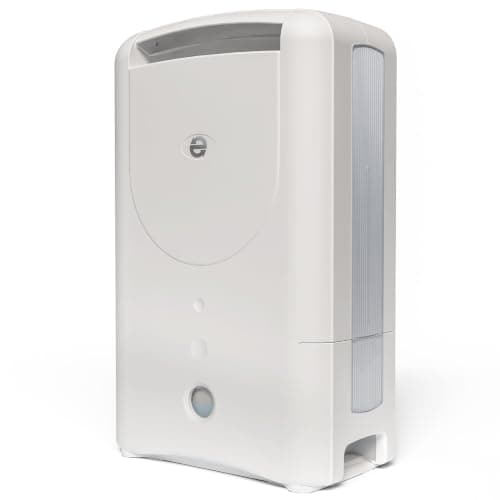
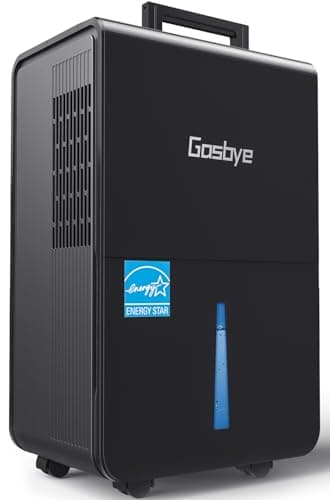
The best dehumidifier for a garage is one whose listing says how it performs in cool air, drained by hose to a floor drain or outdoors and run with the door closed. The Gasbye DryPrime is the pick for most garages, rated 4.5 stars across 936 Amazon ratings, and it is the one listing here that quotes a figure at garage temperatures: 50 pints a day at 65°F and 60% RH. Below about 65°F compressor coils start to frost, so for a garage that sits near freezing in winter, a desiccant unit such as the Eva-Dry EDV-4000H, rated to 34°F, is the better tool.
Buyer's Guide
What to know before you buy.
Why Garages Defeat Ordinary Dehumidifiers
Three things make a garage harder to dry than a basement. It runs cold: an unheated garage follows the outdoor temperature, and a refrigerant (compressor) dehumidifier loses capacity as the air cools, with frost forming on its coil below about 65°F. It leaks: the gap under and around an overhead door, plus every opening and closing, lets outside air back in, and a garage open to outside air cannot be dried at all, because the machine is trying to dehumidify the weather. And it rarely has a drain. Before buying, close the gaps you can, starting with the bottom seal on the door, and plan to run the unit only with the door shut. If the garage is in use with the door up for hours a day, no dehumidifier on this page will keep up.
Read the Temperature, Not Just the Pints
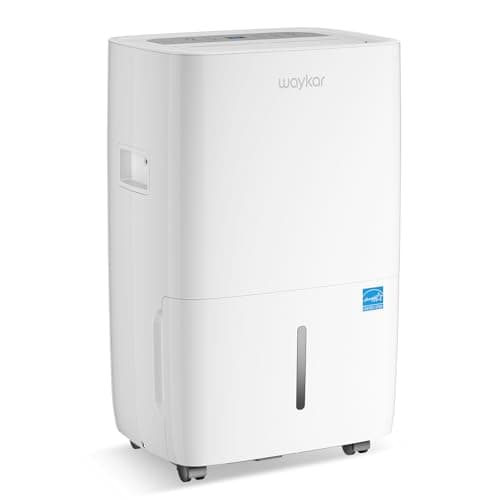
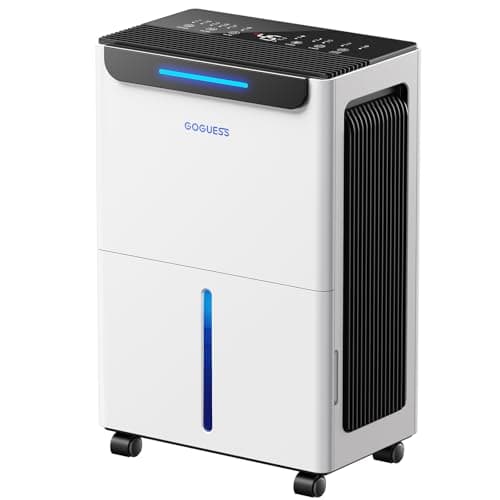
The number to look for on a garage dehumidifier is not the pints a day but the temperature it was measured at. Since 2019 the federal test for portable dehumidifiers has used 65°F and 60% RH, and Gasbye is the only listing here that publishes a figure there, 50 pints a day. Waykar and GoGuess quote 95°F, a summer-afternoon condition, and both state auto defrost, which lets the coil recover when it frosts. Eva-Dry states a rating down to 34°F because it uses a desiccant wheel instead of a refrigerant coil. When a listing gives no low-temperature figure and does not mention defrost, assume it is a warm-weather machine until the manual says otherwise.
Compressor or Desiccant
Choose by the climate and the season you need it for. A compressor unit is the efficient choice whenever the garage is warm and humid, which describes most of the year in Florida and the Gulf South and the summer months almost everywhere else. A desiccant unit is the choice for an unheated garage in a cold climate from late fall to early spring, when a compressor would spend more time defrosting than drying. Desiccant units remove less water and generally draw more power per pint in warm air, so they are a poor summer tool. In a northern garage that is damp in both seasons, the honest answer is one of each, used in its own season, rather than one machine stretched across both. Thermoelectric mini units, the small quiet ones with tanks measured in ounces, are neither: they remove ounces a day, enough for a cabinet but not for a garage.
Where the Water Goes
A garage dehumidifier should drain continuously, because a tank in a space you visit once a day fills and shuts the unit off. A floor drain is the best destination if the garage has one. Otherwise, a garden hose can run under the door seal or through a small hole in the wall to the outside, discharging onto ground that slopes away from the slab rather than beside the foundation. Gasbye and Waykar take a standard 3/4 in garden hose, which makes a long run simple. An outdoor hose freezes in a northern winter and stops the drain, so in cold months route it to an indoor drain or go back to the tank. If the only drain is higher than the unit, look at a model with a built-in pump.
Fuel, Fumes and the Outlet
Garages hold things the rest of the house does not: gasoline cans, mowers, solvents, paint and sometimes a fuel-burning heater. Gasoline vapor is heavier than air and collects near the floor, which is exactly where a portable dehumidifier's fan, motor and switches sit. Read the manual's location warnings before running any unit in a garage that stores fuel, keep it well away from where cans and equipment sit, and never run it while fuel is being poured or a vehicle is idling. Plug it directly into a grounded outlet; garage outlets are typically GFCI protected, so if the unit keeps tripping one, have the outlet checked rather than bypassing it.
Sizing a Garage, and a Garage Gym
Coverage claims are a poor guide in a garage. Even a large two-car garage is well under 1,000 sq ft, and three of the four units here claim several times that, because the claims are measured at warm, saturated conditions. Size by how damp and how leaky the space is instead. A sealed one-car garage or garage gym can be held at 50% by a small compressor unit like the GoGuess with the door shut. A two-car garage that stores a wet car, a freezer or lawn equipment, or that sweats on the slab in spring, needs a full-size unit like the Gasbye or Waykar. A gym used daily adds moisture from breath and sweat, so run the unit during and after sessions. Set the target at 50% or a little below; the EPA's guidance for indoor spaces is under 60%, ideally 30–50%, and the same range protects stored boxes, fabric and tools.
Free 2-day shipping
Amazon Prime members pay no shipping on restoration equipment
Dehumidifiers, air movers, and moisture meters qualify for free Prime delivery — bulk items that otherwise cost $15–$40 to ship.
Affiliate link — HearthDry earns a bounty if you sign up; costs you nothing extra.