

Best Dehumidifiers for Gun Safes in 2026 — Heating Rods vs Rechargeable Desiccant

Best Dehumidifiers for Gun Safes in 2026

Heating Rods vs Rechargeable Desiccant

5 picks compared · prices, ratings and stock checked October 11, 2026

Our Top Pick

If your safe has a power port, the Lockdown Golden Rod in its 12-inch size, stated for up to 100 cubic feet. If there is no way in for a cord, the Eva-Dry E-333 cordless unit, which holds up to 6 oz of moisture between recharges.

4.7 on Amazon · 2,451 ratings

Quick answer

The best dehumidifier for a gun safe is an electric heating rod when you can run a power cord into the safe, and a rechargeable desiccant unit when you cannot. The Lockdown Golden Rod is the default rod, rated 4.7 stars across 2,451 Amazon ratings, and its 12-inch size is stated for up to 100 cubic feet. A rod keeps the air a few degrees warmer than the room, which lowers relative humidity; a desiccant pulls water out and must be recharged. Either way, put a small hygrometer inside and aim for 30–50% relative humidity.

Our Picks at a Glance

Every pick below is currently stocked — ratings and stock read from Amazon on 11 October 2026.

How this page was made: we compare the current Amazon listings, the makers' published specs and what verified buyers report, then rank by fit for the job. Ratings, review counts and stock are read from Amazon and dated. We earn a commission on purchases through our links; it does not change the order. Reviewed by Marcus Reed, IICRC-certified Water Restoration Technician.

Full Reviews

Each pick in detail: what the listing states, what buyers report, and where it falls short.

#1
Best Overall (Heating Rod)

Check price

on Amazon ↗

Listing verified 13 Oct 2026

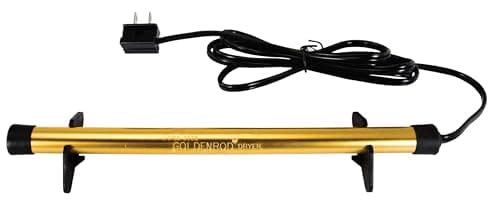
Lockdown Golden Rod 12-Inch Dehumidifier Rod (Up to 100 Cubic Feet)See it on Amazon ↗

Quick Verdict

The gun safe rod with the best buyer record, stated for 100 cubic feet in its 12-inch size: plug it in and leave it.

Key Specs

Type

Plug-in electric heating rod

Length

12 in; 18, 24 and 36 in versions also sold

Coverage (stated)

Up to 100 cubic feet

Power

110–120 V AC plug on a 6 ft cord

Installation

Attachable legs; quick plug attachment so the cord can pass through the back of the safe

Wattage

Not stated on the listing

Pros

  • Made for safes and nothing else, with the stronger buyer record of the two heaters on this page
  • States its coverage plainly, up to 100 cubic feet for the 12-inch rod, and comes in three longer sizes for bigger safes
  • The quick plug attachment on the cord is designed to be fed through the hole at the back of a safe
  • Nothing to recharge, weigh or replace once it is installed

Cons

  • The listing states no wattage and no safety listing such as UL or ETL
  • Needs a power path into the safe; with no factory port that means drilling, so ask the safe maker first
  • Warms the air rather than removing water, so a safe in a damp room still depends on that room being kept dry

Suited to

A safe with a power port, or an owner willing to make one, who wants protection that runs without upkeep

Our take

A heating rod works on a simple piece of physics: warm air holds more water vapor, so raising the safe a few degrees above the room lowers its relative humidity without removing anything. The more useful effect is on the steel. Condensation forms when humid air touches a surface colder than its dew point, and a rod keeps the guns and walls slightly warmer than the air that comes in each time the door opens. Lockdown rates the shortest rod for up to 100 cubic feet, so measure your safe's interior and step up a length if you are close to that figure. The missing wattage is worth asking Lockdown about, because the rod runs around the clock.

Check today's price on Amazon →

Affiliate link — commission at no extra cost to you

Compare elsewhere

These open a search for this model. We quote prices only where we can verify them — Amazon, Sylvane and eBay.

#2
Best Cordless

Check price

on Amazon ↗

Listing verified 13 Oct 2026

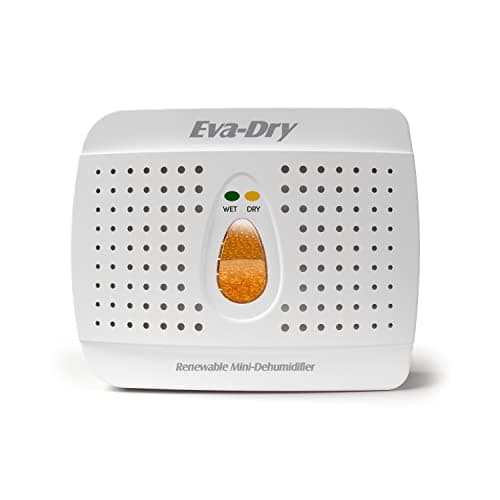
Eva-Dry E-333 Cordless Rechargeable Dehumidifier (Up to 6 oz Capacity)See it on Amazon ↗

Quick Verdict

The cordless default: no hole in the safe, a stated 6 oz capacity and the longest buyer record here — recharge it on a schedule.

Key Specs

Type

Rechargeable silica gel, cordless while working

Coverage (stated)

Up to 333 cubic feet

Absorbing capacity (stated)

Up to 6 oz

Time between recharges (stated)

20–30 days

Recharge

Renewed between uses; recharge time not stated on the listing

Listed size and weight

6.25 x 4.75 x 1.25 in; 1.45 lb

Pros

  • The deepest buyer record on this page by a wide margin, for a unit sold for gun safes among other small spaces
  • No cord in the safe while it works, so there is no hole to drill
  • States its absorbing capacity, up to 6 oz, as well as a coverage figure
  • A five-year manufacturer warranty

Cons

  • Six ounces is a small reservoir; a safe in a humid room, or one opened often, will use it up sooner than the stated 20–30 days
  • The listing does not say how long a recharge takes
  • Its 333 cubic feet figure is the volume of a small walk-in closet, so read it as a ceiling rather than a sizing guide

Suited to

A safe with no power port, or any owner who would rather not drill one

Our take

Silica gel pulls water vapor out of the air and holds it, so a desiccant unit lowers humidity by actually removing water, the opposite of how a rod works. The catch is that it fills up. Eva-Dry states up to 6 oz of absorbing capacity and 20–30 days between recharges, a fair guide for a closed safe in a dry room; in a basement or garage, or a safe you open every day, expect fewer days. Hang it high, recharge it on a calendar rather than when you remember, and keep a hygrometer beside it so a rising reading tells you it is full.

Check today's price on Amazon →

Affiliate link — commission at no extra cost to you

#3
Most Absorbing Capacity

Check price

on Amazon ↗

Listing verified 13 Oct 2026

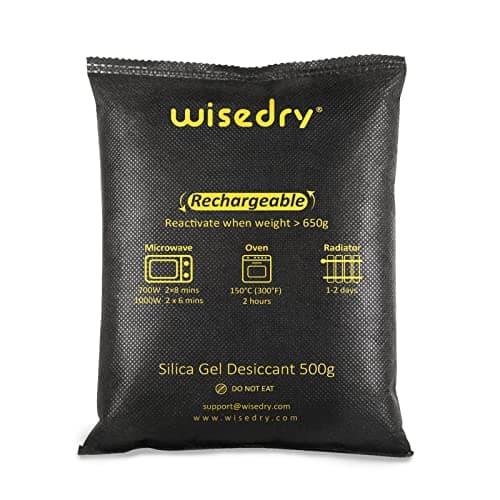
wisedry Rechargeable Silica Gel Bags (2 x 500 g, Microwave Recharge)See it on Amazon ↗

Quick Verdict

The most stated water-holding capacity on the page and a weigh-to-check method, in plain bags rather than a safe-specific design.

Key Specs

Type

Silica gel desiccant bags, cordless

Contents

2 bags of 500 g each

Absorption (stated)

150 g of moisture per bag, up to 180 g

Recharge

Microwave for 10–16 minutes depending on power, or oven

When to recharge (stated)

Weigh the bag; recharge only once it reaches 650 g

Reuse (stated)

More than 10 times

Pros

  • The largest stated absorbing capacity on this page: 150 g per bag, about 10.5 oz across the pair
  • Recharges in a microwave in 10–16 minutes, the fastest stated turnaround here
  • Weighing the bag gives an objective saturation check rather than a judgment about color
  • A long buyer record, though much of it comes from use in cars

Cons

  • Sold mainly as a car dehumidifier for fogged windows, so the bags have no hard housing or mounting bracket for a safe
  • Recharging takes some care: the listing warns against overheating, and you need a kitchen scale to know when to do it

Suited to

A large safe, or a safe in a damp basement, where a small canister would fill too quickly

Our take

Capacity is the specification most desiccant listings leave out, and it decides how often you will be recharging. wisedry states it clearly: each 500 g bag takes up about 150 g of water, up to 180 g, so the pair holds roughly 10.5 oz between them. The weighing method is the most honest saturation test on the page, because a bag that has gained 150 g is full whatever it looks like. The product is designed for car windows rather than safes, so lay the bags flat on a shelf where air reaches both faces, and keep to the stated microwave times exactly.

Check today's price on Amazon →

Affiliate link — commission at no extra cost to you

#4
Best for Large Safes

Check price

on Amazon ↗

Listing verified 13 Oct 2026

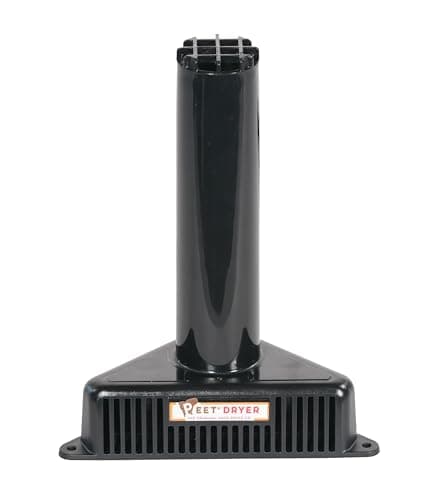
PEET SafeKeeping M10 Gun Safe Dryer (13 W, Up to 300 Cubic Feet)See it on Amazon ↗

Quick Verdict

A fanless 13 W dryer stated for 300 cubic feet with a five-year warranty: the heater for big safes.

Key Specs

Type

Plug-in warm-air convection dryer, no fan

Coverage (stated)

Up to 300 cubic feet

Power draw (stated)

13 W

Upkeep

No filters, refills or recharging

Listed size and weight

9 x 7 x 4 in; 0.93 lb

Cord length

Not stated on the listing

Pros

  • Stated for up to 300 cubic feet, three times the 12-inch rod's figure
  • States its power draw, 13 W, so the cost of running it all year can be worked out
  • A five-year warranty
  • No fan, so it runs silently by the listing's account

Cons

  • A box rather than a slim rod, so it takes up some shelf or floor space inside the safe
  • Cord length is not stated, which matters when the outlet is not directly behind the safe
  • Shares every heater's limit: it relies on the room around the safe not being damp

Suited to

A tall or wide safe beyond the reach of a 12-inch rod, where a stated power figure matters

Our take

PEET's 13 watts is the useful number here, because it turns running cost into a sum rather than a guess: 13 W around the clock comes to about 114 kWh a year, so multiply that by your electricity rate. The unit works like a rod, warming the air so relative humidity falls and the steel stays above the dew point, but it is shaped as a compact box and stated for up to 300 cubic feet, which suits the largest home safes. It is the only heater here whose listing gives both a wattage and a five-year warranty. Check the cord length against the distance to your outlet before you order.

Check today's price on Amazon →

Affiliate link — commission at no extra cost to you

#5
Best for Small Safes and Ammo Cans

Check price

on Amazon ↗

Listing verified 13 Oct 2026

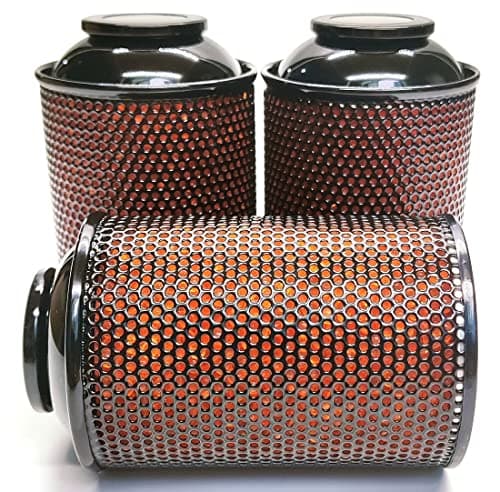
TOAAOT 200 g Silica Gel Canisters (3-Pack, About 15 Cubic Feet Each)See it on Amazon ↗

Best for Small Safes and Ammo Cans

TOAAOT 200 g Silica Gel Canisters (3-Pack, About 15 Cubic Feet Each)

4.5(854 reviews)

Quick Verdict

Three small indicating canisters for the spaces a rod cannot reach; budget an afternoon for each oven recharge.

Key Specs

Type

Indicating silica gel canisters, cordless

Contents

3 canisters of 200 g

Coverage (stated)

About 15 cubic feet per canister

Indicator

Orange when dry, dark green when saturated; no cobalt chloride

Recharge

Oven, 4 hours at 300°F

Listed canister size

3.15 x 3.15 x 1.97 in

Pros

  • A coverage figure, about 15 cubic feet each, that a pistol safe or document box can actually use
  • Three separate canisters can be split between a handgun safe, an ammo can and a hard gun case
  • A color indicator shows when each canister needs recharging, and the gel contains no cobalt chloride

Cons

  • A 4-hour oven recharge at 300°F is the longest and most involved here
  • The listing gives the weight of gel, 200 g, but not how much water each canister holds
  • A full-size gun safe would need several canisters

Suited to

Pistol safes, fire-resistant document boxes, ammo cans and hard gun cases

Our take

Small safes are where desiccants make the most sense: there is rarely a power port, the volume is small and the door stays shut most of the time. Each TOAAOT canister is stated for about 15 cubic feet, which is ample for a handgun safe or an ammo can and honest about its limits. The orange-to-dark-green beads make the check visual. Plan the recharge around the oven, because it takes 4 hours at 300°F, and keep one canister in rotation so the safe is never empty while another bakes.

Check today's price on Amazon →

Affiliate link — commission at no extra cost to you

Buyer's Guide

What to know before you buy.

Heating Rod or Desiccant: How Each One Works

The two kinds of gun safe dehumidifier solve the same problem in opposite ways. A heating rod, or a heater such as PEET's, warms the inside of the safe a few degrees above the room. Warm air can hold more water vapor, so relative humidity falls even though no water has left, and the steel stays warmer than the air that drifts in, which keeps condensation off it. A desiccant does remove water: silica gel absorbs vapor until it is saturated, then has to be dried in an oven, a microwave or on its own charger before it works again. Rods need a cord into the safe and no upkeep; desiccants need no cord and regular recharging. In a damp room, using one of each is reasonable.

Getting a Power Cord Into the Safe

A rod is only an option if the cord has a way in. Many safes come with a power port or a pre-drilled hole in the back panel, so look for one before deciding you need a desiccant. Lockdown's cord has a quick plug attachment, designed so the cord can be run through the back of the safe and then plugged in. If there is no opening, ask the safe maker before drilling, because a new hole can affect the fire seal and the warranty. Route the cord so the door cannot pinch it, and use an outlet that is not on a wall switch, since a heater only protects the guns while it is powered.

Sizing: Work Out Your Safe's Volume First

Every listing here quotes coverage in cubic feet, so measure the inside of your safe, not the outside. Multiply height, width and depth in inches and divide by 1,728: a safe measuring 55 by 26 by 20 inches inside holds about 16.5 cubic feet. Compare that with the stated figures: about 15 cubic feet per TOAAOT canister, 100 for the 12-inch Lockdown rod, 300 for PEET and 333 for the Eva-Dry. Treat the larger desiccant figures as ceilings for a closed space. How long a desiccant lasts depends on how much water it can hold and how much damp air gets in, so where a listing states capacity, as Eva-Dry and wisedry do, size on that number.

Put a Hygrometer Inside and Aim for 30–50%

None of the units on this page reports what it is achieving, so a small digital hygrometer inside the safe is the only way to know. EPA recommends keeping indoor humidity below 60%, ideally between 30% and 50%, and that band is a sensible target for stored firearms too. Leave the hygrometer on a middle shelf for a week, read it before you open the door, and watch the trend rather than one reading. A number creeping up beside a desiccant unit means it is close to saturated. A number that stays above 50% with a rod running means the room is too damp for a heater alone, and a desiccant or a room dehumidifier needs to join it.

Where the Moisture Comes From

A safe is not airtight, and most of its moisture arrives from the room around it. A basement or garage that sits above 60% humidity in summer will keep loading any desiccant and can outrun a rod, so drying the room with an ENERGY STAR certified dehumidifier is often the real fix. Every door opening swaps some interior air for room air, which is why a safe opened daily needs more capacity than one opened once a month. A gun brought in from cold weather collects condensation as it warms, so let it reach room temperature and wipe it down before it goes back in. Damp cases, holsters and range bags stored inside carry water in with them.

Frequently Asked Questions

Do I need a dehumidifier for my gun safe?

In most homes, yes. A closed steel box holds whatever humidity the room had when the door shut, and it cools and warms with the room, which is when condensation forms on bare metal.

A safe in a dry, air-conditioned bedroom may stay below 50% on its own; one in a basement, a garage or a humid climate rarely does. A hygrometer left inside for a week settles the question before you spend anything.

Do dehumidifier rods for gun safes actually work?

YesWithin limits. A rod does not pull water out of the safe; it warms the interior slightly, which lowers relative humidity and keeps the steel above the temperature at which condensation forms.

That is enough in a room of ordinary humidity. In a damp basement or garage a rod can struggle to hold the reading under 50%, and a desiccant inside the safe or a dehumidifier in the room is the better partner.

What humidity should a gun safe be?

Somewhere between 30% and 50% relative humidity, the same range EPA gives for homes. Much drier than that and wooden stocks and leather can dry out; above about 60%, rust and mold become real risks.

Check with a small digital hygrometer kept inside the safe. A wireless model with a separate display lets you read the trend without opening the door and letting room air in.

What is the best dehumidifier for a gun safe in a garage?

A heater, either the Lockdown rod or PEET's dryer, if there is an outlet nearby. Garages swing in temperature, and a safe that cools overnight and warms in the morning is exactly where condensation forms; a heater keeps the interior above the room's temperature through those swings.

A desiccant alone saturates quickly in a humid garage, so if a cord is impossible, use the largest capacity you can, such as the wisedry bags, and read the hygrometer weekly.

How do you recharge a gun safe dehumidifier?

Only the desiccant types need it, and each has its own method. The Eva-Dry is renewed between uses, with no recharge time given on its listing. The wisedry bags go in a microwave for 10–16 minutes once they weigh 650 g.

The TOAAOT canisters go in an oven for 4 hours at 300°F when the beads turn from orange to dark green. Let any unit cool before it goes back in the safe, and keep to the maker's times, since overheating can damage the gel or its container.

What is the best moisture absorber for a gun safe?

For a full-size safe with no power, the Eva-Dry E-333 is the most-rated rechargeable unit on this page; the wisedry bags hold more water if the safe is large or the room damp.

For a pistol safe, an ammo can or a document box, the TOAAOT canisters are sized for small spaces. Disposable tubs that turn absorbed water into liquid brine are a poor fit inside a safe, because a spill next to steel causes the corrosion you were trying to prevent.

Who do I call right now for water damage?

Call (888) 840-6512. The line is answered 24 hours a day, seven days a week, and connects you with an IICRC-certified water damage restoration company that serves your area. A recorded menu picks up first: choose water damage or mold, key in your 5-digit ZIP code, and hold through the short silence while the call is passed to the company.

Describe what you can see — where the water is coming from, how long it has been there, and whether it smells — the more specific you are, the faster the right company is on the line. If the source is a pipe or an appliance, shut the main water valve first. Have four things ready and the call goes quickly: the address, when the water started, what is wet now, and whether you have filed an insurance claim.

Still not sure which of these is your situation? (888) 840-6512 · toll-free · answered 24/7

Sources

  1. EPA — A Brief Guide to Mold, Moisture, and Your Home
  2. ENERGY STAR — Dehumidifiers

Methodology: How we source and verify data · Report an error

How we chose these picks

  • Every pick is a current listing. Stock, star ratings and rating counts are read from Amazon by script and carry the date they were read.
  • Nothing under 4.0 stars makes the list, and the top pick needs a large rating count, so one good week of reviews cannot put it there.
  • Specs are quoted from the listing or the maker, with the test condition behind the number where there is one, and sized against the job rather than the room on the box.
  • We do not run lab or field tests. Where a spec matters, we say what it is measured under and what it cannot tell you.

Free 2-day shipping

Amazon Prime members pay no shipping on restoration equipment

Dehumidifiers, air movers, and moisture meters qualify for free Prime delivery — bulk items that otherwise cost $15–$40 to ship.

Try Prime free →

Affiliate link — HearthDry earns a bounty if you sign up; costs you nothing extra.

Also Worth Comparing

Best Dehumidifier for Basement Use in 2026 — Drain Hose, Built-In Pump and Honest Pint Ratings

Most basement dehumidifier disappointment comes from two numbers nobody reads properly: the pint rating, measured at warm test conditions a 60°F basement never reaches, and the drainage method. Five units are compared here on those two points first, from a garden-hose drain to a built-in pump with a stated 15 ft lift.

Read the comparison

Best Moisture Meters for Homeowners in 2026 — Water Damage Detection

A moisture meter tells you what your eyes can't see — wet drywall, soggy subfloor, and moisture in framing. These are the four best moisture meters for homeowners dealing with water damage.

Read the comparison

Best Dehumidifier for a Bedroom or Apartment in 2026 — Quiet Small-Room Units Compared

A bedroom dehumidifier has to be quiet enough to sleep beside, and five of the six picks here are thermoelectric units that remove ounces of water a day rather than pints. That is enough for a stuffy bedroom, closet or studio apartment; for a room with wet windows every morning, the sixth pick is a small compressor unit rated in pints.

Read the comparison

Best Whole House Dehumidifiers in 2026 — Installed, Ducted and Sized to the Home

A whole house dehumidifier is installed, drains itself and, in most homes, is ducted into the heating and cooling system so it dries every room the air reaches. Three AprilAire E-series units carry the strongest buyer record in a category with far fewer ratings than portables, and one large portable is here for the open basement that does not need ducts.

Read the comparison

Best Dehumidifiers for a Garage in 2026 — Judged on Cold-Weather Specs and Drainage

A garage is the hardest space in a house to dehumidify: it runs cold, it leaks air and it rarely has a drain. These four picks are judged on the specifications that decide whether a unit keeps working there, from a capacity stated at cool conditions and auto defrost to a desiccant option for winter and a hose that reaches a drain.

Read the comparison

Best Moisture Absorbers in 2026 — For Cabinets, Storage Rooms, Cars and Bathrooms, and Where a Dehumidifier Wins

A moisture absorber is a no-power container of crystals or gel that draws water out of the air in a small, closed space. It is the right tool for a cabinet, a car or a boat and the wrong one for a basement or a room after a leak, so these picks are sorted by where they will sit.

Read the comparison

Best Hygrometers for Home in 2026 — Indoor Humidity Monitors That Tell You When a Room Is Too Damp

A hygrometer is the small, inexpensive instrument that tells you whether a room needs a dehumidifier, a humidifier or nothing at all. These picks are judged on the accuracy each listing states, how easily you can read them, and whether they can warn you about a damp basement before you smell it.

Read the comparison

Best Fireproof Waterproof Safes in 2026 — Fire and Water Ratings Read Off Each Listing, and Where to Keep the Safe So Water Reaches It Last

The papers you need for an insurance claim are the ones a fire or a burst pipe ruins first, and a safe protects them only as far as its fire and water ratings go. These picks are compared on the ratings each listing states, read on 12 Oct 2026, with the placement, bolting and humidity habits that decide whether the papers come out dry.

Read the comparison