Best Roof Leak Sealants, Patches and Tapes in 2026 — Temporary Repairs That Hold Until the Roofer Comes

Best Roof Leak Sealants, Patches and Tapes in 2026

Temporary Repairs That Hold Until the Roofer Comes

5 picks compared · prices, ratings and stock checked October 11, 2026

Our Top Pick

For a small crack or gap at flashing, a gutter seam or a skylight edge, Gorilla Waterproofing Spray: the deepest buyer record in the category and the simplest to apply. For a seam that has to be sealed while the roof is still wet, Geocel 4500 states it applies, adheres and cures underwater.

4.3 on Amazon · 13,554 ratings

Quick answer

The best roof leak sealant is the one that matches the spot: a flexible spray for small gaps, a cartridge sealant for flashing and vent seams, a brush-on coating for a flat roof. Gorilla Waterproofing Spray is the default pick, rated 4.3 stars across 13,554 Amazon ratings, for small gaps and cracks around flashing, gutters and skylights. If the roof is still wet, Geocel 4500 states it applies and cures underwater. Treat every one of these as a temporary repair until a roofer fixes the cause, and stay off any roof that is wet, icy or steep.

Our Picks at a Glance

Every pick below is currently stocked — ratings and stock read from Amazon on 11 October 2026.

How this page was made: we compare the current Amazon listings, the makers' published specs and what verified buyers report, then rank by fit for the job. Ratings, review counts and stock are read from Amazon and dated. We earn a commission on purchases through our links; it does not change the order. Reviewed by Marcus Reed, IICRC-certified Water Restoration Technician.

Full Reviews

Each pick in detail: what the listing states, what buyers report, and where it falls short.

#1
Best Overall

Check price

on Amazon ↗

Listing verified 13 Oct 2026

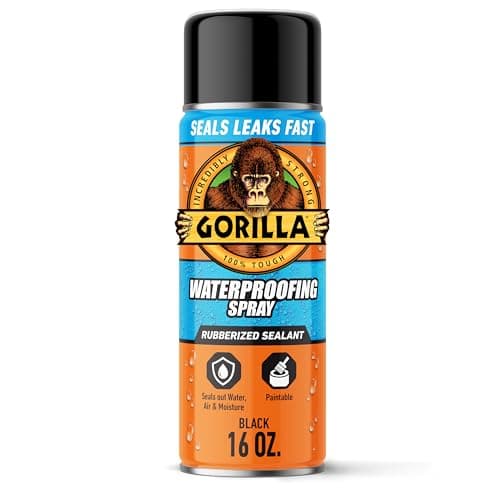
Gorilla Waterproofing Spray, Flexible Rubberized Sealant (Black, 16 oz)See it on Amazon ↗

Quick Verdict

The easiest small-gap fix for flashing, gutters and skylights on a dry day; a temporary seal, not a shingle repair.

Key Specs

Type

Aerosol rubberized sealant

Size

16 oz, black (also sold as a clear 14 oz can)

Stated uses

Roofs, gutters, skylights, flashing, chimneys, PVC pipe joints, windows, RV roofs

Gap size

Small gaps and cracks (largest gap not stated on the listing)

Finish (stated)

Flexible, self-leveling; temperature and UV resistant once dry

Paintable

Latex or oil-based paint; prime before oil-based

Pros

  • Amazon's Choice, with the deepest buyer record of any roof sealant here
  • A spray reaches the irregular joints around flashing, chimney bases and skylight frames where a caulk bead is hard to lay
  • Self-leveling, so it settles into small cracks rather than sitting on top of them
  • Can be painted afterward to match the roofline or trim

Cons

  • Made for small gaps and cracks; it does not replace a missing or broken shingle, and the listing gives no maximum gap width
  • The listing makes no wet-surface claim, so plan to apply it to a clean, dry roof
  • An aerosol drifts in wind, which on a roof means overspray on shingles, siding and whatever is below

Suited to

A small, reachable leak at flashing, a gutter seam or a skylight edge, sealed on a dry, calm day

Our take

Most roof leaks a homeowner can reach start at a joint rather than in the middle of a shingle: the flashing around a chimney, the boot around a plumbing vent, the frame of a skylight, a gutter seam. A sprayed rubber coating suits those irregular shapes, and it is the format most people reach for first, which is why this listing carries the deepest buyer record here. Use it inside its stated limits. The listing promises to cover small gaps and cracks, makes no claim about wet surfaces and gives no cure time, so clean and dry the joint, follow the can's directions on coats and drying, and check the ceiling below after the next heavy rain before you call it fixed.

Check today's price on Amazon →

Affiliate link — commission at no extra cost to you

Compare elsewhere

These open a search for this model. We quote prices only where we can verify them — Amazon, Sylvane and eBay.

#2
Best for Flashing and Wet Seams

Check price

on Amazon ↗

Listing verified 13 Oct 2026

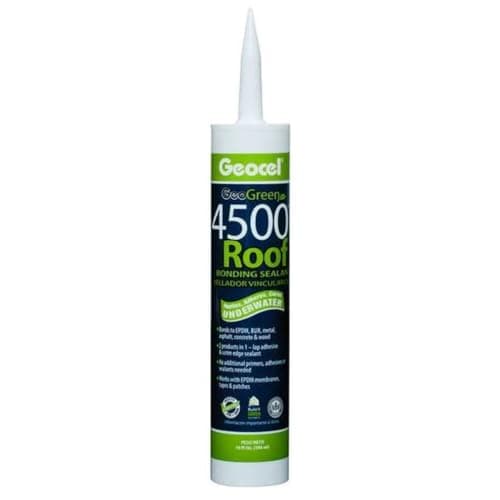
Geocel 4500 Roof Bonding Sealant (10 fl oz Cartridge, Black)See it on Amazon ↗

Best for Flashing and Wet Seams

Geocel 4500 Roof Bonding Sealant (10 fl oz Cartridge, Black)

4.7(666 reviews)

Quick Verdict

The roofing-specific cartridge sealant that states it cures underwater; for flashing edges, vent boots and nail heads.

Key Specs

Type

One-component polymer roofing sealant, caulk cartridge

Size

10 fl oz, black

Wet use (stated)

Applies, adheres and cures underwater; withstands ponding water quickly

Substrates (stated)

Asphalt shingles, steel, metal, concrete, wood, EPDM, primed TPO, primed PVC, Hypalon (black only)

Flammability (stated)

Non-flammable formulation

Other uses (stated)

Night seal, core and test cuts; works with EPDM membranes, tapes and patches

Pros

  • States it applies, adheres and cures underwater, the most direct wet-weather claim on this page
  • Written for roofing, with a substrate list that covers asphalt shingles, metal, EPDM and primed TPO
  • A cartridge bead is the right shape for flashing edges, vent boots and exposed nail heads
  • Non-flammable, per the listing

Cons

  • Needs a caulking gun, and one 10 oz tube seals a joint or two, not a section of roof
  • TPO and PVC membranes have to be primed first, per its substrate list
  • Neither coverage nor full cure time is given on the listing

Suited to

Resealing a lifted flashing edge, a cracked vent boot or exposed nail heads, including when the roof is damp

Our take

A cartridge sealant is what a roofer carries for small repairs, and this one is written for roofing rather than general waterproofing. The claim that matters is the first on the listing: it applies, adheres and cures underwater. That does not make a wet roof a safe place to stand, but it does mean a joint sealed from a ladder at the eave, or through a dormer window, will not wash out in the next shower. The substrate list is the second reason to choose it: asphalt shingles, metal and EPDM as they are, TPO and PVC once primed. Lay the bead where water actually enters, such as the uphill side of a vent boot or the top edge of step flashing, not only where the damage looks worst.

Check today's price on Amazon →

Affiliate link — commission at no extra cost to you

#3
Best for Cold Weather

Check price

on Amazon ↗

Listing verified 13 Oct 2026

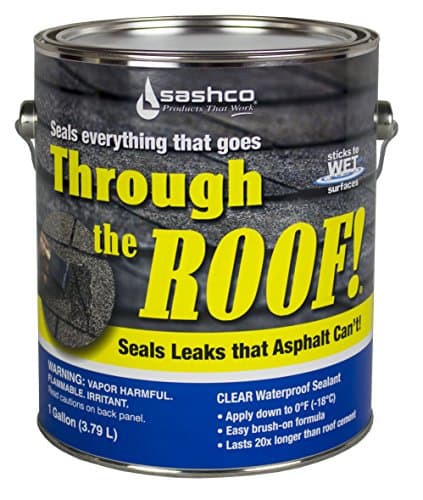
Sashco Clear Roof Sealant, Brush Grade (1 Gallon)See it on Amazon ↗

Best for Cold Weather

Sashco Clear Roof Sealant, Brush Grade (1 Gallon)

4.4(953 reviews)

Quick Verdict

Clear brush-on sealant rated to apply down to 0°F and bond to wet shingles; about 12.8 sq ft per gallon, so patch, do not coat.

Key Specs

Type

Clear co-polymer rubber roof sealant, brush grade

Size

1 gallon

Coverage (stated)

About 12.8 sq ft at 1/8 inch thick

Application temperature (stated)

Down to 0°F

Service range (stated)

-30°F to 200°F once cured

Wet use (stated)

Bonds to wet shingles, flashing and gutters

Pros

  • States it can be applied down to 0°F, the lowest stated application temperature on this page
  • Bonds to wet shingles, flashing and gutters without primer, per the listing
  • Clear, so a repair on light shingles, brick or a skylight frame does not show as a black patch
  • A gallon with a 5-year shelf life leaves enough for the next leak

Cons

  • A gallon at 1/8 inch covers only about 12.8 sq ft, so it is a patching product, not a roof coating
  • Takes about a week to cure fully
  • Far more product than a single flashing repair needs

Suited to

Winter and wet-weather patching on shingles, flashing, brick and gutters where a black repair would show

Our take

Two numbers set this apart. It can be applied down to 0°F, where most sealants want a mild, dry day, and once cured it is rated from -30°F to 200°F, a span that covers a dark roof in July and a northern January. The coverage figure is the one to read before buying: about 12.8 square feet per gallon at an eighth of an inch. That is plenty for many joints, chimney flashing and gutter seams, and nowhere near enough to coat a roof. Being clear, it also suits spots where a black asphalt patch would be an eyesore. Give it about a week before judging the repair, and if you repaint with latex, wait the one to two days the listing gives.

Check today's price on Amazon →

Affiliate link — commission at no extra cost to you

#4
Best for Flat and Low-Slope Roofs

Check price

on Amazon ↗

Listing verified 13 Oct 2026

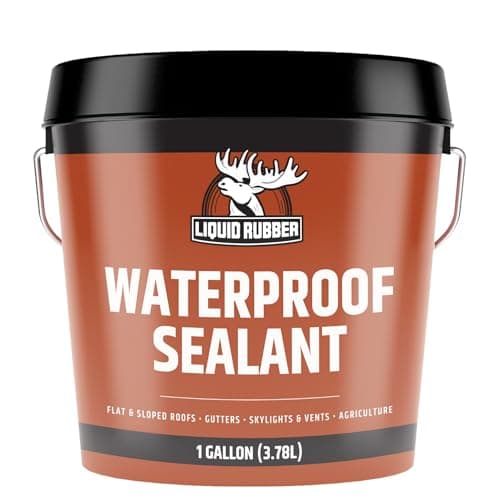
Liquid Rubber Waterproof Sealant, Roof and Gutter Coating (Black, 1 Gallon)See it on Amazon ↗

Best for Flat and Low-Slope Roofs

Liquid Rubber Waterproof Sealant, Roof and Gutter Coating (Black, 1 Gallon)

4.4(2,251 reviews)

Quick Verdict

A brush-on rubber membrane for flat and low-slope roofs: 15 sq ft per gallon at 60–80 mil, reinforced at the seams.

Key Specs

Type

Water-based bitumen liquid rubber coating

Size

1 gallon; goes on brown, dries black

Application

Brush, roll or spray

Coverage on flat roofs (stated)

15 sq ft per gallon in 3–4 heavy coats for a 60–80 mil membrane

Elongation (stated)

Over 950%

VOCs (stated)

None; water-based; does not damage foam insulation, per the listing

Pros

  • Builds a seamless membrane on flat, low-slope and metal roofs, including surfaces where water stands
  • States its coverage plainly: 15 sq ft per gallon at 60–80 mil, built up in 3–4 heavy coats
  • Water-based with no VOCs, per the listing, so it can be used in confined spaces and over foam insulation
  • Rated at over 950% elongation, so it can move with the roof through temperature swings

Cons

  • Several heavy coats with drying time between them make this a weekend job, not an emergency patch
  • Can stay tacky after curing and is not for any surface people walk on
  • Seams, vents and skylights need the brand's tape or fabric as well, sold separately

Suited to

A leaking flat garage, porch or shed roof, or a metal roof seam, where a coating is the repair

Our take

Flat and low-slope roofs leak differently from shingled ones: water sits on them, so any open seam is under constant pressure. A brush-on membrane is the right repair there, and this listing gives the figures needed to plan it: 15 square feet per gallon on a flat roof, built up in three or four heavy coats to 60–80 mil. Use that to size the job before ordering; a porch roof can easily need several gallons. The listing is also candid about two limits. It can remain tacky after curing, so it is wrong for a roof deck people walk on, and it wants reinforcing tape or fabric at seams and around vents, which is where flat roofs usually fail.

Check today's price on Amazon →

Affiliate link — commission at no extra cost to you

#5
Best Roof Tape

Check price

on Amazon ↗

Listing verified 13 Oct 2026

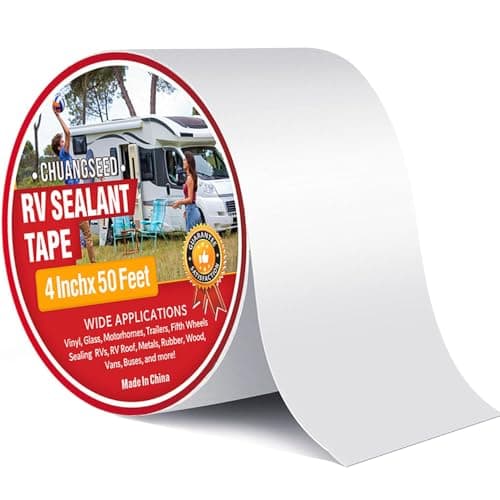
CHUANGSEED Butyl Roof Patch Tape (White, 4 in x 50 ft)See it on Amazon ↗

Quick Verdict

Peel-and-stick butyl tape for metal, EPDM and TPO seams; not listed for asphalt shingles, and confirm the width before ordering.

Key Specs

Type

Butyl rubber tape with a PDA film face, peel and stick

Size

4 in x 50 ft per the title (one bullet says 6 in wide; confirm the variant)

Bonds to (stated)

EPDM, metal, galvanized steel, TPO, Hypalon, wood, fiberglass

Low-temperature flexibility (stated)

Flexible to -58°C (-72.4°F)

Weathering (stated)

UV-resistant, weatherproof

Asphalt shingles

Not listed among its surfaces

Pros

  • Peel-and-stick, with no gun, brush or cure time
  • Names the membranes and metals that flat and metal roofs are made of: EPDM, TPO, Hypalon, galvanized steel
  • A 50 ft roll leaves plenty for several seams or a run of gutter joints
  • Rated to stay flexible down to -72.4°F, per the listing

Cons

  • The listing is written for RV and camper roofs and does not name asphalt shingles, so it is not a shingle repair
  • The title and one bullet disagree on width, 4 in against 6 in; check the size on the variant you select
  • Butyl seals by contact, so it needs a clean, dry surface; the listing makes no wet-application claim

Suited to

Taping a split seam on a metal, EPDM or TPO roof, a shed or a gutter joint until it can be repaired properly

Our take

Tape is the fastest temporary repair there is: no cure time, nothing to mix and no tools beyond a knife and something to press it down firmly. The catch is the surface. This listing is written for RV and camper roofs, and its bonding list, EPDM, TPO, Hypalon, metal, galvanized steel, wood and fiberglass, describes flat membrane and metal roofing, not asphalt shingles. On a house, that makes it the right pick for a metal roof seam, a flat garage or porch membrane, or a gutter joint. Clean and dry the area first and work out every air pocket as you press it down. Check the width before ordering, since the listing contradicts itself on that point.

Check today's price on Amazon →

Affiliate link — commission at no extra cost to you

Buyer's Guide

What to know before you buy.

Find Where the Water Gets In First

The stain on your ceiling is rarely under the hole in the roof. Water enters at a joint, runs down the underside of the roof deck or along a rafter, and drips wherever the framing lets it fall, which can be several feet from the entry point. Start in the attic on a dry day with a flashlight: look for dark streaks on the decking, rusty nail tips, damp insulation and daylight around vent pipes, then trace the trail uphill from the wet spot. Outside, the usual entry points are the flashing around chimneys and walls, the rubber boots around plumbing vents, skylight frames, valleys where two slopes meet and exposed nail heads. Sealing the wrong spot is the most common reason a patched roof still leaks.

Safety First: When to Stay Off the Roof

Falls from roofs and ladders cause serious injuries every year, and a leaking roof tempts people up at the worst possible time. Do not climb onto a roof that is wet, icy, frosted or covered in moss or leaves, and do not walk a steep roof at all without fall protection. Work from a ladder at the eave where you can: set it on firm, level ground, extend it about three feet above the roof edge and keep three points of contact. Keep every ladder well clear of overhead power lines. If the leak is above the second story, on a steep pitch or reachable only by walking the roof, call a roofer and manage the water from inside until then.

Match the Sealant to the Spot

Each format fits a different kind of leak. A cartridge sealant such as Geocel 4500 is for lines: lifted flashing edges, cracked vent boots, nail heads and seams. A spray such as Gorilla's covers small, irregular gaps around chimneys, skylights and gutter joints where a bead is hard to lay. A brush-grade sealant like Sashco's patches an area a few square feet across. A liquid rubber coating builds a membrane over a flat or low-slope roof. Butyl tape bridges a straight seam on metal or membrane roofing. Check the surface list on each listing before buying: Geocel names asphalt shingles, metal, EPDM and primed TPO, while the tape here is written for RV, metal and membrane roofs and never mentions shingles.

What a Sealant Can and Cannot Fix

A sealant buys time. It can close a gap at a joint and keep the next few storms out of the attic, but it does not replace missing or cracked shingles, worn-out underlayment or a soft, rotted roof deck. Smeared thickly across shingles, it can also make a roofer's later repair harder. Think of every product here as a bridge to a proper repair. If the roof is near the end of its life, if the leak is in a valley, or if the same spot has been sealed before and leaks again, have a roofer inspect it. Photograph the damage inside and out before you patch anything, because an insurance adjuster will want to see what the leak looked like.

Tarps and Temporary Cover

When the damage is larger than any sealant can cover, such as missing shingles after a storm or a branch through the decking, a heavy-duty tarp is the usual temporary cover. It should extend well past the damaged area and, where possible, up and over the ridge, so water runs across the top of it rather than underneath. Fasten it with wood strips screwed along the edges rather than nails punched through the middle of the sheet. Tarping is roof work with every risk described above, and many roofers offer it as a stopgap service. A tarp is meant to protect the house for days or weeks while a repair is arranged, not to get it through a season.

Dry What Got Wet Below

A ceiling stain means water has already passed through the attic insulation and into the drywall, and stopping the leak does not dry either one. Wet fiberglass batts lose much of their insulating value and hold moisture against the ceiling, so pull back soaked or matted insulation and replace it once the area is dry. Drywall that sags, feels soft or stays wet needs fans and a dehumidifier, or cutting out, because EPA guidance is to dry water-damaged materials within 24 to 48 hours to prevent mold. A moisture meter tells you when the board is actually dry rather than dry to the touch. Only then is it time for a stain-blocking primer and paint. Check the decking and rafters near the leak for dark staining as well.

Frequently Asked Questions

What is the best roof leak sealant?

It dependsOn where the leak is. For a lifted flashing edge, a cracked vent boot or exposed nail heads, a roofing cartridge sealant such as Geocel 4500.

For small gaps around chimneys, skylights and gutters, a rubberized spray such as Gorilla Waterproofing Spray. For a flat or low-slope roof, a liquid rubber coating built up to the thickness on its label. For a straight seam on metal or membrane roofing, butyl tape. All of them are temporary until a roofer fixes the cause.

How do you stop a roof leak from inside?

From inside you can control the water, not seal the roof. Put a bucket under the drip and move belongings away. If water is near a light fixture, switch off that circuit at the breaker.

A ceiling bulging with water can be drained by piercing its lowest point with a screwdriver over a bucket, which beats letting it collapse. Then trace the wet trail in the attic uphill to the entry point and mark it for the outside repair.

Can you apply roof sealant in the rain?

Some products are made for it. Geocel 4500 states it applies, adheres and cures underwater, and Sashco's roof sealant states it bonds to wet shingles, flashing and gutters.

Gorilla's spray and the butyl tape on this page make no wet-application claim, so use them on a clean, dry surface. Whatever the label says, a wet roof is a slippery one: work only from a ladder at the eave or from a window, never by walking the roof in the rain.

Does spray sealant work for roof leaks?

For small gaps and cracks at joints, yes, as a temporary repair. A rubberized spray suits the irregular shapes around chimney flashing, skylight frames and gutter seams, where a caulk bead is awkward.

It is the wrong tool for missing shingles, a split in a flat roof membrane or anything wider than a crack. Spray only on a dry, calm day, since overspray drifts, and check the ceiling below after the next heavy rain.

Why does my roof leak only sometimes?

Intermittent leaks usually depend on conditions. Wind-driven rain can push water sideways under flashing or shingles that shed ordinary rain. Heavy downpours can overflow a valley or a clogged gutter.

In winter, ice dams at the eaves back meltwater up under the shingles. And a wet spot that appears on cold, dry days may be attic condensation rather than a leak. Note the weather each time it happens; the pattern points to the cause.

How long does a roof leak patch last?

None of the listings on this page states a service life for a repair, so treat any patch as temporary. How long it holds depends on whether the surface was clean and dry, how much the joint moves with heat and cold, how much sun it takes and whether the real entry point was sealed.

Check the repair from the attic after each heavy rain, and arrange the permanent fix with a roofer that season rather than letting a patch become the roof.

Who do I call right now for water damage?

Call (888) 840-6512. The line is answered 24 hours a day, seven days a week, and connects you with an IICRC-certified water damage restoration company that serves your area. A recorded menu picks up first: choose water damage or mold, key in your 5-digit ZIP code, and hold through the short silence while the call is passed to the company.

Describe what you can see — where the water is coming from, how long it has been there, and whether it smells — the more specific you are, the faster the right company is on the line. If the source is a pipe or an appliance, shut the main water valve first. Have four things ready and the call goes quickly: the address, when the water started, what is wet now, and whether you have filed an insurance claim.

Still not sure which of these is your situation? (888) 840-6512 · toll-free · answered 24/7

Sources

  1. EPA — A Brief Guide to Mold, Moisture, and Your Home

Methodology: How we source and verify data · Report an error

How we chose these picks

  • Every pick is a current listing. Stock, star ratings and rating counts are read from Amazon by script and carry the date they were read.
  • Nothing under 4.0 stars makes the list, and the top pick needs a large rating count, so one good week of reviews cannot put it there.
  • Specs are quoted from the listing or the maker, with the test condition behind the number where there is one, and sized against the job rather than the room on the box.
  • We do not run lab or field tests. Where a spec matters, we say what it is measured under and what it cannot tell you.

Free 2-day shipping

Amazon Prime members pay no shipping on restoration equipment

Dehumidifiers, air movers, and moisture meters qualify for free Prime delivery — bulk items that otherwise cost $15–$40 to ship.

Try Prime free →

Affiliate link — HearthDry earns a bounty if you sign up; costs you nothing extra.

Also Worth Comparing

Best Moisture Meters for Homeowners in 2026 — Water Damage Detection

A moisture meter tells you what your eyes can't see — wet drywall, soggy subfloor, and moisture in framing. These are the four best moisture meters for homeowners dealing with water damage.

Read the comparison

Best Thermal Cameras for Water Leak Detection in 2026 — Find Hidden Moisture

Water damage behind walls is invisible until it's mold. A thermal camera reveals temperature differentials caused by moisture — identifying wet areas in walls, ceilings, and floors before they become a mold problem.

Read the comparison

Best Fan to Dry Out a Wet or Flooded Basement

Not all fans dry water damage equally: an air mover lays a fast, focused stream along the wet floor, while a box fan scatters its air across the room. Here are three picks, from a centrifugal air mover to a high-velocity floor fan and a 20-inch box fan.

Read the comparison

Best Mold Killer for Water Damage 2026 — Three Antimicrobials Reviewed

After water damage, the right treatment helps keep mold from returning on framing and concrete once the cleanup is done. These are three products for water damage cleanup in 2026, compared on what each listing claims, bleach content and where each belongs in the cleanup.

Read the comparison

Best Roof Tarps for Emergency Leaks in 2026 — Thickness, Size and Tie-Down Points Compared

A heavy polyethylene tarp, boarded down and run over the ridge, is the standard emergency cover for missing shingles or a hole in the roof deck. It keeps the weather out for the days or weeks until the roof is fixed, and putting one up is real roof work, so this page starts with when to leave it to a roofer.

Read the comparison

Best Downspout Extensions in 2026 — Flexible Pipes Measured Against the 4 to 10 ft Rule, for a Drier Basement

Roof water that lands at the foundation is one of the most common reasons a basement gets wet, and an extension is the low-cost way to carry it out to ground that drains away. These picks are measured against how far each one reaches by its own listing, and against the grading, ice and mowing problems that decide whether an extension keeps working.

Read the comparison

Best Roof Heat Cable in 2026 — De-Icing Cables That Keep Meltwater Draining, and the Attic Fix That Stops Ice Dams

A roof heat cable melts a channel through the ice at the eave and in the gutter so meltwater can drain, but it does not stop the attic heat loss that causes ice dams. These picks are compared on the wattage, cable type, roof types and certifications each listing states, with the sizing arithmetic, the running cost in kilowatt-hours and the electrical and ladder safety points most roundups skip.

Read the comparison

Best Attic Fan in 2026 — Gable, Solar and Humidistat Fans, and the Intake and Air Sealing That Decide Whether One Helps

A powered attic fan lowers attic heat only when the soffit vents can feed it and the ceiling below is sealed; otherwise it pulls cooled air and moisture up from the rooms and can upset gas appliance flues. These picks are compared on what each listing states about airflow, watts, thermostats and humidistats, with the sizing arithmetic for fan and intake and the moisture fixes that come first.

Read the comparison

Best Gutter Guards in 2026 — DIY Micro-Mesh and Aluminum Screens Sized for 5 in and 6 in Gutters, So Roof Water Reaches the Downspout

A clogged gutter spills roof water over its front edge and onto the soil right beside the foundation, which is where many basement leaks begin. These DIY guards are compared on the debris each type stops, the gutter width each listing states, how each one meets the roof edge, and the cleaning that no guard removes.

Read the comparison

Best Waterproof Tape in 2026 — Patch, Butyl and Self-Fusing Silicone Tape for Leaks, and Why a Taped Pipe Is Temporary

Waterproof tape comes in three kinds that do different jobs: wide patch tape for cracks and liners, butyl tape for outdoor seams, and self-fusing silicone for wrapping pipes and hoses. These five are compared on what each listing states about width, temperature, wet application and use, with the shutoff-first steps and the tape arithmetic for a leaking pipe.

Read the comparison

Best Ice Melt for Roofs in 2026 — Calcium Chloride Pellets and Tablets That Open a Drain Channel Through an Ice Dam

Roof ice melt opens a drain channel through an ice dam so trapped water can run off; it does not stop the next dam forming. These calcium chloride picks are compared on what each listing states, alongside the stocking method, how much to buy for your eaves and why rock salt stays off the roof.

Read the comparison

Best Elastomeric Roof Coating in 2026 — Acrylic and Silicone for Low-Slope, Metal and RV Roofs, With the Gallon Math

An elastomeric roof coating is a thick, stretchy paint that renews the surface of a low-slope, metal or RV roof and reflects the sun, but it cannot repair rotten decking or a failed flashing. These picks compare acrylic and silicone coatings on what each listing states about coverage, coats, surfaces and cure time, with the arithmetic to work out how many gallons your roof needs.

Read the comparison