
Best Elastomeric Roof Coating in 2026 — Acrylic and Silicone for Low-Slope, Metal and RV Roofs, With the Gallon Math

Best Elastomeric Roof Coating in 2026

Acrylic and Silicone for Low-Slope, Metal and RV Roofs, With the Gallon Math

5 picks compared · prices, ratings and stock checked October 12, 2026

Our Top Pick

For most low-slope metal, built-up and rolled roofs that drain, the Ames Maximum-Stretch Acrylic Elastomeric Roof Coating (4.6 gal, white). If water still stands on the roof two days after rain, choose a 100% silicone such as the Marlin Coatings 100% Silicone Top Coat (5 gal) instead.

4.5 on Amazon · 1,547 ratings

Quick answer

The best elastomeric roof coating for a low-slope or metal roof that drains is a white acrylic such as the Ames Maximum-Stretch Acrylic Elastomeric Roof Coating, rated 4.5 stars across 1,547 Amazon ratings, with 650% elongation and 88% light reflectivity per its listing. If water ponds on the roof after rain, buy a 100% silicone instead; Marlin's silicone listing claims ponding-water resistance and none of the acrylics here do. Before you order, divide the roof area by the stated coverage per gallon and multiply by the coats. A coating seals a sound surface. It does not repair soft decking.

Our Picks at a Glance

Every pick below is currently stocked — ratings and stock read from Amazon on 12 October 2026.

How this page was made: we compare the current Amazon listings, the makers' published specs and what verified buyers report, then rank by fit for the job. Ratings, review counts and stock are read from Amazon and dated. We earn a commission on purchases through our links; it does not change the order. Reviewed by Marcus Reed, IICRC-certified Water Restoration Technician.

Full Reviews

Each pick in detail: what the listing states, what buyers report, and where it falls short.

#1
Best Overall

Check price

on Amazon ↗

Listing verified 13 Oct 2026

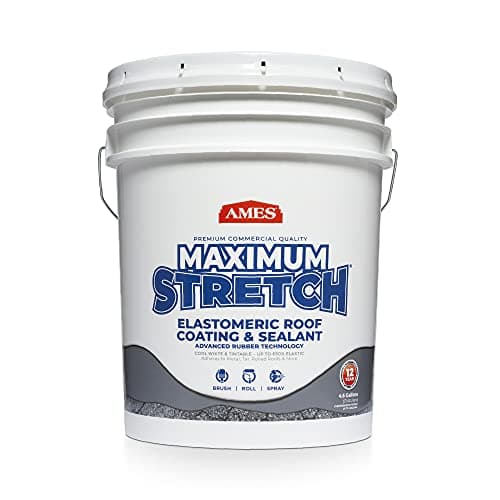
Ames Maximum-Stretch Acrylic Elastomeric Roof Coating (White, 4.6 gal, 650% Elongation)See it on Amazon ↗

Quick Verdict

Ames Maximum-Stretch Acrylic Elastomeric Roof Coating: high stated stretch and reflectivity for draining low-slope roofs, but no coverage rate on the listing.

Key Specs

Type (stated)

Elastomeric acrylic, rubberized roof coating and sealant

Elongation (stated)

650%

Reflectivity (stated)

88% light reflectivity; white, tintable

Surfaces (stated)

Metal roofing, tar, built-up and rolled roofing on low-slope roofs; also listed for RV roofs

Application (stated)

Brush, roller or sprayer

Size

4.6 gal in a 5 gal pail (model MSS5)

Pros

  • 650% stated elongation, the stretch a coating needs to ride out a metal roof's daily expansion
  • Names the low-slope surfaces it is made for: metal, tar, built-up and rolled roofing
  • 88% stated light reflectivity in a white that can be tinted
  • Goes on by brush, roller or sprayer, and the listing calls it low VOC

Cons

  • No coverage rate, coat count or cure time on the listing, so read the pail label before planning the job
  • Buyer reports split on thickness: some find it thick, others say it spreads thin
  • Some buyers report it washing off when rain arrived before it had cured

Suited to

Recoating a sound, draining low-slope roof of metal, built-up or rolled roofing in a sunny climate

Our take

Ames calls Maximum-Stretch an elastomeric acrylic, and the 650% elongation figure is the reason to buy it. A metal or low-slope roof grows and shrinks every day as the sun heats it, and a coating that cannot stretch cracks first at the seams and fasteners. The 88% reflectivity keeps the surface cooler, which also slows that movement. What the listing leaves out matters as much: there is no coverage rate, no coat count and no rain-safe or cure time. Get those from the pail label before you plan, and pick a dry spell, because several buyers say the coating washed off when rain came early. Acrylic belongs on roofs that drain; standing water calls for silicone.

Check today's price on Amazon →

Affiliate link — commission at no extra cost to you

Compare elsewhere

These open a search for this model. We quote prices only where we can verify them — Amazon, Sylvane and eBay.

#2
Best for Short Weather Windows

Check price

on Amazon ↗

Listing verified 13 Oct 2026

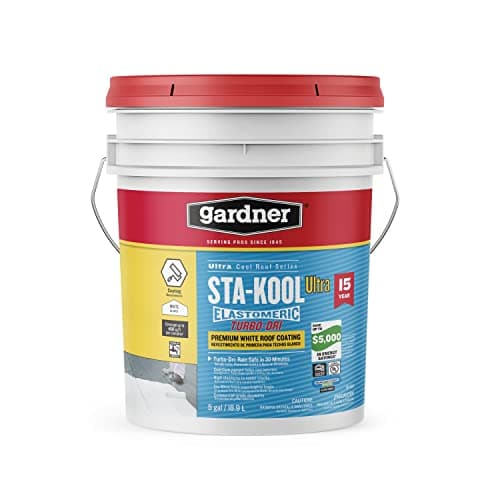
Gardner-Gibson Sta-Kool 15-Year Turbo-Dri Acrylic Elastomeric Roof Coating (White, 5 gal)See it on Amazon ↗

Quick Verdict

Gardner-Gibson Sta-Kool 15-Year Turbo-Dri: a 30-minute rain-safe acrylic for short weather windows, on a listing light on coverage facts.

Key Specs

Type (stated)

Flexible white acrylic elastomeric coating with heat-reflective pigments

Rain safe (stated)

30 minutes

Recoat (stated)

3 hours

Application (stated)

Roller, one uniform coat at a time

Size

5 gal (part SK-8015)

15-Year in the name

What it covers is not explained on the listing

Pros

  • Rain safe in 30 minutes, per the listing, which cuts the risk of a passing shower ruining fresh coating
  • Ready to recoat in 3 hours, so two coats fit into one day
  • Goes on with an ordinary roller
  • Buyer reports describe smooth rolling and good coverage in two coats

Cons

  • No coverage rate and no reflectivity number on the listing
  • The listing never says what the 15-Year in the product name covers
  • Some buyers report the coating lasting only about two years

Suited to

A low-slope or RV roof in a humid or stormy region where a long dry spell is hard to find

Our take

Acrylic roof coatings often fail early for one reason: rain arrives before the film has cured, and the water rinses it away or blisters it. Gardner-Gibson's answer is speed. The listing says Sta-Kool Turbo-Dri is rain safe in 30 minutes and ready for a second coat in 3 hours, so both coats can go on between a morning start and mid-afternoon. That suits regions with afternoon storms, where a clear 24-hour window is rare. The trade-off is a thin listing. It gives no coverage per gallon and no reflectivity figure, and it never explains the 15-Year in the product name. Read the label for the spread rate, and ask Gardner-Gibson in writing what those 15 years cover before you count on them.

Check today's price on Amazon →

Affiliate link — commission at no extra cost to you

#3
Best for Ponding Water

Check price

on Amazon ↗

Listing verified 13 Oct 2026

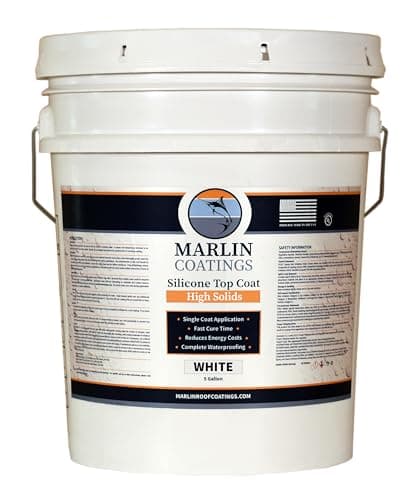
Marlin Coatings 100% Silicone Top Coat Roof Coating (White, 5 gal, One Coat)See it on Amazon ↗

Quick Verdict

Marlin Coatings 100% Silicone Top Coat: the pick for roofs that hold water, with a stated 60 sq ft per gallon in one coat.

Key Specs

Type (stated)

100% silicone, self-leveling

Coverage (stated)

About 60 sq ft per gallon, roughly 300 sq ft per 5 gal pail

Coats (stated)

One coat

Ponding water (stated)

Does not break down under UV exposure or ponding water

Surfaces (stated)

EPDM rubber, TPO, PVC, fiberglass, spray foam and metal

Reflectance (stated)

Solar Reflective Index of 113

Pros

  • Claims resistance to ponding water, the condition that defeats acrylic coatings
  • Gives a coverage figure, about 60 sq ft per gallon, so you can do the arithmetic
  • One coat at that rate, per the listing
  • Lists the single-ply, foam and metal roofs it bonds to

Cons

  • Once a roof is silicone, plan on silicone for every later recoat, since most other coatings and sealants do not bond to it
  • Spraying needs a 6,000 psi pump, so most homeowners will roll it
  • No primer guidance and no warranty term on the listing, which says warranties vary by application

Suited to

Flat roofs, RVs and trailers where water still sits after rain

Our take

Standing water is where acrylic coatings struggle and silicone earns its place. Marlin's listing says its 100% silicone does not break down under ponding water or UV, goes on in one coat, and covers about 60 sq ft per gallon. That rate turns into a shopping list: a 300 sq ft RV roof is one 5 gal pail, and a 1,000 sq ft flat roof is about 17 gallons, so four pails. The coating self-levels, which helps it settle into low spots and seams. Two cautions. A full pail weighs 49 lb, so plan how it gets onto the roof without carrying it up a ladder in one hand. And the listing gives no primer advice for each surface, so clean the roof thoroughly and try a small patch for adhesion before coating the whole roof.

Check today's price on Amazon →

Affiliate link — commission at no extra cost to you

#4
Best for RVs and Campers

Check price

on Amazon ↗

Listing verified 13 Oct 2026

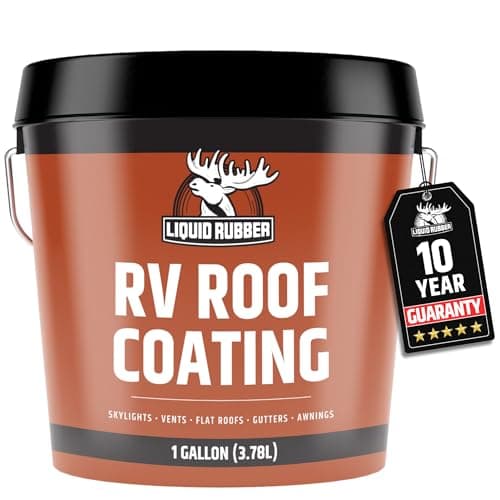
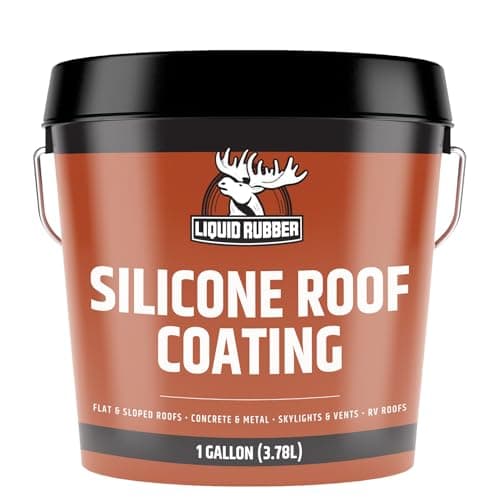
Liquid Rubber RV Roof Sealant Elastomeric Coating (White, 1 gal, Model 14101)See it on Amazon ↗

Quick Verdict

Liquid Rubber RV Roof Sealant: a full RV roof system with stated coverage and temperature limits, if you buy the primer for EPDM or TPO.

Key Specs

Surfaces (stated)

EPDM, TPO, fiberglass and aluminum RV roofs, vents and skylights

Coverage (stated)

1 gal per 50 sq ft at the final recommended thickness; one 5 gal pail for a 30 ft RV

Application temperature (stated)

50°F to 90°F

Primer (stated)

Liquid Rubber EPDM and TPO Primer on EPDM and TPO roofs

System (stated)

Cleaner, primer and coating, with lap sealant and seam tape at joints and vents

Formula (stated)

Water based, zero VOC; store above freezing

Pros

  • Written for the four common RV roof skins: EPDM, TPO, fiberglass and aluminum
  • A clear coverage figure of 1 gal per 50 sq ft, with a 5 gal pail sized for a 30 ft RV
  • States its application temperature window, 50°F to 90°F
  • Buyers report easy application and water cleanup

Cons

  • EPDM and TPO roofs need the separate primer for proper adhesion, an extra purchase
  • Buyer reports are mixed on drying, with some describing a tacky surface for weeks and some reporting peeling
  • At 1 gal per 50 sq ft, a whole RV roof takes a full 5 gal pail

Suited to

Recoating a travel trailer, camper or motorhome roof over a weekend

Our take

RV roofs move more than house roofs. The body flexes on every road, and the roof skin is often EPDM or TPO membrane that most coatings will not grip without help. Liquid Rubber's listing deals with that directly. It names EPDM, TPO, fiberglass and aluminum, calls for its own primer on EPDM and TPO, and adds lap sealant and seam tape at vents and skylights, which is where RV roofs actually leak. The coverage figure, 1 gal per 50 sq ft, is heavy next to a house coating because it builds a thick film, so a 30 ft RV takes a 5 gal pail. Apply it between 50°F and 90°F on a dry forecast, and give it longer in cool or humid weather, since some buyers report a tacky surface for weeks.

Check today's price on Amazon →

Affiliate link — commission at no extra cost to you

#5
Best for Sheds and Small Roofs

Check price

on Amazon ↗

Listing verified 13 Oct 2026

Liquid Rubber Silicone Roof Coating (White, 1 gal, Model 13201)See it on Amazon ↗

Best for Sheds and Small Roofs

Liquid Rubber Silicone Roof Coating (White, 1 gal, Model 13201)

4.6(135 reviews)

Quick Verdict

Liquid Rubber Silicone Roof Coating (1 gal): silicone in a small can for sheds, porches and adhesion trials.

Key Specs

Type (stated)

Silicone, solids based, no solvents, ultra-low VOC

Coverage (stated)

About 1 gal per 50 sq ft, depending on the roofing material

Coats (stated)

1 to 2 layers recommended

Elongation (stated)

Over 237%

Surfaces (stated)

Flat and sloped roofs, sheds, wood, concrete and metal

Primer (stated)

Not needed except on EPDM and TPO

Pros

  • A 1 gal can sized for a shed, a porch roof or one section of a larger roof
  • States both a coverage rate and how many layers to plan for
  • Names the one case that needs primer: EPDM and TPO
  • No solvents and low odor, per the listing

Cons

  • About 50 sq ft per gallon means a large roof needs many cans
  • Lower stated elongation, over 237%, than the acrylic picks on this page
  • The listing does not say whether the 50 sq ft figure is per layer or for the whole job

Suited to

A shed, porch or small flat roof section, or a trial patch before a larger silicone job

Our take

Not every roof needs a 5 gal pail. A garden shed, a porch roof or the flat section of a garage may be 50 to 150 sq ft, and Liquid Rubber's 1 gal silicone is sized for that. The listing gives about 1 gal per 50 sq ft and recommends 1 to 2 layers, without saying whether that rate is per layer. Plan on the higher figure: a 100 sq ft porch roof takes 2 gal for one layer, or 4 gal if you apply two. The listing names the surfaces it suits and says only EPDM and TPO need primer. A single can is also a sensible way to check how well silicone grips your roof before you commit to a full pail of any brand.

Check today's price on Amazon →

Affiliate link — commission at no extra cost to you

Buyer's Guide

What to know before you buy.

What a Roof Coating Does, and What It Cannot Fix

An elastomeric coating is a thick, rubbery paint. It renews the weathered surface of a roof, bridges hairline cracks and small gaps at seams and fasteners, and reflects sunlight so the roof runs cooler. It stretches as the roof moves instead of cracking. That is all it does. It cannot repair decking that is soft or rotten, replace a failed flashing at a chimney or wall, or rebuild a membrane that is splitting along its seams. Coating over a wet roof traps the water under a new skin, and EPA notes that hidden mold can grow in roof materials above a ceiling after a roof leak. Find the leak, fix the cause, let the roof dry out fully, and only then coat the surface.

Acrylic or Silicone: Let the Water Decide

The choice comes down to how your roof drains. Acrylic coatings, like the Ames and Gardner-Gibson picks, suit roofs that shed water within a day or two after rain. They can be tinted, they clean up with water, and later recoats can be more acrylic. Silicone suits roofs where water ponds. Roofers generally call water ponding when it is still standing 48 hours after rain. Marlin's listing claims its silicone holds up under ponding water, and none of the acrylic listings here make that claim. The catch is that silicone becomes the only option for future recoats, since most other coatings and sealants do not stick to it. If you are unsure, hose the roof down on a dry day and look again after 48 hours.

The Gallon Math: Area, Coverage and Coats

Measure the roof's length and width and multiply them. On a low-slope roof that gives the area closely enough; add the faces of any curbs or parapets you will coat. Divide by the listing's coverage per gallon, multiply by the number of coats, then add about 10% for a rough or granulated surface, which soaks up more. Two worked examples: a 1,000 sq ft flat roof at Marlin's stated 60 sq ft per gallon in one coat needs about 17 gallons, which is four 5 gal pails. A 30 x 8 ft travel trailer is 240 sq ft; at Liquid Rubber's 1 gal per 50 sq ft it needs about 5 gallons. Ames and Gardner-Gibson state no coverage rate, so read the pail label before ordering.

Prep, Weather and Ladder Safety

A coating is only as good as the surface under it. Sweep and wash the roof, rinse it, and let it dry completely. Tighten loose fasteners on a metal roof, and seal open seams, vents and skylight edges before the main coat, the way Liquid Rubber's RV system adds seam tape and lap sealant. Use primer where the listing calls for it, such as Liquid Rubber on EPDM and TPO. Then match the weather to the label: Liquid Rubber RV states 50°F to 90°F, and Gardner-Gibson states rain safe in 30 minutes, while the others give no window, so pick a dry forecast with no dew. Wet coating is slippery. Work from a secured ladder, wear soft-soled shoes, and never walk a roof that is wet or steep.

Who Should Not Buy a Roof Coating

Skip these products if your roof is steep asphalt shingle. None of the picks here list asphalt shingles as a surface, and a shingle roof sheds water by its overlaps, not by a sealed skin; coating it does not restore lost granules or a failing underlayment, so check with the shingle maker before trying. Skip them if the roof has soft spots underfoot, sagging decking or a leak whose source you have not found, because those need a roofer. Skip them too if insulation under a flat roof is wet, which a coating would seal in. For a single gap at a flashing or vent, a cartridge sealant or patch tape is the better tool. Photograph any leak damage before you coat, since an insurance adjuster will want to see it.

Frequently Asked Questions

Does elastomeric roof coating stop leaks?

It can stop small leaks that come through the roof surface, such as hairline cracks or open seams on a sound low-slope or metal roof.

It will not stop a leak from a failed flashing, a soft deck or a split membrane, and coating over those hides the problem while it gets worse. Find where the water enters, repair that first, and use the coating to protect the whole surface afterward.

Is silicone or acrylic roof coating better?

Neither is better everywhere; silicone suits roofs where water ponds, and acrylic suits roofs that drain. Acrylic can be tinted and recoated with more acrylic later.

Silicone, such as Marlin's 100% silicone, claims resistance to standing water, but once it is on the roof, every later recoat needs to be silicone too. Check whether water is still standing 48 hours after rain before you choose.

How many coats of elastomeric roof coating do I need?

As many as the label specifies, which ranges from one coat to two on this page. Marlin states one coat at about 60 sq ft per gallon. Liquid Rubber's silicone recommends 1 to 2 layers.

Gardner-Gibson's acrylic can be recoated after 3 hours, and its buyers describe two coats. A second coat mainly builds thickness and covers spots the first one missed, so thin coats are no substitute for the stated spread rate.

How long does elastomeric roof coating last?

It dependsOn the product, the roof and the climate, and the listings on this page do not give a tested service life.

Liquid Rubber's RV coating claims 10 years of protection when applied as directed, and Gardner-Gibson puts 15-Year in its product name without explaining it. Buyer reports run from about two years to about five. Inspect the roof every year and recoat when the surface wears thin.

Can you put elastomeric roof coating on shingles?

Not with the products on this page, since none of them list asphalt shingles as a surface. Shingle roofs shed water through their overlaps, and a coating does not replace lost granules or worn underlayment.

Shingle-specific coatings exist, but ask the shingle maker whether coating affects the roof's warranty first. For a worn shingle roof, a roofer's inspection is usually the better first step.

How long does roof coating need to dry before rain?

Only Gardner-Gibson states a figure among these picks: rain safe in 30 minutes. The Ames and Marlin listings give no rain-safe time, so follow the pail label and leave a clear forecast of at least a day.

Some Ames buyers report the coating washing off when rain came early. Liquid Rubber RV also states an application window of 50°F to 90°F, and cool, humid weather slows curing.

Who do I call right now for water damage?

Call (888) 840-6512. The line is answered 24 hours a day, seven days a week, and connects you with an IICRC-certified water damage restoration company that serves your area. A recorded menu picks up first: choose water damage or mold, key in your 5-digit ZIP code, and hold through the short silence while the call is passed to the company.

Describe what you can see — where the water is coming from, how long it has been there, and whether it smells — the more specific you are, the faster the right company is on the line. If the source is a pipe or an appliance, shut the main water valve first. Have four things ready and the call goes quickly: the address, when the water started, what is wet now, and whether you have filed an insurance claim.

Still not sure which of these is your situation? (888) 840-6512 · toll-free · answered 24/7

Sources

  1. EPA — A Brief Guide to Mold, Moisture, and Your Home

Methodology: How we source and verify data · Report an error

How we chose these picks

  • Every pick is a current listing. Stock, star ratings and rating counts are read from Amazon by script and carry the date they were read.
  • Nothing under 4.0 stars makes the list, and the top pick needs a large rating count, so one good week of reviews cannot put it there.
  • Specs are quoted from the listing or the maker, with the test condition behind the number where there is one, and sized against the job rather than the room on the box.
  • We do not run lab or field tests. Where a spec matters, we say what it is measured under and what it cannot tell you.

Free 2-day shipping

Amazon Prime members pay no shipping on restoration equipment

Dehumidifiers, air movers, and moisture meters qualify for free Prime delivery — bulk items that otherwise cost $15–$40 to ship.

Try Prime free →

Affiliate link — HearthDry earns a bounty if you sign up; costs you nothing extra.

Also Worth Comparing

Best Roof Leak Sealants, Patches and Tapes in 2026 — Temporary Repairs That Hold Until the Roofer Comes

A can, tube or roll from this page can stop a small roof leak at a seam, a flashing edge or a vent boot. It cannot replace missing shingles or rotted decking, and the place water gets in is often several feet uphill from the stain on your ceiling.

Read the comparison

Best Roof Tarps for Emergency Leaks in 2026 — Thickness, Size and Tie-Down Points Compared

A heavy polyethylene tarp, boarded down and run over the ridge, is the standard emergency cover for missing shingles or a hole in the roof deck. It keeps the weather out for the days or weeks until the roof is fixed, and putting one up is real roof work, so this page starts with when to leave it to a roofer.

Read the comparison

Best Waterproof Tape in 2026 — Patch, Butyl and Self-Fusing Silicone Tape for Leaks, and Why a Taped Pipe Is Temporary

Waterproof tape comes in three kinds that do different jobs: wide patch tape for cracks and liners, butyl tape for outdoor seams, and self-fusing silicone for wrapping pipes and hoses. These five are compared on what each listing states about width, temperature, wet application and use, with the shutoff-first steps and the tape arithmetic for a leaking pipe.

Read the comparison

Best Gutter Guards in 2026 — DIY Micro-Mesh and Aluminum Screens Sized for 5 in and 6 in Gutters, So Roof Water Reaches the Downspout

A clogged gutter spills roof water over its front edge and onto the soil right beside the foundation, which is where many basement leaks begin. These DIY guards are compared on the debris each type stops, the gutter width each listing states, how each one meets the roof edge, and the cleaning that no guard removes.

Read the comparison

Best Moisture Meters for Homeowners in 2026 — Water Damage Detection

A moisture meter tells you what your eyes can't see — wet drywall, soggy subfloor, and moisture in framing. These are the four best moisture meters for homeowners dealing with water damage.

Read the comparison