Best Ice Melt for Roofs in 2026 — Calcium Chloride Pellets and Tablets That Open a Drain Channel Through an Ice Dam

Best Ice Melt for Roofs in 2026

Calcium Chloride Pellets and Tablets That Open a Drain Channel Through an Ice Dam

3 picks compared · prices, ratings and stock checked October 12, 2026

Our Top Pick

For an ice dam you can reach safely from a ladder, the Peladow Calcium Chloride Pellets Snow and Ice Melter, 50 lb, packed into nylon stockings and laid across the dam. If you would rather not fill stockings, Roof Melt by KMI 14 lb tablets are made to sit on the problem spots, per the listing.

4.7 on Amazon · 386 ratings

Quick answer

The best ice melt for roofs is calcium chloride, never rock salt: for an ice dam at your eaves, buy the Peladow Calcium Chloride Pellets Snow and Ice Melter, 50 lb, rated 4.7 stars across 386 Amazon ratings and stated effective down to -25°F. Pack the pellets into old nylon stockings and lay each one up and down the slope across the dam so it melts a channel to the gutter. A 50 lb bag fills about 16 stockings at 3 lb each. The channel lets trapped water drain; it does not stop the next dam, which starts with attic heat melting snow higher up the roof.

Our Picks at a Glance

Every pick below is currently stocked — ratings and stock read from Amazon on 12 October 2026.

How this page was made: we compare the current Amazon listings, the makers' published specs and what verified buyers report, then rank by fit for the job. Ratings, review counts and stock are read from Amazon and dated. We earn a commission on purchases through our links; it does not change the order. Reviewed by Marcus Reed, IICRC-certified Water Restoration Technician.

Full Reviews

Each pick in detail: what the listing states, what buyers report, and where it falls short.

#1
Best Overall

Check price

on Amazon ↗

Listing verified 13 Oct 2026

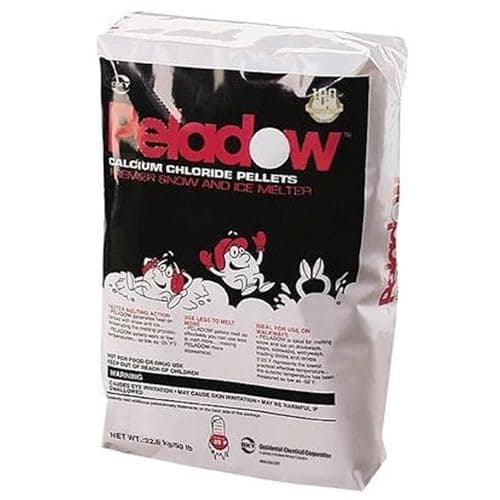
Peladow Calcium Chloride Pellets Snow and Ice Melter, 50 lb (Rated to -25°F)See it on Amazon ↗

Quick Verdict

Peladow Calcium Chloride Pellets Snow and Ice Melter, 50 lb: calcium chloride rated to -25°F, the material for the stocking method.

Key Specs

Chemical (stated)

Calcium chloride pellets

Size

50 lb bag

Low-temperature limit (stated)

Effective down to -25°F

How it works (stated)

Attracts moisture from the air; exothermic, so it gives off heat as it dissolves

Odor (stated)

Odorless

Made in (stated)

United States

Pros

  • Sold as calcium chloride pellets, the chemical general roof guidance points to instead of rock salt
  • Rated to -25°F, so it keeps working through the deep cold when ice dams grow fastest
  • Pellets pour easily into a stocking, and 50 lb covers a long eave line or more than one storm

Cons

  • The listing does not mention roofs at all, so the stocking method is your choice, not a use the maker states
  • Heavy to carry and more than one small dam needs; keep the bag sealed, since the listing says the pellets pull moisture from the air
  • Any chloride melt sends salty runoff into the beds below the eaves, so use no more than the dam needs

Suited to

The stocking method on an asphalt-shingle roof, for a homeowner who can work safely from a ladder at the eaves

Our take

Two lines on this listing explain why calcium chloride is the roof chemical. It is effective down to -25°F, and it is exothermic, meaning it releases heat as it dissolves, so it keeps cutting into ice on the coldest nights when a dam is growing. The listing does not mention roofs, so the method is the one in the buying guide: about 3 lb of pellets per nylon stocking, laid up and down the slope across the dam so the melt opens a channel to the gutter. Keep the bag closed between storms, because the listing says the pellets attract moisture from the air, and an open bag hardens into a lump. On a metal roof, check the roof maker's guidance before using any chloride.

Check today's price on Amazon →

Affiliate link — commission at no extra cost to you

Compare elsewhere

These open a search for this model. We quote prices only where we can verify them — Amazon, Sylvane and eBay.

#2
Best Purpose-Made Roof Tablets

Check price

on Amazon ↗

Listing verified 13 Oct 2026

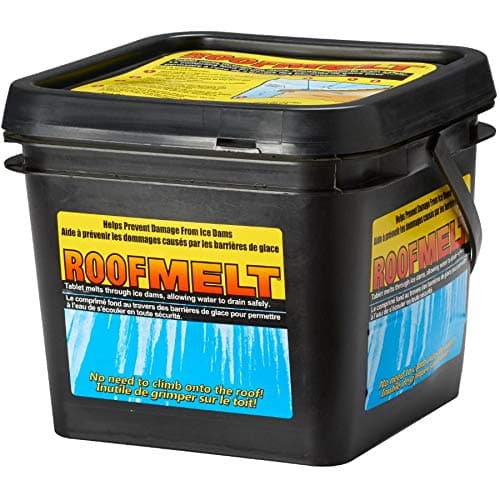
Roof Melt by KMI Snow and Ice Melting Tablets, 14 lbSee it on Amazon ↗

Best Purpose-Made Roof Tablets

Roof Melt by KMI Snow and Ice Melting Tablets, 14 lb

4(112 reviews)

Quick Verdict

Roof Melt by KMI 14 lb tablets: purpose-made roof tablets with a thin listing, so confirm calcium chloride on the label.

Key Specs

Form (stated)

Rectangular tablets shaped to sit on a roof surface

Size

14 lb

Use (stated)

Place on problem areas of the roof to help prevent ice dam damage

Color (stated)

Black, to blend with most roofs

Made in (stated)

Portland, Maine

Active ingredient

Not named in the listing's bullet points

Pros

  • Made for roofs: the listing describes placing the tablets on ice dam problem areas, so you are not adapting a walkway product
  • No stockings to fill; the tablets go straight onto the spots where water backs up
  • Black tablets blend with dark shingles, per the listing, so they are less obvious than white pellets while they work

Cons

  • The bullets never name the chemical, and one calls the tablets tough plastic, which is muddled copy; confirm calcium chloride on the package label
  • No temperature limit on the listing
  • The listing speaks of preventing ice dam damage, but tablets open a channel; the dam itself stays until the attic is fixed

Suited to

Treating one or two problem spots on a roof when filling and placing stockings is not practical

Our take

This is the only pick sold specifically for roofs, and that is its main advantage: the tablet shape and the directions are built around sitting on shingles over an ice dam. The listing itself is thin, though. Its bullets do not name the active ingredient or a temperature limit, and one bullet calls the tablets durable plastic, which cannot be right for something meant to dissolve into ice. Treat the package label as the spec sheet: confirm it says calcium chloride, and follow its directions for how many tablets to use and where. Place them on the dam, the problem area the listing describes, and look the next day for an open channel. Resist the urge to help it along with a hammer or a shovel; frozen shingles crack long before the ice gives way.

Check today's price on Amazon →

Affiliate link — commission at no extra cost to you

#3
Best Small Bag for One Ice Dam

Check price

on Amazon ↗

Listing verified 13 Oct 2026

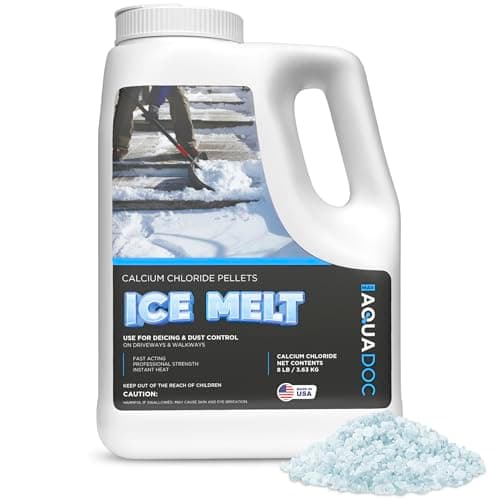
AquaDoc Calcium Chloride Ice Melt, 8 lb (Rated to -25°F)See it on Amazon ↗

Best Small Bag for One Ice Dam

AquaDoc Calcium Chloride Ice Melt, 8 lb (Rated to -25°F)

4.7(51 reviews)

Quick Verdict

AquaDoc Calcium Chloride Ice Melt, 8 lb: the same -25°F calcium chloride in a bag sized for one dam.

Key Specs

Chemical (stated)

Calcium chloride

Size

8 lb

Low-temperature limit (stated)

Down to -25°F (-32°C)

Surfaces named (stated)

Concrete, asphalt, brick and stone, when used as directed

Made in (stated)

USA

Roof use

Not named on the listing

Pros

  • Names calcium chloride and the same -25°F limit as the Peladow pellets, in a size that suits one problem eave
  • 8 lb fills two or three stockings at about 3 lb each, enough for one dam over a door or porch
  • Its listing names stairs and walkways, so what is left can go on the steps below the eaves where drips refreeze, following the label

Cons

  • A newer listing with a shorter buyer history than the other two picks
  • 8 lb runs out fast if dams form along a long eave
  • Roofs are not among the surfaces the listing names

Suited to

A single ice dam over an entry, porch or garage door, with the leftover going on the steps below

Our take

This is the same chemistry as the Peladow pellets, calcium chloride rated to -25°F per its listing, in a bag about a sixth the size. That matters more than it sounds. Many ice dam problems come down to one or two bad spots, such as over an entry or where two roof slopes meet, and a 50 lb bag is more than those need in a season. Eight pounds fills two or three stockings at about 3 lb each. The listing names concrete, asphalt, brick and stone as surfaces it suits when used as directed, which makes it a fit for the steps beneath a dripping eave as well. It does not name roofs, so the stocking method and its limits apply exactly as they do with the larger bag.

Check today's price on Amazon →

Affiliate link — commission at no extra cost to you

Buyer's Guide

What to know before you buy.

Calcium Chloride, Not Rock Salt: What Goes on a Roof

Choose a product whose label lists calcium chloride. It keeps melting ice at much lower temperatures than rock salt, and both Peladow and AquaDoc state an effective limit of -25°F. Rock salt, which is sodium chloride, is the one to keep off the roof. General roofing guidance warns that it can corrode metal flashing, gutters and fasteners, and that its runoff can damage the shrubs and lawn under the eaves. Blended walkway melts are a gamble on a roof, because many listings do not give the full mix, so you cannot tell how much sodium chloride is in the bag. Calcium chloride is still a salt, so use only what the stockings or tablets need and never scatter it loose across the shingles. If your roof is metal, or the shingle warranty says anything about chemicals, read that before you use any melt.

The Stocking Method, Step by Step

Fill the leg of an old pair of nylon stockings or pantyhose with about 3 lb of calcium chloride pellets and tie off the end. From a ladder on firm, cleared ground, lay the stocking up and down the roof slope so it crosses the dam, with the lower end hanging an inch or two past the edge over the gutter. As the pellets dissolve, they melt a narrow channel through the ice, and the water trapped behind the dam drains through it. On a long dam, set several stockings along the worst stretch rather than relying on one. Expect it to take hours, not minutes, and check the channels the next day. Once the dam is gone, pull the stockings off so the nylon does not end up in the gutter. If you cannot reach the dam from a ladder at the eaves, do not climb onto the roof to place them.

How Much Melt to Buy

Measure the length of eave where dams form, not the whole roof. At about 3 lb per stocking, a 50 lb bag fills about 16 stockings and an 8 lb bag fills two or three. If you space stockings roughly 2 to 3 ft apart along the worst stretch, a 30 ft dam takes 10 to 15 of them, which is most of a 50 lb bag in one application. A single dam over a 6 ft porch roof takes two or three, which the 8 lb bag covers. Tablets are counted differently: follow the package for how many to place per foot of dam, since the Roof Melt listing gives no coverage figure. Buy for one or two applications per storm rather than the whole winter, and keep any opened calcium chloride sealed, because it pulls moisture from the air and sets hard.

Melt Opens a Channel; It Does Not Fix the Ice Dam

An ice dam forms when heat from the house warms the upper roof deck, snow there melts, and the water refreezes at the cold eave. Every product on this page treats the result. A channel lets trapped water drain so it stops backing up under the shingles, but the next snowfall will build a dam in the same place for as long as the attic leaks heat. The lasting fixes are on the attic side: air sealing the gaps around light fixtures, pipes, flues and the hatch, adding insulation, and keeping attic ventilation clear so the roof deck stays cold. A roof heat cable is the in-between option, a powered channel kept open all winter where those fixes have to wait. Raking the bottom few feet of snow off the roof from the ground after each storm also removes the water that feeds the dam.

Safety: Ladders, Falling Ice and Why You Never Chip a Dam

Work from a ladder on firm ground, never from the roof itself. Clear and treat the ground where the ladder feet go, set the base about 1 ft out for every 4 ft of height, and have someone hold it. A ladder standoff lets it rest against the wall or roof edge instead of an ice-filled gutter, which can bend under the load. Keep the ladder well clear of the power line feeding the house. Do not chip, hammer or pry at the ice: shingles are brittle in the cold, and a blade or hatchet can cut through to the roof deck and cause the leak you were trying to stop. Stay out from under the eaves while the dam melts, since icicles and slabs of ice can drop as the channel opens. If the dam is on a second story, a steep pitch or anywhere you would need to stand on the roof, hire a roofer with steam equipment.

Who Should Not Rely on Roof Ice Melt

Skip the melt and call a roofer if water is already coming through a ceiling, a light fixture or an exterior wall. At that point melt works too slowly, and the priority is finding where the water is going inside. Turn off power to any wet light fixture at the breaker, catch the drip, and check the attic for wet insulation and decking. EPA advises drying water-damaged areas within 24 to 48 hours to prevent mold growth, and it names roof materials above ceiling tiles as a place hidden mold grows after roof leaks. Owners of metal, slate, tile or flat roofs should ask the roof maker or a roofer before using any chloride at all. And if dams come back every winter, the money is better spent on attic air sealing and insulation than on melt bought year after year.

Frequently Asked Questions

Is calcium chloride safe for roof shingles?

Calcium chloride is the melt general roofing guidance recommends for shingles, used sparingly inside stockings or as tablets. It is generally considered gentler than rock salt on shingles and plants, but it is still a salt, so do not spread it loose or use more than the dam needs.

Some retailers advise against any chemical on a roof, and some shingle warranties mention chemicals, so check yours. On a metal roof, ask the roof maker first.

Can you use rock salt on a roof?

NoKeep rock salt off the roof. Sodium chloride, the chemical in rock salt, is hard on the metal around a roof, including flashing, gutters and nail heads, and the salty runoff can harm grass and shrubs along the drip line.

It also stops working at temperatures where calcium chloride still melts ice. If rock salt or an unlabeled blend is all you have, use a roof rake to clear the snow above the dam instead.

How do you use ice melt on a roof?

Put it inside a stocking, or use tablets, and set it across the dam instead of scattering it. Fill a nylon stocking leg with about 3 lb of calcium chloride, tie it off, and place it from a ladder so it runs up the slope over the dam, with the end hanging past the edge.

It melts a channel that lets trapped water drain. Check it the next day, add more stockings along a long dam, and remove them once the ice is gone.

Do roof melt tablets work?

YesAs a way to open a drain channel, not to clear a whole dam. Purpose-made tablets such as Roof Melt by KMI sit on the problem area and melt down through the ice as they dissolve.

That listing does not name its active ingredient, so confirm calcium chloride on the package. Tablets save filling stockings, but the ice around the channel stays, and the dam will rebuild until attic heat loss is dealt with.

Will ice melt damage my gutters?

It can if you overuse it, because any chloride adds to corrosion on metal gutters and fasteners over time. Use the least melt that opens a channel, and pull the stockings out once the dam has melted.

In spring, flush the gutters and downspouts with a hose to clear salt residue. EPA advises cleaning and repairing roof gutters regularly, and the downspouts should send meltwater away from the foundation rather than pooling it against the house.

How do I stop ice dams from forming?

Keep the roof deck cold by stopping house heat from reaching it. Air seal the gaps in the attic floor around light fixtures, pipes, flues and the hatch, then add insulation and make sure the attic vents are clear.

Where that work has to wait, a roof heat cable keeps a drain path open all winter, and a roof rake clears the snow that feeds a dam after each storm. Ice melt is the emergency fix in between.

Who do I call right now for water damage?

Call (888) 840-6512. The line is answered 24 hours a day, seven days a week, and connects you with an IICRC-certified water damage restoration company that serves your area. A recorded menu picks up first: choose water damage or mold, key in your 5-digit ZIP code, and hold through the short silence while the call is passed to the company.

Describe what you can see — where the water is coming from, how long it has been there, and whether it smells — the more specific you are, the faster the right company is on the line. If the source is a pipe or an appliance, shut the main water valve first. Have four things ready and the call goes quickly: the address, when the water started, what is wet now, and whether you have filed an insurance claim.

Still not sure which of these is your situation? (888) 840-6512 · toll-free · answered 24/7

Sources

  1. EPA — A Brief Guide to Mold, Moisture, and Your Home

Methodology: How we source and verify data · Report an error

How we chose these picks

  • Every pick is a current listing. Stock, star ratings and rating counts are read from Amazon by script and carry the date they were read.
  • Nothing under 4.0 stars makes the list, and the top pick needs a large rating count, so one good week of reviews cannot put it there.
  • Specs are quoted from the listing or the maker, with the test condition behind the number where there is one, and sized against the job rather than the room on the box.
  • We do not run lab or field tests. Where a spec matters, we say what it is measured under and what it cannot tell you.

Free 2-day shipping

Amazon Prime members pay no shipping on restoration equipment

Dehumidifiers, air movers, and moisture meters qualify for free Prime delivery — bulk items that otherwise cost $15–$40 to ship.

Try Prime free →

Affiliate link — HearthDry earns a bounty if you sign up; costs you nothing extra.

Also Worth Comparing