
Quick answer
Mold smells musty and earthy — most people describe it as wet cardboard, damp basement, old books, or rotting wood — and the smell comes from microbial volatile organic compounds (MVOCs) that only actively growing mold releases. Mildew smells the same but lighter and sharper. The smell is meaningful in two ways: it means a colony is alive and being fed by moisture right now, and it is often the only sign of mold growing where you cannot see it — inside a wall, under a floor, in an air handler. It is not sewer gas (rotten eggs), a dead animal (sweet, putrid), or new-carpet chemicals. Follow the smell to its strongest point, look for the water, and if nothing is visible, an independent mold inspection with a moisture meter is how the source is found. Call (888) 840-6512 to reach a certified water damage restoration company in your area; the line is answered 24/7.
Press 1 for water damage or 2 for mold, then your 5-digit ZIP. The line goes quiet for about half a minute while it connects — that is normal, stay on.
Written & reviewed by Marcus ReedIICRC WRT
Reviewed August 30, 2026· Next review Feb 2027
The Smell Is a Message
Mold smells musty and earthy — wet cardboard, a damp cellar, old books, rotting leaves, wet dog. The smell has a source that matters more than the description: microbial volatile organic compounds (MVOCs), gases released only by mold and mildew that are actively growing. Dead, dry mold does not smell. So the musty note in a room says two things at once — a colony is alive, and something is wet enough to feed it *right now*.
That makes it the most useful mold detector in the house, because it works through walls.
Mold vs. Mildew vs. Everything Else
| Smell | What it is | What to do |
|---|---|---|
| Musty, earthy, damp — wet cardboard, cellar | mold or mildew, actively growing | find the water |
| Same, lighter and sharper, in a bathroom or closet | mildew — surface growth | clean, ventilate |
| Rotten eggs, sulphur | sewer gas — a dry trap or a vent problem | the dry-drain fix |
| Sweet, heavy, then putrid | a dead animal in a wall or duct | find and remove |
| Chemical, sharp, "new" | off-gassing from carpet, paint, furniture | ventilate; it fades |
| Musty only when the AC or heat starts | growth on the coil or in the ducts | AC mold |
| Musty on clean laundry | the washing machine | washer mold |
No species smells different from another. "Black mold" smells like every mold; a strong smell means a large or hidden colony, not a particular one.
Where the Smell Is Coming From
The colony is where the smell is strongest, and it is fed by water. Work the room:
- 1Sniff low and high. Musty near the floor points to a subfloor, carpet pad or the base of a wall; near the ceiling, to a leak from above or an attic.
- 2The closed-door test. Close each room for an hour, then open the door — the room that hits you is the room with the source.
- 3The cold-wall check. Closets and exterior walls behind furniture condense moisture; pull the furniture and look. Window sills and their walls are the classic case.
- 4The wet appliances. Washing machine gasket, dishwasher filter, refrigerator drip pan, the AC drain pan.
- 5The basement. Below-grade rooms hold humidity; the musty-basement diagnostic walks it room by room.
- 6After a leak. Anything that got wet in the last months — a ceiling, a cabinet floor under a sink, a carpet — and was not dried fast.
A hygrometer on the wall tells you whether the whole room is the problem: over 60% relative humidity, and everything in it is feeding growth.
Talk to a water damage pro now
Answered 24/7 · Toll-free · answered 24/7 · no obligation
(888) 840-6512- Describe the damage & give your ZIP
- You're routed to the on-call local crew
- They quote — you decide, no obligation
When You Smell It and See Nothing
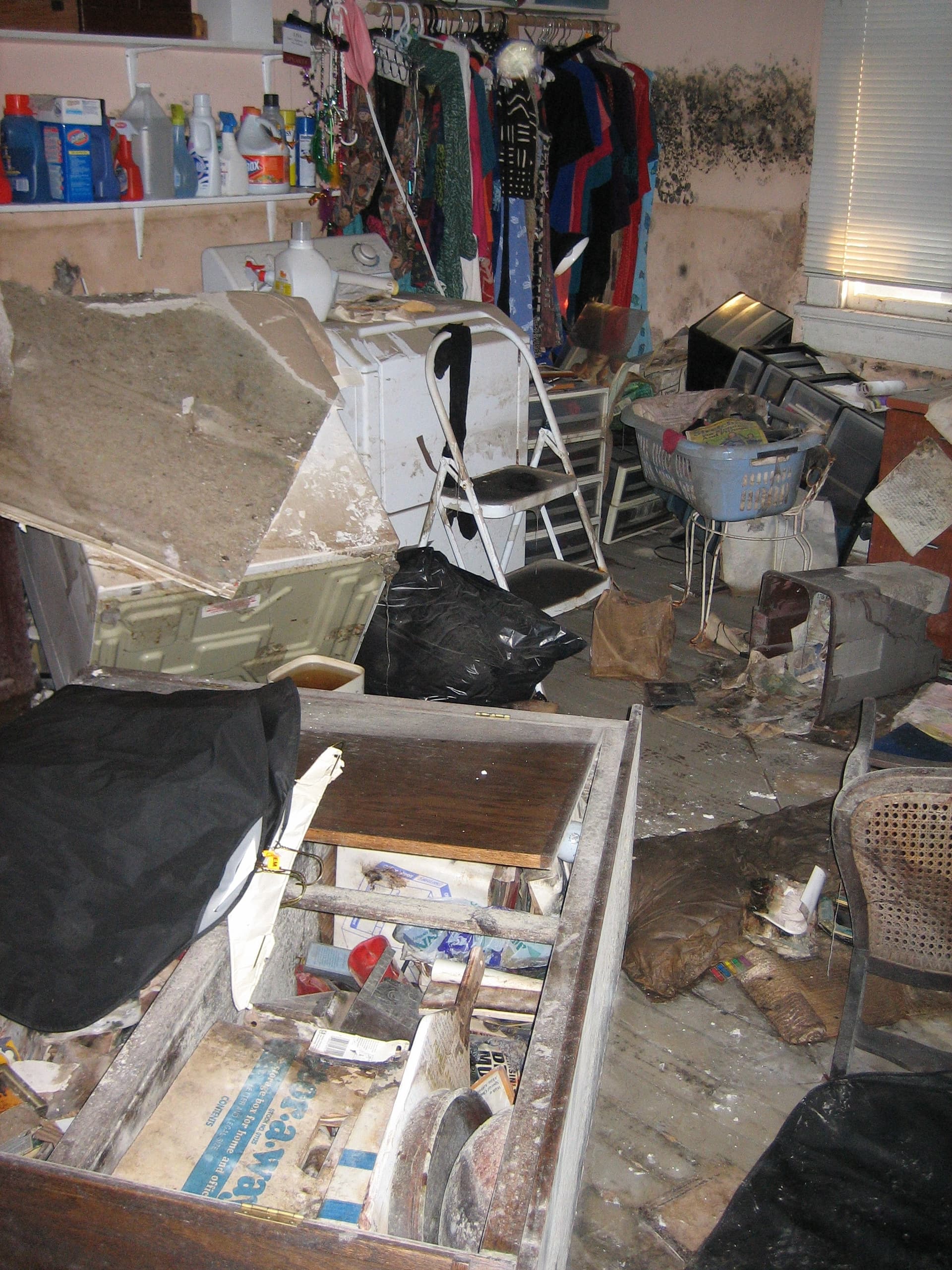
A persistent musty smell with clean visible surfaces is the signature of hidden mold — inside a wall cavity from an old leak, under flooring, behind a shower, in an air handler. The mold inside walls guide covers the search; a moisture meter finds the wet material behind the paint, and an independent mold inspector ($300–$600, one who sells no removal) is the professional version of the same hunt. Who to call, in what order explains why the inspector and the remediator should be different companies.
Getting Rid of It
The smell is the colony's exhaust. Air fresheners, ozone machines and "odour eliminators" mask it for a day and change nothing. The smell goes when the growth goes and the water is fixed: remove the mold — the safe method for small areas, a remediation crew for large or hidden ones — dry the space, hold it under 50% humidity, and the musty note is gone within days. Water damage that still smells musty after drying is the one that was never fully dry.
Health, Briefly
MVOCs themselves are irritants at the concentrations found in homes; the bigger exposure is the spores from the colony producing them. Headaches, congestion and a cough that track with a musty room are the recognized pattern, and for anyone with asthma or a mold allergy, the smell is a reason to act rather than air out.
Bottom Line
Musty, earthy, wet cardboard: that is mold, alive, fed by water now. It is a signal, not an odour to cover — follow it to its strongest point, find what is wet, and remove the growth. A smell you cannot trace to anything visible is a colony inside the structure, and a moisture meter, not a candle, is the next step.
Reading to confirm what you already suspect?
Confirm it in two minutes instead — the pro on this line answers questions about YOUR situation all day: what it is, what it should cost, whether you even need service. If you want, they'll set the appointment on the same call.
Toll-free · no obligation · asking costs nothing
Frequently Asked Questions
What does black mold smell like?
The same as any mold: musty and earthy, sometimes described as wet dirt or rotting leaves. No species has a distinctive smell a person can identify, and the color of a colony does not change its odour.
A strong musty smell with no visible growth points to a large or hidden colony rather than a particular kind — and to a material that has been wet for a while.
Can you smell mold without seeing it?
YesAnd it is the most common way hidden mold announces itself.
MVOCs pass through drywall, flooring and ductwork, so a colony inside a wall cavity, under a subfloor, behind a shower or on an air-conditioner coil produces a smell in the room with nothing to see. A musty smell that persists after cleaning the visible surfaces is the classic sign of growth inside the structure.
Does a musty smell always mean mold?
Almost alwaysMold or mildew, because the compounds that smell musty are produced by fungal growth.
What varies is where: a damp basement, a bathroom without a fan, a closet on a cold wall, an AC coil, a washing machine gasket, wet clothes. The exceptions are a dry floor drain (sewer smell, not musty), a dead rodent (putrid), and the chemical smell of new materials. Air fresheners and 'odour eliminators' remove none of these.
How do I get rid of the mold smell?
By removing the growth and fixing the moisture — the smell is a by-product of a living colony, and it stops when the colony does.
Find the source, remove the mold (or the moldy material), dry the space under 50% humidity, and the smell fades within days. A smell that survives cleaning the visible mold means the real colony is somewhere you have not looked.
Who do I call right now for water damage?
Call (888) 840-6512. The line is answered 24 hours a day, seven days a week, and connects you with an IICRC-certified water damage restoration company that serves your area. A recorded menu picks up first: choose water damage or mold, key in your 5-digit ZIP code, and hold through the short silence while the call is passed to the company.
Describe what you can see — where the water is coming from, how long it has been there, and whether it smells — the more specific you are, the faster the right company is on the line. If the source is a pipe or an appliance, shut the main water valve first. Have four things ready and the call goes quickly: the address, when the water started, what is wet now, and whether you have filed an insurance claim.
Still not sure which of these is your situation? (888) 840-6512 · toll-free · answered 24/7
Sources
- EPA — A Brief Guide to Mold, Moisture and Your Home
- CDC — Basic Facts About Mold and Dampness
- EPA — Mold Cleanup in Your Home
Methodology: How we source and verify data · Report an error
Disclaimer: HearthDry is an independent educational resource. This article is for informational purposes only and does not constitute professional, legal, or insurance advice. Consult licensed professionals before making decisions about your property or insurance claims.
Free 2-day shipping
Amazon Prime members pay no shipping on restoration equipment
Dehumidifiers, air movers, and moisture meters qualify for free Prime delivery — bulk items that otherwise cost $15–$40 to ship.
Affiliate link — HearthDry earns a bounty if you sign up; costs you nothing extra.
Equipment
What each machine actually does
Removes the moisture the structure is still giving off — the machine that decides how long drying takes
See the picks →Moves air across wet surfaces so the dehumidifier has something to take out of the air
See the picks →Finds water behind walls and under floors, and tells you when a material is actually dry
See the picks →Alerts you the moment a leak starts — the cheapest thing on this list and the only preventive one
See the picks →Those pages carry affiliate links. As an Amazon Associate, HearthDry earns from qualifying purchases; it costs you nothing extra.
Our Amazon storefront →Advertisement
