
Quick answer
A professional mold inspection is a visual and moisture survey of the house by a trained inspector, usually with air samples (spore traps compared against an outdoor baseline) and surface samples (tape lifts or swabs) sent to an accredited lab; the report identifies whether indoor spore levels are elevated relative to outside, what kinds of mold are present, and where the moisture is coming from. Expect roughly $300–$600 for an inspection with a few samples, with additional samples at about $50–$100 each. It is worth paying for when there is a musty smell with nothing visible, when a home sale or tenant dispute needs documentation, when someone in the household has unexplained respiratory symptoms, and after remediation to confirm the job worked. It is not needed when you can already see mold — EPA's guidance is that visible mold should simply be removed, whatever kind it is. Hire an inspector who does not sell remediation. Call (888) 840-6512 to reach a certified water damage restoration company in your area; the line is answered 24/7.
Press 1 for water damage or 2 for mold, then your 5-digit ZIP. The line goes quiet for about half a minute while it connects — that is normal, stay on.
Written & reviewed by Marcus ReedIICRC WRT
Reviewed August 30, 2026· Next review Feb 2027
What You Are Buying
A professional mold inspection is a diagnosis, not a test result. The sampling is the part people picture, but the inspector's value is in the survey: walking the house, reading moisture in the materials, knowing where mold hides, and finding the water that is feeding it. A lab report without that survey is a number with no address.
A complete inspection has four parts:
- 1Interview and history — where the smell is, what leaked and when, who has symptoms, what has been repaired.
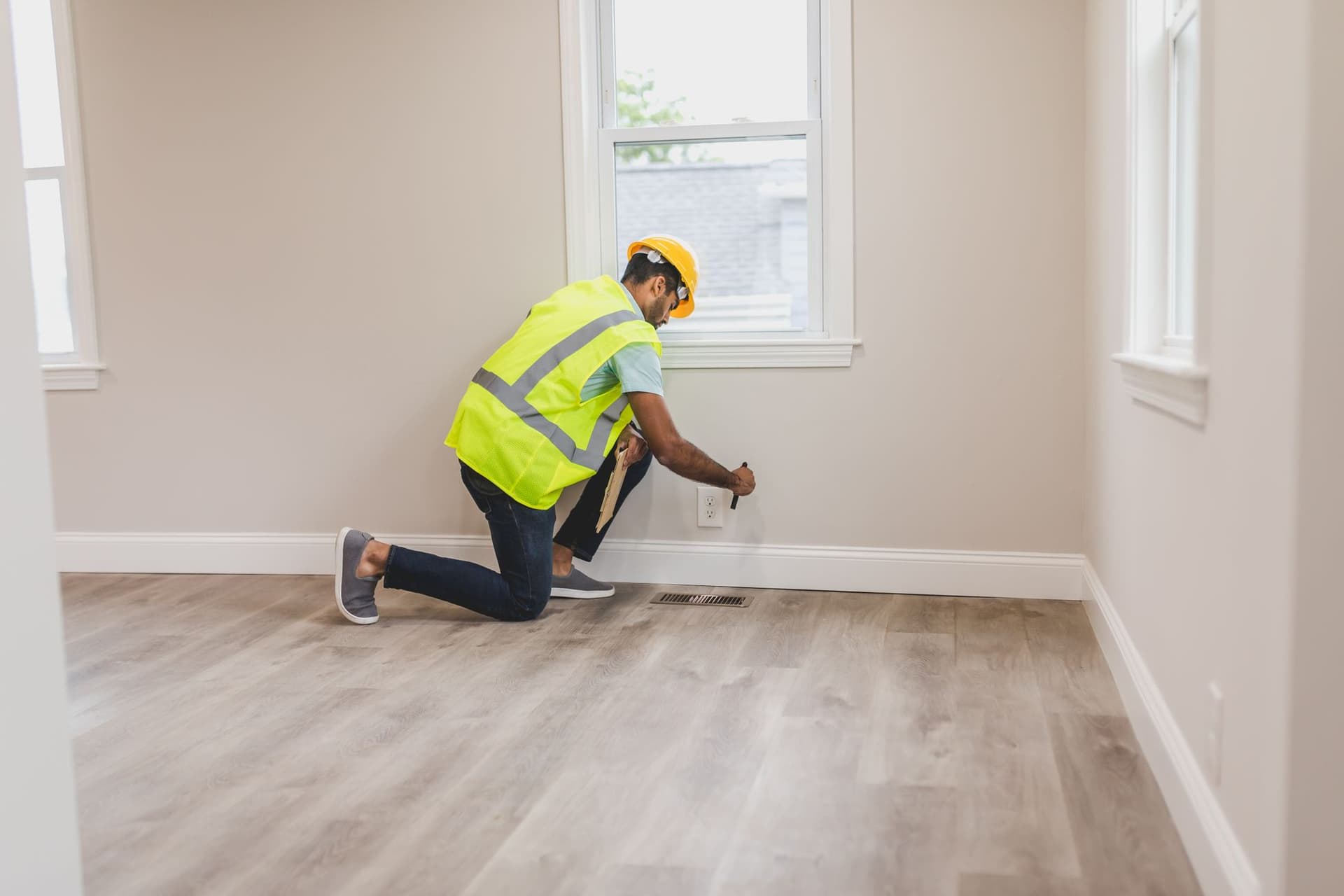
- 2Visual and moisture survey — every room, with attention to the usual suspects: under sinks, behind toilets and washers, around windows, the base of showers, below any ceiling stain, the HVAC closet, attic, basement and crawl space. A moisture meter and often a thermal camera find wet material behind intact surfaces (how the readings work).
- 3Sampling, where it answers a question — see below.
- 4A written report — findings by location, the moisture source, photos, lab results with interpretation, and a recommended scope if remediation is needed. That scope is what a remediation company bids against.
The Sampling, Explained
| Sample | How it's taken | What it tells you | What it doesn't |
|---|---|---|---|
| Air (spore trap) | A pump pulls a set volume of air through a cassette; one outdoors as a baseline, one or more indoors | Whether indoor spore counts and types differ from outside — the sign of an indoor source | Where the source is; whether a given count is "safe" (there is no standard) |
| Surface (tape lift / swab) | Pressed or wiped on a suspect spot | Whether a stain is mold and roughly what kind | Anything about the air or the extent |
| Bulk | A piece of material sent to the lab | Growth in or on that material | Extent beyond the piece |
| Wall cavity (inner-wall) | A small hole and an air sample from inside the wall | Whether growth is inside a wall that looks fine | It's a single point; negative does not clear the wall |
| ERMI / dust DNA | Dust vacuumed and analyzed by DNA | A research-derived index of mold species in settled dust | EPA developed it for research and does not recommend it for home decisions |
Samples go to a lab; AIHA-accredited (EMLAP) labs are the standard. Results take two to five days. An inspector who interprets results for you — indoor versus outdoor, species that indicate water damage, whether the pattern points to a source — is doing the job; one who hands you a spreadsheet is not.
When Testing Is Worth It
- A musty smell and nothing visible. What a mold smell means is a hidden source; air sampling plus a moisture survey is how it gets located.
- Someone is sick and the house is suspected. Documentation for a physician, and a diagnosis of the house rather than the person. Industrial hygienists specialize here.
- A home sale or a tenant dispute. A third-party report is what a negotiation, a lease or a court respects.
- Post-remediation verification. The one case where testing is close to mandatory beyond small jobs: an independent inspector confirms the remediation worked before the walls close.
- A past water event that "dried on its own." Materials that stayed wet for more than a couple of days may have grown mold behind the surface; a survey finds it before the drywall does.
Talk to a water damage pro now
Answered 24/7 · Toll-free · answered 24/7 · no obligation
(888) 840-6512- Describe the damage & give your ZIP
- You're routed to the on-call local crew
- They quote — you decide, no obligation
When It Isn't
EPA is direct about this: if you can see mold, sampling is generally unnecessary. It has to be removed whatever species it is, there are no federal exposure limits to compare a result against, and the money is better spent on the removal and on fixing the moisture. Testing to find out "what kind" — including whether it is "black mold" — does not change the cleanup. Testing sold as a precondition to a remediation quote, by the company that will do the remediation, is a sales step.
Mail-in kits and settle plates are not inspections: they will grow mold from any air in any house and tell you nothing about whether yours has a problem. Which mold test kits are worth anything covers the exceptions.
What It Costs
| Service | Typical price |
|---|---|
| Visual and moisture inspection, no sampling | $200 – $400 |
| Inspection with 2–3 lab samples | $300 – $600 |
| Large home or extensive sampling | $600 – $1,000+ |
| Additional air or surface sample | $50 – $100 each |
| Post-remediation verification | $250 – $600 |
| Industrial hygienist (health, legal, dispute cases) | $500 – $1,500+ |
The mold inspection cost page breaks pricing down by region and home size, and mold testing cost covers the sampling side. Inspections are rarely covered by insurance on their own; they may be reimbursed as part of a covered water-damage claim.
Who Should Do It
The inspector should have no stake in the remediation. That is the one rule, and Texas, Florida, New York and Louisiana write it into law with separate assessor and remediator licenses. Beyond that, look for ACAC credentials (CMI for inspectors, CIEC for consultants), IICRC or NORMI training, an accredited lab, and sample reports from previous jobs. For the fuller vetting checklist see how to choose a certified mold inspector, and for the decision tree across inspectors, remediators and hygienists, who to call for mold.
A home inspector doing a pre-purchase inspection will note visible mold and moisture, and some offer sampling as an add-on. When mold is a real concern in a purchase, a dedicated inspection by a credentialed mold inspector is the report the negotiation needs.
What Happens Next
If the inspection finds a problem, the report's scope goes to two or three remediation contractors for bids, the moisture source goes to the right trade, and the same inspector comes back for verification when the work is done. If it finds nothing but the smell persists, the next step is usually a closer look at the HVAC system and the crawl space or attic — the two places a survey most often misses on the first pass.
Reading to confirm what you already suspect?
Confirm it in two minutes instead — the pro on this line answers questions about YOUR situation all day: what it is, what it should cost, whether you even need service. If you want, they'll set the appointment on the same call.
Toll-free · no obligation · asking costs nothing
Frequently Asked Questions
How much does a professional mold inspection cost?
Typically $300–$600 for a visual and moisture inspection with two or three lab samples, rising to $600–$1,000 for large homes or extensive sampling.
Individual air or surface samples add roughly $50–$100 each. A remediation company's 'free' inspection is a sales call; an independent inspector's fee is the price of a scope you can trust.
Is mold testing worth it if I can see the mold?
Usually notEPA's position is that sampling is unnecessary when mold is visible — it needs to be removed regardless of species, and there are no federal exposure limits to compare a result against.
Testing earns its fee when the problem is hidden, when documentation is needed, when health symptoms need an explanation, or as post-remediation clearance.
What is the difference between a mold inspection and mold testing?
An inspection is the survey — the inspector looks, measures moisture, checks the usual places, and diagnoses the water source. Testing is the sampling that may be part of it — air, surface or bulk samples analyzed by a lab.
An inspection without testing is often enough to find the problem; testing without an inspection (a mail-in kit, a stand-alone air sample) tells you a number with no context.
Who should do a mold inspection?
Someone who does not sell remediation. Look for ACAC (CMI, CIEC), IICRC or NORMI inspector credentials, a state assessor license in Texas, Florida, New York or Louisiana, and samples sent to an AIHA-accredited laboratory. Industrial hygienists handle the health, legal and dispute cases.
Do home inspectors test for mold?
A standard home inspection notes visible mold and moisture but does not include sampling; some inspectors offer mold testing as an add-on, with varying training. For a purchase where mold is a concern, a dedicated mold inspection by a credentialed inspector is the documentation a negotiation needs.
Who do I call right now for water damage?
Call (888) 840-6512. The line is answered 24 hours a day, seven days a week, and connects you with an IICRC-certified water damage restoration company that serves your area. A recorded menu picks up first: choose water damage or mold, key in your 5-digit ZIP code, and hold through the short silence while the call is passed to the company.
Describe what you can see — where the water is coming from, how long it has been there, and whether it smells — the more specific you are, the faster the right company is on the line. If the source is a pipe or an appliance, shut the main water valve first. Have four things ready and the call goes quickly: the address, when the water started, what is wet now, and whether you have filed an insurance claim.
Still not sure which of these is your situation? (888) 840-6512 · toll-free · answered 24/7
Sources
- EPA — Mold Testing or Sampling
- EPA — A Brief Guide to Mold, Moisture and Your Home
- CDC — Basic Facts About Mold and Dampness
- Texas Department of Licensing and Regulation — Mold Assessors and Remediators
- Florida DBPR — Mold-Related Services licensing
- New York State Department of Labor — Mold Program (licensing)
- NYC Health — Guidelines on Assessment and Remediation of Fungi in Indoor Environments
Methodology: How we source and verify data · Report an error
Disclaimer: HearthDry is an independent educational resource. This article is for informational purposes only and does not constitute professional, legal, or insurance advice. Consult licensed professionals before making decisions about your property or insurance claims.
Free 2-day shipping
Amazon Prime members pay no shipping on restoration equipment
Dehumidifiers, air movers, and moisture meters qualify for free Prime delivery — bulk items that otherwise cost $15–$40 to ship.
Affiliate link — HearthDry earns a bounty if you sign up; costs you nothing extra.
Equipment
What each machine actually does
Removes the moisture the structure is still giving off — the machine that decides how long drying takes
See the picks →Moves air across wet surfaces so the dehumidifier has something to take out of the air
See the picks →Finds water behind walls and under floors, and tells you when a material is actually dry
See the picks →Alerts you the moment a leak starts — the cheapest thing on this list and the only preventive one
See the picks →Those pages carry affiliate links. As an Amazon Associate, HearthDry earns from qualifying purchases; it costs you nothing extra.
Our Amazon storefront →Advertisement
