
Quick answer
White mold is usually Aspergillus, Penicillium or Cladosporium in early growth, before the colony darkens — the same families as the molds people fear, at an earlier stage. It appears as white fuzzy or powdery patches on basement joists, crawl space wood, cardboard and fabric. To tell it from efflorescence, spray water: mineral salts dissolve, mold smears and smells musty. Call (888) 840-6512 to reach a certified water damage restoration company in your area; the line is answered 24/7.
Written & reviewed by Marcus ReedIICRC WRT
Reviewed August 13, 2026· Next review Feb 2027
White Mold Is Young Mold
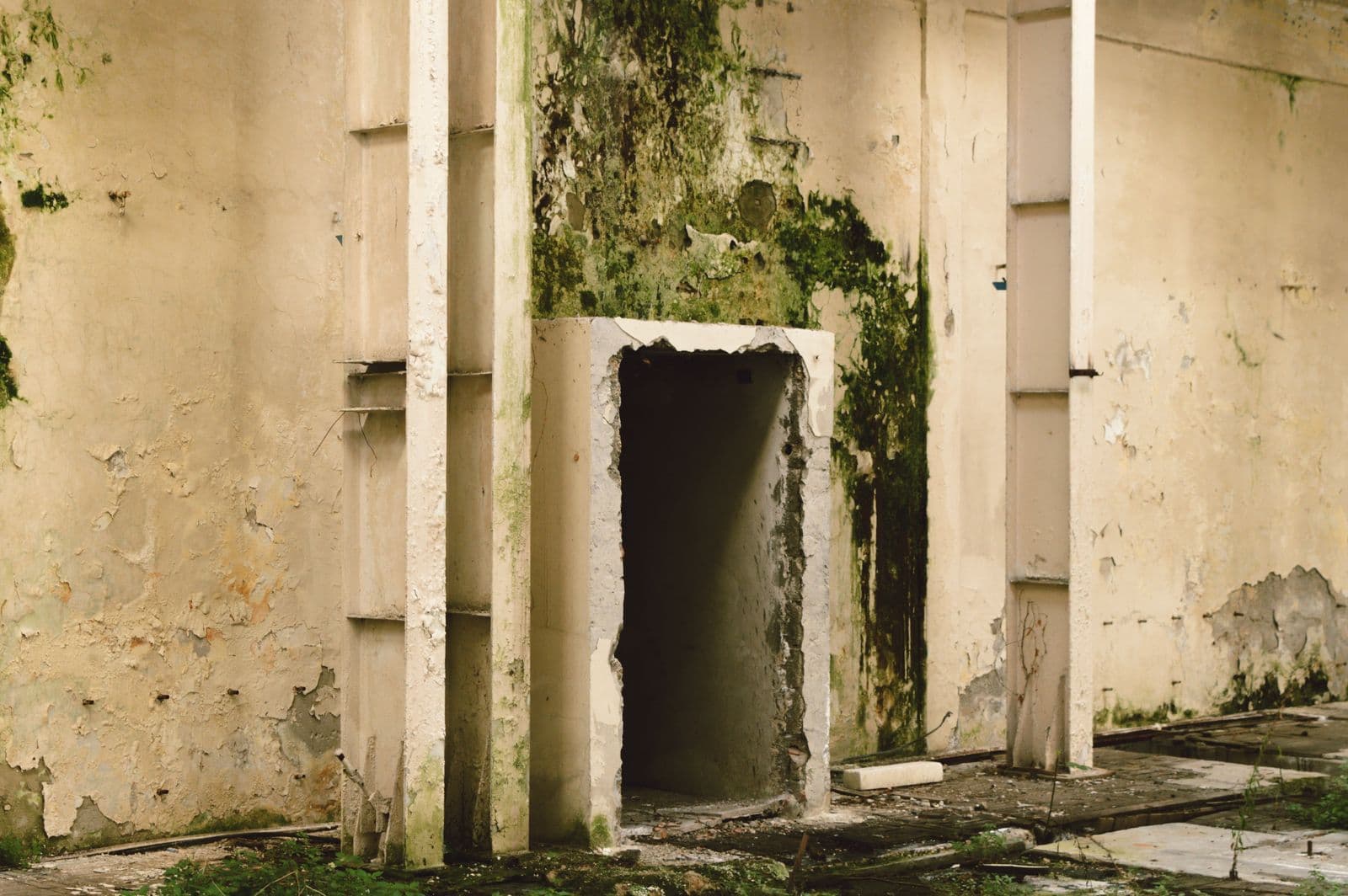
The white fuzzy patches on basement joists and stored boxes usually belong to the same families as the molds people fear — Aspergillus, Penicillium, Cladosporium — photographed earlier in their life cycle, before spore pigmentation darkens the colony. Dismissing it because it isn't black is like ignoring smoke because there are no flames yet.
The Three Look-Alikes
| It might be | Where | The tell |
|---|---|---|
| White mold | Wood, drywall, fabric, cardboard | Smears when wet, musty smell up close |
| Efflorescence | Concrete, block, brick only | Dissolves instantly under a water spray |
| Mildew | Surface films in bathrooms | Flat powdery film, wipes clean easily |
The water-spray test settles most cases in ten seconds. On a damp basement wall you can meet two at once — salts on the block, mold on the sill plate above it — both filed under one moisture problem.
Where It Grows and Why There
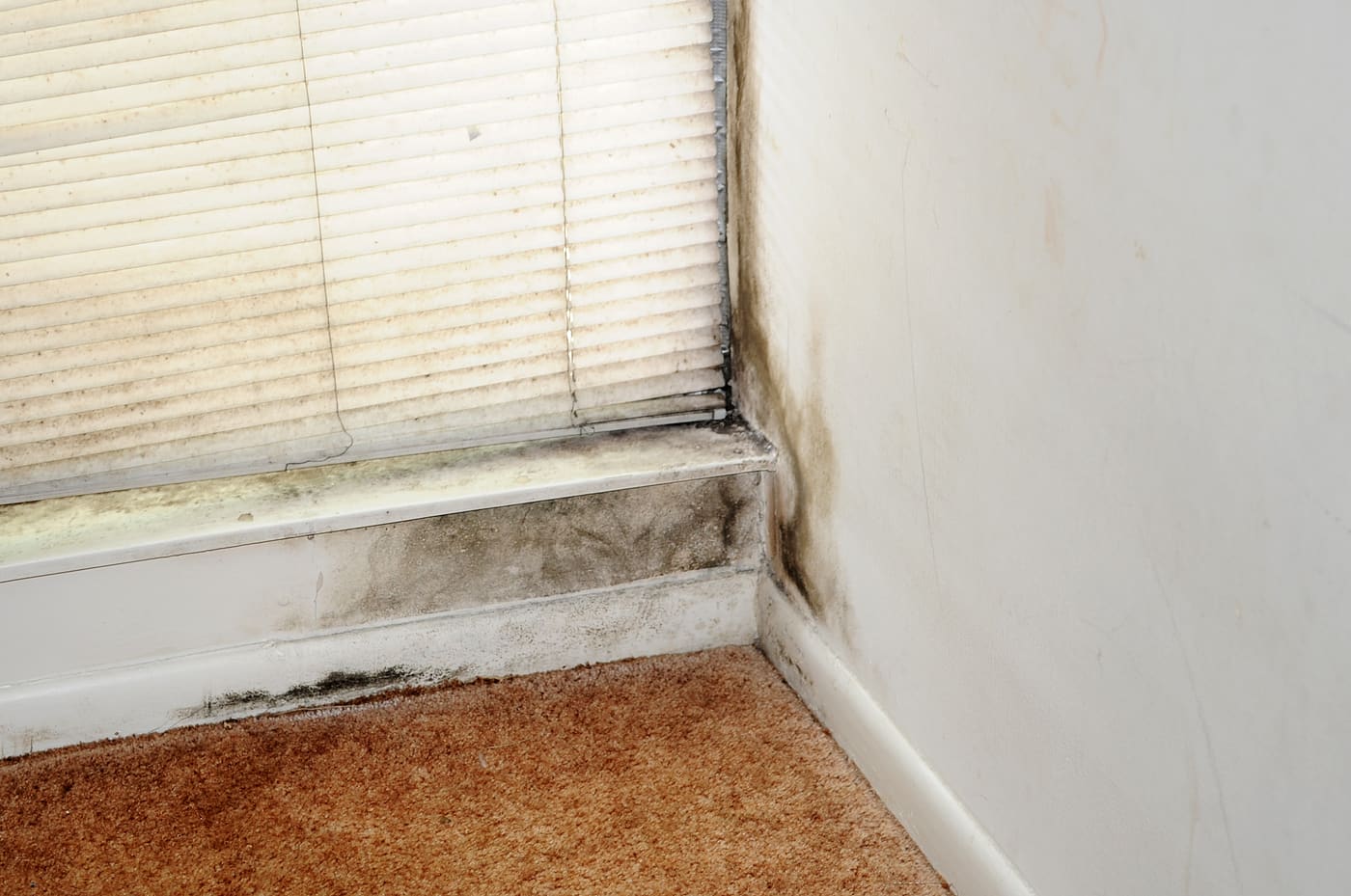
White mold maps the still, damp air in a house: basement joists over 55–60% humidity, crawl space subfloor above bare soil, closet walls that face the outdoors, boxes stored directly on concrete. Each location is a moisture mechanism — and fixing that mechanism is the difference between removal and rescheduling.
Removal That Sticks
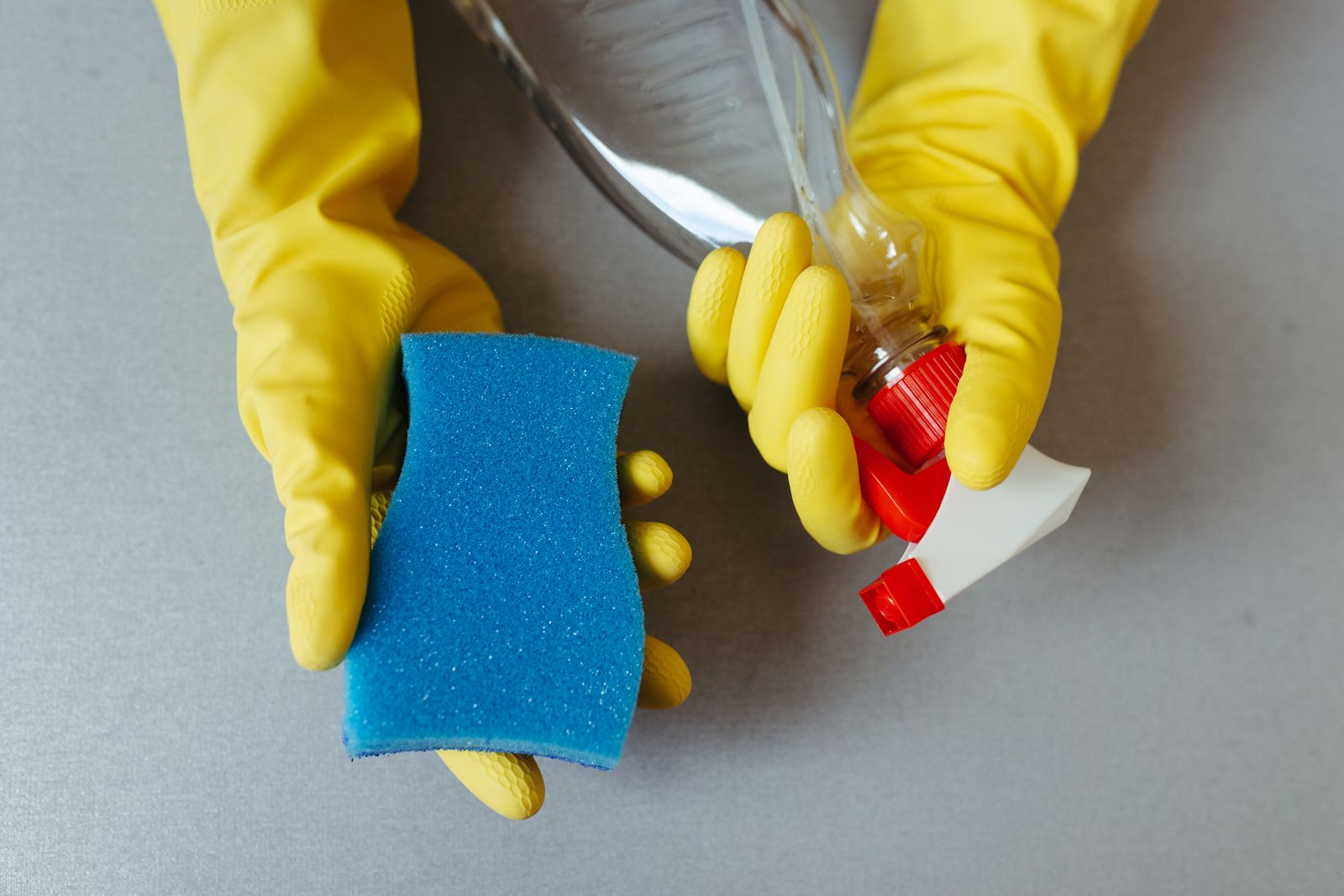
Small patches — under roughly 10 square feet on sound material — are a careful DIY job: N95, gloves, ventilation, a no-bleach mold cleaner, full drying, and then the real work of cutting the moisture source. Bleach stays on the shelf for porous surfaces: it whitens the stain, leaves the roots, and donates water to the colony.
Porous casualties — cardboard, carpet pad, heavily bloomed fabric — get bagged and replaced, not rehabilitated. And three situations skip DIY entirely: growth larger than a bath towel, anything inside HVAC, and post-flood growth, which is professional containment work.
Talk to a water damage pro now
Answered 24/7 · Toll-free · answered 24/7 · no obligation
(888) 840-6512- Describe the damage & give your ZIP
- You're routed to the on-call local crew
- They quote — you decide, no obligation
Keeping It Gone
Every recurrence is a moisture bill unpaid. Hold basements and crawl spaces under 50–55% RH with dehumidification, get storage up off concrete floors, give closets on exterior walls an air gap, and put a vapor barrier between soil and subfloor. White mold has no opinion about your cleaning products — only about your humidity.
Where White Mold Shows Up, and What It Is Telling You
| Location | Usual cause |
|---|---|
| Basement floor joists and the underside of the subfloor | Humidity above about 60% in still air; a dehumidifier problem, not a leak |
| Closets and cabinets on exterior walls | Cold wall surface, warm room air, no airflow — condensation |
| Under sinks, behind the toilet | A slow supply or drain leak |
| Stored cardboard, fabric, leather, books | Cardboard and fabric wick and hold moisture from the air |
| Attic sheathing, especially the north slope | Bath or dryer fans venting into the attic; blocked soffits (attic mold) |
| Crawl space joists | Bare soil and vented humid air (crawl space mold) |
| Furniture backs against exterior walls | Trapped cold pocket with no air movement |
The location is the diagnosis. White mold in a basement is a humidity number; in a closet it is a cold wall; under a sink it is a drip. Fixing the surface without the cause buys a few weeks.
Is White Mold Dangerous?
The same as any mold — the color is a stage of growth, not a species, and CDC's guidance does not distinguish. For most people exposure means irritation and allergy-type symptoms; for people with asthma, mold allergies or weakened immune systems it carries real risk, and they should stay out of the affected area until it is cleaned. Testing to find out "what kind" does not change the cleanup and, per EPA, is generally unnecessary when growth is visible; when a professional inspection is worth it covers the exceptions.
Two More Look-Alikes
Dry rot is a wood-destroying fungus that starts as white cottony strands and matures into a brown, cracked, crumbling wood surface; if the wood under the white growth is soft or cubed, it is structural and a contractor's problem, not a cleaning one. Powdery mildew on houseplants is a plant pathogen, not a building mold — it lives on leaves, not walls, and does not spread to the house.
Keeping the Humidity Number
White mold is the clearest humidity signal a house gives. Measure it: a $15 hygrometer in the basement and one in the worst closet. Basements and crawl spaces at or below 50% relative humidity do not grow it (why 50% and not 60%); closets on exterior walls need the door cracked and the contents off the wall; stored goods go in plastic bins on shelving, not cardboard on concrete. Where the number will not come down with a portable dehumidifier, the source is water entering — basement leaks or crawl space moisture — and that is the fix.
Reading to confirm what you already suspect?
Confirm it in two minutes instead — the pro on this line answers questions about YOUR situation all day: what it is, what it should cost, whether you even need service. If you want, they'll set the appointment on the same call.
Toll-free · no obligation · asking costs nothing
Frequently Asked Questions
What is the white mold growing in my house?
Usually Aspergillus, Penicillium, or Cladosporium species in early growth, before spore pigmentation darkens the colony — white mold is often young mold.
On basement joists and crawl space wood it appears as white fuzzy or powdery patches; on stored fabric and boxes as a gray-white bloom. It's the same organism family as darker molds, at an earlier and more treatable stage.
Is white mold dangerous?
It carries the same allergy and respiratory irritant profile as other molds — problematic for asthma, allergies, and immune-compromised households.
It won't dissolve your framing overnight, but sustained growth on joists holds moisture against wood and expands. Treat it as a moisture alarm with a health footnote, not a cosmetic issue.
How do I tell white mold from efflorescence?
Spray a little water on it. Efflorescence — mineral salts on concrete, brick, or block — dissolves and disappears; mold smears, stays, and often smells musty up close.
Location helps too: efflorescence lives on masonry; white mold prefers wood, drywall, fabric, and cardboard. On a basement wall they can co-exist, because both are fed by the same moisture.
How do I remove white mold?
Small patches (under ~10 sq ft) on sound surfaces: N95 and gloves, a no-bleach mold cleaner, dry the area fully, and fix the moisture source — without that last step it returns on schedule.
Porous items like cardboard and carpet pad get discarded, not cleaned. Larger areas, HVAC involvement, or post-flood growth are professional territory with containment.
Why does white mold keep coming back?
Because the moisture that grew it is still there. White mold on joists means crawl space or basement humidity above ~55–60%; in closets it means condensation on cold exterior walls; on stored goods it means still, damp air.
The permanent fix is always moisture arithmetic: barrier or drainage below, dehumidification in the air, airflow in dead corners.
Who do I call right now for water damage?
Call (888) 840-6512. The line is answered 24 hours a day, seven days a week, and connects you with an IICRC-certified water damage restoration company that serves your area. Describe what you can see — where the water is coming from, how long it has been there, and whether it smells — the more specific you are, the faster the right company is on the line.
If the source is a pipe or an appliance, shut the main water valve first. Have four things ready and the call goes quickly: the address, when the water started, what is wet now, and whether you have filed an insurance claim.
Need it handled now?
Mold Remediation — 24/7 Certified Crews
Bigger than a bath towel, in HVAC, or back for the third time? Containment-grade remediation ends the cycle.
Sources
- CDC — Mold and Health(retrieved 2026-08-13)
- EPA — Mold Cleanup in Your Home(retrieved 2026-08-13)
- IICRC S520 — Mold Remediation(retrieved 2026-08-13)
Methodology: How we source and verify data · Report an error
Disclaimer: HearthDry is an independent educational resource. This article is for informational purposes only and does not constitute professional, legal, or insurance advice. Consult licensed professionals before making decisions about your property or insurance claims.
Professional Equipment
The Right Cleaner Beats the Strong Cleaner
No-bleach mold products kill roots on porous surfaces instead of bleaching stains over them — and during any scrubbing, a HEPA air scrubber keeps disturbed spores out of the rest of the house.
Affiliate link — HearthDry earns a commission from Sylvane via CJ at no extra cost to you
Free 2-day shipping
Amazon Prime members pay no shipping on restoration equipment
Dehumidifiers, air movers, and moisture meters qualify for free Prime delivery — bulk items that otherwise cost $15–$40 to ship.
Affiliate link — HearthDry earns a bounty if you sign up; costs you nothing extra.
Equipment
What each machine actually does
Removes the moisture the structure is still giving off — the machine that decides how long drying takes
See the picks →Moves air across wet surfaces so the dehumidifier has something to take out of the air
See the picks →Finds water behind walls and under floors, and tells you when a material is actually dry
See the picks →Alerts you the moment a leak starts — the cheapest thing on this list and the only preventive one
See the picks →Those pages carry affiliate links. As an Amazon Associate, HearthDry earns from qualifying purchases; it costs you nothing extra.
Our Amazon storefront →Advertisement
