Best Small Dehumidifier in 2026 — Thermoelectric Minis vs a Small Compressor, by the Capacity Each Listing States

Best Small Dehumidifier in 2026

Thermoelectric Minis vs a Small Compressor, by the Capacity Each Listing States

5 picks compared · prices, ratings and stock checked October 12, 2026

Our Top Pick

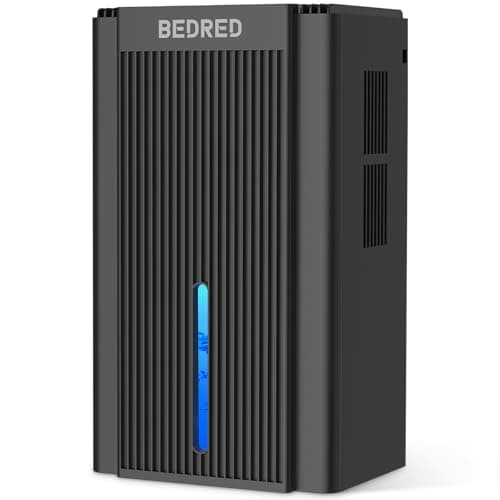
For a small, mildly damp room, the BEDRED 95 oz Dehumidifier: a thermoelectric unit with a sleep mode and a tank that switches it off when full. For a room that stays damp, the Kesnos 30 Pint compressor unit removes pints rather than ounces and drains by hose.

4.3 on Amazon · 4,534 ratings

Quick answer

For a bedroom, bathroom or closet that is only a little damp, buy a thermoelectric mini such as the BEDRED 95 oz Dehumidifier, rated 4.3 stars across 4,534 Amazon ratings; for a room that stays above 60% humidity, skip the minis and buy a small compressor unit like the Kesnos 30 Pint. The gap is large. The minis here that state a figure list 11 to 24 oz a day at 86°F and 80% RH, while the Kesnos states 30 pints, or 480 oz, at 95°F and 90% RH. No mini can dry a damp basement.

Our Picks at a Glance

Available picks first — 4 of 5 in stock at our last check — ratings and stock read from Amazon on 12 October 2026.

Best Overall
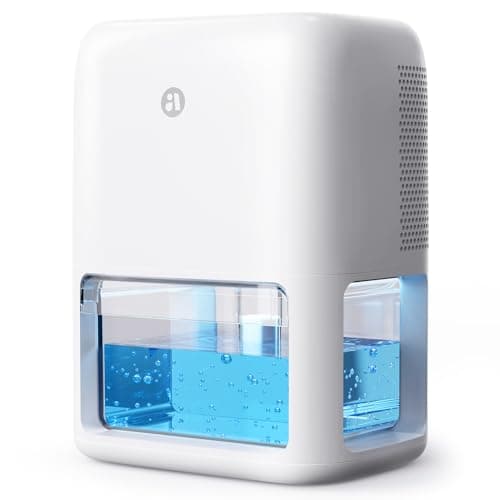
BEDRED 95 oz Thermoelectric Dehumidifier (Sleep Mode, Auto Shut-Off, 7-Color Light)
4.3 from 4,534 Amazon ratings · checked 12 Oct

Out of stock at our last check — the link still works if it returns.

Best for: A bedroom, home office or bathroom that runs a little damp, where a quiet unit with a big tank matters more than raw capacity

Type:
Thermoelectric (semiconductor), per the listing
Tank:
95 oz; the unit shuts off when it is full

Listing verified 12 Oct 2026

How this page was made: we compare the current Amazon listings, the makers' published specs and what verified buyers report, then rank by fit for the job. Ratings, review counts and stock are read from Amazon and dated. We earn a commission on purchases through our links; it does not change the order. Reviewed by Marcus Reed, IICRC-certified Water Restoration Technician.

Full Reviews

Each pick in detail: what the listing states, what buyers report, and where it falls short.

#1
Best Overall

Check price

on Amazon ↗

Listing verified 12 Oct 2026

BEDRED 95 oz Thermoelectric Dehumidifier (Sleep Mode, Auto Shut-Off, 7-Color Light)See it on Amazon ↗

Quick Verdict

BEDRED 95 oz Dehumidifier: a thermoelectric mini with a large tank, auto shut-off and sleep mode, bought on its buyer record rather than its specs.

Key Specs

Type

Thermoelectric (semiconductor), per the listing

Tank

95 oz; the unit shuts off when it is full

Daily removal

Not stated on the listing

Noise

Sleep mode turns the lights off and lowers the noise; no decibel figure given

Room size

No square-foot figure stated

Lighting

7-color ambient light

Pros

  • The longest buyer record among the electric minis on this page
  • A large tank for a mini, so fewer trips to the sink
  • Shuts itself off when the tank is full, so it cannot overflow onto a bedroom floor
  • Sleep mode switches the lights off, which matters more in a bedroom than the color options do

Cons

  • No daily removal figure, no decibel number and no room size on the listing, so you buy it on buyer reports rather than specs
  • Like every thermoelectric unit, it removes ounces a day, not pints
  • No drain hose is mentioned, so the tank is emptied by hand

Suited to

A bedroom, home office or bathroom that runs a little damp, where a quiet unit with a big tank matters more than raw capacity

Our take

The BEDRED earns the top spot on buyer evidence, not on paper. Its listing describes a thermoelectric unit with a 95 oz tank, auto shut-off and a sleep mode, and stops there: no daily removal rate, no test conditions, no decibel figure, no room size. That gap matters less than it sounds, because thermoelectric units sit in a narrow band. The two minis on this page that do state a figure list 11 oz and about 24 oz a day, both at 86°F and 80% relative humidity, which is hotter and wetter than most bedrooms. Plan on a figure in that range, not pints, and set it up to succeed: door closed, a hygrometer on the far wall, and a check after a week.

Check today's price on Amazon →

Affiliate link — commission at no extra cost to you

Compare elsewhere

These open a search for this model. We quote prices only where we can verify them — Amazon, Sylvane and eBay.

#2
Highest Stated Output for a Mini

Check price

on Amazon ↗

Listing verified 13 Oct 2026

BREEZOME 60 oz Dual-Semiconductor Mini Dehumidifier (700 ml/day at 86°F/80% RH, 48 W)See it on Amazon ↗

Quick Verdict

BREEZOME 60 oz Dual-Semiconductor: about 24 oz a day at 86°F and 80% RH, the highest stated figure among these minis, at 48 W.

Key Specs

Type

Thermoelectric with two semiconductor chips

Daily removal (stated)

Up to 700 ml, about 24 oz, at 86°F and 80% RH

Tank

1.8 L (60 oz); shuts off with a red light when full

Power (stated)

48 W; 1.15 kWh over 24 hours

Noise (stated)

35 dB in sleep mode

Timer

12, 24, 36 or 48 hours

Pros

  • States the highest daily removal of the minis here, with the test temperature and humidity named
  • Two chips instead of one, which is where the extra output comes from
  • Gives its own energy use, so the running cost can be worked out at your electric rate
  • A timer lets it run only while the room is empty

Cons

  • Its sleep-mode figure, 35 dB, is higher than the under-30 dB claims on some other minis
  • 700 ml a day is still only about 1.5 pints, and less in a cooler room
  • No drain hose, so the tank is emptied by hand

Suited to

A bathroom, laundry nook or small bedroom where you want the most water a mini states it can remove

Our take

This is the mini to buy if you want the most water a thermoelectric unit claims on paper. Two semiconductor chips give it a listed 700 ml a day, about 24 oz, at 86°F and 80% RH, roughly double the 11 oz the TABYIK lists under the same conditions. Keep those conditions in mind. Hot, saturated test air is where these units do best; at 70°F and 55% the same machine collects noticeably less, because there is less water in the air to catch. The listing also gives its power draw, 48 W and 1.15 kWh per 24 hours, which makes it one of the few minis whose running cost you can check against your electric bill before you buy.

Check today's price on Amazon →

Affiliate link — commission at no extra cost to you

#3
Best for a Closet or Bathroom Shelf

Check price

on Amazon ↗

Listing verified 13 Oct 2026

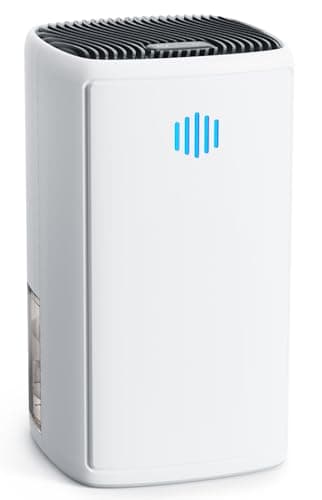
TABYIK 38 oz Small Dehumidifier (11 oz/day at 86°F/80% RH, Under 30 dB)See it on Amazon ↗

Best for a Closet or Bathroom Shelf

TABYIK 38 oz Small Dehumidifier (11 oz/day at 86°F/80% RH, Under 30 dB)

4.4(186 reviews)

Quick Verdict

TABYIK 38 oz Small Dehumidifier: 11 oz a day at stated conditions in a 5.91 in square body, made for closets and small bathrooms.

Key Specs

Type

Thermoelectric (semiconductor)

Daily removal (stated)

11 oz per 24 hours at 86°F and 80% RH

Tank

38 oz; auto shut-off with a flashing red light

Noise (stated)

Below 30 dB

Size

5.91 x 5.91 x 11.42 in

Defrost

Auto-defrost listed

Pros

  • States both a removal rate and the conditions behind it
  • A 5.91 in square base fits a bathroom shelf, a closet floor or a nightstand
  • Listed below 30 dB
  • Auto-defrost, useful in a cool closet or bathroom in winter

Cons

  • At 11 oz a day it suits a closet or small bathroom more than a full bedroom
  • The back outlet needs open space, so it cannot be pushed flat against a wall
  • No drain hose; the tank comes out to be emptied

Suited to

A reach-in or walk-in closet, a small bathroom or a laundry nook with the door kept shut

Our take

The TABYIK is the honest benchmark on this page. It states 11 oz of water in 24 hours at 86°F and 80% relative humidity, names both conditions, and gives its size, 5.91 inches square by 11.42 inches tall, so you know before buying what it is and where it fits. Do the arithmetic: 11 oz is about two-thirds of a pint, so the 38 oz tank takes three to four days to fill at the test conditions and longer in a cooler room. That makes it right for a closet, a small bathroom or a laundry nook with the door shut, and too small for an open-plan room. Keep its top inlet and back outlet clear, as the listing asks.

Check today's price on Amazon →

Affiliate link — commission at no extra cost to you

#4
Best With No Outlet

Check price

on Amazon ↗

Listing verified 13 Oct 2026

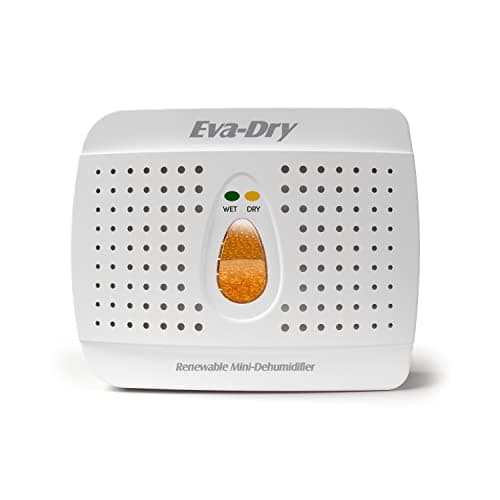
Eva-Dry E-333 Wireless Mini Dehumidifier (Renewable Silica Gel, Up to 333 Cu Ft)See it on Amazon ↗

Quick Verdict

Eva-Dry E-333: a cordless, renewable silica gel absorber for up to 333 cubic feet, for closets and cabinets, not rooms.

Key Specs

Type

Silica gel absorber; no fan

Space (stated)

Up to 333 cubic feet

Absorbs (stated)

Up to 6 oz before recharging

Recharge interval (stated)

Every 20 to 30 days

Power

None while absorbing; renewable and rechargeable

Placement

Hangs or stands

Pros

  • Needs no outlet while it works, so it can hang in a closet, cabinet or gun safe
  • Renewable: the silica gel is recharged and reused rather than thrown away
  • Silent, since there is no fan
  • Spill-free, with no tank to empty

Cons

  • Holds only up to 6 oz over a cycle of weeks, so it cannot dry an open room
  • Rated for 333 cubic feet, which is closet-sized, not bedroom-sized
  • Needs a recharge every few weeks, and sooner in a humid month

Suited to

Closets, cabinets, safes and storage bins where there is no outlet and the air barely moves

Our take

The Eva-Dry is not a smaller electric dehumidifier; it is a silica gel absorber, and its listing is clear about scale. It works in up to 333 cubic feet, holds up to 6 oz of moisture, and lasts 20 to 30 days before you recharge the beads. Convert the space: 333 cubic feet is a closet about 6 by 7 feet with an 8 ft ceiling. A 10 by 12 ft bedroom with the same ceiling is 960 cubic feet, almost three times its rating. That is why it belongs in closets, cabinets, safes and storage boxes, where the air hardly changes, and why it does nothing useful in an open room.

Check today's price on Amazon →

Affiliate link — commission at no extra cost to you

#5
Best Step-Up: Small Compressor Unit

Check price

on Amazon ↗

Listing verified 13 Oct 2026

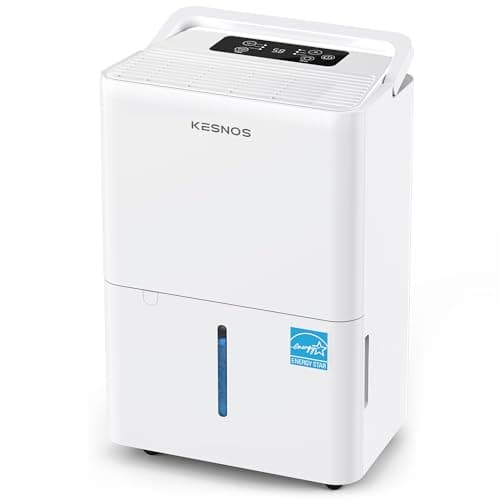
Kesnos 30 Pint ENERGY STAR Compressor Dehumidifier (2,500 Sq Ft, 36 dB, Drain Hose Included)See it on Amazon ↗

Quick Verdict

Kesnos 30 Pint: a compact compressor unit stated at 30 pints a day at 95°F and 90% RH, with a drain hose, for rooms a mini cannot dry.

Key Specs

Type

Compressor

Capacity (stated)

Up to 30 pints/day at 95°F and 90% RH

Size

11.02 x 7.68 x 15.20 in, on 360-degree casters

Drainage

0.39 gal tank with auto stop, or the included 3.3 ft drain hose

Humidity range (stated)

Down to 30% RH

Noise (stated)

36 dB

Pros

  • Removes pints, not ounces: the right tool when a room stays above 60% for days
  • Compact for a compressor unit, at about 11 by 8 by 15 inches, and it rolls on casters
  • Drain hose included, so it can run without anyone emptying a tank
  • Names its test conditions, 95°F and 90% RH

Cons

  • The tank holds about 50 oz, which fills in under 3 hours at the stated rate, so plan on the hose
  • A compressor cycles on and off, and its hum is a different sound from a mini's fan
  • Heavier and bulkier than any mini here; its weight is not stated on the listing

Suited to

A bedroom, basement room or apartment that stays above 60% humidity even with a mini running

Our take

This is what to buy when a mini is not enough. The Kesnos is a compressor unit, and its listing states up to 30 pints a day at 95°F and 90% RH: about 480 oz, against the 11 to 24 oz the minis here list at 86°F and 80%. The conditions differ, so the gap is not exact, but it is the difference between a closet helper and a machine that can pull a damp room down into the EPA's 30% to 50% range. The catch is the water. Its 0.39-gallon tank holds about 50 oz, so at full output it fills within hours; run the included 3.3 ft hose to a floor drain or tub. Cold rooms are the other limit, since ENERGY STAR notes frost can form on coils below 65 degrees.

Check today's price on Amazon →

Affiliate link — commission at no extra cost to you

Buyer's Guide

What to know before you buy.

Thermoelectric, Absorber or Compressor: Three Machines Sold as Small

Three different machines get sold as small dehumidifiers. A thermoelectric, or Peltier, mini uses a chip that turns cold on one side, so moisture condenses on it while a small fan moves air across; it is light and quiet and removes ounces a day. A silica gel absorber such as the Eva-Dry has no fan at all and soaks up moisture until it is recharged. A small compressor unit works like a refrigerator, with a coil cooled by refrigerant, and removes pints a day, but it weighs more and makes a compressor's hum. The right one depends on the space more than the label. A closed closet or cabinet suits an absorber, a mildly damp bedroom or bathroom suits a mini, and any room that stays above 60% humidity needs a compressor.

Read the Capacity, Then Read the Conditions

Every capacity figure comes with a test condition, and the condition moves the number a lot. The minis here are rated at 86°F and 80% relative humidity, which is hot, sticky air with plenty of water to catch. The Kesnos compressor is rated at 95°F and 90%, hotter and wetter still. A typical bedroom sits closer to 70°F to 75°F and 55% to 65%, and every unit collects less water there than its listing says. When a listing gives no figure at all, as the BEDRED's does, compare tank size and buyer reports instead. Keep the units straight too: a pint is 16 fluid ounces, so a 30-pint machine is rated for about 480 oz a day, roughly 20 times what the highest-output mini here states.

Sizing: Square Feet on a Mini Box Mean Little

Square-foot claims on mini dehumidifier listings swing widely: similar thermoelectric units read on 12 Oct 2026 claimed anywhere from 215 to 1,000 sq ft, for machines that state a few ounces a day. Size by results instead. Close the door, put a hygrometer on the far side of the room from the unit, and give it a week. If the room settles between 30% and 50%, the EPA's ideal range, the mini fits. If it still reads above 60%, the room has more moisture coming in than any mini can take out, and the step up is a compressor unit. ENERGY STAR's own sizing advice leans the same way: it is better to oversize than undersize. A bigger machine that reaches the target and switches off beats a small one that runs all day and never gets there.

What a Mini Cannot Do

A mini will not dry a damp basement, a crawl space, a room over a wet crawl space, or anything after a leak or a flood. Those spaces take in moisture all day from soil, concrete and wet materials, and a unit rated for ounces falls behind by the first afternoon. Minis also slow down in cold air, which is why several listings add auto-defrost, and a basement in winter is exactly where that bites. If you can see water, smell a musty odor that keeps returning, or find mold spreading past a small patch, fix the water source first. Mold covering more than about 10 square feet is past what the EPA treats as a homeowner cleanup, and wet building materials need professional drying with equipment sized for the job.

Where to Put a Small Dehumidifier

Placement decides how much a small unit can do. Close the door to the room, because a mini cannot keep up with damp air flowing in from the rest of the house; ENERGY STAR gives the same advice for any dehumidifier. Set it on a hard, level surface near the source of the damp, such as the shower side of a bathroom or the exterior wall of a closet, and not tucked behind furniture. Leave the vents open. The TABYIK listing, for one, asks for a clear top inlet and back outlet. Keep it away from dust and lint, which ENERGY STAR says can clog coils and grills, and wipe the intake when you empty the tank. An absorber like the Eva-Dry can hang from a closet rod, where no cord has to reach.

Running Cost and Noise

A mini's running cost is easy to work out when the listing gives its power use. The BREEZOME states 1.15 kWh over 24 hours, so multiply that by your rate per kWh for a day, then by 30 for a month. A compressor unit draws more power per hour but removes far more water for each kWh it uses. ENERGY STAR says certified dehumidifiers are 20% more efficient than non-certified models; the Kesnos listing claims certification, and none of the minis here does. On noise, a mini has only a small fan, while a compressor adds a hum and a click each time it cycles. None of the picks here states the distance at which its decibel figure was measured, so read those numbers as a rough ranking rather than a promise.

Frequently Asked Questions

Do mini dehumidifiers actually work?

YesIn a small closed space with mild dampness, and no in a basement or a wet room.

Thermoelectric minis state ounces a day, such as 11 oz for the TABYIK at 86°F and 80% RH, which can hold a closet, small bathroom or shut bedroom near the EPA's 30% to 50% range. They cannot pull down a room that keeps getting new moisture from soil, a leak or a crowded household.

What size dehumidifier do I need for a small room?

A thermoelectric mini is enough for a small room that is only slightly damp, and a compressor unit is the answer for one that stays above 60% humidity. Test before you upgrade: run the mini for a week with the door shut and a hygrometer across the room.

If the reading will not settle under 50%, a compact compressor such as the Kesnos 30 Pint is the right size, and ENERGY STAR advises erring on the larger side.

Can a small dehumidifier dry a basement?

Not a mini. Basements take in moisture from soil and concrete all day, and a thermoelectric unit that states ounces a day falls behind almost at once.

A compact compressor unit can handle a small, finished basement room with the door shut, but an open or damp basement needs a full-size unit with a drain hose. Standing water or a leak has to be fixed before any dehumidifier can keep up.

Is a thermoelectric or compressor dehumidifier better for a small room?

Thermoelectric is better for quiet, light-duty use, and compressor is better for real drying. A thermoelectric mini is lighter, has only a fan to make noise and suits a closet or a mildly damp bedroom.

A compressor unit removes pints instead of ounces and reaches a target humidity in a damp room, at the cost of more weight, a hum when it runs and a drop in output below about 65 degrees.

How much electricity does a small dehumidifier use?

A thermoelectric mini uses about as much as an old 40 to 60 W light bulb left on. The BREEZOME lists 48 W and 1.15 kWh over 24 hours, so a month of nonstop running is about 35 kWh.

A compressor unit uses more per hour but removes far more water per kWh, which is why it costs less per ounce of water removed once a room is genuinely damp.

How often do you empty a small dehumidifier?

Every two to four days in humid weather, depending on the tank and the room. At its stated 11 oz a day, the TABYIK's 38 oz tank lasts about three and a half days, and at 700 ml a day the BREEZOME's 1.8 L tank lasts about two and a half.

Both shut off when full. A compressor unit fills its tank within hours, so run its drain hose instead.

Who do I call right now for water damage?

Call (888) 840-6512. The line is answered 24 hours a day, seven days a week, and connects you with an IICRC-certified water damage restoration company that serves your area. A recorded menu picks up first: choose water damage or mold, key in your 5-digit ZIP code, and hold through the short silence while the call is passed to the company.

Describe what you can see — where the water is coming from, how long it has been there, and whether it smells — the more specific you are, the faster the right company is on the line. If the source is a pipe or an appliance, shut the main water valve first. Have four things ready and the call goes quickly: the address, when the water started, what is wet now, and whether you have filed an insurance claim.

Still not sure which of these is your situation? (888) 840-6512 · toll-free · answered 24/7

Sources

  1. EPA — A Brief Guide to Mold, Moisture, and Your Home
  2. ENERGY STAR — Dehumidifiers

Methodology: How we source and verify data · Report an error

How we chose these picks

  • Every pick is a current listing. Stock, star ratings and rating counts are read from Amazon by script and carry the date they were read.
  • Nothing under 4.0 stars makes the list, and the top pick needs a large rating count, so one good week of reviews cannot put it there.
  • Specs are quoted from the listing or the maker, with the test condition behind the number where there is one, and sized against the job rather than the room on the box.
  • We do not run lab or field tests. Where a spec matters, we say what it is measured under and what it cannot tell you.

Free 2-day shipping

Amazon Prime members pay no shipping on restoration equipment

Dehumidifiers, air movers, and moisture meters qualify for free Prime delivery — bulk items that otherwise cost $15–$40 to ship.

Try Prime free →

Affiliate link — HearthDry earns a bounty if you sign up; costs you nothing extra.

Also Worth Comparing

Best Dehumidifier for a Bedroom or Apartment in 2026 — Quiet Small-Room Units Compared

A bedroom dehumidifier has to be quiet enough to sleep beside, and five of the six picks here are thermoelectric units that remove ounces of water a day rather than pints. That is enough for a stuffy bedroom, closet or studio apartment; for a room with wet windows every morning, the sixth pick is a small compressor unit rated in pints.

Read the comparison

Best Dehumidifier for a Closet in 2026 — Hanging Absorbers, Mini Units and a Compressor for Damp Walk-Ins

A closed closet trades very little air with the rest of the house, so a hanging absorber or a mini dehumidifier can keep up with it where it could never dry a room. The picks here are sorted by the closet you have: no outlet, an outlet, or a walk-in beside a damp wall or a bathroom.

Read the comparison

Best Dehumidifier for a Bathroom in 2026 — For Rooms With No Exhaust Fan or a Weak One

An exhaust fan ducted outdoors is the real fix for a steamy bathroom, and a plug-in dehumidifier is what you add when there is no fan or the one you have barely pulls. The units small enough for a bathroom remove ounces of water a day, so their job is drying the walls, ceiling and grout sooner after the steam clears, not clearing the steam.

Read the comparison

Best Dehumidifiers for Campers and RVs in 2026 — Matched to Shore Power, Battery and Storage

A camper packs cooking, showers and sleeping into a few hundred square feet of thin, often cold shell, which is why windows stream and cabinets smell musty. These five picks are matched to how the RV is used, from a compact compressor on shore power and a low-watt unit for battery and inverter to cordless and disposable absorbers for the months it sits in storage.

Read the comparison

Best Dehumidifier for Basement Use in 2026 — Drain Hose, Built-In Pump and Honest Pint Ratings

Most basement dehumidifier disappointment comes from two numbers nobody reads properly: the pint rating, measured at warm test conditions a 60°F basement never reaches, and the drainage method. Five units are compared here on those two points first, from a garden-hose drain to a built-in pump with a stated 15 ft lift.

Read the comparison