

Best Quiet Dehumidifier in 2026 — Ranked Only on the Decibel Figures the Listings State, Compressor and Thermoelectric

Best Quiet Dehumidifier in 2026

Ranked Only on the Decibel Figures the Listings State, Compressor and Thermoelectric

5 picks compared · prices, ratings and stock checked October 12, 2026

Our Top Pick

For a bedroom or living space that is actually damp, the Kesnos 30 Pint: a compressor unit stated at 36 dB, with a drain hose in the box. For a small room where silence matters more than drying power, the PSOS 98 oz thermoelectric unit, with a light-free sleep mode under 30 dBA.

4.5 on Amazon · 4,217 ratings

Quick answer

If you need a quiet dehumidifier that still dries a damp room, buy the Kesnos 30 Pint, a compressor unit whose listing states 36 dB and up to 30 pints a day at 95°F and 90% RH. For a small, slightly damp bedroom, the PSOS 98 oz thermoelectric unit lists a sleep mode under 30 dBA, but it removes ounces, not pints. Every 10 dB step sounds roughly twice as loud, and none of these listings says how far from the unit its figure was measured, so treat the numbers as a ranking, not a promise.

Our Picks at a Glance

Every pick below is currently stocked — ratings and stock read from Amazon on 12 October 2026.

How this page was made: we compare the current Amazon listings, the makers' published specs and what verified buyers report, then rank by fit for the job. Ratings, review counts and stock are read from Amazon and dated. We earn a commission on purchases through our links; it does not change the order. Reviewed by Marcus Reed, IICRC-certified Water Restoration Technician.

Full Reviews

Each pick in detail: what the listing states, what buyers report, and where it falls short.

#1
Best Overall: Quietest Stated Compressor

Check price

on Amazon ↗

Listing verified 13 Oct 2026

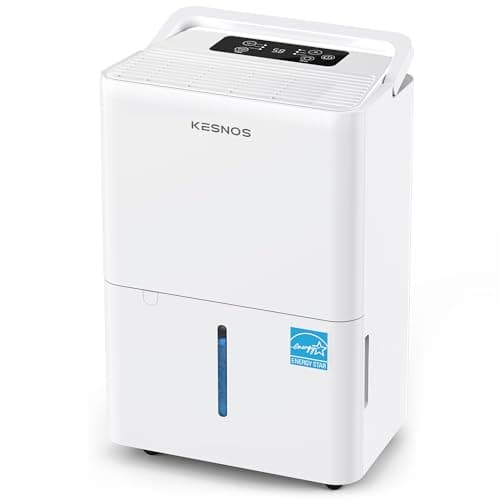
Kesnos 30 Pint ENERGY STAR Dehumidifier (36 dB, 2,500 Sq Ft, Drain Hose Included)See it on Amazon ↗

Best Overall: Quietest Stated Compressor

Kesnos 30 Pint ENERGY STAR Dehumidifier (36 dB, 2,500 Sq Ft, Drain Hose Included)

4.5(4,217 reviews)

Quick Verdict

Kesnos 30 Pint: a compressor unit stated at 36 dB that still removes up to 30 pints a day, the balance most damp bedrooms need.

Key Specs

Noise (stated)

36 dB; mode, fan speed and distance not given

Type

Compressor

Capacity (stated)

Up to 30 pints/day at 95°F and 90% RH

Modes

Comfort, Dry, Continuous and Turbo

Drainage

0.39 gal tank with auto stop; 3.3 ft drain hose included

Size

11.02 x 7.68 x 15.20 in; 360-degree casters

Pros

  • The lowest stated decibel figure among the compressor units here
  • Removes pints a day, so it can bring a genuinely damp bedroom down to target
  • Comfort mode is described for keeping a sleep environment, and the unit cycles against a set humidity
  • Casters make it easy to roll away from the bed at night

Cons

  • The 36 dB figure comes with no mode, fan speed or measuring distance
  • Compressor cycling adds a start-up click and hum that a thermoelectric unit does not make
  • A small tank makes the drain hose close to essential for overnight running

Suited to

A bedroom, apartment or finished basement room that is truly damp and where you also sleep or work

Our take

The Kesnos ranks first because it pairs the lowest decibel figure of any compressor listing here, 36 dB, with enough capacity to matter: up to 30 pints a day at 95°F and 90% RH. Thermoelectric units are quieter on paper, but they remove ounces, and a bedroom that is truly damp will outrun them. Read the 36 dB with care. The listing does not say which mode, fan speed or distance it applies to, and a compressor's sound changes when it kicks on, so expect a soft hum with a click at each start. Use Comfort mode at night and let it cycle against a target, roll it a few feet from the bed, and run the 3.3 ft hose so a full tank never stops it at 3 a.m.

Check today's price on Amazon →

Affiliate link — commission at no extra cost to you

Compare elsewhere

These open a search for this model. We quote prices only where we can verify them — Amazon, Sylvane and eBay.

#2
Quietest for a Small Bedroom

Check price

on Amazon ↗

Listing verified 13 Oct 2026

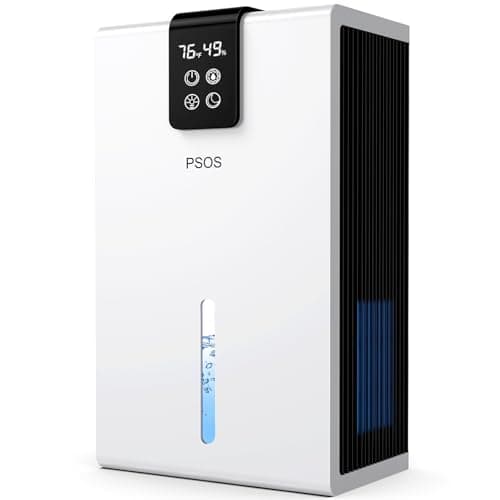
PSOS 98 oz Dual-Semiconductor Dehumidifier (Sleep Mode Under 30 dBA, Humidity Display)See it on Amazon ↗

Quick Verdict

PSOS 98 oz Dual-Semiconductor: under 30 dBA and light-free in sleep mode, for a small room that is only slightly damp.

Key Specs

Noise (stated)

Under 30 dBA in low-speed sleep mode

Type

Thermoelectric, two semiconductor chips

Daily removal

Not stated on the listing

Tank

98 oz; auto shut-off when full

Display

Humidity and temperature readout

Low temperature (stated)

Runs at down to 41°F, with auto defrost

Pros

  • The quietest stated figure on this page, and the only one given in dBA
  • Sleep mode turns the lights off as well as slowing the fan
  • A humidity readout on the unit shows whether the quiet setting is keeping up
  • No compressor, so no start-up click

Cons

  • No daily removal figure, and thermoelectric units remove ounces, not pints
  • Its 1,000 sq ft claim is hard to square with a machine of this type; treat it as a one-room unit
  • Sleep mode slows the fan, so it removes even less water at night

Suited to

A small bedroom or nursery that is only slightly damp, where silence and darkness matter most

Our take

If the noise itself is the problem, this is the quietest stated figure on the page: under 30 dBA in its low-speed sleep mode, and the listing uses dBA, the scale weighted toward how human ears hear. Sleep mode also switches the lights off, which is the other thing that keeps people awake. The trade is drying power. It is a thermoelectric unit, the listing gives no daily removal figure, and sleep mode slows the fan further. So use it the way it works best: run it in its powerful mode during the day with the door shut, drop to sleep mode at night, and read the built-in humidity display in the morning. If the room will not settle under 50%, it needs a compressor unit.

Check today's price on Amazon →

Affiliate link — commission at no extra cost to you

#3
Best for Sleeping Near a Large Unit

Check price

on Amazon ↗

Listing verified 13 Oct 2026

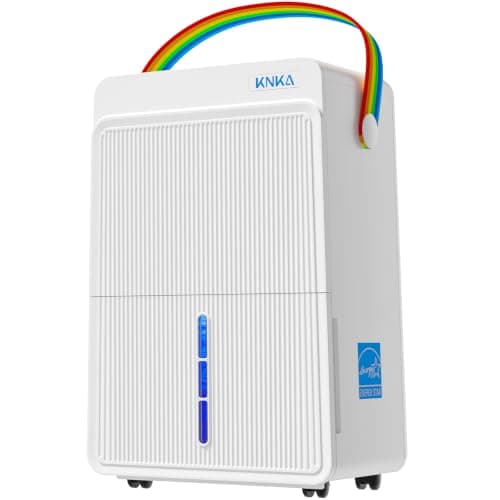
KNKA 80 Pint ENERGY STAR Dehumidifier (56 Pints/Day at 86°F/80% RH, 40–45 dB, Display Turns Off)See it on Amazon ↗

Quick Verdict

KNKA 80 Pint: 40 to 45 dB with a display that turns off and an AUTO mode that holds 50%, for big spaces people sleep in.

Key Specs

Noise (stated)

40–45 dB

Capacity (stated)

80 pints/day at 95°F and 95% RH; 56 pints/day at 86°F and 80% RH

Lights

Humidity display and indicator lights can be turned off

Modes

AUTO (holds 50% RH by default), DRY, and SETTING (30–80% RH)

Drainage

1.45 gal tank; 6.56 ft drain hose; optional 2.64 gal external tank sold separately

Coverage (stated)

Up to 5,500 sq ft

Pros

  • States capacity at 86°F and 80% RH as well as at 95°F, a milder and more useful condition
  • The display and indicator lights switch off for a dark bedroom
  • AUTO mode holds 50% by default, so it cycles off instead of running all night
  • Its 6.56 ft drain hose is twice the length of the 3.3 ft hoses on the Kesnos and Waykar

Cons

  • 40–45 dB is a range, and the listing does not say which setting gives which number
  • A large machine for a bedroom; it fits a basement suite or an open living area better
  • Has to stand upright for 24 hours before first use, per the listing

Suited to

A basement bedroom, guest suite or open living area that needs a big unit running while people sleep nearby

Our take

The KNKA is the pick for sleeping in the same space as a large unit. Two details on its listing matter for that. The humidity display and indicator lights can be switched off, so it does not light up a dark room, and AUTO mode holds 50% by default, so it stops when the air is dry instead of running all night. Its noise is stated as a range, 40 to 45 dB, which is fair to a machine whose fan and compressor change pitch, though it leaves out which setting gives which number. Capacity is stated at 86°F and 80% RH as well as at the usual 95°F, and 56 pints a day at that milder condition is plenty of headroom for a basement bedroom.

Check today's price on Amazon →

Affiliate link — commission at no extra cost to you

#4
Best Quiet Pick for a Large Damp Room

Check price

on Amazon ↗

Listing verified 13 Oct 2026

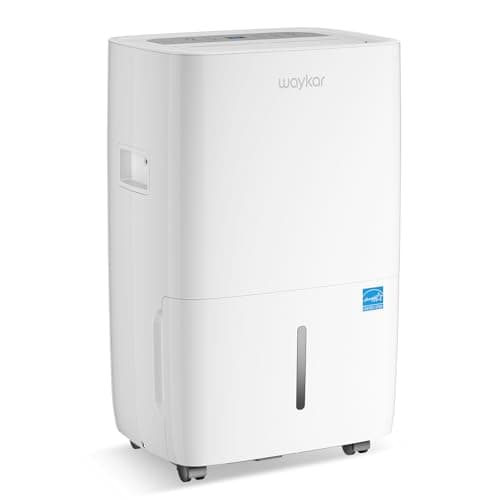
Waykar 80 Pint ENERGY STAR Dehumidifier (About 42 dB, 5,000 Sq Ft, Drain Hose Included)See it on Amazon ↗

Quick Verdict

Waykar 80 Pint: about 42 dB with 80 pints a day of capacity, so it dries a large room fast and then goes quiet.

Key Specs

Noise (stated)

About 42 dB

Capacity (stated)

80 pints/day at 95°F and 90% RH

Humidity range (stated)

30% to 80% RH

Airflow

90-degree auto swing louver

Drainage

4.3 L (1.14 gal) tank; 3.3 ft drain hose with a 3/4 in garden-hose connection

Timer

24 hours

Pros

  • One stated noise figure, about 42 dB, rather than a range
  • A 24-hour timer lets it run hard while the room is empty and stop before bedtime
  • Garden-hose connection for continuous drainage
  • Humidity can be set as low as 30%

Cons

  • The listing mentions no sleep mode and no way to dim the display
  • About 42 dB, with no fan speed or measuring distance given
  • Rated for up to 5,000 sq ft, far more machine than a single bedroom needs

Suited to

A finished basement, family room or large open space that is damp and lived in

Our take

The Waykar is here for a large damp space where you also spend time, such as a finished basement or a family room off the garage. Its listing gives one noise figure, about 42 dB, and pairs it with 80 pints a day at 95°F and 90% RH, so it can pull a big room down quickly and then shut off. That is the point of a large unit in a quiet setup: it reaches the target and stops, where a small machine runs flat out for hours. The listing does not mention a sleep mode, so use the 24-hour timer to run it through the day and evening, and set the target near 50% so it rests overnight.

Check today's price on Amazon →

Affiliate link — commission at no extra cost to you

#5
Clearest Noise Figure

Check price

on Amazon ↗

Listing verified 13 Oct 2026

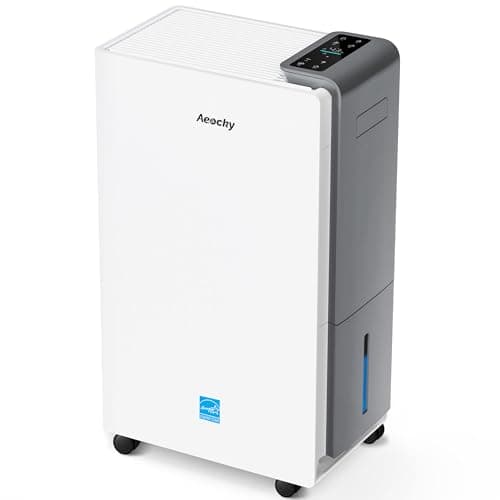
AEOCKY RHEA-001 80 Pint ENERGY STAR Most Efficient Dehumidifier (44 dB at Lowest Fan, 5,500 Sq Ft)See it on Amazon ↗

Quick Verdict

AEOCKY RHEA-001: 44 dB at its lowest fan, the one figure here tied to a fan speed, with 56 pints a day at 86°F and 80% RH.

Key Specs

Noise (stated)

44 dB at the lowest fan speed

Capacity (stated)

56 pints/day at 86°F and 80% RH; up to 80 pints/day at 95°F and 95% RH

Efficiency

ENERGY STAR Most Efficient 2025, per the listing

Compressor

Rotary, with copper tubing, per the listing

Coverage (stated)

Up to 5,500 sq ft

Low temperature

Defrost sensors for cool spaces, per the listing

Pros

  • The only listing here that says which fan speed its decibel figure belongs to
  • States capacity at 86°F and 80% RH, closer to real basement air than 95°F
  • Claims ENERGY STAR Most Efficient status, which matters for a machine that may run for months

Cons

  • 44 dB at the lowest fan is the highest stated figure on this page, and higher speeds will be louder
  • Tank size and drain hose details are not covered in its listing bullets
  • A big machine for a bedroom; it suits a basement living space better

Suited to

A basement rec room or bedroom where a big unit can run on its low fan and still remove plenty of water

Our take

AEOCKY is on this list for how clearly it states its noise, not for being the quietest. It is the only listing here that says which fan speed its figure belongs to: 44 dB at the lowest speed. That makes it the loudest stated figure on the page, yet it is the most useful kind of figure, because every other number here could have been measured at the quietest setting without saying so. Pair it with the capacity line, 56 pints a day at 86°F and 80% RH, and you have a large basement unit that can sit on its low fan and still remove a lot of water. Set the target, leave it on low, and keep it as far from the sleeping area as the room allows.

Check today's price on Amazon →

Affiliate link — commission at no extra cost to you

Buyer's Guide

What to know before you buy.

Compressor vs Thermoelectric: Where the Noise Comes From

A compressor dehumidifier makes two sounds: the fan, and the compressor's hum, which starts with a click and stops when the target humidity is reached. The fan speed is the part you control, which is why low-fan and sleep settings matter. A thermoelectric unit has no compressor at all, only a small fan moving air over a cooled chip, so its sound is a steady whisper with no start-up click. That is why the quietest stated figure on this page, under 30 dBA, belongs to a thermoelectric unit, and why the compressor units start at 36 dB. The catch is output. A thermoelectric unit removes ounces a day, a compressor unit removes pints, and a quiet machine that cannot keep the room dry has not solved anything.

How to Read a Decibel Figure on a Listing

Decibels are logarithmic, so small gaps matter: every 10 dB step sounds roughly twice as loud, which makes a 45 dB unit sound about twice as loud as a 35 dB one. The figures on these listings are the sellers' own, and none of the five picks says how far from the unit it was measured. Only the AEOCKY names the fan speed behind its number, and only the PSOS uses dBA, the scale weighted to human hearing. A range like the KNKA's 40 to 45 dB is fairer than a single number, because a dehumidifier's sound changes as the fan steps up and the compressor cycles. Read a listed figure as the quietest setting and expect higher fan speeds to be louder. A listing with no figure at all tells you nothing about noise.

Sleep Mode, Timers and Running at Night

A sleep mode usually means a slower fan and the lights off, and both cut the moisture removed overnight. That is fine if the room was dried during the day. The working pattern is to run the unit on its normal or high setting while the room is empty, with the door shut, then switch to sleep mode or let a humidity target take over at night. Set that target near 50%. The EPA's ideal range is 30% to 50%, and a compressor unit that reaches it shuts off and stays quiet until the air drifts up again. On a unit with no sleep mode, a timer does the same job. Check the lights as well as the sound: the KNKA's display turns off, and the PSOS sleep mode is light-free.

Placement: A Mat, a Gap and a Few Extra Feet

Where the unit sits changes how loud it sounds. On a hardwood or tile floor, a compressor's vibration passes into the floor and spreads, so stand it on a dense rubber or foam anti-vibration mat, the kind sold for washing machines. Keep it level, because a tilted unit rattles. Leave space around it: ENERGY STAR advises keeping a unit without top-mounted discharge away from walls and furniture, which also stops sound bouncing straight back off a nearby wall. Distance helps more than people expect. In open air, doubling your distance from a sound source cuts its level by about 6 dB, so a unit 8 feet from the bed sounds quieter than one at 4 feet, even though walls reflect some sound back. Keep it off hollow shelves and cabinets, which act like a drum.

Who Should Not Shop on Quiet Alone

Do not choose a dehumidifier on its noise figure alone if the room has a real moisture problem. A basement that takes in water after rain, a bedroom where mold keeps returning on a window sill, or a space that reads above 60% humidity for days needs capacity first; pick the quietest unit that can hold the target, then use placement and timing to deal with the sound. Thermoelectric units are the wrong choice there, however silent. Light sleepers in a room that is only slightly damp are better served by a thermoelectric unit, or by running a compressor unit during the day and switching it off at bedtime. If mold covers more than about 10 square feet, the EPA treats it as more than a routine homeowner cleanup, and no dehumidifier replaces fixing the water source.

Frequently Asked Questions

Are dehumidifiers loud?

Compressor dehumidifiers make a moderate hum, and thermoelectric units are close to silent. The compressor units on this page state 36 to 45 dB, while the thermoelectric PSOS lists under 30 dBA in sleep mode.

A compressor also clicks on and off as it cycles. Placement changes what you hear: a unit on a hard floor near a wall sounds louder than the same unit on a mat in open space.

Can I sleep with a dehumidifier on?

YesIf it is quiet enough for you and set up for the night.

Use a sleep mode, or a humidity target near 50% so a compressor unit shuts off once the room is dry, and turn off the display lights. Place it a few feet from the bed on a level mat. Empty the tank before bed or run a drain hose, so it does not stop partway through the night.

What is the quietest type of dehumidifier?

Thermoelectric, or Peltier, units are the quietest electric type, because they have no compressor, and silica gel absorbers make no sound at all. The PSOS on this page lists under 30 dBA in sleep mode.

Both types remove far less water than a compressor unit, so they suit a small, mildly damp room and not a basement or a room that stays above 60% humidity.

How many decibels is a quiet dehumidifier?

For a bedroom, aim for a listed figure under about 40 dB, which on this page only the Kesnos compressor unit, at 36 dB, and the PSOS thermoelectric unit, under 30 dBA, meet.

Treat any listed number as a best case, since none of these listings states the measuring distance and only one names the fan speed. Every 10 dB higher sounds about twice as loud.

Why is my dehumidifier so loud?

Usually because it sits on a hard or uneven floor, close to a wall, on high fan, or with a clogged filter. Put it on a level anti-vibration mat, pull it away from walls and furniture, and clean the filter and intake.

A rattle that starts suddenly can mean a loose panel or a failing fan, and a compressor that never shuts off may be undersized for the room or set to continuous mode.

Is it OK to run a dehumidifier all night?

YesAs long as it has auto shut-off or a drain hose and room to breathe.

Compressor units like the picks here are built to cycle on and off against a humidity target, so set one near 50% rather than leaving it in continuous mode, which can overdry the room. Keep the intake and outlet clear of bedding, curtains and furniture.

Who do I call right now for water damage?

Call (888) 840-6512. The line is answered 24 hours a day, seven days a week, and connects you with an IICRC-certified water damage restoration company that serves your area. A recorded menu picks up first: choose water damage or mold, key in your 5-digit ZIP code, and hold through the short silence while the call is passed to the company.

Describe what you can see — where the water is coming from, how long it has been there, and whether it smells — the more specific you are, the faster the right company is on the line. If the source is a pipe or an appliance, shut the main water valve first. Have four things ready and the call goes quickly: the address, when the water started, what is wet now, and whether you have filed an insurance claim.

Still not sure which of these is your situation? (888) 840-6512 · toll-free · answered 24/7

Sources

  1. EPA — A Brief Guide to Mold, Moisture, and Your Home
  2. ENERGY STAR — Dehumidifiers
  3. ENERGY STAR — Dehumidifier Testing and Capacity

Methodology: How we source and verify data · Report an error

How we chose these picks

  • Every pick is a current listing. Stock, star ratings and rating counts are read from Amazon by script and carry the date they were read.
  • Nothing under 4.0 stars makes the list, and the top pick needs a large rating count, so one good week of reviews cannot put it there.
  • Specs are quoted from the listing or the maker, with the test condition behind the number where there is one, and sized against the job rather than the room on the box.
  • We do not run lab or field tests. Where a spec matters, we say what it is measured under and what it cannot tell you.

Free 2-day shipping

Amazon Prime members pay no shipping on restoration equipment

Dehumidifiers, air movers, and moisture meters qualify for free Prime delivery — bulk items that otherwise cost $15–$40 to ship.

Try Prime free →

Affiliate link — HearthDry earns a bounty if you sign up; costs you nothing extra.

Also Worth Comparing

Best Dehumidifier for a Bedroom or Apartment in 2026 — Quiet Small-Room Units Compared

A bedroom dehumidifier has to be quiet enough to sleep beside, and five of the six picks here are thermoelectric units that remove ounces of water a day rather than pints. That is enough for a stuffy bedroom, closet or studio apartment; for a room with wet windows every morning, the sixth pick is a small compressor unit rated in pints.

Read the comparison

Best Dehumidifier for Home in 2026 — Sized by Room, Dampness and Drain

The right dehumidifier for a home depends on the size of the space and how damp it is, and the pint number on the box depends on which test produced it. These five picks run from a 22-pint single-room unit to an 80-pint machine for a whole basement, compared on the figures their listings actually state.

Read the comparison

Best Dehumidifier for Basement Use in 2026 — Drain Hose, Built-In Pump and Honest Pint Ratings

Most basement dehumidifier disappointment comes from two numbers nobody reads properly: the pint rating, measured at warm test conditions a 60°F basement never reaches, and the drainage method. Five units are compared here on those two points first, from a garden-hose drain to a built-in pump with a stated 15 ft lift.

Read the comparison

Best Hygrometers for Home in 2026 — Indoor Humidity Monitors That Tell You When a Room Is Too Damp

A hygrometer is the small, inexpensive instrument that tells you whether a room needs a dehumidifier, a humidifier or nothing at all. These picks are judged on the accuracy each listing states, how easily you can read them, and whether they can warn you about a damp basement before you smell it.

Read the comparison