
Written & reviewed by Marcus ReedIICRC WRT
Reviewed September 4, 2026· Next review Mar 2027
Quick answer
In an apartment, responsibility follows the moisture source: mold fed by building issues — roof or plumbing leaks, failed seals, structural dampness — falls under the landlord's habitability duty, and the LANDLORD arranges and pays for professional remediation. Your moves as the tenant: written notice with photos the same day, a reasonable deadline, and follow-up in writing. Mold from tenant-side habits (never running the bath fan, drying laundry indoors, blocked vents) can land on you. Property owners and landlords reading this: a certified mold call handles inspection through remediation with the documentation a habitability dispute demands.
Sound like your situation? Confirm it in one call instead of ten more minutes of reading — (888) 840-6512 · toll-free · no obligation
In a rental, mold from building problems — leaks, plumbing, poor ventilation design — is the landlord's to fix, through their contractor. Your job is fast written notice and documentation. Here's the exact sequence.
The Short Answer
In an apartment, responsibility follows the moisture source: mold fed by building issues — roof or plumbing leaks, failed seals, structural dampness — falls under the landlord's habitability duty, and the LANDLORD arranges and pays for professional remediation. Your moves as the tenant: written notice with photos the same day, a reasonable deadline, and follow-up in writing. Mold from tenant-side habits (never running the bath fan, drying laundry indoors, blocked vents) can land on you. Property owners and landlords reading this: a certified mold call handles inspection through remediation with the documentation a habitability dispute demands.
What This Page Covers
Renters: who is legally responsible for mold in an apartment, how to report it so the landlord must act, what to document, and when the landlord's restoration company gets involved. Homeowners with rentals: your playbook too.
Talk to a water damage pro now
Avg 45-min response · Free call · Your ZIP routes you to the nearest crew
(888) 840-6512Mold can establish within 24–48 hours of water exposure — drying started today stays a drying job.
- Describe the damage & give your ZIP
- You're routed to the on-call local crew
- They quote — you decide, no obligation
If the Mold Followed a Leak
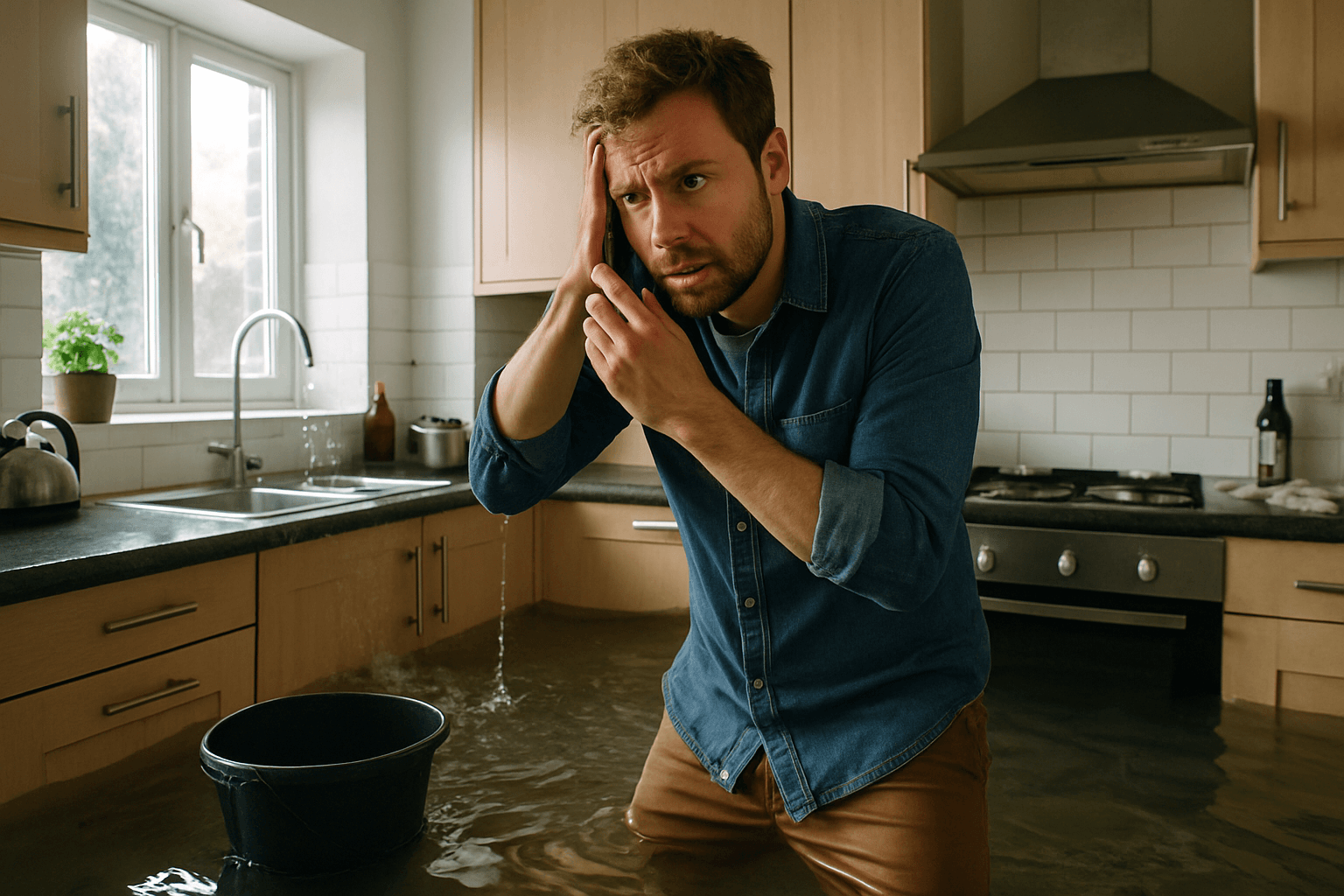
Stop the water at the fixture valve or the main, cut power to wet rooms at the breaker if you can reach the panel safely, move what you can out of the water, and photograph everything before it is touched. Water that has reached carpet pad, drywall or a subfloor is a same-day restoration call rather than a cleanup: mold can establish on wet materials within 24–48 hours, and every hour of delay moves materials from "dry it" to "replace it."
Before You Sign Anything
Ask for a written scope and the pricing basis, who is fixing the water source and when, and what the moisture readings are — a company that does not take readings is not drying. Sudden, accidental water damage (a burst pipe, a failed supply line, an appliance leak) is usually covered by homeowners insurance; long-term leaks, neglected maintenance and rising outside water usually are not. Document first, then call the restoration company, then the insurer.
Reading to confirm what you already suspect?
Confirm it in two minutes instead — the pro on this line answers questions about YOUR situation all day: what it is, what it should cost, whether you even need service. If you want, they'll set the appointment on the same call.
Toll-free · no obligation · asking costs nothing
Frequently Asked Questions
- 1roof, window or plumbing leaks
- 2failed caulking or seals
- 3chronic damp from structural or drainage problems. Most states fold this into the implied warranty of habitability. Tenant-caused moisture — chronic ventilation habits, unreported spills — can shift responsibility. Either way the fix for more than a small patch is professional remediation, arranged by whoever owns the problem.
- 1dated email or letter describing location and size, with photos
- 2name the suspected source if visible — 'ceiling stain above the growth'
- 3request repair and remediation within a specific reasonable window (many states treat 14–30 days as reasonable for non-emergencies)
- 4keep copies. Verbal complaints are legally invisible in most disputes.
Is my landlord responsible for mold in my apartment?
Generally yesWhen the moisture source is the building's:
How do I report mold so the landlord actually has to act?
In writing, always:
Can I just clean apartment mold with bleach myself?
For a palm-sized patch on tile or painted surface, yes — but cleaning the symptom without fixing the moisture source guarantees a comeback, and scrubbing large growth spreads spores.
More importantly for renters: cleaning it BEFORE documenting it can erase your evidence that a building leak caused it. Photos first, written notice second, cleaning third.
What if my landlord ignores the mold?
Escalation depends on your state: options typically include a follow-up notice citing habitability, complaints to local code enforcement or the health department, and in some states rent-withholding or repair-and-deduct procedures with strict rules — check your state's tenant handbook before using them. Your documentation trail is what makes any of these work.
I own the rental — what's my move when a tenant reports mold?
Fast, documented response: acknowledge in writing, get a certified mold inspection scheduled promptly, fix the moisture source, and remediate to the S520 standard with clearance documentation.
That paper trail is habitability protection. One call lines up an IICRC-certified company that handles inspection, remediation and the documentation end to end.
Who pays for temporary relocation if remediation is major?
Lease and state law govern: significant habitability failures can trigger rent abatement or relocation obligations in some jurisdictions. Landlords: your insurer and the remediation timeline both want the certified crew's scope in writing early. Tenants: ask the question in writing once the remediation scope exists.
Sources
- IICRC S500 Standard for Professional Water Damage Restoration
- III — Water damage and homeowners insurance
Methodology: How we source and verify data · Report an error
Disclaimer: HearthDry is an independent educational resource. This article is for informational purposes only and does not constitute professional, legal, or insurance advice. Consult licensed professionals before making decisions about your property or insurance claims.
Recommended Equipment
Tools Water Damage Pros Use
Remove moisture fast — needed for drying walls, floors & crawlspaces
Shop on Amazon →Professional-grade air circulation speeds drying time by 3–5x
Shop on Amazon →Detect hidden moisture behind walls & under floors before mold starts
Shop on Amazon →Smart alarms alert you the moment a leak starts — prevent next time
Shop on Amazon →As an Amazon Associate, HearthDry earns from qualifying purchases. Prices and availability may vary.
