Best for: A laundry room where clothes are regularly dried on racks or lines
- Type:
- Compressor (refrigerant)
- Capacity (stated):
- 34 pints/day at 95°F, 90% RH
Listing verified 13 Oct 2026

Judged on Clothes-Drying Modes, Capacity and Drainage
5 picks compared · prices, ratings and stock checked October 11, 2026
Our Top Pick
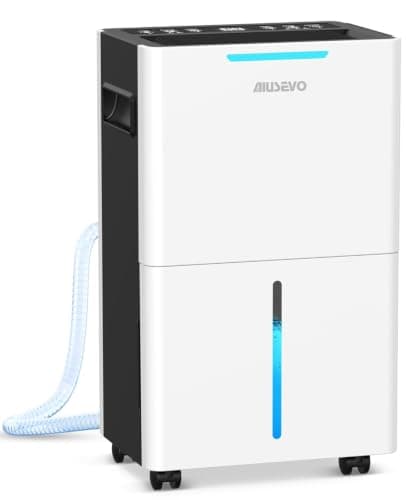
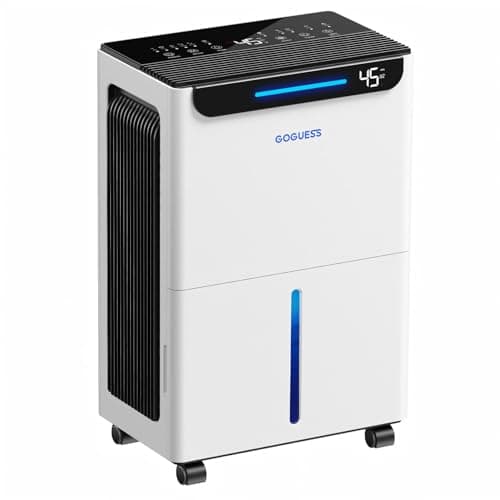
The GoGuess YC3D12-PRO suits a typical laundry room: the largest capacity among these picks, a TURBO mode its listing ties to faster clothes drying, and a drain hose in the box. For a laundry closet or small room, the Aiusevo AS280 has a dedicated DRY mode at 15.3 lb.
4.5 on Amazon · 968 ratings
Quick answer
The best dehumidifier for a laundry room is a compressor unit with a clothes-drying or continuous mode, set beside a floor drain or utility sink with its hose connected. The GoGuess 34 pint is the pick for most laundry rooms, rated 4.5 stars across 968 Amazon ratings, removing up to 34 pints a day at 95°F and 90% RH, with a 3.28 ft drain hose included. Check the dryer first: it must vent outdoors, and a loose or disconnected duct is a moisture source no dehumidifier should be asked to cover. Aim for 30–50% RH most of the time.
Every pick below is currently stocked — ratings and stock read from Amazon on 11 October 2026.
Best for: A laundry room where clothes are regularly dried on racks or lines
Listing verified 13 Oct 2026
Best for: A laundry closet or small laundry room, or a household that dries one load at a time
Listing verified 13 Oct 2026
Best for: A basement laundry area that needs steady humidity control more than fast clothes drying
Listing verified 13 Oct 2026
Best for: A medium laundry room where clothes are dried on racks a few times a week
Listing verified 13 Oct 2026
Best for: A laundry room with no floor drain or sink close enough for a hose
Listing verified 13 Oct 2026
How this page was made: we compare the current Amazon listings, the makers' published specs and what verified buyers report, then rank by fit for the job. Ratings, review counts and stock are read from Amazon and dated. We earn a commission on purchases through our links; it does not change the order. Reviewed by Marcus Reed, IICRC-certified Water Restoration Technician.
Full Reviews
Each pick in detail: what the listing states, what buyers report, and where it falls short.
Check price
on Amazon ↗
Listing verified 13 Oct 2026
See it on Amazon ↗Best Overall
Quick Verdict
The most capacity here, with a TURBO mode for clothes and a hose in the box — the hose is short.
Key Specs
Type
Compressor (refrigerant)
Capacity (stated)
34 pints/day at 95°F, 90% RH
Coverage (claimed)
Up to 2,500 sq ft
Modes
DEHU (30%–80% set point), TURBO (named for faster clothes drying), SLEEP
Drainage
Included 3.28 ft hose for continuous draining; the 2.3 L tank shuts the unit off when full
Protection
Auto defrost, overload protection, child lock
Pros
Cons
Suited to
A laundry room where clothes are regularly dried on racks or lines
Our take
Drying a load indoors means every drop the spin cycle left in the fabric ends up in the room air, and in a small laundry room that drives humidity up fast. Capacity matters more here than almost anywhere else in the house, which is why this unit leads: 34 pints a day at its rated condition, the most among the well-rated units here, with a TURBO mode the listing connects to clothes drying. Close the door, start TURBO when the rack goes up and let it run until the clothes are dry, then drop back to DEHU at 50%. The hose is short, so plan the unit's spot around the drain before anything else.
Affiliate link — commission at no extra cost to you
Compare elsewhere
These open a search for this model. We quote prices only where we can verify them — Amazon, Sylvane and eBay.
Check price
on Amazon ↗
Listing verified 13 Oct 2026
See it on Amazon ↗Best for Small Laundry Rooms
Quick Verdict
A named DRY mode in a slim 15.3 lb body — right for a small room, outpaced by heavy drying.
Key Specs
Type
Compressor (refrigerant)
Capacity (stated)
21 pints/day at 95°F, 90% RH
Modes
DEHU (30%–80% set point), DRY for wet clothes, CONT for non-stop removal
Drainage
0.52 gal tank with auto shut-off, or continuous drain through the included hose (length not stated)
Noise (claimed)
About 34 dB
Size and weight (listing)
15.94 x 9.65 x 6.89 in; 15.3 lb
Pros
Cons
Suited to
A laundry closet or small laundry room, or a household that dries one load at a time
Our take
Of the picks here, this is the one whose listing gives clothes drying its own mode by name, DRY, alongside CONT for non-stop running and DEHU for holding a set humidity. That makes the routine simple: DRY while a rack is up, DEHU at 50% the rest of the time. Its slim, light body fits a laundry closet where a full-size unit would block the dryer door. The limit is capacity: 21 pints a day at its rated condition is the smallest figure on this page, and in a cool basement laundry it will remove less than that. One load at a time in a small room suits it; a whole family's racks do not.
Affiliate link — commission at no extra cost to you
Compare elsewhere
Check price
on Amazon ↗
Listing verified 13 Oct 2026
See it on Amazon ↗Most-Rated, ENERGY STAR
Quick Verdict
ENERGY STAR and the deepest buyer record here — no clothes mode and no hose included.
Key Specs
Capacity (stated)
22 pints/day (test conditions not stated on the listing)
Coverage (claimed)
Up to 1,500 sq ft
Humidity range
35%–85% set point
Efficiency
ENERGY STAR certified; the listing claims 31% energy savings over traditional dehumidifiers
Drainage
Tank with auto stop and restart, or continuous drain through a standard hose (not included) on the built-in socket
Controls
App control over Wi-Fi, voice control through Alexa or Google Assistant, turbo, programmable timer
Pros
Cons
Suited to
A basement laundry area that needs steady humidity control more than fast clothes drying
Our take
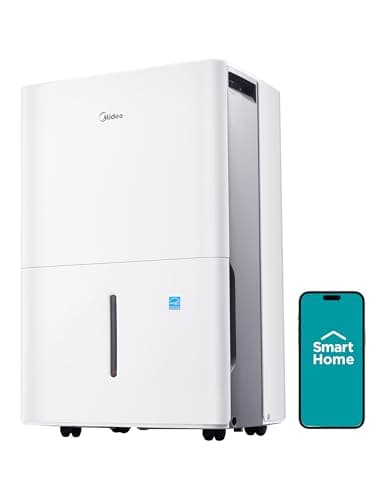
This is the well-documented choice rather than the specialist. ENERGY STAR certification means its efficiency was certified against the specification the EPA publishes, and that is worth having in a laundry room where a dehumidifier may run for hours several days a week. What it lacks for this job is a named clothes-drying mode and a hose in the box: turbo is the nearest setting, and a standard hose for the drain socket is a separate purchase. Its 22-pint figure also comes without test conditions, which makes it hard to line up against the others. Buy it for a basement laundry where steady control at 50% matters more than drying racks quickly.
Affiliate link — commission at no extra cost to you
Compare elsewhere
Check price
on Amazon ↗
Listing verified 13 Oct 2026
See it on Amazon ↗Quick Dry Mode, 3-Year Warranty
Quick Verdict
Strong laundry specs, with Quick Dry and a 3-year warranty — fewer buyer reports behind it than the rest.
Key Specs
Type
Compressor (refrigerant)
Capacity (stated)
30 pints/day at 95°F, 90% RH
Coverage (claimed)
Up to 2,000 sq ft
Modes
Comfort (30%–80% set point), Continuous, Quick Dry for clothes
Drainage
1.7 L tank with auto shut-off, or continuous drain through the included 3.3 ft hose
Noise (claimed)
About 35 dB
Pros
Cons
Suited to
A medium laundry room where clothes are dried on racks a few times a week
Our take
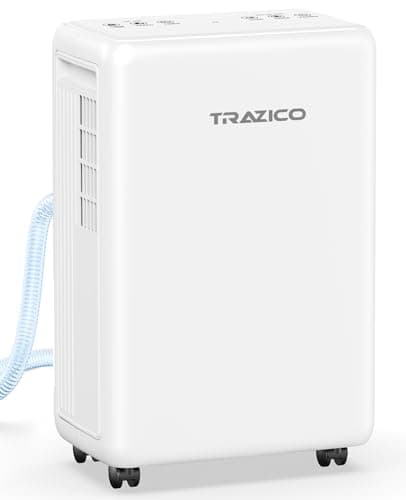
On paper this is the closest rival to the GoGuess for a laundry room: 30 pints a day at the same rated condition, a hose in the box and a mode, Quick Dry, that the listing ties to drying clothes indoors on rainy days. It also lists a 3-year warranty and auto restart, so a power blip during a drying cycle does not leave it switched off. It ranks below the others on evidence rather than specs, because its buyer record is the shortest here and how it holds up over the years is less established. If you buy it, register the warranty and keep the hose sloping steadily down to the drain.
Affiliate link — commission at no extra cost to you
Compare elsewhere
Check price
on Amazon ↗
Listing verified 13 Oct 2026
See it on Amazon ↗Largest Bucket, No Drain Needed
Quick Verdict
The biggest bucket here, for a room with no drain — no clothes mode, and a short buyer record.
Key Specs
Capacity (stated)
25 pints/day (test conditions not stated on the listing)
Coverage (claimed)
Up to 1,500 sq ft
Bucket
8.5 pints, with a 10-second alarm when full or missing
Drainage
Built-in drain hose connection for continuous drainage (hose inclusion not stated)
Controls
30%–70% humidistat, three fan speeds, Smart Dry automatic fan speed
Size and weight (listing)
19.4 x 13.2 x 9.9 in; 33 lb
Pros
Cons
Suited to
A laundry room with no floor drain or sink close enough for a hose
Our take
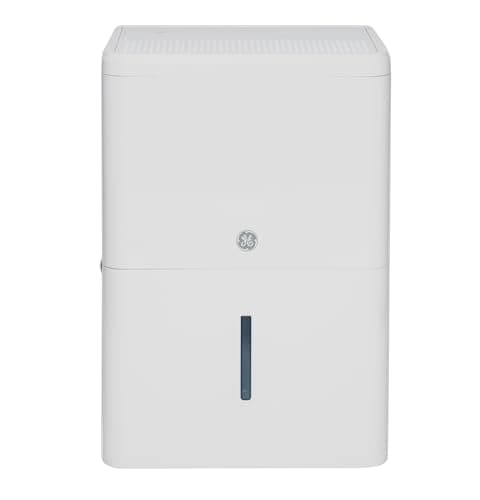
Not every laundry room has a floor drain, and in one without, bucket size decides how often you are carrying water. GE's is 8.5 pints, the largest stated here and nearly twice what the GoGuess tank holds. On a drying day even that can fill before evening, so its honest use is steady humidity control between loads, emptied once or twice a day, with the drain connection ready for when a hose can reach. Smart Dry is a fan-speed feature, not a laundry mode, so it will not push hard through a rack of wet clothes. Clean the filter whenever the reminder lights; lint collects quickly in this room.
Affiliate link — commission at no extra cost to you
Compare elsewhere
What to know before you buy.
Three sources keep a laundry room damp. The washer releases warm, humid air whenever the door or lid opens, and a front-loader's door seal holds water between washes. Clothes dried on racks or lines give up nearly all the water the spin cycle left in them, straight into the room. And a clothes dryer, which pulls the water out of a full load, pushes all of it through the vent duct; if that duct is crushed, disconnected or ends in an attic or crawl space, the moisture stays in the house. The EPA's guidance is direct on this: vent clothes dryers to the outside. A dehumidifier is the right tool for the first two sources and the wrong fix for the third, so check the duct before buying anything.
A dryer vent problem shows up as lint on the wall behind the machine, a room that feels like a steam bath when the dryer runs, or condensation on the walls and window during a cycle. Pull the dryer out and look. The duct should be rigid or semi-rigid metal, connected tightly at both ends, as short and straight as the space allows, and should end at an outdoor hood whose flap opens when the dryer runs. Plastic or foil accordion duct, a clamp that has slipped off, or a duct that ends indoors all need fixing. A clogged vent is a fire risk as well as a moisture source, so clean the duct and the outdoor hood along with the lint screen. Once the vent is sound, what remains is the washer and indoor drying, which is the dehumidifier's job.
Three of the picks name a setting for clothes: DRY on the Aiusevo, Quick Dry on the Trazico, and TURBO on the GoGuess, which its listing says speeds up clothes drying. None of the listings explains what each mode changes inside the machine, so judge them by the result. What dries a rack is a steady flow of dry air across the fabric and a unit that keeps removing water until the clothes are done. Close the door, set the dehumidifier a few feet from the rack with its outlet aimed along the clothes, and space the items so air can pass between them. The Midea and GE name no clothes setting, but either will still dry a rack when set to its lowest humidity target with the door shut.
A laundry room often has what a dehumidifier needs most: a floor drain or a utility sink close by. Use it. The stated tanks on this page hold from about 3.6 to 8.5 pints, while rated capacities run from 21 to 34 pints a day, so on a drying day a tank can fill well before the clothes are dry, and a full tank stops the machine. These hoses drain by gravity, so the outlet must sit higher than wherever the water ends up. A floor drain is easiest; for a utility sink, set the unit on a sturdy shelf or stand above the rim and clip the hose end so it cannot slip out. The GoGuess and Trazico hoses are about 3.3 ft, so place the unit first. The Midea takes a standard hose bought separately, so you choose the length. If the only drain sits higher than the unit, look at a model with a built-in pump.
Coverage claims on these listings run from 1,500 to 2,500 sq ft, and a laundry room is a small fraction of that, so set them aside. Size by how much laundry dries in the room instead. A laundry closet or small room where the dryer handles everything, with an occasional rack of delicates, is well served by a 21- or 22-pint unit such as the Aiusevo or Midea. A room where a household's laundry routinely dries on racks needs the 30- to 34-pint class, the Trazico or GoGuess, and a drain. In a basement laundry, which runs cooler, step up a size, because compressor output falls as the air drops below about 65°F. For everyday control, set the humidistat at 45–50%; the EPA recommends keeping indoor humidity below 60%, and ideally between 30% and 50%.
A dehumidifier lowers the humidity in the room, but it does not dry the places where laundry rooms usually grow mold. Leave the front-loader door and detergent drawer open between washes so the gasket can dry, and wipe the fold of the gasket after the last load of the day. Move wet clothes out of the washer promptly, since a damp load left sitting soon smells musty. Every few months, check behind the machines for drips at the supply hoses and the drain connection, because a slow leak there soaks the floor and wall where nobody looks. If the room still smells musty with the humidity below 50%, look for a hidden source: a leaking hose, wet drywall behind the washer, or mold already growing on the gasket or the wall.
YesIf you dry clothes indoors, if the room smells musty, or if a hygrometer there reads above 60% for days at a time.
A compressor unit with a hose to a floor drain or sink handles it well. If the dampness only appears while the dryer runs, look at the vent duct first; a disconnected or crushed duct is a repair, and a dehumidifier will not keep up with it.
Of the picks here, three name a clothes setting: the GoGuess 34 pint calls it TURBO, the Aiusevo AS280 calls it DRY, and the Trazico calls it Quick Dry.
The GoGuess is the choice for most laundry rooms because it pairs that mode with the largest capacity among them and an included hose. The Aiusevo suits a small room or laundry closet, and the Trazico is a strong option with a 3-year warranty.
Use the clothes mode if the unit has one, such as DRY, Quick Dry or TURBO. Without one, choose continuous running, or the lowest humidity target with the fan on high.
Keep the door shut, point the air outlet along the rack, and leave gaps between items. Once the clothes are dry, switch back to a normal setting of about 45–50% so the unit is not running hard all week.
YesMoving air across the fabric speeds evaporation, and the dehumidifier then removes the water that evaporates.
Aim a fan along the rack from one side and set the dehumidifier on the other, with the door closed. A fan on its own in a closed room does the first half of the job only: the clothes give up water, and the room air fills with it.
Size by the laundry rather than the floor area. A laundry closet, or a room where the dryer does most of the work, is well served by about 21 to 22 pints a day.
A room where clothes regularly dry on racks needs 30 to 34 pints and a drain hose. For a basement laundry, go a size larger, because compressor units remove less water as the air cools.
YesAs long as the hose outlet on the dehumidifier sits higher than the sink rim, because these units drain by gravity.
Set the unit on a sturdy shelf or stand beside the sink, run the hose without loops or upward bends, and clip the end so it stays in the basin. If the unit has to sit on the floor below the sink, a model with a built-in pump is the answer.
Call (888) 840-6512. The line is answered 24 hours a day, seven days a week, and connects you with an IICRC-certified water damage restoration company that serves your area. A recorded menu picks up first: choose water damage or mold, key in your 5-digit ZIP code, and hold through the short silence while the call is passed to the company.
Describe what you can see — where the water is coming from, how long it has been there, and whether it smells — the more specific you are, the faster the right company is on the line. If the source is a pipe or an appliance, shut the main water valve first. Have four things ready and the call goes quickly: the address, when the water started, what is wet now, and whether you have filed an insurance claim.
Still not sure which of these is your situation? (888) 840-6512 · toll-free · answered 24/7
Methodology: How we source and verify data · Report an error
Free 2-day shipping
Amazon Prime members pay no shipping on restoration equipment
Dehumidifiers, air movers, and moisture meters qualify for free Prime delivery — bulk items that otherwise cost $15–$40 to ship.
Affiliate link — HearthDry earns a bounty if you sign up; costs you nothing extra.

A built-in pump is the answer when the only drain is above the dehumidifier: a laundry sink, a standpipe or a window. It is only an answer if it can lift water that high, and two of the four listings here state a lift height while two do not.
Read the comparisonMost basement dehumidifier disappointment comes from two numbers nobody reads properly: the pint rating, measured at warm test conditions a 60°F basement never reaches, and the drainage method. Five units are compared here on those two points first, from a garden-hose drain to a built-in pump with a stated 15 ft lift.
Read the comparisonThe right dehumidifier for a home depends on the size of the space and how damp it is, and the pint number on the box depends on which test produced it. These five picks run from a 22-pint single-room unit to an 80-pint machine for a whole basement, compared on the figures their listings actually state.
Read the comparisonA dehumidifier stops mold by taking away the damp it needs, and the musty smell usually leaves with the damp. It does not kill mold that is already growing, so these picks are judged on the job they can do: holding a basement, a room or a closet below 50% humidity, day after day.
Read the comparison