Quick answer
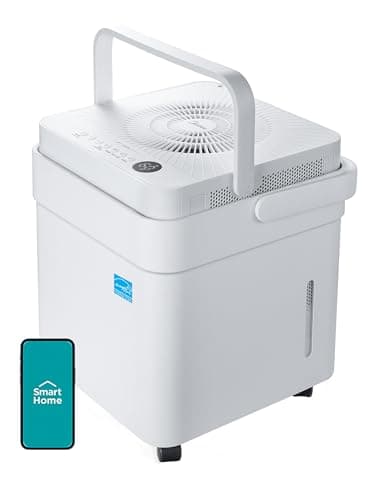
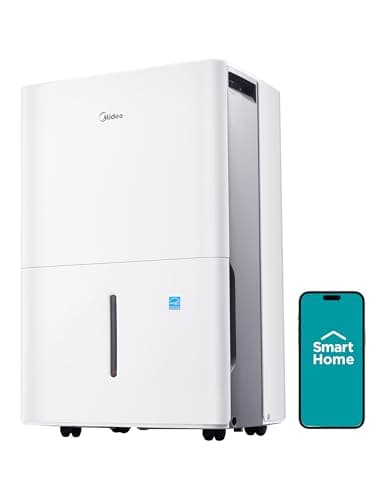
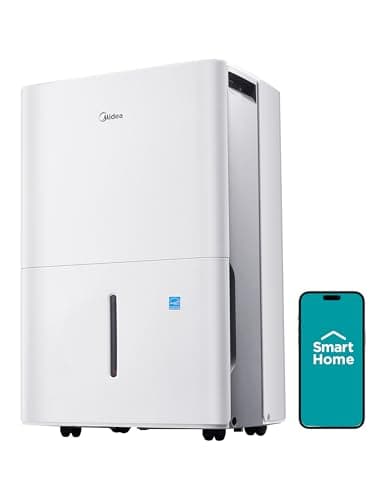
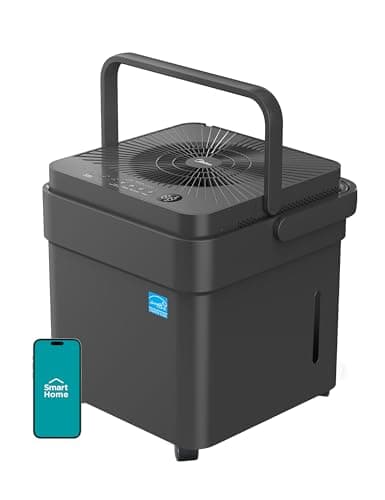
The Midea Cube is worth buying when you want to empty a bucket less often, and for most damp basements and large rooms the size to get is the Midea Cube 35 Pint Dehumidifier, rated 4.3 stars across 147 Amazon ratings. Its listing gives 35 pints a day, which Midea likens to 50 pints on the older 2012 DOE test, so it is rated on the current, cooler test, and its bucket holds 4.2 gallons. Neither the 20 nor the 35 pint Cube has a pump. If water must be lifted to a sink, choose the Midea 50 Pint Dehumidifier with Pump.
Buyer's Guide
What to know before you buy.
What Makes the Cube Different, and How This Review Was Built
Most portable dehumidifiers hide a small bucket inside the cabinet. The Cube flips that: the machine sits on top of a large square tank, and Midea says the tank is up to three times larger, so the unit runs up to three times longer between emptyings. The 20 pint Cube holds 3.2 gallons and the 35 pint Cube 4.2 gallons. The top section also lifts and twists to extend for use, then nests down for storage. This review is built from Midea's Amazon listings as read on 12 Oct 2026, the specs printed on them, buyer ratings, and public guidance from EPA and ENERGY STAR. Nothing here comes from running the machines, and where a listing leaves out a figure, such as noise or lift height, this page says so.
Reading the Pint Rating: Two DOE Tests
Dehumidifier capacity is given in pints of water removed per day, but the number depends on the air it was measured in. The older 2012 DOE test used warm air at 80°F, while the current DOE test uses 65°F and 60% relative humidity, which is closer to a real basement. Cooler air gives up less water, so the same machine scores lower on the new test. That is why the Cube listings give two numbers: the 20 pint Cube is similar to 30 pints on the 2012 test, and the 35 pint Cube similar to 50. The standard Midea listings give 22, 35 and 50 pints with no test named. Compare like with like, and expect any machine to remove less in a basement colder than 65°F.
Bucket, Hose or Pump: How the Water Leaves
Every pint the machine pulls from the air has to go somewhere. A bucket suits a bedroom, but a damp basement can fill even the Cube's 4.2 gallon tank in a day or two. Both Cube listings include a drain hose for continuous gravity drainage, with the unit set above a sink or over a floor drain. Gravity only works downhill, so the outlet has to sit higher than the drain along the whole run, with no upward loops. A pump removes that limit by pushing water up to a laundry sink or out a window. Midea's pump Cube has the weaker buyer record, so this page points to the standard Midea 50 pint with a pump. Measure the height the water must climb before buying any pump model.
Sizing a Midea for Your Space
Listings quote coverage in square feet, from 1,500 for the 20 pint Cube to 4,500 for the 50 pint models, but how damp the space is matters as much as its floor area. ENERGY STAR's sizing chart ties capacity to dampness, and it adds that it is better to oversize than undersize. A bedroom or bathroom that only feels clammy suits the 20 pint Cube or the 22 pint Midea. A basement that smells musty and shows damp patches suits the 35 pint Cube. A basement that has had water on the floor, or one that sits humid all summer, needs the 50 pint class with a hose or pump to a drain. Set the humidistat to about 45% to 50%; EPA advises keeping indoor humidity below 60%, ideally 30% to 50%.
Who Should Not Buy a Midea Cube
The Cube is a room and basement dehumidifier, not a drying system for real water damage. If a pipe burst or the basement flooded, the walls, carpet pad and subfloor hold far more water than a home unit can pull out in time, and EPA advises drying water-damaged areas within 24 to 48 hours to prevent mold. That job calls for a restoration company with commercial dehumidifiers and air movers. A crawl space is another poor fit, because it is cold and cramped, and a crawl space unit built to sit low and pump its water out suits it better. If water has to be lifted to a sink, skip the gravity-only Cubes. And if mold is already spreading, fix the moisture source and get it cleaned up before relying on any dehumidifier.
Warranty, Filter and Upkeep
Only the 20 pint Cube listing states a warranty, 1 year of parts and labor, so check the term for whichever model you choose and register it. That is a short term for a compressor appliance that may run most of the summer, so keep the receipt. Upkeep is light. Rinse the washable filter every couple of weeks in heavy use, because a clogged filter cuts airflow and capacity. Empty and wipe the bucket weekly so it does not grow slime, and if you run a hose, check that it has not kinked or sagged into a dip that holds water. In a cool basement, look for frost on the coil. The auto defrost named on several Midea listings should clear it; if frost keeps returning, the room is too cold for the machine.
Free 2-day shipping
Amazon Prime members pay no shipping on restoration equipment
Dehumidifiers, air movers, and moisture meters qualify for free Prime delivery — bulk items that otherwise cost $15–$40 to ship.
Affiliate link — HearthDry earns a bounty if you sign up; costs you nothing extra.