Hisense Dehumidifier Review 2026 — The Current 25, 35 and 50-Pint Models Compared From Their Listings, With the Pump, Drain and Cold-Basement Details

Hisense Dehumidifier Review 2026

The Current 25, 35 and 50-Pint Models Compared From Their Listings, With the Pump, Drain and Cold-Basement Details

4 picks compared · prices, ratings and stock checked October 12, 2026

Our Top Pick

For a basement with a floor drain, the Hisense 50-Pint Energy Star Portable Dehumidifier, which drains by gravity through a garden hose. With no drain below the unit, the Hisense 50-Pint Lift-Up Portable Dehumidifier with Built-In Pump.

4.4 on Amazon · 67 ratings

Quick answer

If you want a Hisense for a damp basement or a large room, buy the Hisense 50-Pint Energy Star Portable Dehumidifier, rated 4.4 stars across 67 Amazon ratings; if the water has to go up to a sink or out a window, choose the Hisense 50-Pint Lift-Up Portable Dehumidifier with Built-In Pump instead. Both remove up to 50 pints a day per their listings, but Hisense does not state the temperature and humidity behind that figure, so treat the 4,500 sq ft coverage claim as a ceiling. This comparison is built from the listings and buyer ratings, not hands-on use.

Our Picks at a Glance

Every pick below is currently stocked — ratings and stock read from Amazon on 12 October 2026.

How this page was made: we compare the current Amazon listings, the makers' published specs and what verified buyers report, then rank by fit for the job. Ratings, review counts and stock are read from Amazon and dated. We earn a commission on purchases through our links; it does not change the order. Reviewed by Marcus Reed, IICRC-certified Water Restoration Technician.

Full Reviews

Each pick in detail: what the listing states, what buyers report, and where it falls short.

#1
Best Overall

Check price

on Amazon ↗

Listing verified 13 Oct 2026

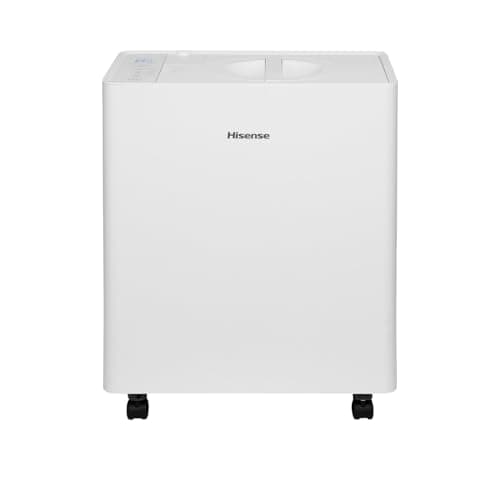
Hisense 50-Pint Energy Star Portable Dehumidifier (4,500 Sq Ft Stated, Gravity Drain, 18.6-Pint Bucket)See it on Amazon ↗

Quick Verdict

Hisense 50-Pint Energy Star Portable Dehumidifier: a gravity-drain 50-pint for basements with a floor drain; test conditions are not stated.

Key Specs

Capacity (stated)

Up to 50 pints per day; test temperature and humidity not stated

Coverage (stated)

Rooms up to 4,500 sq ft

Bucket (stated)

18.6 pints; shuts the unit off when full

Continuous drain (stated)

Gravity drain through a standard garden hose, not included

Pump

None listed; gravity drain only

Filter (stated)

Washable, with a clean-filter alert

Pros

  • Takes a standard garden hose for gravity draining to a floor drain
  • An 18.6-pint bucket with auto shutoff for rooms with no drain
  • A filter alert, so dust does not quietly choke the coil
  • ENERGY STAR rated, per the listing

Cons

  • No pump, so the hose has to run downhill to a drain
  • No test conditions for the 50-pint figure and no noise figure
  • No low-temperature limit on this listing

Suited to

A basement or large damp room with a floor drain lower than the unit

Our take

This is the plain Hisense 50-pint: a compressor dehumidifier with a bucket, a hose connection and a filter alert, and it has the longest buyer record of the Hisense listings compared here. Two numbers on the box need context. Fifty pints per day is stated without the temperature and humidity behind it, and since 2019 the federal test has used 65°F and 60% RH, so a rating taken at that cooler point means more than one taken in warmer, wetter air. The 4,500 sq ft coverage is the maker's estimate, and a wet basement needs more capacity than a dry room of the same size. Gravity draining is the strong point if you have a floor drain: run a garden hose downhill with no loops and the bucket never needs emptying.

Check today's price on Amazon →

Affiliate link — commission at no extra cost to you

Compare elsewhere

These open a search for this model. We quote prices only where we can verify them — Amazon, Sylvane and eBay.

#2
Best for Basements Without a Floor Drain

Check price

on Amazon ↗

Listing verified 13 Oct 2026

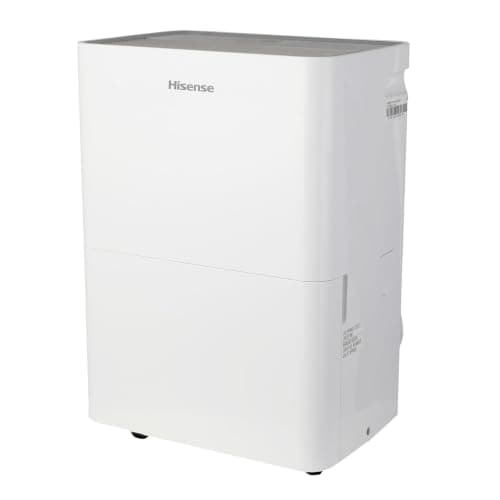
Hisense 50-Pint Lift-Up Portable Dehumidifier with Built-In Pump (White, 18-Pint Top-Lift Tank)See it on Amazon ↗

Quick Verdict

Hisense 50-Pint Lift-Up Portable Dehumidifier with Built-In Pump: drains up to a sink or window, though the listing gives no lift height.

Key Specs

Capacity (stated)

50 pints per day; test conditions not stated

Pump (stated)

Built-in pump with an included quick-connect hose

Drain targets (stated)

Routes water to a sink or a window

Tank (stated)

18 pints, lifts out from the top

Moving it (stated)

Four casters

Filter (stated)

Washable and removable

Pros

  • Pumps water up to a sink or out a window, so no floor drain is needed
  • The quick-connect hose comes in the box
  • The tank lifts out of the top, so there is no bending to slide a bucket out
  • Casters and a washable filter, per the listing

Cons

  • No pump lift height or hose length, the two numbers a pump buyer needs
  • A newer listing with a short buyer record so far
  • A pump is one more part that can clog, so the hose and outlet need seasonal cleaning

Suited to

A basement where the nearest drain is a laundry sink or a window above the unit

Our take

The pump is the reason to pick this Hisense over the gravity model. Gravity draining only works when a floor drain sits below the hose outlet, and many finished basements have none, leaving a laundry sink or a window as the nearest outlet. This unit's built-in pump pushes the water up there through the included quick-connect hose. What the listing leaves out is how high the pump lifts and how long the hose is, so measure the rise from the unit to the sink rim and confirm both in the manual before you order. Lead the hose well into the sink rather than just over the edge, and clip it so it cannot slip out and drain onto the floor. A black version is listed separately.

Check today's price on Amazon →

Affiliate link — commission at no extra cost to you

#3
Best Mid-Size

Check price

on Amazon ↗

Listing verified 13 Oct 2026

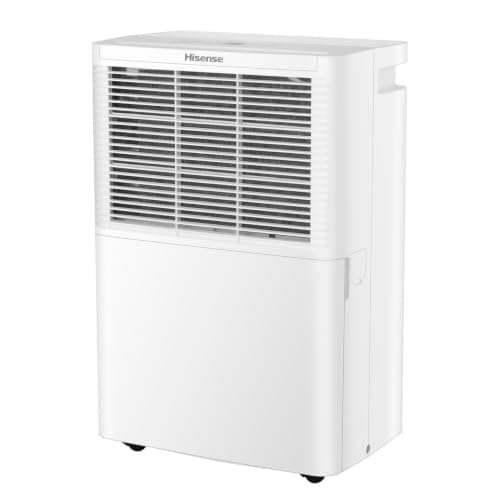
Hisense 35-Pint Compact Dehumidifier (Rated Down to 38°F, Slide-Out Bucket, 2-Year Warranty)See it on Amazon ↗

Quick Verdict

Hisense 35-Pint Compact Dehumidifier: rated to 38°F with a 2-year warranty, but no hose connection is mentioned and the coverage figures conflict.

Key Specs

Capacity (stated)

35 pints per day; test conditions not stated

Coverage (stated)

Up to 3,000 sq ft in the description; the title says 3,500 sq ft

Low-temperature operation (stated)

Down to 38°F

Bucket (stated)

Slide-out, with auto shutoff when full

Carrying (stated)

Built-in carry handle

Warranty (stated)

2 years

Pros

  • Rated to run down to 38°F, which suits a cool basement or garage
  • The only listing here that states a warranty term, 2 years
  • Smaller and easier to carry between rooms than the 50-pint units
  • ENERGY STAR certified, per the listing

Cons

  • The coverage figure differs between the title and the description
  • No hose connection for continuous draining is mentioned
  • A short buyer record so far

Suited to

A finished basement room, a laundry room or a garage that is damp but not wet

Our take

The 35-pint fills the gap between the small 25-pint and the 50-pint units, and its listing adds two useful details: operation down to 38°F and a 2-year warranty. The temperature figure matters in basements and garages. Compressor dehumidifiers pull less water as a room cools, and below about 65°F the coil can start to frost, so a unit built to keep running in the cold is the one to look for. That is a range the machine will operate in, not the temperature its 35 pints were measured at. Elsewhere the listing is less tidy: it says 3,000 sq ft in the description and 3,500 in the title, and it never mentions a drain hose, so plan on emptying the bucket.

Check today's price on Amazon →

Affiliate link — commission at no extra cost to you

#4
Best Small-Room Pick

Check price

on Amazon ↗

Listing verified 13 Oct 2026

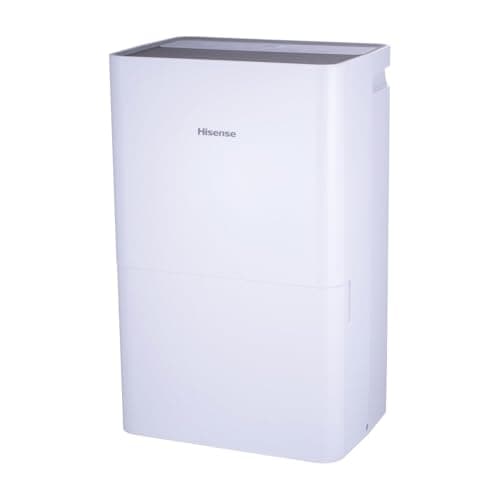
Hisense 25-Pint Compact Portable Dehumidifier (1,500 Sq Ft Stated, 57 dBA, CO Continuous Mode)See it on Amazon ↗

Quick Verdict

Hisense 25-Pint Compact Portable Dehumidifier: a simple 25-pint with a stated 57 dBA; its CO mode means continuous running, not draining.

Key Specs

Capacity (stated)

25 pints per day; test conditions not stated

Coverage (stated)

1,500 sq ft

Noise (stated)

57 dBA; measuring distance not stated

Controls (stated)

Manual controls; the CO setting runs the unit without stopping

Low-temperature operation (stated)

Down to 38°F

Efficiency (stated)

ENERGY STAR certified

Pros

  • The only listing here with a stated noise figure, 57 dBA
  • Simple manual controls with no app or setup
  • Rated to run down to 38°F
  • ENERGY STAR certified, per the listing

Cons

  • 57 dBA is easy to hear in a quiet bedroom at night
  • CO means continuous running, not continuous draining, and no hose outlet is mentioned
  • 25 pints is small for a wet basement

Suited to

A single damp room or a small basement that needs only light moisture control

Our take

The 25-pint is the simplest Hisense here, and its listing is the most open about noise: 57 dBA, a level you will hear in a quiet room, though no measuring distance is given. One detail trips people up. The listing says that pressing the minus button until CO flashes makes the unit run uninterrupted. That is continuous operation, meaning the compressor keeps going whatever the humidity reading; it is not continuous draining, and this listing never mentions a hose outlet. Continuous mode suits drying a room after a spill, when you want the machine working flat out. For everyday control, set a target around 45 to 50% instead, and empty the bucket when it fills.

Check today's price on Amazon →

Affiliate link — commission at no extra cost to you

Buyer's Guide

What to know before you buy.

How This Hisense Review Was Put Together

No Hisense unit was run for this page. The comparison is built from each model's Amazon listing as read on 12 October 2026, the specs Hisense states on those listings, ENERGY STAR's sizing guidance and the buyer ratings Amazon shows on each card. Where a listing leaves a number out, such as the test conditions behind its pint figure, the pump's lift height or a noise level, this page says so rather than filling the gap. Hisense currently sells dehumidifiers on Amazon at 25, 35 and 50 pints, including a lift-up model with a built-in pump in white and in black. Most of those listings are new and have short buyer records, which is a reason to keep the receipt and register the warranty, not a reason to avoid them.

Reading the Pint Rating and the Coverage Claim

A dehumidifier's pints-per-day figure depends on the air it was measured in. Since 2019 the US Department of Energy test for portable dehumidifiers has used 65°F and 60% relative humidity, cooler than the older 80°F test, so the same machine now carries a smaller number. Hisense's listings give 25, 35 and 50 pints without stating the conditions. Coverage claims are looser still, since 4,500 sq ft for a 50-pint unit assumes a moderately damp space. ENERGY STAR's sizing charts depend on the size of the space and how damp it starts, and its advice is that it is better to oversize than undersize. For a basement that smells musty or shows wet spots, choose the 50-pint even if the floor area looks small.

Pump or Gravity Drain

Every compressor dehumidifier collects water in a bucket, and an 18-pint bucket on a 50-pint machine can fill more than once a day in a damp summer basement. A hose ends that chore. Gravity draining, which the Hisense 50-Pint Energy Star model supports through a standard garden hose, needs a floor drain or sump lower than the outlet, with the hose sloping down all the way and no loops. A built-in pump, as on the Hisense 50-Pint Lift-Up model, pushes water up to a laundry sink or out a window instead. Pumps add a part that can clog, so clean the hose and outlet each season. If a drain hose pulls free, the floor gets the water, so clip it in place and check it after you move the unit.

Cold Basements and the 38°F Rating

Basements run cool, and compressor dehumidifiers slow down as the air cools, because the coil has to stay colder than the room's dew point to condense water. Below about 65°F, frost can start to form on the coil and the unit pauses to defrost. Several of Hisense's newer listings state operation down to 38°F. That means the machine is designed to keep working and defrosting in that range, not that it removes 35 or 50 pints there. Expect noticeably less water per day in a 55°F basement than the label suggests. If your space sits below about 40°F for long spells, such as an unheated garage or a crawl space in winter, a desiccant dehumidifier or a crawl space unit built for those conditions is the better tool.

Humidity Targets and Filter Care

Set the humidity target, not just the fan. EPA advises keeping indoor humidity below 60 percent, ideally between 30 and 50 percent, and ENERGY STAR says the optimum for a building is generally considered to be between 30% and 50%, with anything higher able to promote mold growth. A setting around 45 to 50% keeps a basement out of the mold range without running the compressor all day. Check the room with a separate hygrometer at first, because a built-in sensor sits at the intake and can read differently from the far corner. Wash the filter when the alert comes on, or every few weeks in heavy use, and let it dry before refitting. A dusty filter starves the coil of air, and the unit works harder for less water.

Who Should Not Buy a Hisense Dehumidifier

A portable Hisense is the wrong machine for a flooded basement. After a flood or a burst pipe, the job is drying walls, floors and cavities fast, and EPA advises drying water-damaged areas and items within 24 to 48 hours to prevent mold growth. On its own, a household unit will not do that; restoration crews use commercial dehumidifiers and air movers sized to the job. A Hisense is also not built for crawl spaces, which need a unit made to sit in a sealed crawl space and drain itself, or for garages near freezing. If you want app control, none of the listings compared here mentions Wi-Fi, so check before you buy. Where the damp comes from a leak, fix the leak first, since a dehumidifier treats the air rather than the source.

Frequently Asked Questions

Are Hisense dehumidifiers good?

They are a sound mid-range choice, judged from their listings and buyer ratings. Hisense offers ENERGY STAR models at 25, 35 and 50 pints, a pump option, and operation down to 38°F on newer listings.

The weak spots are on paper: Hisense does not state the test conditions behind its pint ratings, and most current listings are new with short buyer records. Keep the receipt and register the warranty.

Does the Hisense dehumidifier have a pump?

Some models do. The Hisense 50-Pint Lift-Up Portable Dehumidifier with Built-In Pump, sold in white and black, pumps water to a sink or window through an included quick-connect hose.

The standard Hisense 50-Pint Energy Star model drains by gravity through a garden hose instead, and the 25 and 35-pint compact listings do not mention a hose connection at all. Look for the words built-in pump in the title.

How do you drain a Hisense dehumidifier continuously?

Connect a hose to the drain outlet and run it to a drain. On the Hisense 50-Pint Energy Star model, a standard garden hose, bought separately, drains by gravity, so it must slope down to a floor drain with no loops or kinks.

On the lift-up pump model, use the included quick-connect hose, which can run up to a sink or window. The CO setting on the 25-pint is continuous running, not draining.

What does CO mean on a Hisense dehumidifier?

CO means continuous operation. On the Hisense 25-Pint Compact, the listing says to press the minus button until CO flashes, and the unit then runs without stopping at a humidity target.

It has nothing to do with draining, so the water still collects in the bucket. Use it to dry a room quickly after a spill; for everyday use, set a target around 45 to 50% so the compressor can rest.

What size Hisense dehumidifier do I need?

For a damp basement or a large open room, the 50-pint; for a single room, the 25 or 35-pint. Size by dampness as well as floor area, because ENERGY STAR's sizing charts rise with how damp the space starts, and it advises oversizing rather than undersizing.

Hisense lists 1,500 sq ft for the 25-pint and 4,500 sq ft for the 50-pint, but treat both as best-case figures.

Will a Hisense dehumidifier work in a cold basement?

YesWithin limits. Several newer Hisense listings, including the 25 and 35-pint compact models, state operation down to 38°F.

That is the range where the unit keeps running and defrosting, not where it reaches its rated pints. In a basement at 55 to 60°F, expect less water per day than the label suggests, and below about 40°F a desiccant unit is the better choice.

Who do I call right now for water damage?

Call (888) 840-6512. The line is answered 24 hours a day, seven days a week, and connects you with an IICRC-certified water damage restoration company that serves your area. A recorded menu picks up first: choose water damage or mold, key in your 5-digit ZIP code, and hold through the short silence while the call is passed to the company.

Describe what you can see — where the water is coming from, how long it has been there, and whether it smells — the more specific you are, the faster the right company is on the line. If the source is a pipe or an appliance, shut the main water valve first. Have four things ready and the call goes quickly: the address, when the water started, what is wet now, and whether you have filed an insurance claim.

Still not sure which of these is your situation? (888) 840-6512 · toll-free · answered 24/7

Sources

  1. EPA — A Brief Guide to Mold, Moisture, and Your Home
  2. ENERGY STAR — Dehumidifiers
  3. ENERGY STAR — Dehumidifier Testing and Capacity

Methodology: How we source and verify data · Report an error

How we chose these picks

  • Every pick is a current listing. Stock, star ratings and rating counts are read from Amazon by script and carry the date they were read.
  • Nothing under 4.0 stars makes the list, and the top pick needs a large rating count, so one good week of reviews cannot put it there.
  • Specs are quoted from the listing or the maker, with the test condition behind the number where there is one, and sized against the job rather than the room on the box.
  • We do not run lab or field tests. Where a spec matters, we say what it is measured under and what it cannot tell you.

Free 2-day shipping

Amazon Prime members pay no shipping on restoration equipment

Dehumidifiers, air movers, and moisture meters qualify for free Prime delivery — bulk items that otherwise cost $15–$40 to ship.

Try Prime free →

Affiliate link — HearthDry earns a bounty if you sign up; costs you nothing extra.

Also Worth Comparing

Best Dehumidifier for Basement Use in 2026 — Drain Hose, Built-In Pump and Honest Pint Ratings

Most basement dehumidifier disappointment comes from two numbers nobody reads properly: the pint rating, measured at warm test conditions a 60°F basement never reaches, and the drainage method. Five units are compared here on those two points first, from a garden-hose drain to a built-in pump with a stated 15 ft lift.

Read the comparison

Best Dehumidifiers With a Built-In Pump in 2026 — Compared on Lift Height

A built-in pump is the answer when the only drain is above the dehumidifier: a laundry sink, a standpipe or a window. It is only an answer if it can lift water that high, and two of the four listings here state a lift height while two do not.

Read the comparison

Best Dehumidifier for Home in 2026 — Sized by Room, Dampness and Drain

The right dehumidifier for a home depends on the size of the space and how damp it is, and the pint number on the box depends on which test produced it. These five picks run from a 22-pint single-room unit to an 80-pint machine for a whole basement, compared on the figures their listings actually state.

Read the comparison

Best Dehumidifiers for a Garage in 2026 — Judged on Cold-Weather Specs and Drainage

A garage is the hardest space in a house to dehumidify: it runs cold, it leaks air and it rarely has a drain. These four picks are judged on the specifications that decide whether a unit keeps working there, from a capacity stated at cool conditions and auto defrost to a desiccant option for winter and a hose that reaches a drain.

Read the comparison

Best Hygrometers for Home in 2026 — Indoor Humidity Monitors That Tell You When a Room Is Too Damp

A hygrometer is the small, inexpensive instrument that tells you whether a room needs a dehumidifier, a humidifier or nothing at all. These picks are judged on the accuracy each listing states, how easily you can read them, and whether they can warn you about a damp basement before you smell it.

Read the comparison