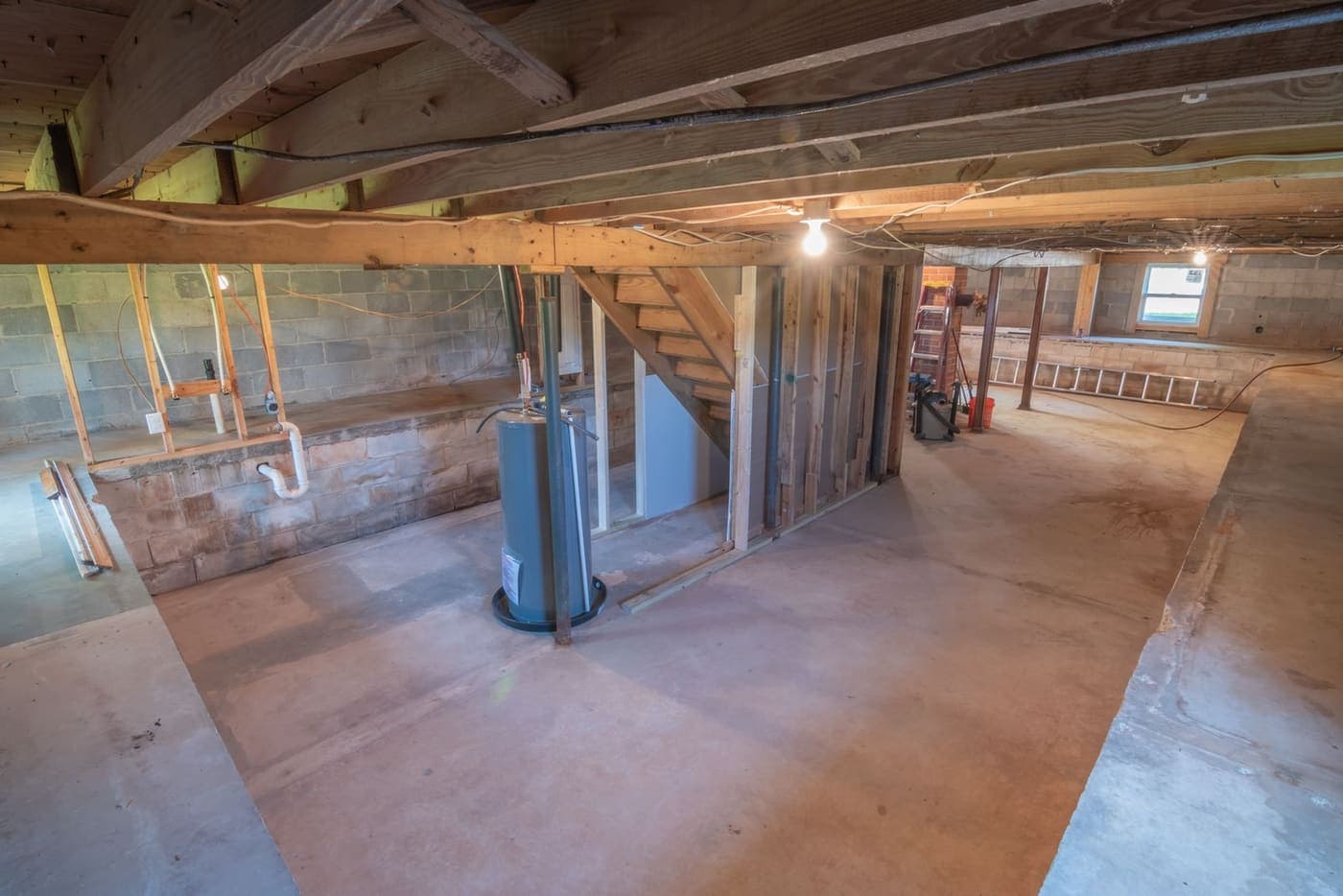
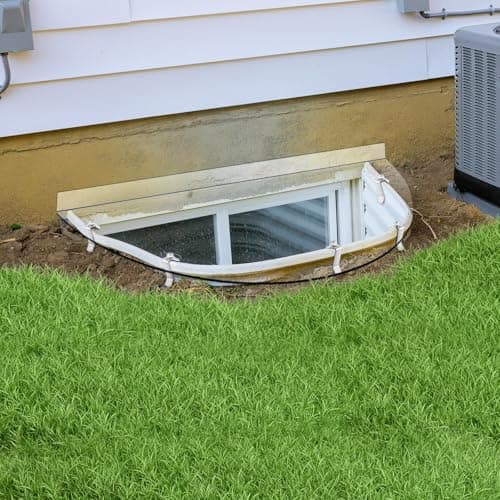
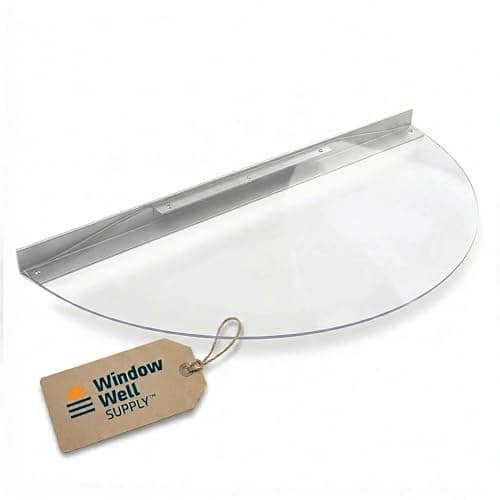
Best for: A standard semicircular window well that fills with leaves, snow and rain
- Material:
- Clear polycarbonate with a UV-resistant coating
- Size (stated):
- 39 in W x 16 in L
Listing verified 13 Oct 2026

Clear Covers, Egress Wells and Grates Compared on Fit, Load and Water
5 picks compared · prices, ratings and stock checked October 11, 2026
Our Top Pick
For a standard semicircular well, the Window Well Supply Clear Polycarbonate Window Well Cover (Sloped Semi-Circle, 39 x 16 in): made in the USA, with aluminum bracing and a stated 500 lb load. For a large egress well, the Heicofer Clear Polycarbonate Egress Window Well Cover (54 x 38 in), the only clear cover here whose listing says it opens for egress.
4.6 on Amazon · 139 ratings
Quick answer
The best window well cover for a standard semicircular well is the Window Well Supply Clear Polycarbonate Window Well Cover (Sloped Semi-Circle, 39 x 16 in): if your well is a semicircle that matches its 39 x 16 in size, buy this sloped cover, which states a 500 lb load and has aluminum bracing. It is rated 4.6 stars across 139 Amazon ratings. Measure width, projection and shape first. Over a bedroom egress well, use only a cover that opens from inside without tools, and keep the well drain clear, because a cover stops rain from above, not groundwater from below.
Every pick below is currently stocked — ratings and stock read from Amazon on 11 October 2026.
Best for: A standard semicircular window well that fills with leaves, snow and rain
Listing verified 13 Oct 2026
Best for: A standard well where the cover comes off each summer for ventilation or window cleaning
Listing verified 13 Oct 2026
Best for: A well that is hard to match in size, or one where water runs down the foundation wall into the well
Listing verified 13 Oct 2026
Best for: A large egress window well, once the seller confirms how the cover releases from inside
Listing verified 13 Oct 2026
Best for: A deep egress well where the worry is a child or pet falling in, not water
Listing verified 13 Oct 2026
How this page was made: we compare the current Amazon listings, the makers' published specs and what verified buyers report, then rank by fit for the job. Ratings, review counts and stock are read from Amazon and dated. We earn a commission on purchases through our links; it does not change the order. Reviewed by Marcus Reed, IICRC-certified Water Restoration Technician.
Full Reviews
Each pick in detail: what the listing states, what buyers report, and where it falls short.
Check price
on Amazon ↗
Listing verified 13 Oct 2026
See it on Amazon ↗Best Overall
Quick Verdict
The Window Well Supply Clear Polycarbonate Window Well Cover (Sloped Semi-Circle, 39 x 16 in) states a 500 lb load and sheds water on a slope; confirm the inside release before fitting it over an egress well.
Key Specs
Material
Clear polycarbonate with a UV-resistant coating
Size (stated)
39 in W x 16 in L
Shape
Sloped semicircle
Bracing
Aluminum, described as rust-free
Load (stated)
Up to 500 lb
Hardware and origin
Mounting hardware included; made in the USA, per the listing
Pros
Cons
Suited to
A standard semicircular window well that fills with leaves, snow and rain
Our take
The common window well is a corrugated metal semicircle, and this cover is built for that shape: a sloped panel of clear polycarbonate over aluminum bracing, so rain and snow slide off instead of sitting on top. It is the only clear cover on this page with a stated load, up to 500 lb, which matters where children play or snow drifts deep. The listing adds a UV-resistant coating, mounting hardware and US manufacture. What it leaves out is egress. The bullets stress resistance to break-ins, and a cover that resists a push from outside may also resist one from inside, so if this well serves a bedroom or another sleeping room, ask the seller how it releases from below before you install it.
Affiliate link — commission at no extra cost to you
Compare elsewhere
These open a search for this model. We quote prices only where we can verify them — Amazon, Sylvane and eBay.
Check price
on Amazon ↗
Listing verified 13 Oct 2026
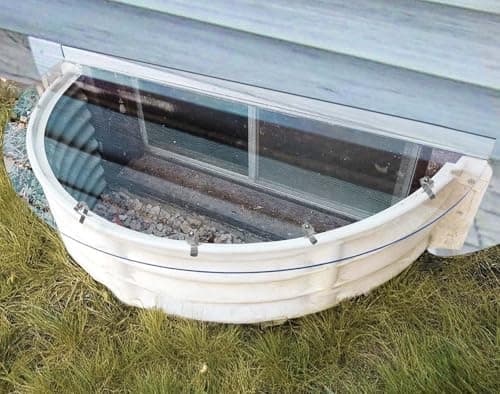
See it on Amazon ↗Best for Seasonal Removal
Quick Verdict
The Vercraft Clear Polycarbonate Window Well Cover with Mounting Clips (40 x 18 in) states a 4.5 mm panel and comes with clips for seasonal removal; it gives no load rating.
Key Specs
Material
UV-resistant polycarbonate, described as impact resistant and anti-yellowing
Size (stated)
40 in L x 18 in W
Thickness (stated)
4.5 mm (0.18 in)
Backstop
Given as both 1-1/2 in and 5 cm on the listing
Mounting
5 sets of stainless steel clips included
Load rating
Not stated on the listing
Pros
Cons
Suited to
A standard well where the cover comes off each summer for ventilation or window cleaning
Our take
Thickness is the spec most clear covers leave out, and it is the best single hint at how much a panel will flex under wet snow. Vercraft states it: 4.5 mm, or 0.18 in, of UV-resistant polycarbonate described as impact resistant and anti-yellowing. Five sets of stainless steel mounting clips come with it, and the listing presents them for repeated fitting and removal, which suits anyone who takes the cover off in summer to let the well air out. The listing is less careful elsewhere. It gives the backstop as 1-1/2 in and as 5 cm, which are different sizes, it states no load rating, and its bullets do not describe the shape. Compare the product photos with your well, and keep people off it.
Affiliate link — commission at no extra cost to you
Compare elsewhere
Check price
on Amazon ↗
Listing verified 13 Oct 2026
See it on Amazon ↗Most Size Options
Quick Verdict
The QIPRAONO Clear Polycarbonate Window Well Cover (39 x 16 in, 2 in Splash Guard) comes in 15 sizes with a 2 in splash guard; thickness, load and inside release are not stated.
Key Specs
Material
Polycarbonate with a UV-resistant coating
Size (stated)
39 x 16 in
Rear splash guard
2 in, integrated
Size options
15, per the listing
Hardware
Included, with instructions
Load rating
Not stated on the listing
Pros
Cons
Suited to
A well that is hard to match in size, or one where water runs down the foundation wall into the well
Our take
Two features make this cover worth a look. The first is range: the listing offers 15 sizes, more than any other here, which helps when a well is a few inches off the common sizes. The second is a 2 in rear splash guard, the strip that stands against the foundation and, per the listing, directs water away and keeps dirt out. On a wall with no gutter above it, or beside a downspout that splashes, that edge matters, because water running down the siding is otherwise guided straight under the back of the cover. Everything else is unstated: no thickness, no load rating, no shape and no word on release from inside, despite the title. Treat it as a weather lid for a well that is not an escape route unless the seller confirms an inside release.
Affiliate link — commission at no extra cost to you
Compare elsewhere
Check price
on Amazon ↗
Listing verified 13 Oct 2026
See it on Amazon ↗Best for Large Egress Wells
Quick Verdict
The Heicofer Clear Polycarbonate Egress Window Well Cover (54 x 38 in) is the egress-size clear cover here; its buyer record is very short, so test the inside release yourself.
Key Specs
Material
UV-resistant polycarbonate
Size (stated)
54 x 38 in; 59 x 38 in also on the listing
Egress
Described as easy to open for egress routes; how it opens is not described
Hardware
All mounting hardware and step-by-step instructions included
Load rating
Not stated on the listing
Thickness and shape
Not stated on the listing
Pros
Cons
Suited to
A large egress window well, once the seller confirms how the cover releases from inside
Our take
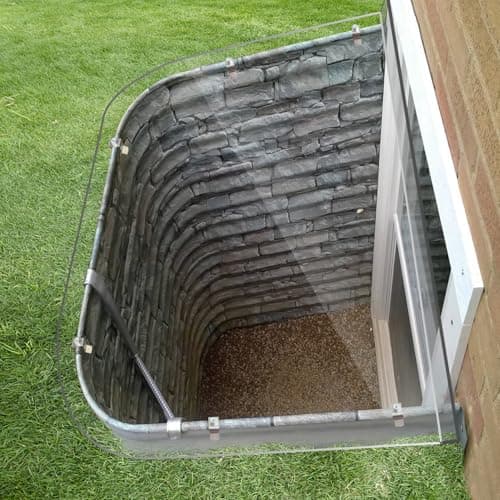
Egress wells are why many people search for a cover, and they are a different job. Model codes call for at least 36 in of projection, and the window they serve is someone's way out in a fire. Heicofer is the only clear cover in this group sized for them, at 54 x 38 in with a 59 x 38 in option, and the only one whose listing addresses egress, saying the covers are easy to open for egress routes. The listing does not describe hinges, a lift-off design or a latch, and a panel this big with no stated thickness or load rating may be heavy and awkward to push up from below. The buyer record is very short. Once it is fitted, test it the way it would be used, from inside the well.
Affiliate link — commission at no extra cost to you
Compare elsewhere
Check price
on Amazon ↗
Listing verified 13 Oct 2026
See it on Amazon ↗Best for Fall Protection, Not Rain
Quick Verdict
The Adjust-A-Grate Window Well Grate Model L9 (34 to 37 in Projection, 45 to 60 in Width) guards large metal egress wells against falls and moves in an emergency, per the listing, but keeps no water out.
Key Specs
Type
Open grate, not a solid cover
Fits (stated)
Metal window wells with large-radius front corners, 34 to 37 in projection and 45 to 60 in width
Does not fit
Wood, concrete or block rectangular wells, per the listing
Material
Tempered aluminum
Light
Up to 90% of natural sunlight, per the listing
Emergency use
Lightweight enough to be moved in an emergency, per the listing
Pros
Cons
Suited to
A deep egress well where the worry is a child or pet falling in, not water
Our take
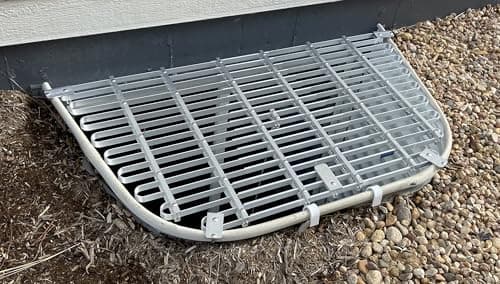
A grate solves a different problem from a clear cover. A deep egress well is a fall hazard, and an aluminum grate over it keeps people and pets from stepping into it while still letting light through, up to 90% of it per the listing. It also speaks to escape: the listing says it is lightweight enough to be moved in an emergency, which is the question to ask of anything placed over an egress well. What it cannot do is keep water out. Rain, snow and leaves fall straight through, so on a well that floods, the grate leaves the leak untouched. It fits only metal wells with large-radius front corners, 34 to 37 in of projection by 45 to 60 in of width, and the listing rules out rectangular wood, concrete and block wells.
Affiliate link — commission at no extra cost to you
Compare elsewhere
What to know before you buy.
A window well is a pit set against the foundation so a basement window can sit below grade, and every bit of rain, snowmelt and leaf litter that lands in it has to drain away through the gravel at its base or a drain tied into the footing drain. When that drain clogs, or rain comes faster than it can soak away, water pools against the window and finds the gaps around its frame. A clear cover stops most of that water at the source by shedding it outside the well, and it keeps leaves from matting over the drain. That is why covers come early in the order of basement fixes, alongside gutters, downspouts and grading. EPA advises making sure the ground slopes away from the foundation and keeping gutters clean and repaired; a well cover works with those steps, not instead of them.
Measure the well, not the window. Width is the distance across the well's outer rim, measured along the wall. Projection is how far the rim stands out from the foundation at its farthest point. Note the shape as well: a corrugated metal semicircle, a rectangle of wood, block or concrete, or a large egress well with radius corners. Listings label the two figures inconsistently. Window Well Supply titles its cover 39 in W x 16 in L, Vercraft calls its 40 x 18 in cover 40 in long and 18 in wide, and Adjust-A-Grate gives projection and width separately. On these covers the larger figure is the width along the wall, but check the seller's size chart. Take the measurement at the outside of the rim so the cover can overlap it, and note any siding trim, dryer vent or hose bib above the well that the back edge has to clear.
If the window in the well is a bedroom's emergency escape opening, the cover is part of the escape route. The International Residential Code, which most US jurisdictions adopt in some form, allows covers over egress wells only if they can be released or removed from inside without a key, a tool, special knowledge or more force than it takes to open the window. Never bolt, lock or screw a cover down over an egress well, and never stack anything on it. Of the clear covers here, only the Heicofer listing addresses egress, and none describes how it releases. Before you buy, ask the seller how the cover opens from below and check your local building department's rules; after fitting, climb into the well and push it open. An egress well is also far larger than a standard one, at least 36 in of projection under the IRC.
Clear covers are made from polycarbonate or acrylic. Polycarbonate resists impact far better, which is why every clear cover on this page uses it, per its listing; acrylic holds its clarity and resists scratches well but cracks more easily when hail, a branch or a boot lands on it. Look for a stated UV-resistant coating, because plastic left in the sun without one can yellow and turn brittle, and all four clear covers here claim one. Thickness is the next check, and only Vercraft states it, at 4.5 mm. Load ratings are rarer still: Window Well Supply states 500 lb and the rest give no figure. Grates are a separate category. An aluminum or steel grate, like the Adjust-A-Grate, stops falls and lets light in, but rain and snow drop straight through it.
A cover keeps rain off, but the well still needs a working drain. Groundwater, a high water table and water seeping sideways through saturated soil all reach the well from below or beside it, under any cover. Before fitting one, clear the leaves and silt out of the well, then pour in a bucket of water and watch whether it drains away or sits. A well with no drain, or one that holds water, needs its drain cleared or a new one fitted, which is usually contractor work. A cover cannot fix the window either. If water shows up at the frame while the well is dry, the leak is in the window or the seal between the frame and the foundation, and that needs repair. Water coming through the floor or the lower walls points to a drainage problem, often solved with interior drain tile and a sump pump.
Some basements need something else first. If the well still floods during heavy rain with a cover on, the problem is drainage or groundwater, and the money is better spent on the well drain, the grading and downspouts, or an interior drain with a sump pump. If the leak shows at the window when the well is dry, repair the window seal first. If the basement window is a bedroom's only way out and no cover you can find releases easily from inside, leave the well uncovered or fit a grate that moves in an emergency. And if the only goal is to keep children and pets from falling in, a grate does that without the damp air a closed cover can trap in the well. If water has already reached the basement, EPA advises drying wet materials within 24 to 48 hours to prevent mold.
They prevent the most common kind: rain and snowmelt collecting in the well and pooling against the window. A clear cover sheds that water outside the well and keeps leaves off the drain.
It does not stop groundwater rising from below, water seeping sideways through the soil, or a window frame that leaks on its own, so the well still needs a working drain and the window a sound seal.
YesAs long as it can be opened from inside without a key, tool or special knowledge. The International Residential Code allows covers over egress wells on that condition, and many local codes follow it.
A cover screwed, bolted or locked down over a bedroom egress well is unsafe and fails code. Confirm the release with the seller, check your local building department's rules, and test the cover from inside the well once it is fitted.
Measure the outside of the well's rim, not the window. Width runs across the rim along the foundation wall; projection runs from the wall to the farthest point of the rim.
Note the shape, whether semicircular, rectangular or an egress well with radius corners, and anything on the wall above the well. Listings label the two figures differently, so compare with the size chart and choose a cover that overlaps the rim.
Only if the listing states a load rating, and only within it. Among the clear covers here, only the Window Well Supply states one, up to 500 lb.
The others give no figure, so treat them as weather lids and keep people off them. Grates such as the Adjust-A-Grate are made to guard an open well against falls, though its listing gives no load figure either.
Polycarbonate, for most wells. It resists impact far better than acrylic, which counts when hail, falling branches or a stray foot land on the cover, and every clear cover on this page uses it.
Acrylic stays clear and resists scratches but cracks more easily. Whichever you choose, look for a stated UV-resistant coating so the panel does not yellow and turn brittle in the sun.
Only if you open the basement window for air. A closed cover blocks airflow to the window and can hold humid air in the well, so some owners take covers off for summer and refit them in fall; clip-on designs such as the Vercraft suit that routine.
If summer storms are what fill your well, leave the cover on and keep the well clean and its drain clear.
Call (888) 840-6512. The line is answered 24 hours a day, seven days a week, and connects you with an IICRC-certified water damage restoration company that serves your area. A recorded menu picks up first: choose water damage or mold, key in your 5-digit ZIP code, and hold through the short silence while the call is passed to the company.
Describe what you can see — where the water is coming from, how long it has been there, and whether it smells — the more specific you are, the faster the right company is on the line. If the source is a pipe or an appliance, shut the main water valve first. Have four things ready and the call goes quickly: the address, when the water started, what is wet now, and whether you have filed an insurance claim.
Still not sure which of these is your situation? (888) 840-6512 · toll-free · answered 24/7
Methodology: How we source and verify data · Report an error
Free 2-day shipping
Amazon Prime members pay no shipping on restoration equipment
Dehumidifiers, air movers, and moisture meters qualify for free Prime delivery — bulk items that otherwise cost $15–$40 to ship.
Affiliate link — HearthDry earns a bounty if you sign up; costs you nothing extra.

The right sump pump prevents basement flooding before it starts — and handles it fast when it happens. These are the 3 best sump pumps for basement flooding in 2026, tested and ranked by an IICRC-certified water damage restoration technician.
Read the comparisonMost basement dehumidifier disappointment comes from two numbers nobody reads properly: the pint rating, measured at warm test conditions a 60°F basement never reaches, and the drainage method. Five units are compared here on those two points first, from a garden-hose drain to a built-in pump with a stated 15 ft lift.
Read the comparisonA water leak detector catches a leak while it is still a puddle rather than an insurance claim. These four flood sensors and water alarms range from a standalone 110 dB alarm with no Wi-Fi to a LoRa kit that sounds on the spot and texts your phone.
Read the comparisonWhen a basement floods, a submersible utility pump gets standing water out fast — before a sump pump can handle the residual moisture. These are the 3 best submersible pumps for water removal in 2026.
Read the comparisonRoof water that lands at the foundation is one of the most common reasons a basement gets wet, and an extension is the low-cost way to carry it out to ground that drains away. These picks are measured against how far each one reaches by its own listing, and against the grading, ice and mowing problems that decide whether an extension keeps working.
Read the comparisonA door threshold seal closes the gap between the door and the sill, which stops drafts and rain blown under the door; it cannot hold back water pooling against the house. These picks cover stick-on sweeps, a slide-on door bottom, a replacement threshold insert and a garage door threshold, compared on the gap each listing says it fills and how it attaches.
Read the comparisonA water barrier keeps rain runoff from running under a garage door or doorway, but only up to its own height and only if it is in place before the water arrives. These picks are compared on the height, length and limits each listing states, with the deployment steps and the water a barrier cannot stop.
Read the comparisonHydraulic cement is the one patching product that sets while water is coming through it, which makes it the right first move on a weeping crack or a leaking pipe penetration in a basement wall. These picks are compared from their listings on set time, pressure claims and tub size, with the undercut that makes a plug hold, the leaks it cannot stop, and the point where a basement needs drainage rather than another tub.
Read the comparison