Best Hydraulic Cement in 2026 — Fast-Setting Plugs for Active Basement Leaks, the Undercut That Makes Them Hold, and the Cracks They Cannot Fix

Best Hydraulic Cement in 2026

Fast-Setting Plugs for Active Basement Leaks, the Undercut That Makes Them Hold, and the Cracks They Cannot Fix

5 picks compared · prices, ratings and stock checked October 13, 2026

Our Top Pick

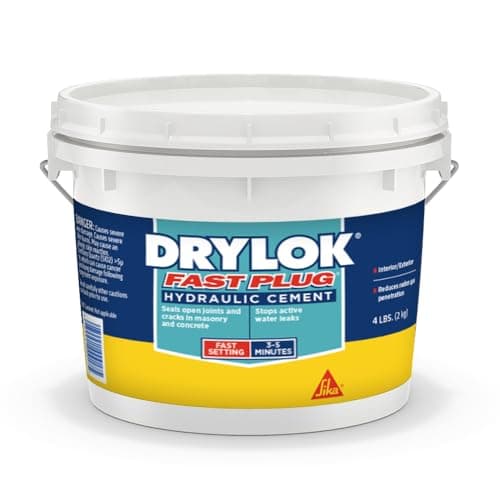
For most basement leaks, UGL DRYLOK Fast Plug Hydraulic Cement, 4 lb: a 3 to 5 minute stated set, expands as it dries, and the listing states it withstands up to 3,050 lb of hydrostatic pressure. For a wall with several cracks or a pipe penetration, the Quikrete Hydraulic Water-Stop Cement, 10 lb.

4.5 on Amazon · 2,316 ratings

Quick answer

Hydraulic cement stops an active leak in a concrete or block wall because it sets in 3 to 5 minutes and expands as it cures, and for most basement repairs the one to buy is UGL DRYLOK Fast Plug Hydraulic Cement, 4 lb, rated 4.5 stars across 2,316 Amazon ratings, whose listing states it stops water even under pressure. Chisel the crack into an inverted V about 3/4 in wide and deep, press the mix in, and hold it until it sets. It is a plug, not a waterproofing system: a crack that moves, a wall that seeps everywhere after rain, or water rising through the floor needs drainage or a pro.

Our Picks at a Glance

Every pick below is currently stocked — ratings and stock read from Amazon on 13 October 2026.

Fastest Stated Set, for Block Walls and Running Holes
Rust-Oleum Concrete Saver Pro Hydraulic Cement, 20 lb (1 to 3 Minute Set, Controlled Expansion, Block and Poured Concrete)
4.2 from 31 Amazon ratings · checked 13 OctAmazon's Choice

Best for: A block basement with leaks at several mortar joints, or a deep hole that is running water

Form:
Powder; 20 lb
Set time (stated):
Watertight seal in 1 to 3 minutes; stops active and non-active leaks

Listing verified 13 Oct 2026

If Not Hydraulic Cement: Poured-Wall Crack Injection
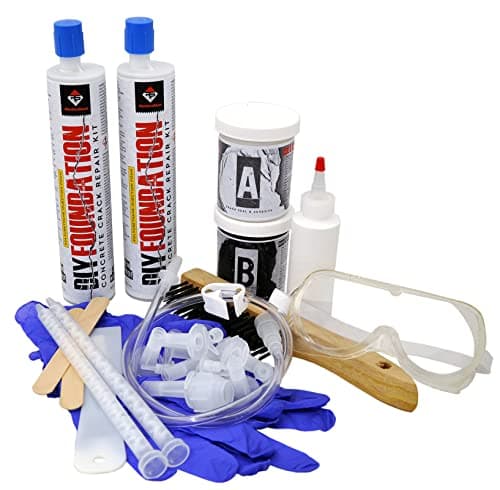
RadonSeal Complete DIY Foundation Crack Repair Kit, 10 ft (Two-Part Urethane, Drill-Free Injection)
4.6 from 1,183 Amazon ratings · checked 13 OctAmazon's Choice

Best for: A vertical crack in a poured concrete wall that seeps after rain and has reopened once already

Type:
Two-component low-viscosity urethane injected with a standard caulking gun
Crack length (stated):
Kit covers 10 ft

Listing verified 13 Oct 2026

How this page was made: we compare the current Amazon listings, the makers' published specs and what verified buyers report, then rank by fit for the job. Ratings, review counts and stock are read from Amazon and dated. We earn a commission on purchases through our links; it does not change the order. Reviewed by Marcus Reed, IICRC-certified Water Restoration Technician.

Full Reviews

Each pick in detail: what the listing states, what buyers report, and where it falls short.

#1
Best Overall

Check price

on Amazon ↗

Listing verified 13 Oct 2026

UGL DRYLOK Fast Plug Hydraulic Cement, 4 lb (3 to 5 Minute Set, Expands as It Dries)See it on Amazon ↗

Quick Verdict

UGL DRYLOK Fast Plug Hydraulic Cement, 4 lb: a 3 to 5 minute set and a stated pressure claim, sized for one or two cracks.

Key Specs

Form

Powder that mixes with water; 4 lb tub

Set time (stated)

3 to 5 minutes

Pressure claim (stated)

Stops water even under pressure; withstands up to 3,050 lb of hydrostatic pressure, as the listing words it

Expansion (stated)

Expands as it dries to lock in place

Uses (stated)

Mortar joints, cracks and holes in masonry walls above or below grade; sealing leaks around concrete and masonry; anchoring metal to masonry

Topcoat

None required, per the listing; interior and exterior

Pros

  • States the two things that matter for a leak: a set time of 3 to 5 minutes and a pressure claim
  • Expands as it sets, which is what keeps a plug in an undercut crack
  • Doubles as anchoring cement for a railing post or a bracket in block
  • Same maker as the masonry waterproofer that asks for hydraulic cement in every crack before painting

Cons

  • A 4 lb tub runs out fast on a wall with several cracks; larger sizes are listed separately
  • No yield figure or working temperature on the listing
  • Rigid once set, so a crack that moves with the seasons will open beside the plug

Suited to

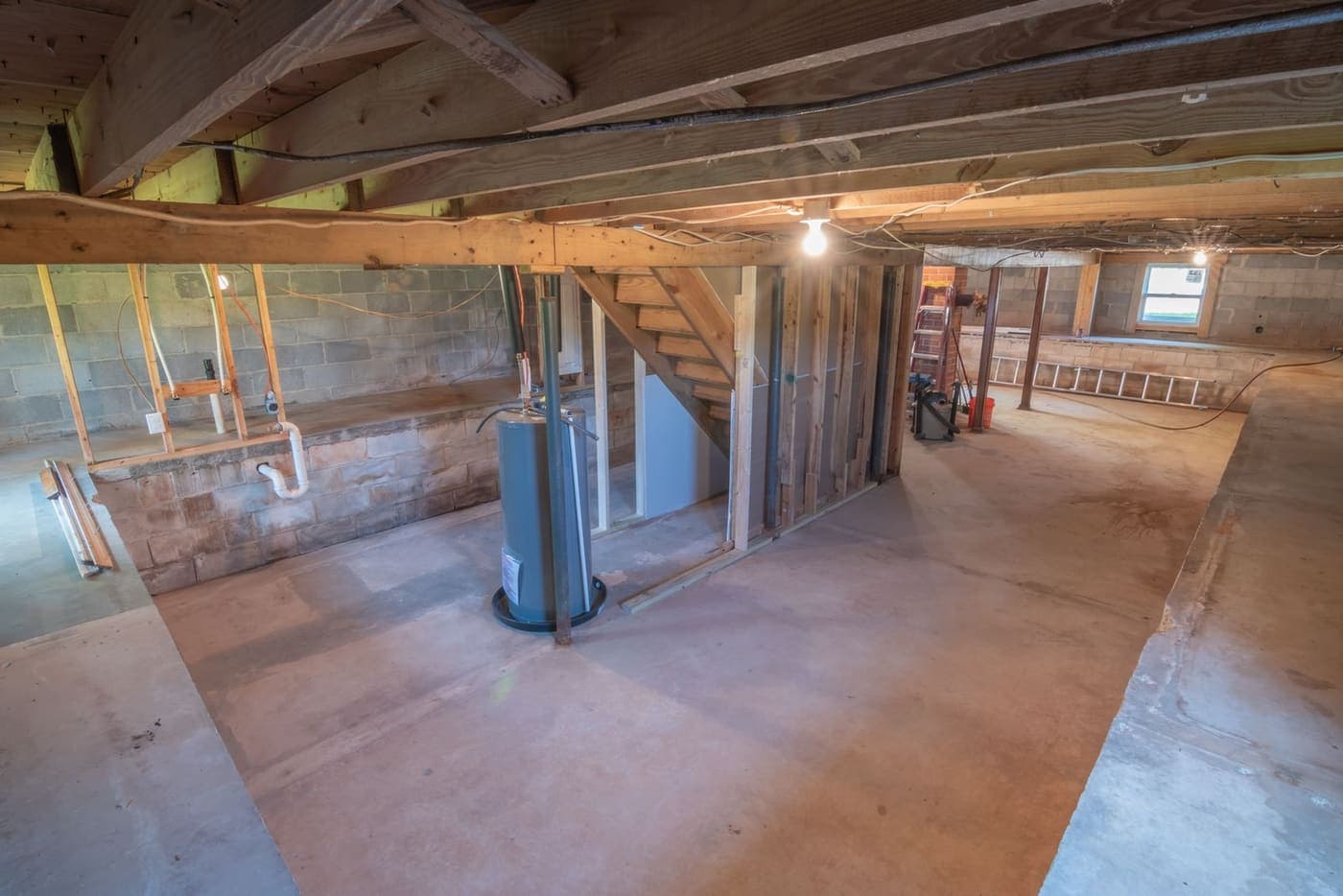
One or two weeping cracks or a leaking tie-rod hole in a poured or block basement wall

Our take

Fast Plug is the one to reach for when water is coming through right now. The listing gives a 3 to 5 minute set and a claim of stopping water under pressure, and it says the cement expands as it dries, which is what wedges the plug into an undercut crack instead of letting the water push it back out. Mix only what you can place in a couple of minutes, since a batch that stiffens in the bowl is wasted. Press the mix into the undercut with a gloved hand or a putty knife and hold it there until it stops moving. The pressure figure is a lab claim, and the plug is only as good as the crack prep behind it: loose concrete, paint or efflorescence under the plug means a leak that returns at the edge. DRYLOK's own waterproofing paint asks for this product in every crack first.

Check today's price on Amazon →

Affiliate link — commission at no extra cost to you

Compare elsewhere

These open a search for this model. We quote prices only where we can verify them — Amazon, Sylvane and eBay.

#2
Best for Pipe Penetrations and Multi-Crack Walls

Check price

on Amazon ↗

Listing verified 13 Oct 2026

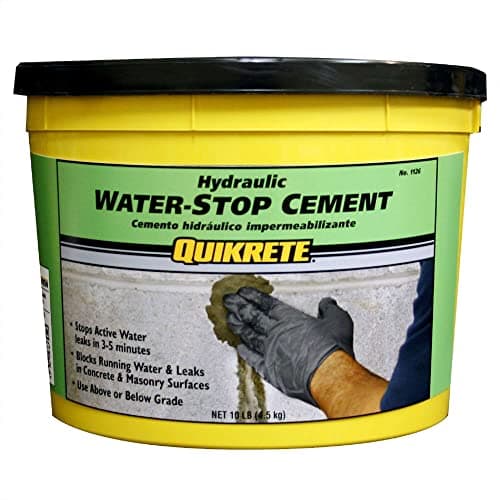
Quikrete Hydraulic Water-Stop Cement, 10 lb (3 to 5 Minute Set, Pools, Foundations and Pipe Penetrations)See it on Amazon ↗

Quick Verdict

Quikrete Hydraulic Water-Stop Cement, 10 lb: the pail for pipe penetrations and multi-crack walls, with a 3 to 5 minute set.

Key Specs

Form

Powder; 10 lb pail

Set time (stated)

3 to 5 minutes

Water claim (stated)

Blocks running water or leaks, above and below grade

Uses (stated)

Swimming pools, foundations, sealing around concrete pipes

Prep (stated)

Clean surface; do not apply over loose debris such as dirt, algae or mildew

Expansion

Not stated on this listing

Pros

  • Ten pounds covers a wall with several cracks and a pipe penetration without a second trip
  • Names pipe penetrations, which is where many basement leaks actually are
  • The only listing here that spells out the prep: a clean surface with no algae or mildew under the plug

Cons

  • The listing does not claim expansion, so the undercut and the hold matter more
  • A 10 lb pail is more than one small leak needs, and opened powder absorbs moisture in a damp basement
  • No pressure figure on the listing

Suited to

A basement with a leaking sewer-pipe or water-line penetration plus a few wall cracks

Our take

Buy the Quikrete pail when the job is more than one crack. The listing names foundations, pools and the gap around concrete pipes, and the pipe case deserves the attention: where a water line, a sewer pipe or a conduit passes through a basement wall, the hole was cut oversize and the gap around it is a common leak path that a bead of caulk never holds. Chip the gap open, clean it to bare concrete, and pack hydraulic cement around the pipe in layers, holding each until it sets. The listing's prep line is the useful one here: no dirt, algae or mildew under the plug, which in a basement means wire-brushing the mold off the wall first. Seal the pail tightly between uses, because the powder picks up moisture in a damp room and starts to set in the tub.

Check today's price on Amazon →

Affiliate link — commission at no extra cost to you

#3
Best Small Tub for One Leak

Check price

on Amazon ↗

Listing verified 13 Oct 2026

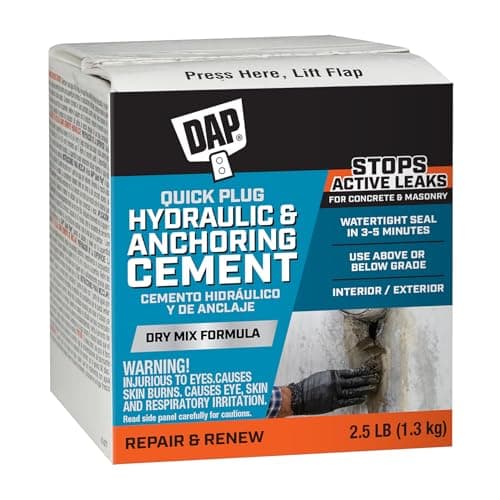
DAP Quick Plug Hydraulic Cement, 2.5 lb (Polymer-Fortified, Watertight in 3 to 5 Minutes While Water Flows)See it on Amazon ↗

Quick Verdict

DAP Quick Plug Hydraulic Cement, 2.5 lb: the small tub for a tie-rod hole or one weeping spot, stated to seal while water flows.

Key Specs

Form

Powder; 2.5 lb tub; a 5 lb tub is listed separately

Set time (stated)

Watertight seal in 3 to 5 minutes, even while water is flowing

Formula (stated)

Polymer-fortified Portland cement

Uses (stated)

Filling concrete cracks; anchoring fence and railing posts and machinery into concrete and masonry; interior and exterior

Cleanup (stated)

Soap and water

Expansion and pressure claims

Not stated on this listing

Pros

  • The smallest tub here, right for one tie-rod hole or a single hairline that weeps
  • States that it seals while water is flowing, which is the whole point of the product
  • Polymer-fortified, which the listing offers as its difference from plain Portland cement

Cons

  • No expansion or pressure claim on the listing, unlike DRYLOK
  • Too little for anything beyond one or two spots
  • Anchoring and leak-plugging are different jobs, and the listing does not say whether the mix differs for either

Suited to

A single weeping spot, a tie-rod hole or a small anchoring job

Our take

Quick Plug is the small tub, and small is the point: a tie-rod hole in a poured wall, the kind that weeps a damp circle after rain, takes a golf-ball of cement, and a 2.5 lb tub does several of them with powder to spare. The listing states a watertight seal in 3 to 5 minutes even while water is flowing, and polymer fortification, which it offers as its edge over plain Portland cement. What it does not state is expansion or a pressure figure, so lean on technique: chip the hole open to sound concrete, dampen it, and press the plug in with your thumb through a glove and hold it. Soap-and-water cleanup is stated, and worth doing fast, because hydraulic cement sets on a putty knife as quickly as it sets in the wall. For a wall with many spots, the Quikrete pail is the better buy.

Check today's price on Amazon →

Affiliate link — commission at no extra cost to you

#4
Fastest Stated Set, for Block Walls and Running Holes

Check price

on Amazon ↗

Listing verified 13 Oct 2026

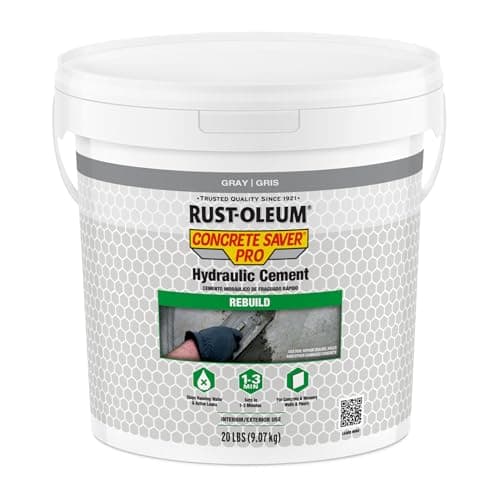
Rust-Oleum Concrete Saver Pro Hydraulic Cement, 20 lb (1 to 3 Minute Set, Controlled Expansion, Block and Poured Concrete)See it on Amazon ↗

Quick Verdict

Rust-Oleum Concrete Saver Pro Hydraulic Cement, 20 lb: the fastest stated set for running holes and block walls, bought in bulk.

Key Specs

Form

Powder; 20 lb

Set time (stated)

Watertight seal in 1 to 3 minutes; stops active and non-active leaks

Expansion (stated)

Controlled expansion, high strength

Surfaces (stated)

Concrete block, cast-in-place concrete, stucco, tilt-up, exposed aggregate and slump block

Uses (stated)

Plugs and seals deep holes in concrete and masonry; interior and exterior

Pressure claim

Not stated on this listing

Pros

  • The fastest stated set here, 1 to 3 minutes, for a hole that is actively running
  • Names block, stucco and slump block, so it covers walls other listings do not mention
  • Twenty pounds is enough for a whole block wall's worth of mortar-joint leaks

Cons

  • A 1 to 3 minute set leaves almost no working time; mix a cupful at a time
  • A newer listing with a shorter buyer record than the others here
  • Far more than one leak needs, and the powder has to be kept dry

Suited to

A block basement with leaks at several mortar joints, or a deep hole that is running water

Our take

Reach for this one when the leak is a hole rather than a hairline. The listing states a watertight seal in 1 to 3 minutes for active and non-active leaks, controlled expansion, and a surface list that includes concrete block, stucco and slump block, which matters because block walls leak at mortar joints and through the hollow cores, not along one neat crack. The speed cuts both ways: with 1 to 3 minutes, a batch bigger than a cup sets in the bowl before you have placed it, so mix small, work one joint at a time, and keep a bucket of water for the knife. Twenty pounds suits a wall with a dozen weeping joints, not a single crack. The listing gives no pressure figure, and a block wall with water in its cores after every rain is usually a drainage problem this product can only chase.

Check today's price on Amazon →

Affiliate link — commission at no extra cost to you

#5
If Not Hydraulic Cement: Poured-Wall Crack Injection

Check price

on Amazon ↗

Listing verified 13 Oct 2026

RadonSeal Complete DIY Foundation Crack Repair Kit, 10 ft (Two-Part Urethane, Drill-Free Injection)See it on Amazon ↗

If Not Hydraulic Cement: Poured-Wall Crack Injection

RadonSeal Complete DIY Foundation Crack Repair Kit, 10 ft (Two-Part Urethane, Drill-Free Injection)

4.6(1,183 reviews)

Quick Verdict

RadonSeal DIY Foundation Crack Repair Kit, 10 ft: the flexible full-depth fix for a poured-wall crack that a surface plug keeps losing.

Key Specs

Type

Two-component low-viscosity urethane injected with a standard caulking gun

Crack length (stated)

Kit covers 10 ft

Method (stated)

Drill-free injection from the inside of the basement

Claims (stated)

Seals hairline cracks against water seepage; also a barrier against radon and soil gases

Wall type

Poured concrete walls; the listing does not name block

Set time and working temperature

Not stated on this listing

Pros

  • Fills the crack through its full depth rather than capping the surface
  • Urethane stays flexible, so a crack that moves a little with the seasons stays sealed
  • The listing's radon and soil-gas claim is a second reason to seal a poured-wall crack
  • Ten feet covers the typical vertical crack from floor to sill

Cons

  • Not for block walls or for a leak that is running water now
  • Two-part urethane has a working time once mixed, and the listing does not state it, so read the kit instructions first
  • More steps than a tub of cement: surface seal, ports and injection in sequence

Suited to

A vertical crack in a poured concrete wall that seeps after rain and has reopened once already

Our take

Hydraulic cement caps a crack at the surface; injection fills it. On a poured concrete wall the common leak is a vertical crack from a shrinkage or settlement line, and that crack is a slot through the full 8 in or so of the wall. A plug at the inside face holds until the wall moves a hair or the water finds the edge, which is why so many patched cracks reopen. This kit injects a low-viscosity two-part urethane that the listing says reaches hairline cracks and cures into a flexible seal, with the bonus that a sealed crack is also a radon and soil-gas path closed. It is not the product for water running through right now, where cement first and injection later is the usual order, and it is not for block walls. Expect to spend an afternoon following the kit's sequence.

Check today's price on Amazon →

Affiliate link — commission at no extra cost to you

Buyer's Guide

What to know before you buy.

What Hydraulic Cement Is, and Why It Works Where Other Patches Fail

Hydraulic cement is a Portland-cement powder blended to set in minutes and to expand slightly as it cures. Ordinary concrete patch shrinks a little as it dries and needs a dry surface and hours to set, so water pushing through a crack washes it out before it can hold. Hydraulic cement sets fast enough to beat the water, and the expansion wedges it into the crack so pressure from behind cannot push it back out. The listings here state set times of 3 to 5 minutes for DRYLOK, Quikrete and DAP and 1 to 3 minutes for Rust-Oleum, and DRYLOK and Rust-Oleum state expansion. That makes it the product for an active leak in a basement wall: a weeping crack, a tie-rod hole, the gap around a pipe, a mortar joint in block. The comparison on this page is built from the listings and from published masonry guidance, not from hands-on use.

The Undercut: Why the Shape of the Crack Decides Whether the Plug Holds

A smear of cement over a hairline fails because nothing holds it but the bond to the surface, and water pressure attacks that bond from behind. The fix is to make the crack wider inside than at the surface. Chisel the crack open to a groove about 3/4 in wide and deep, which is what makers' directions commonly call for, and shape it as an inverted V or a dovetail so the opening at the face is narrower than the cavity behind it. The cement expands into that shape and locks like a key. Knock out anything loose, brush the groove clean, and dampen it; a bone-dry surface pulls water out of the mix before it cures. Mix a batch you can place in a minute or two, press it in firmly starting from the top of a vertical crack, and hold it with your palm until it stops pushing back. Against running water, pack the plug from the edges of the opening toward the center and hold the last piece until it sets.

Pressure, Set Time and Temperature: Reading the Listings

Set time is the figure every listing gives, and it is the working time you have, not the time until the wall is sound: strength keeps building for days. Heat shortens the set and cold stretches it, so in a warm basement in August mix with cooler water and smaller batches, and never add water to a batch that has started to stiffen, because that breaks the set and weakens the plug. Pressure claims vary. DRYLOK's listing says the plug stops water even under pressure and quotes a figure of up to 3,050 lb of hydrostatic pressure; Quikrete says it blocks running water; DAP says it seals while water is flowing; Rust-Oleum says active and non-active leaks. None of them states yield, so buy by the job: the 2.5 lb DAP for one spot, the 4 lb DRYLOK for a couple of cracks, the 10 lb Quikrete for a wall with a pipe penetration, and the 20 lb Rust-Oleum for a block wall. Keep every tub sealed; powder that has taken on moisture in a damp basement sets before you open it.

What Hydraulic Cement Cannot Fix

A plug stops water at one point; it does nothing about the water's reason for being there. If a wall seeps in many places after every rain, the soil outside is holding water against the foundation, and plugging one crack sends the water to the next, then to the cove joint where floor meets wall. Akona's listing says plainly that its cement is not intended for corners with water flow, and that joint is where hydrostatic pressure shows up first. Water rising through the floor is a high water table, which needs a sump and drain tile. A crack that moves with the seasons will reopen beside a rigid plug, which is where the urethane injection kit belongs on a poured wall. Horizontal cracks, stair-step cracks in block, a wall that bows inward or a crack wider than about 1/4 in are structural questions for a foundation contractor or an engineer, not a patching job. And no plug replaces clean gutters and ground that slopes away from the house, both on EPA's list of moisture-control measures, or downspouts that carry roof water well away from the foundation.

Who Should Not Buy Hydraulic Cement, and What to Use Instead

If your crack is dry and only cosmetic, a flexible concrete crack sealant from a tube is easier and will move with the slab. If the leak is a slow seep through a poured-wall crack rather than running water, urethane injection seals the full depth and stays flexible. If water is coming through the floor, through the cove joint or across a whole wall, you need an interior drain and sump or exterior waterproofing, and a basement waterproofing contractor should look before you buy any product. If the wall is block with water inside the cores, a plug at each joint is a losing race and the fix is drainage. Hydraulic cement is also the wrong product for an expansion joint, a pool coping line that must flex, or a repointing job across a whole face, where it sets too fast to tool. Renters should report a leaking wall to the landlord in writing rather than patch it themselves.

After the Plug: Dry the Wall, Then Decide on Paint

A stopped leak leaves a wet wall and often a damp floor, and EPA's rule for any leak applies: dry wet materials within 24 to 48 hours and in most cases mold will not grow. Run a fan on the patched wall and a dehumidifier in the room, and pull cardboard and rugs away from the base of the wall. Mold already on the concrete comes off with detergent and water and a brush, as EPA advises for hard surfaces, and white fuzzy deposits that brush off dry are usually efflorescence, the salts the water carried through. Give the wall several days before a masonry waterproofing paint, whose own listing asks for hydraulic cement in every hole and crack first and for a wall with no active leak. If the plug weeps again at its edge within a season, the crack is moving or the pressure is higher than a surface plug can hold, and that is the point to call a basement waterproofing contractor rather than buy a second tub.

Frequently Asked Questions

Does hydraulic cement stop water leaks?

YesAt the point where it is placed: it sets in minutes and expands as it cures, so it plugs an active leak through a crack, hole or pipe gap in concrete or block.

DRYLOK's listing says it stops water even under pressure, and DAP's says it seals while water is flowing. It stops the symptom, not the cause; water held against the wall by poor drainage will find the next opening.

How long does hydraulic cement take to set?

Three to 5 minutes for the DRYLOK, Quikrete and DAP products here, and 1 to 3 minutes for Rust-Oleum, per their listings. That is the time you have to place it, so mix a cupful at a time.

Heat makes it set faster and cold slower, and full strength builds over days, so leave the plug alone for at least a day before painting over it or loading it.

Can you apply hydraulic cement to a wet surface or under water?

Yes; that is what it is for.

Every listing here describes stopping active or running water, and the surface should be damp rather than dry so the mix does not lose its water to the concrete. Clean off loose material, dirt, algae and mildew first, as the Quikrete listing directs, because the plug bonds to sound concrete, not to what is sitting on it.

What is the difference between hydraulic cement and concrete crack sealer?

Hydraulic cement is a rigid, fast-setting powder for active leaks; a crack sealer is a flexible paste or urethane for dry or seeping cracks that may move.

Use cement when water is coming through now, a tube sealant for a dry cosmetic crack in a slab, and urethane injection, such as the RadonSeal kit, for a poured-wall crack that seeps and has reopened once already.

Will hydraulic cement stop water coming up through the basement floor?

NoNot for long.

Water rising through the floor, or at the joint where floor meets wall, is hydrostatic pressure from a high water table or saturated soil, and a plug moves it to the next crack or the cove joint, which Akona's listing says its cement is not intended for. The fix is drainage: a sump pump and interior drain tile, or exterior waterproofing, after gutters, downspouts and grading have been checked.

How long does hydraulic cement last?

Indefinitely on a crack that does not move and a wall under modest pressure; the plug is cement and does not degrade on its own.

It fails at its edges when the crack widens with seasonal movement or when pressure behind the wall rises, which is why a plug that weeps again within a season points to a moving crack or a drainage problem rather than a bad batch.

Who do I call right now for water damage?

Call (888) 840-6512. The line is answered 24 hours a day, seven days a week, and connects you with an IICRC-certified water damage restoration company that serves your area. A recorded menu picks up first: choose water damage or mold, key in your 5-digit ZIP code, and hold through the short silence while the call is passed to the company.

Describe what you can see — where the water is coming from, how long it has been there, and whether it smells — the more specific you are, the faster the right company is on the line. If the source is a pipe or an appliance, shut the main water valve first. Have four things ready and the call goes quickly: the address, when the water started, what is wet now, and whether you have filed an insurance claim.

Still not sure which of these is your situation? (888) 840-6512 · toll-free · answered 24/7

Sources

  1. EPA — A Brief Guide to Mold, Moisture, and Your Home

Methodology: How we source and verify data · Report an error

How we chose these picks

  • Every pick is a current listing. Stock, star ratings and rating counts are read from Amazon by script and carry the date they were read.
  • Nothing under 4.0 stars makes the list, and the top pick needs a large rating count, so one good week of reviews cannot put it there.
  • Specs are quoted from the listing or the maker, with the test condition behind the number where there is one, and sized against the job rather than the room on the box.
  • We do not run lab or field tests. Where a spec matters, we say what it is measured under and what it cannot tell you.

Free 2-day shipping

Amazon Prime members pay no shipping on restoration equipment

Dehumidifiers, air movers, and moisture meters qualify for free Prime delivery — bulk items that otherwise cost $15–$40 to ship.

Try Prime free →

Affiliate link — HearthDry earns a bounty if you sign up; costs you nothing extra.

Also Worth Comparing

Best Concrete Crack Sealer in 2026 — Injection Kits for Basement Walls, Fillers for Floors, and the Cracks That Need an Engineer Instead

A concrete crack sealer can stop water seeping through a crack in a basement wall or slab, but it does nothing about the groundwater pushing on that wall, and some cracks are signs of movement that no sealer should cover. These picks are matched to the crack in front of you, with the width limits and cure times each listing states and the warning signs that call for a structural engineer.

Read the comparison

Best Basement Waterproofing Paint in 2026 — Masonry Waterproofers Compared, and the Leaks No Paint Can Stop

Basement waterproofing paint can slow damp seepage through bare concrete and block, but it will not hold back a leaking crack, groundwater pressing up from a high water table, or rain the yard funnels toward the foundation. These picks are compared on what each listing states about water pressure, coverage, cure time and limits, alongside the prep that decides whether any coating stays on.

Read the comparison

Best Sump Pumps for Basements in 2026 — Sized by Lift, Not Horsepower

The right sump pump prevents basement flooding before it starts — and handles it fast when it happens. These are the 3 best sump pumps for basement flooding in 2026, tested and ranked by an IICRC-certified water damage restoration technician.

Read the comparison

Best Downspout Extensions in 2026 — Flexible Pipes Measured Against the 4 to 10 ft Rule, for a Drier Basement

Roof water that lands at the foundation is one of the most common reasons a basement gets wet, and an extension is the low-cost way to carry it out to ground that drains away. These picks are measured against how far each one reaches by its own listing, and against the grading, ice and mowing problems that decide whether an extension keeps working.

Read the comparison

Best Dehumidifier for Basement Use in 2026 — Drain Hose, Built-In Pump and Honest Pint Ratings

Most basement dehumidifier disappointment comes from two numbers nobody reads properly: the pint rating, measured at warm test conditions a 60°F basement never reaches, and the drainage method. Five units are compared here on those two points first, from a garden-hose drain to a built-in pump with a stated 15 ft lift.

Read the comparison