
Quick answer
Water coming through a wall when it rains is getting in higher up, usually at window or door flashing, cracked caulk, loose siding, blocked weep holes in brick, or where a lower roof meets the wall. It runs down inside the wall and appears as a stain, bubbling paint or a wet baseboard below. Mark the stain, check the outside of that wall during the next rain, and have the inside measured. The leak is fixed from outside, and the wet cavity dried from inside. Call (888) 840-6512 to reach a certified water damage restoration company in your area; the line is answered 24/7.
Written & reviewed by Marcus ReedIICRC WRT
Reviewed September 30, 2026· Next review Mar 2027
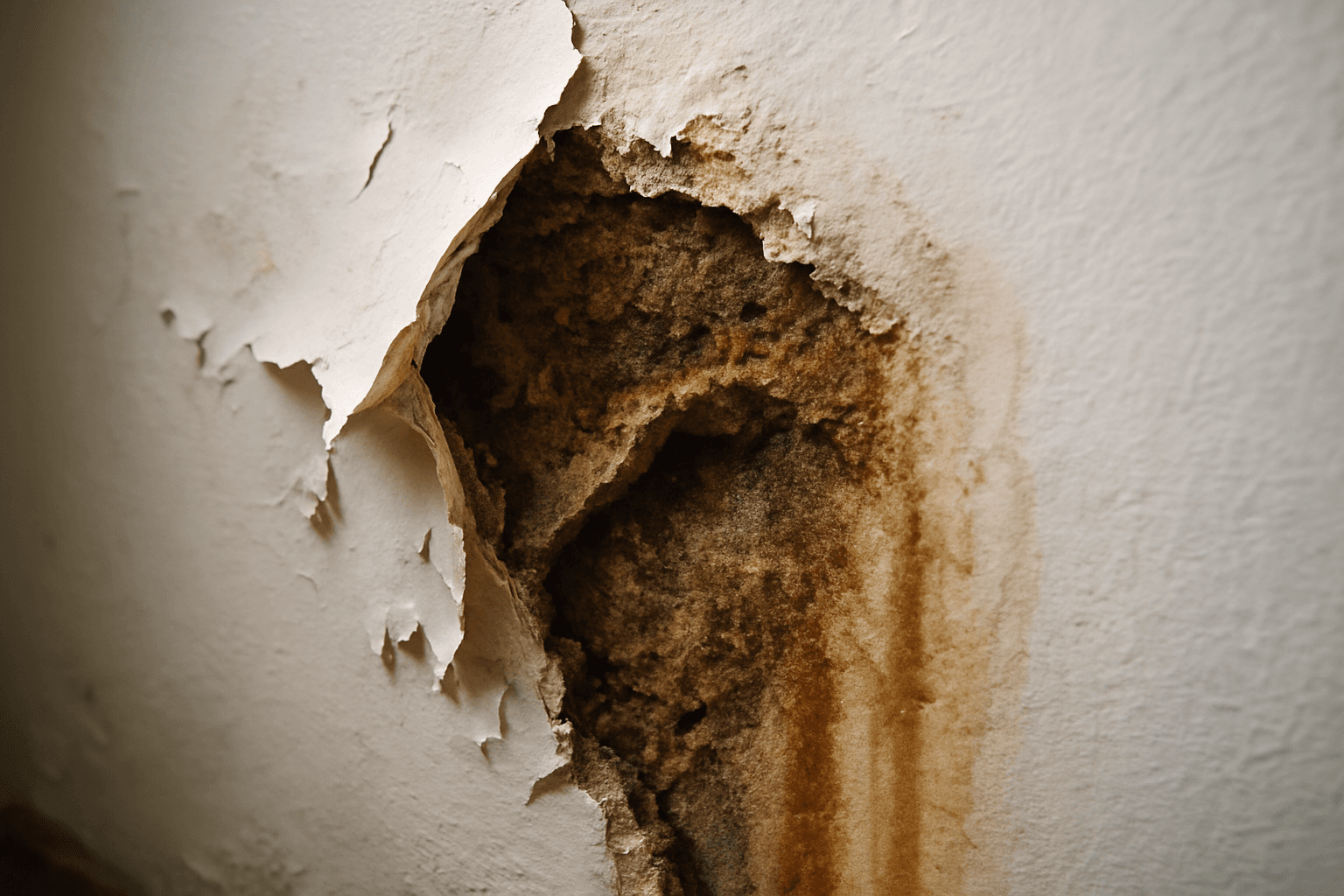
Water coming through a wall when it rains is getting in from the outside through a gap in the siding, brick, stucco, a window or a door above, or where a roof line meets the wall. It rarely comes in where you see it. Water enters high, runs down inside the wall, and shows up as a stain, bubbling paint or a wet baseboard lower down. The longer it goes, the more of the wall's insides are wet.
What to Do Now
- 1Move things away and dry the surface. Pull furniture and rugs back from the wall and wipe the water up so you can see where fresh water appears.
- 2Mark the wet area during the next rain. Pencil the edge of the stain and note which storm direction and how heavy the rain was. A wall that leaks only in wind-driven rain points to siding, windows or flashing on that side.
- 3Look at the outside of that wall. Check the window and door trim above the stain, cracked caulk, missing or loose siding, gutters overflowing onto the wall, and where a lower roof meets the wall.
- 4Have the inside of the wall measured. Press the drywall and the baseboard. A moisture meter or thermal camera shows how far up and across the water has gone, which is usually further than the stain.
Where Rain Gets In
| Where the water shows | Usual entry point |
|---|---|
| Below a window, at a corner | Window flashing or the sill pan |
| Near the ceiling of an exterior wall | Where a roof, deck or chimney meets the wall |
| Low on the wall, near the floor | Siding or brick above, water running down behind it, or soil and gutters splashing against the wall |
| On a brick or stone wall, spread out | Water soaking through the masonry, or blocked weep holes |
| Only when gutters overflow | Gutters or downspouts dumping water against the wall |
Brick and stone walls are built to let some water through and then drain it out at the bottom through weep holes. When the weep holes are blocked by mortar, soil or caulk, the water has nowhere to go but inward. Stucco and siding depend on a water barrier behind them and flashing at every opening. A small gap at the top of a window can put water into the wall every storm.
If the wall is in a basement, basement leaks when it rains covers the foundation side of this.
Talk to a water damage pro now
Answered 24/7 · Toll-free · answered 24/7 · no obligation
(888) 840-6512- Describe the damage & give your ZIP
- You're routed to the on-call local crew
- They quote — you decide, no obligation
What Is Wet Inside
The inside of an exterior wall holds sheathing, studs, insulation and the back of the drywall. Insulation holds water against the wood, and the drywall paper feeds mold. Wet material starts growing in about 24–48 hours. A stain that comes back after being painted means water is still getting in, and each storm adds to what is already there. The hidden water damage signs page lists what to look for elsewhere on the same wall.
Two Jobs, in Order
First the water is stopped from outside. That is a siding, masonry, window or roofing contractor, depending on the entry point. Then the wall is dried or opened. A restoration company measures the cavity, removes wet insulation and drywall where needed, dries the framing, and confirms it with readings before the wall is closed. Drying clean rainwater runs around $3–$7 per square foot before rebuilding.
Doing only the first job leaves a wet wall behind the paint. Doing only the second means it gets wet again in the next storm.
If the wall is soft or the stain grows with each rain, (888) 840-6512 is answered 24/7 and connects you with a certified restoration company that serves your area. The company gives you an arrival window for your address on the call, and there is no charge for the referral.
Reading to confirm what you already suspect?
Confirm it in two minutes instead — the pro on this line answers questions about YOUR situation all day: what it is, what it should cost, whether you even need service. If you want, they'll set the appointment on the same call.
Toll-free · no obligation · asking costs nothing
Frequently Asked Questions
Why is water coming through my wall when it rains?
Rain is getting past the outer skin of the wall: failed window or door flashing, cracked caulk, damaged siding or stucco, blocked weep holes in brick, gutters overflowing onto the wall, or a missing kick-out flashing where a roof meets it.
Can rain soak through a brick wall?
YesBrick absorbs water and is designed to drain it out at the bottom through weep holes. When those are blocked, or the mortar is failing, the water comes inward instead.
Who do I call for water coming through a wall?
The contractor who fixes the entry point, usually siding, masonry, windows or roofing, and a restoration company to measure and dry the wall cavity. They are separate jobs, and both are needed.
How do I know if the inside of the wall is wet?
A stain that grows with each storm, bubbling paint, a soft or swollen baseboard, and a musty smell. A moisture meter or thermal camera shows how far the water has spread inside.
Will a wall dry out on its own after a rain leak?
RarelyInsulation holds water against the studs and sheathing, and each storm adds more. Wet material starts growing mold in about 24–48 hours.
Who do I call right now for water damage?
Call (888) 840-6512. The line is answered 24 hours a day, seven days a week, and connects you with an IICRC-certified water damage restoration company that serves your area. Describe what you can see — where the water is coming from, how long it has been there, and whether it smells — the more specific you are, the faster the right company is on the line.
If the source is a pipe or an appliance, shut the main water valve first. Have four things ready and the call goes quickly: the address, when the water started, what is wet now, and whether you have filed an insurance claim.
Still not sure which of these is your situation? (888) 840-6512 · toll-free · answered 24/7
Sources
- IICRC S500 Standard for Professional Water Damage Restoration
- EPA — A Brief Guide to Mold, Moisture and Your Home
- EPA — Moisture Control Guidance for Building Design, Construction and Maintenance
Methodology: How we source and verify data · Report an error
Disclaimer: HearthDry is an independent educational resource. This article is for informational purposes only and does not constitute professional, legal, or insurance advice. Consult licensed professionals before making decisions about your property or insurance claims.
Free 2-day shipping
Amazon Prime members pay no shipping on restoration equipment
Dehumidifiers, air movers, and moisture meters qualify for free Prime delivery — bulk items that otherwise cost $15–$40 to ship.
Affiliate link — HearthDry earns a bounty if you sign up; costs you nothing extra.
Equipment
What each machine actually does
Removes the moisture the structure is still giving off — the machine that decides how long drying takes
See the picks →Moves air across wet surfaces so the dehumidifier has something to take out of the air
See the picks →Finds water behind walls and under floors, and tells you when a material is actually dry
See the picks →Alerts you the moment a leak starts — the cheapest thing on this list and the only preventive one
See the picks →Those pages carry affiliate links. As an Amazon Associate, HearthDry earns from qualifying purchases; it costs you nothing extra.
Our Amazon storefront →Advertisement
