
Quick answer
Bubbling paint often means water is getting behind it, but not every blister is a leak. Press one: if it is soft, damp or releases water, and the drywall behind feels spongy, moisture from a leak or condensation is the cause. Dry, hard blisters that appeared soon after painting usually come from heat or poor adhesion. Moisture blisters cluster under windows, behind showers, near ceilings below bathrooms and low on outside walls. Find and stop the water and dry the wall before repainting. Call (888) 840-6512 to reach a certified water damage restoration company in your area; the line is answered 24/7.
Written & reviewed by Marcus ReedIICRC WRT
Reviewed September 27, 2026· Next review Mar 2027
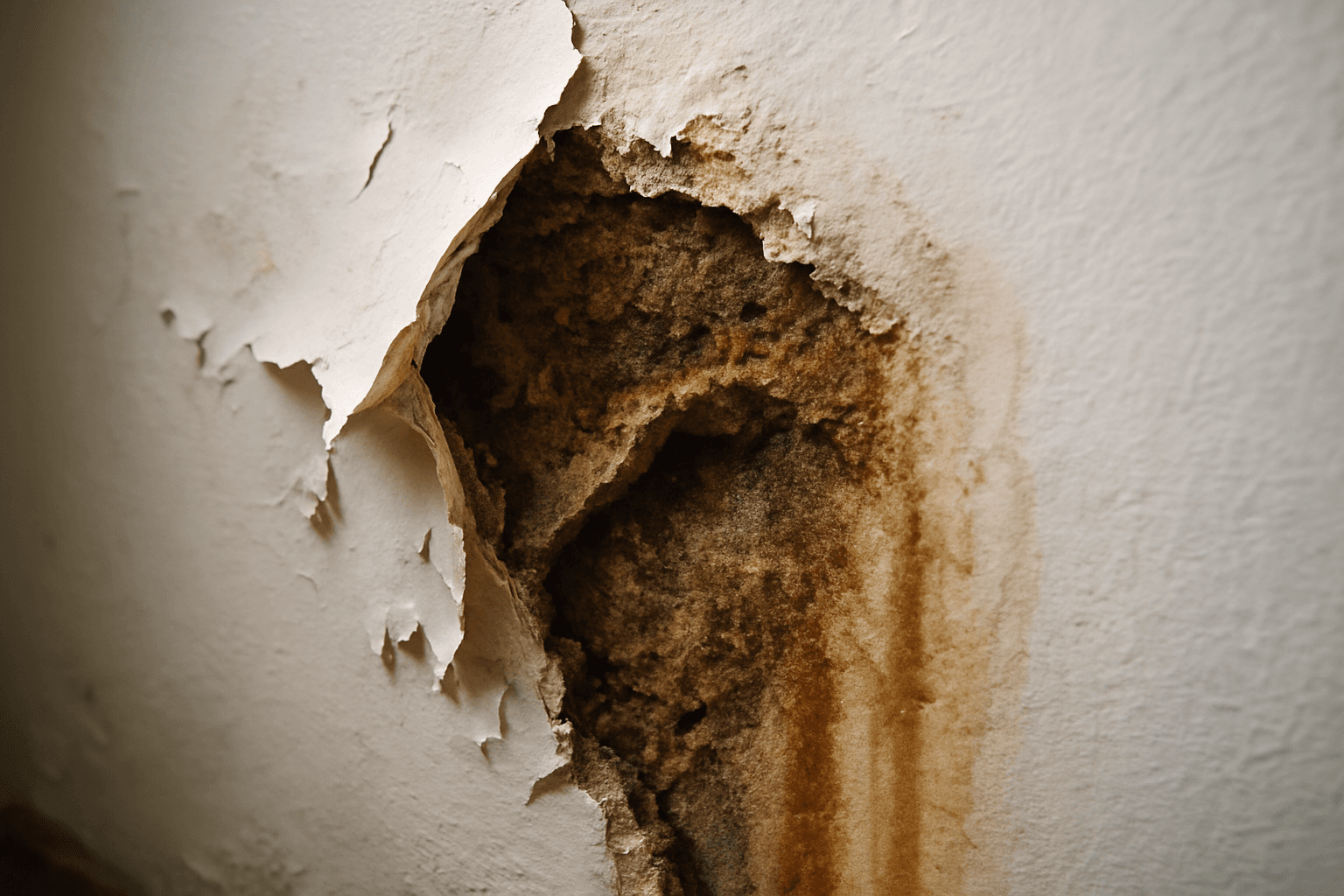
Blistered paint on a wall is often, though not always, moisture pushing out from behind. The quick test is to press one: if water comes out, or the wall underneath feels soft or cold, the blister is a symptom of a leak or condensation and scraping it off fixes nothing. A blister that is hard, dry and crunchy is more likely a paint problem, caused by heat, dirt or a bad bond.
Two Kinds of Blister
Paint lifts for two very different reasons, and they look alike from across the room.
| Moisture blister | Heat or adhesion blister | |
|---|---|---|
| Press it | Soft, may squirt water or feel damp | Firm, crackles, dry inside |
| Behind it | Wet or crumbly drywall, sometimes a brown stain | Clean, sound wall |
| Where | Low on walls, under windows, behind showers, below bathrooms | Sunny walls, over glossy paint, over dust or grease |
| When | Grows or returns after rain, showers or a plumbing event | Appears within days of painting, then stops |
| Smell | Often musty | None |
If the blister holds water, the wall is wet, and the question is how much of it. Water behind paint comes from somewhere, and the paint is only showing you the edge.
Where Moisture Blisters Show Up
The location is the biggest clue to the source.
- Below a window. Failed caulk, flashing or a clogged weep lets rain run down inside the wall. The blisters sit under the corners of the sill.
- On the wall behind a shower or tub. A cracked grout line, a failed valve seal or a leaking drain wets the back of the drywall from the other side. See the page on hidden water damage in walls and floors for how that spreads.
- Near the ceiling under a bathroom. Blisters and a faint yellow line along the top of the wall often come before a stain appears on the ceiling itself.
- Low on an exterior wall. Soil or mulch piled against siding, a downspout dumping at the foundation, or a sprinkler hitting the wall.
- Around a plumbing wall. A slow drip at a supply fitting inside the cavity may take weeks to show.
In a bathroom with no fan, paint can also bubble from shower steam condensing on a cold outside wall. That is still water, and it still leads to mold, but the fix is ventilation rather than a plumber.
Does Peeling Paint Mean Water Damage?
Not by itself. Peeling that starts at a corner and comes off in dry, brittle flakes is often old paint losing its bond, or latex over oil-based paint. Peeling that comes off in soft, rubbery sheets, with a powdery or stained wall beneath, or that keeps returning in the same patch, usually means moisture. A moisture meter on the bare wall settles it: compare the reading at the peeling spot with a dry wall in the same room.
Talk to a water damage pro now
Answered 24/7 · Toll-free · answered 24/7 · no obligation
(888) 840-6512- Describe the damage & give your ZIP
- You're routed to the on-call local crew
- They quote — you decide, no obligation
What to Do About Bubbling Paint
- 1Press a blister and check what is behind it. Pop one with a utility knife over a towel. Note whether it is wet, whether the drywall paper is intact, and whether the gypsum crumbles when you push it with your thumb.
- 2Find and stop the source. Match the blister's location to the list above. Run the shower, hose the window or wait for rain and watch whether the patch darkens. The wet drywall guide explains how far water tends to travel from a small leak.
- 3Dry the wall and confirm it with a meter. A wall only a little damp can be dried in place with airflow and a dehumidifier. Drywall that is soft, stained through or smells musty is usually cut out, because mold can begin on the paper facing in about 24–48 hours.
- 4Repair and repaint only once it reads dry. Scrape the loose paint, let the patch dry, sand, prime with a stain-blocking primer, then paint.
How to Fix Peeling Paint From Water Damage
The order matters more than the products. Stop the water, dry the wall, then repair the surface. Painting a damp wall traps the moisture and the blisters return, often bigger, and a stain-blocking primer only hides a stain, it does not seal out a leak. If the drywall underneath is soft or crumbles, patching is no longer enough and the section has to be replaced; the water-damaged drywall repair page covers when that is a small patch and when it is a whole panel.
Is There Mold Behind the Blisters?
Sometimes. Drywall paper is food for mold, and a wall that has stayed damp behind paint for weeks often has spots of gray, green or black growth on the back of the board or on the paper you exposed when you opened a blister. A musty smell near the wall is a strong hint even when you see nothing. According to the EPA and CDC, mold can trigger allergic reactions, asthma symptoms and irritation of the eyes, nose and throat, and people with asthma, allergies or a weakened immune system are more sensitive to it. The color does not tell you how harmful it is. A patch smaller than about 10 square feet can usually be cleaned by a homeowner with gloves and a mask; more than that, or growth inside the cavity, is a job for a remediation company. The detecting mold in walls guide covers what to look for.
Do not just scrape and repaint. That is the single most common way a small leak turns into mold inside a wall, because the cover-up works for a season while the cavity stays wet.
When It Is More Than Paint
Call a restoration company when the blisters cover more than a few square feet, keep returning after you fix what you thought was the source, sit on a wall that shares a bathroom or kitchen, or come with a musty smell. Those are signs of water in the cavity, and it takes a meter or thermal camera to find where it stops. (888) 840-6512 is answered 24/7 and connects you with a certified restoration company that serves your area; the company gives you an arrival window for your address on the call.
Reading to confirm what you already suspect?
Confirm it in two minutes instead — the pro on this line answers questions about YOUR situation all day: what it is, what it should cost, whether you even need service. If you want, they'll set the appointment on the same call.
Toll-free · no obligation · asking costs nothing
Frequently Asked Questions
Why is the paint on my wall bubbling?
Paint bubbles when it loses its bond with the wall. The two usual reasons are moisture behind it, from a leak, rain getting into the wall or condensation, and a surface problem such as painting in heat or direct sun, over dust or grease, or latex over glossy oil paint.
Pressing a blister tells you which: moisture blisters are soft or wet, surface blisters are dry and hard.
Does peeling paint mean water damage?
Not always. Dry, brittle flakes lifting at a corner often mean old paint losing its bond. Paint that comes off in soft, rubbery sheets, keeps returning in the same spot, or leaves a stained or powdery wall behind usually means moisture. A moisture meter on the bare wall, compared with a dry wall nearby, settles it.
How do I fix peeling paint from water damage?
Stop the source of water first, then dry the wall and confirm it with a meter. Scrape loose paint, replace any drywall that is soft or crumbling, sand, prime with a stain-blocking primer and repaint. Painting over a damp wall traps the moisture and the blisters come back.
Is bubbling paint in a bathroom a sign of a leak?
It can be. On a wall shared with a shower or tub it often means a grout, valve or drain leak wetting the back of the drywall. On an outside wall in a bathroom with no working fan, it is more often shower steam condensing on the cold wall. Both are moisture and both can lead to mold.
Can I just scrape and repaint bubbling paint?
Only if the blisters are dry and the wall behind is sound. If there is water or soft drywall behind the paint, scraping and repainting hides an active moisture problem, which usually returns and can grow mold inside the wall.
Who do I call right now for water damage?
Call (888) 840-6512. The line is answered 24 hours a day, seven days a week, and connects you with an IICRC-certified water damage restoration company that serves your area. Describe what you can see — where the water is coming from, how long it has been there, and whether it smells — the more specific you are, the faster the right company is on the line.
If the source is a pipe or an appliance, shut the main water valve first. Have four things ready and the call goes quickly: the address, when the water started, what is wet now, and whether you have filed an insurance claim.
Still not sure which of these is your situation? (888) 840-6512 · toll-free · answered 24/7
Sources
- EPA — A Brief Guide to Mold, Moisture and Your Home
- CDC — About Mold
- IICRC S500 Standard for Professional Water Damage Restoration
Methodology: How we source and verify data · Report an error
Disclaimer: HearthDry is an independent educational resource. This article is for informational purposes only and does not constitute professional, legal, or insurance advice. Consult licensed professionals before making decisions about your property or insurance claims.
Free 2-day shipping
Amazon Prime members pay no shipping on restoration equipment
Dehumidifiers, air movers, and moisture meters qualify for free Prime delivery — bulk items that otherwise cost $15–$40 to ship.
Affiliate link — HearthDry earns a bounty if you sign up; costs you nothing extra.
Equipment
What each machine actually does
Removes the moisture the structure is still giving off — the machine that decides how long drying takes
See the picks →Moves air across wet surfaces so the dehumidifier has something to take out of the air
See the picks →Finds water behind walls and under floors, and tells you when a material is actually dry
See the picks →Alerts you the moment a leak starts — the cheapest thing on this list and the only preventive one
See the picks →Those pages carry affiliate links. As an Amazon Associate, HearthDry earns from qualifying purchases; it costs you nothing extra.
Our Amazon storefront →Advertisement
