Best Basement Waterproofing Paint in 2026 — Masonry Waterproofers Compared, and the Leaks No Paint Can Stop

Best Basement Waterproofing Paint in 2026

Masonry Waterproofers Compared, and the Leaks No Paint Can Stop

5 picks compared · prices, ratings and stock checked October 12, 2026

Our Top Pick

For damp bare masonry, the KILZ Basement and Masonry Waterproofing Paint: 12 PSI stated, a 4-hour recoat, and a printed list of what it is not for. For a dug-out exterior wall, or hairline cracks that open and close, the Liquid Rubber Foundation Sealant is the flexible alternative.

4.7 on Amazon · 1,262 ratings

Quick answer

If your bare concrete or block basement wall is damp but has no water running through it, buy a masonry waterproofing paint with a stated pressure rating, and for most basements that is the KILZ Basement and Masonry Waterproofing Paint, rated 4.7 stars across 1,262 Amazon ratings. Its listing states 12 PSI, a 4-hour recoat and a 7 to 14 day full cure. Fill cracks with hydraulic cement and scrub off white salt deposits before the first coat. No paint stops water pouring through a crack, a high water table or soil that slopes toward the house, and KILZ says its paint is not for walls with active leaks.

Our Picks at a Glance

Available picks first — 4 of 5 in stock at our last check — ratings and stock read from Amazon on 12 October 2026.

How this page was made: we compare the current Amazon listings, the makers' published specs and what verified buyers report, then rank by fit for the job. Ratings, review counts and stock are read from Amazon and dated. We earn a commission on purchases through our links; it does not change the order. Reviewed by Marcus Reed, IICRC-certified Water Restoration Technician.

Full Reviews

Each pick in detail: what the listing states, what buyers report, and where it falls short.

#1
Best Overall

Check price

on Amazon ↗

Listing verified 13 Oct 2026

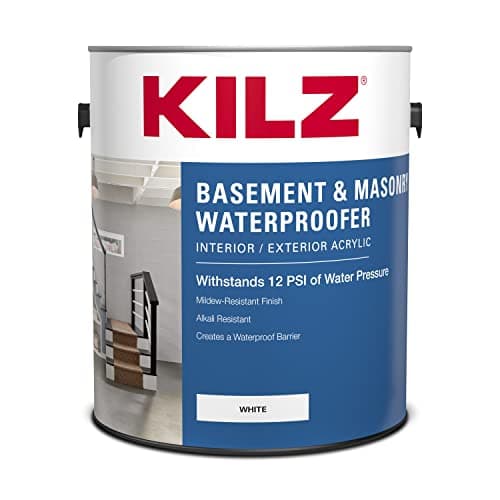
KILZ Basement and Masonry Waterproofing Paint, 1 Gallon (White, Interior/Exterior, 12 PSI Stated)See it on Amazon ↗

Quick Verdict

KILZ Basement and Masonry Waterproofing Paint: 12 PSI stated, interior or exterior, and clear about its limits, for damp walls with no running water.

Key Specs

Type

Interior/exterior masonry waterproofing paint, low odor per the listing

Pressure rating (stated)

Blocks up to 12 PSI of water pressure

Surfaces named

Basement and masonry walls, concrete block, brick, stucco, retaining walls

Dry and recoat (stated)

Dry to the touch in 1 hour; recoat in 4 hours

Full cure (stated)

7 to 14 days

Limits (stated)

Not for floors or for walls with active water leaks

Pros

  • Prints where it does not belong, floors and walls with active leaks, so you know before buying whether your wall qualifies
  • A 4-hour recoat window, per the listing, lets two coats go on in a single day
  • The finish is described as alkali resistant, which matters on concrete and block that carry salts to the surface
  • Bright white and low odor, a help in a dark basement with one small window

Cons

  • Coverage per gallon is not on the listing, so read the can before working out how many gallons the walls need
  • Full cure takes 7 to 14 days, per the listing, so wait before scrubbing the wall or pushing shelving against it
  • No elongation or crack-bridging figure on the listing, so a crack that opens and closes with the seasons is better served by a rubber membrane

Suited to

Bare concrete or block basement walls that feel damp or show seepage stains, with no water running in

Our take

A 12 PSI rating sounds abstract, so turn it into feet. Water pushes about 0.43 psi for every foot of depth, which makes 12 psi the push of a water column roughly 28 ft tall. A basement wall 8 ft below grade, with soil soaked to the surface, sees about 3.5 psi at its base. The rating, then, is rarely what gives out. The bond is. Water and salts moving through the wall from behind lift a coating that went onto dust, chalky residue or old paint. That is why the listing's prep line matters more than its rating: hydraulic cement in every hole and crack below grade, white deposits scrubbed off, and a wall given time to dry. The listing does not say how the 12 PSI figure was measured.

Check today's price on Amazon →

Affiliate link — commission at no extra cost to you

Compare elsewhere

These open a search for this model. We quote prices only where we can verify them — Amazon, Sylvane and eBay.

#2
Best for New or Alkaline Concrete

Check price

on Amazon ↗

Listing verified 13 Oct 2026

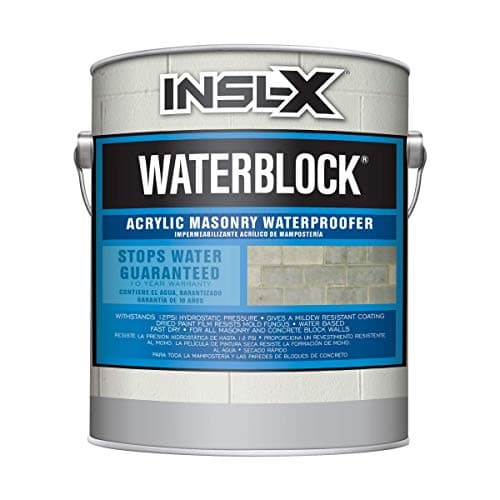
INSL-X WaterBlock Acrylic Masonry Waterproofer Paint, 1 Gallon (White, 12 psi Stated)See it on Amazon ↗

Quick Verdict

INSL-X WaterBlock Acrylic Masonry Waterproofer: a second 12 psi wall paint, with stated pH 13 alkali resistance and a 50°F to 90°F window.

Key Specs

Type

Water-based acrylic masonry waterproofer for vertical walls

Pressure rating (stated)

Withstands up to 12 psi hydrostatic pressure

Alkali resistance (stated)

Up to pH 13

Application temperature (stated)

Surface and air between 50°F and 90°F

Surfaces named

Interior and exterior concrete walls, cinder block, stucco, brick; basement walls, foundations, retaining walls

Dry and recoat times

Described as fast drying; times not stated on the listing

Pros

  • States its hydrostatic rating directly, 12 psi, so it can be weighed against the KILZ pick on the same terms
  • Alkali resistance up to pH 13, per the listing, a number none of the other paint listings here give
  • Gives an application window, 50°F to 90°F for surface and air, that tells you when a cold basement is not ready
  • Named for foundations and retaining walls too, so a leftover gallon has an outdoor use

Cons

  • No dry, recoat or cure times on the listing, which sends you to the label for prep and application
  • Coverage per gallon is not stated
  • Written for vertical walls only, so it is no answer for a damp slab

Suited to

Newer poured concrete or block walls, in a basement you can keep above 50°F while the paint goes on

Our take

Concrete is strongly alkaline, and young concrete most of all. Many ordinary paints break down or lose their grip on a surface like that, so the pH figure here is worth reading: INSL-X states alkali resistance up to pH 13. The second number to act on is temperature. The listing says to paint only when both the surface and the air sit between 50°F and 90°F, and an unheated basement wall in January can be colder than the room around it. Put a thermometer against the wall itself, or wait for a milder week. The listing gives no dry or recoat times and tells you to review the label for preparation, so read it in the product images or on the can before you start.

Check today's price on Amazon →

Affiliate link — commission at no extra cost to you

#3
Best Flexible Membrane for Moving Cracks

Check price

on Amazon ↗

Listing verified 13 Oct 2026

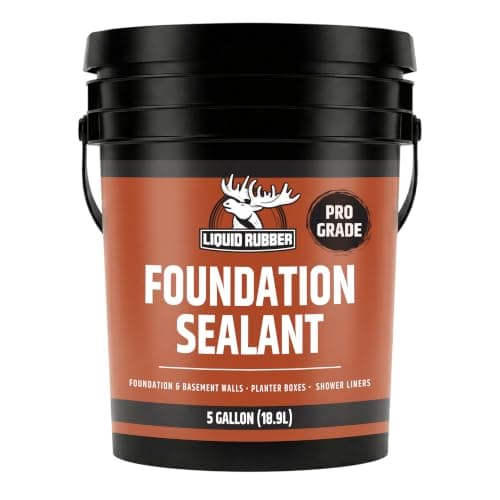
Liquid Rubber Foundation Sealant, 5 Gallon (Black, Flexible Membrane, Interior/Exterior)See it on Amazon ↗

Quick Verdict

Liquid Rubber Foundation Sealant: a stretchy black membrane for moving hairline cracks and dug-out exterior walls, not a finished interior face.

Key Specs

Type

Water-based liquid rubber membrane; zero VOCs, per the listing

Flexibility (stated)

900% elongation

Coverage (stated)

Interior basement walls 50 sq ft per gallon (2 to 3 coats); exterior 20 sq ft per gallon (3 to 4 coats)

Application temperature (stated)

50°F to 90°F

Color

Goes on brown, dries black

Limits (stated)

Not for walking surfaces; tacky when cured

Pros

  • Stretches across a hairline crack that moves, with a stated 900% elongation, where a rigid paint would split
  • Gives coverage for both inside and outside walls, which makes the pail count simple arithmetic
  • No mixing, and brush, roller or sprayer all work, per the listing
  • Zero VOCs, per the listing, which suits a closed basement

Cons

  • Dries black and stays tacky, a poor finish for a wall you will see, touch or stack boxes against
  • Its listing says it is designed to seal against active leaks, but on the inside face, water pushing from behind still works against any coating; fix drainage first
  • Thick build means low coverage: a full basement takes several pails

Suited to

A dug-out exterior foundation wall, or an interior wall with hairline cracks that open and close with the seasons

Our take

Rigid masonry paints and a rubber membrane fail in different ways. A masonry paint bonds into the pores and is far stiffer than rubber, so a hairline crack that opens in winter and closes in summer can crack the film along its line. A membrane stretches over the gap instead; Liquid Rubber states 900% elongation. The trade is thickness and looks. Inside, the listing's 50 sq ft per gallon means one 5 gal pail covers about 250 sq ft, a little over a fifth of the walls in a 30 by 40 ft basement. Outside, on the face the water actually comes from, the rate drops to 20 sq ft per gallon because the build is heavier. That outside face is where a membrane does its best work, if the wall is dug out.

Check today's price on Amazon →

Affiliate link — commission at no extra cost to you

#4
Best White Membrane for Block Walls

Check price

on Amazon ↗

Listing verified 13 Oct 2026

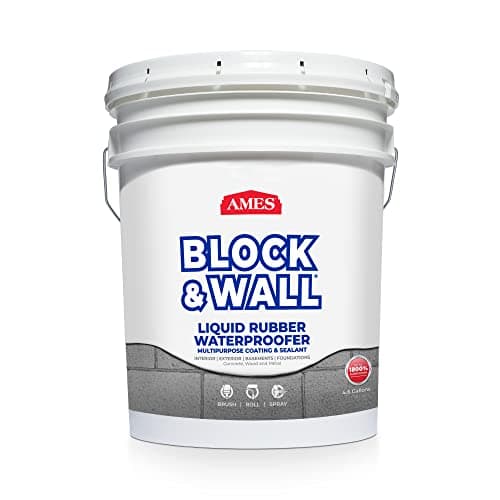
Ames Block & Wall Liquid Rubber Waterproofer, 5 Gallon (White, Fills Cracks to 1/8 in)See it on Amazon ↗

Quick Verdict

Ames Block & Wall Liquid Rubber Waterproofer: a white rubber membrane with clear per-coat coverage, for sealing a whole block-wall basement.

Key Specs

Type

Elastomeric liquid rubber for concrete walls, cinder block and ICF

Flexibility (stated)

Up to 1800% elongation

Crack filling (stated)

Fills cracks and crevices up to 1/8 in

Coverage (stated)

1 gallon per 100 sq ft per coat; 2 coats recommended

Application

Sprayer, roller or brush; low odor, per the listing

Pressure rating

Not stated on the listing

Pros

  • White, so it can stay as the finished face of a utility basement wall, unlike a black membrane
  • States the widest crack it fills, 1/8 in, a limit you can check with a 1/8 in drill bit
  • Coverage is given per coat, the clearest figure on this page for working out how many pails to order
  • Also named for ICF, metal and wood, so leftovers have uses around the foundation

Cons

  • No hydrostatic pressure rating on the listing, so there is no number to hold it to against water pushing through
  • Cracks wider than 1/8 in need filling first, and the listing does not say with what
  • Stock was listed as limited when the listing was read, and a 5 gallon pail is a lot for one damp corner

Suited to

Sealing a whole block-wall basement white in two coats

Our take

This listing makes the arithmetic easy. At 100 sq ft per gallon per coat, with 2 coats recommended, each gallon finishes 50 sq ft of wall, and a full pail finishes roughly 250 sq ft. For the 1,120 sq ft of wall in a 30 by 40 ft basement, before doors and windows, that is about 22 gallons, or five pails with a little to spare. Use the 1/8 in figure as a test, not a hope. Slide a 1/8 in drill bit into each crack; if it drops in, fill that crack before coating. What the listing leaves out is a pressure rating, so treat this as damp-proofing for walls that seep, not a barrier for walls that leak.

Check today's price on Amazon →

Affiliate link — commission at no extra cost to you

#5
The Drylok Option

Check price

on Amazon ↗

Listing verified 12 Oct 2026

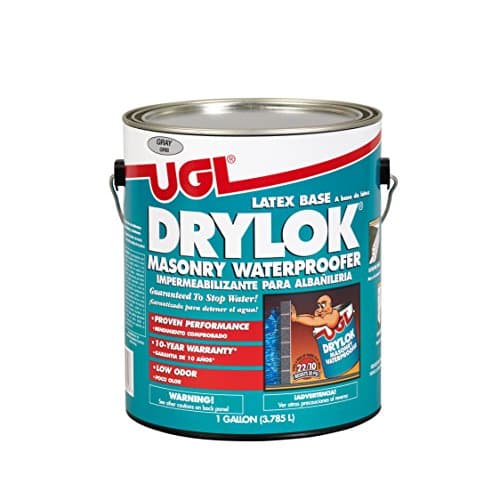
UGL DRYLOK Original Latex Basement and Masonry Waterproofer, 1 Gallon (Gray)See it on Amazon ↗

Quick Verdict

UGL DRYLOK Original Latex Basement and Masonry Waterproofer: the familiar name, but its Amazon listing states no specs, so read the can first.

Key Specs

Type

Latex basement and masonry waterproofer, per the title

Size and color

1 gallon, gray

Made in

United States, per the listing

Pressure rating

Not stated on this listing

Coverage, dry and cure times

Not stated on this listing

Limits on use

Not stated on this listing

Pros

  • Drylok is the name many people search for this job, and this is the brand's Original latex formula, per the title
  • Gray rather than white, which hides dust and scuffs on a utility wall
  • One gallon is a manageable size for trying it on a single wall before committing to the whole basement

Cons

  • The Amazon listing states almost nothing: no pressure rating, coverage, dry time or limits, so the can's label is your only spec sheet
  • Listed with a future availability date when read, so it may not arrive in time for a planned weekend
  • With no stated limits, nothing here warns you off floors or leaking walls; hold it to the same limits KILZ prints

Suited to

Owners who already know Drylok, or who want a gray finish and will read the label before buying

Our take

This pick is here because so many people search for Drylok by name, and you should know what its Amazon listing does and does not tell you. The title confirms the basics: the brand's Original latex formula, gray, one gallon, made in the United States. The bullets give no pressure rating, no coverage, no dry or recoat time and no limits on use. Rather than fill those gaps from memory or from another site, this page leaves them blank. Before you buy, check the product images or the maker's data sheet for the four numbers the KILZ listing prints: pressure rating, recoat time, full cure and the surfaces it is not for. If they suit your wall, the same prep rules apply.

Check today's price on Amazon →

Affiliate link — commission at no extra cost to you

Buyer's Guide

What to know before you buy.

What Waterproofing Paint Can and Cannot Do

A masonry waterproofer fills the pores of bare concrete and block so less dampness reaches the room. That helps a wall that looks dark, smells musty, or shows a faint tide line after rain. It is not a repair for water you can see moving. A crack that runs during storms, water at the joint where the wall meets the floor, and water rising through the slab are all driven by pressure outside the wall. A coat on the inside face, the side waterproofers call the negative side, is working against that push. KILZ prints the limit on its own listing: not for walls with active water leaks. So start outside. EPA advises cleaning and repairing gutters regularly and making sure the ground slopes away from the foundation so water does not collect around it. Carry downspouts 4 to 6 ft out, then judge how much damp is left.

Test the Wall First: Seepage or Condensation

Damp walls have two very different causes, and paint only helps one of them. Tape a square of clear plastic, about 2 ft across, to the bare wall with all four edges sealed, and leave it for a day or two. Beads of water on the wall side of the plastic mean moisture is coming through the masonry, which is the job a waterproofer is made for. Water on the room side means humid air is condensing on a cool wall. Paint will not change that; a dehumidifier will. EPA advises keeping indoor humidity below 60 percent, ideally between 30 and 50 percent, and a basement that runs above that range in summer will sweat on any wall, painted or not. Run the test in the season when the wall looks worst, and repeat it after a heavy rain.

What a 12 PSI Rating Means in Feet of Water

Two listings on this page state 12 psi, KILZ and INSL-X. Water exerts about 0.43 psi for each foot of depth, so 12 psi equals a water column close to 28 ft tall. A wall that sits 8 ft below grade, with soil saturated right to the surface, sees roughly 3.5 psi at the bottom. On paper, the rating is rarely the limit. In practice, a coating on the inside of a wall usually fails at its bond: salts and water moving through the masonry lift a coat that went onto dust, old paint or white deposits, and a crack that moves splits a rigid film. Neither listing says how its figure was measured. Treat a stated rating as a fair way to compare two paints, and treat the prep as the reason one of them is still on the wall in five years.

Prep Decides Whether the Coating Stays On

Start with a stiff wire brush on every white, powdery patch. That deposit is efflorescence, mineral salt left behind when water passing through the wall evaporates at the surface, and a coating laid over it lets go along with the salt. A splash of water tells it from mold: salt dissolves, mold smears. Strip old paint that flakes, because a waterproofer has to bond to the masonry, not to a failing coat. Chisel out loose mortar and patch holes and cracks with hydraulic cement, which KILZ asks for below grade. Wash and rinse the wall, then let it dry for several days with a fan or dehumidifier running. Mold gets cleaned off, never coated: EPA's guidance is to clean up mold and dry the surface before painting, because paint applied over moldy surfaces is likely to peel.

How Much Paint a Basement Takes

Measure the walls, not the floor. Add the lengths of all four walls, multiply by the height, then subtract doors and windows. A 30 by 40 ft basement with 8 ft walls has 140 ft of wall, or 1,120 sq ft. At the Ames listing's 100 sq ft per gallon per coat, two coats need about 22 gallons. Liquid Rubber's stated 50 sq ft per gallon for interior walls lands on the same total. KILZ, INSL-X and the Drylok listing give no coverage, so read it off the can before ordering. Bare block soaks up more than smooth poured concrete, and the first coat on any bare masonry uses more than the second, so buy about 10 percent extra. Keep one sealed can for touch-ups; a scuff from a moved shelf is easier to fix with the same batch.

Who Should Not Paint the Wall

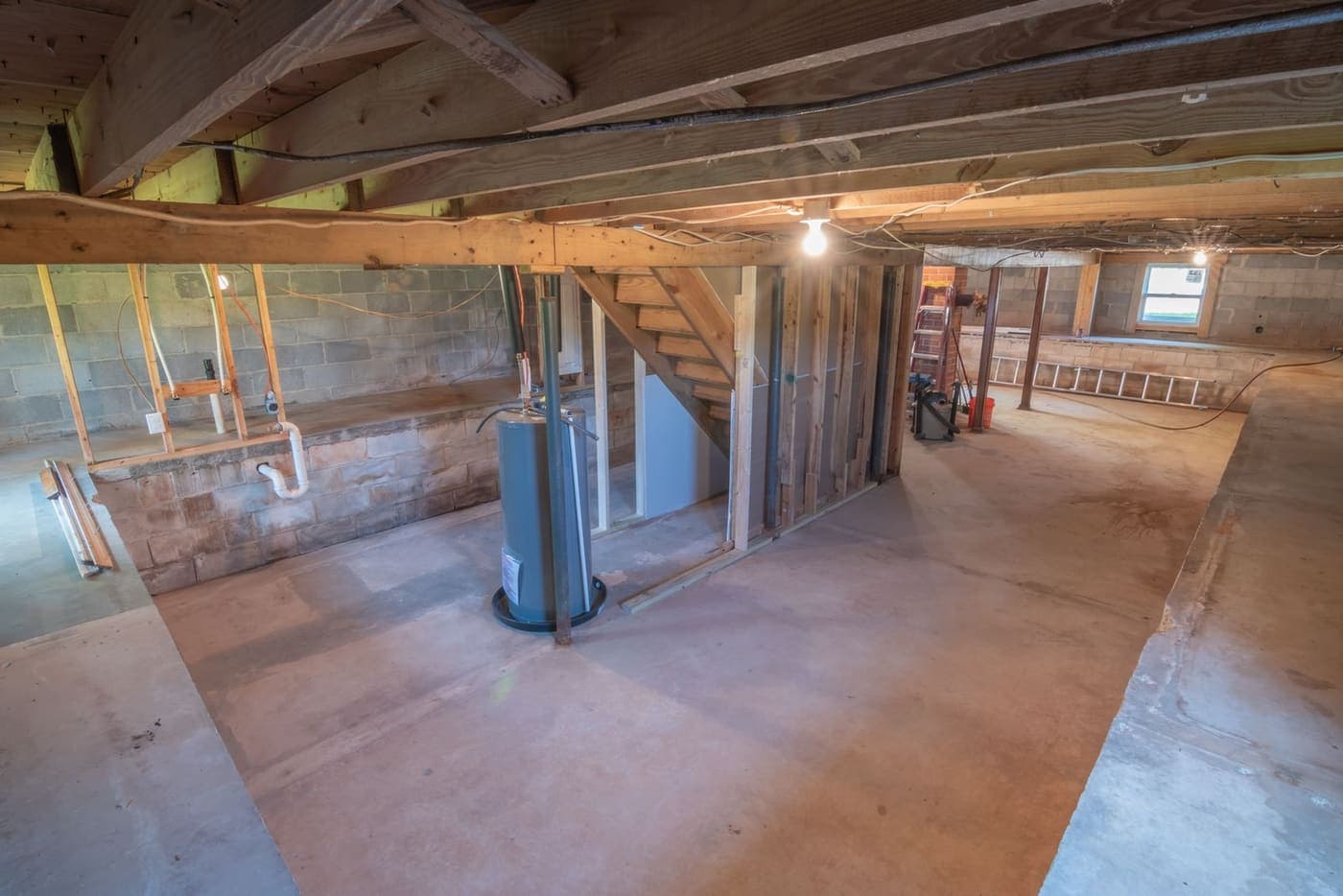
Paint is the wrong buy if water runs in during storms through a crack or at the floor joint, if water comes up through the slab, or if the sump keeps cycling for days after rain, which points to a high water table. Those need water handled outside and under the floor: drain tile and a sump pump, or exterior waterproofing by a contractor. A horizontal crack, a wall bowing inward, or a stair-step crack in block is a structural question for an engineer, and paint would only hide the evidence. Finished basements are out as well, because the coating has to touch bare masonry and framing and drywall cover it. Renters should report seepage to the landlord rather than paint over it. And if the yard slopes toward the house, regrading will do more than any can.

Frequently Asked Questions

Does basement waterproofing paint really work?

It works on damp seepage through bare masonry, and it does not work on leaks. A sound coat closes the pores of concrete and block, so a wall that looked dark and smelled musty can dry out.

Water running through a crack, in at the floor joint or up through the slab is pushed by pressure outside the wall, and a coating on the inside face loses that contest. Sort out gutters, downspouts and grading first, then judge what dampness remains.

Is Drylok or KILZ better for basement walls?

On what the Amazon listings state, KILZ gives you more to judge it by: 12 PSI, a 4-hour recoat, a 7 to 14 day cure, and stated exclusions for floors and active leaks.

The DRYLOK Original listing gives none of those numbers, which says nothing about the paint in the can, only about the listing. Both are masonry waterproofers for bare walls and need the same prep. If you lean toward Drylok, find those four figures on its label before buying.

Can you put waterproofing paint over painted basement walls?

Not reliably. A masonry waterproofer is meant to grip the masonry, and over old paint it can only hold as well as that paint does. Scrape and wire-brush anything flaking, and strip paint you cannot identify, since an ordinary coat underneath can release when moisture pushes through the wall.

The maker's rule for previously painted surfaces is printed on the can, not on any of the listings here, so check it before you buy.

How many coats of waterproofing paint does a basement need?

Plan on two coats, then follow the can. Ames recommends 2 coats at 100 sq ft per gallon each, and Liquid Rubber calls for 2 to 3 coats on interior walls and 3 to 4 outside.

KILZ allows a recoat after 4 hours, so two coats fit in one day in a warm, dry basement. Work the first coat hard into the pores, especially on block, and look for pinholes before the second, since each one left open is a path for water.

Can you apply waterproofing paint to a damp wall?

Wait for the wall to dry unless the label says otherwise. Water already sitting in the pores keeps a coating from bonding, and the listings on this page either say nothing on the point or send you to the label.

Run a dehumidifier and a fan for several days after the last rain, then tape plastic to the wall overnight; if the masonry under it is still wet, it is not ready. INSL-X adds a temperature limit of 50°F to 90°F for both surface and air.

Will waterproofing paint stop mold in a basement?

NoNot on its own. EPA's rule is that the key to mold control is moisture control, which in a basement means humidity under 60 percent and water kept outside the wall.

A coating can cut the damp that comes through masonry, but it does nothing about humid air condensing on cool walls. Never coat over existing growth: scrub it off with detergent and water, let the wall dry fully, then paint, or the new film is likely to peel.

Who do I call right now for water damage?

Call (888) 840-6512. The line is answered 24 hours a day, seven days a week, and connects you with an IICRC-certified water damage restoration company that serves your area. A recorded menu picks up first: choose water damage or mold, key in your 5-digit ZIP code, and hold through the short silence while the call is passed to the company.

Describe what you can see — where the water is coming from, how long it has been there, and whether it smells — the more specific you are, the faster the right company is on the line. If the source is a pipe or an appliance, shut the main water valve first. Have four things ready and the call goes quickly: the address, when the water started, what is wet now, and whether you have filed an insurance claim.

Still not sure which of these is your situation? (888) 840-6512 · toll-free · answered 24/7

Sources

  1. EPA — A Brief Guide to Mold, Moisture, and Your Home
  2. EPA — Mold Cleanup in Your Home

Methodology: How we source and verify data · Report an error

How we chose these picks

  • Every pick is a current listing. Stock, star ratings and rating counts are read from Amazon by script and carry the date they were read.
  • Nothing under 4.0 stars makes the list, and the top pick needs a large rating count, so one good week of reviews cannot put it there.
  • Specs are quoted from the listing or the maker, with the test condition behind the number where there is one, and sized against the job rather than the room on the box.
  • We do not run lab or field tests. Where a spec matters, we say what it is measured under and what it cannot tell you.

Free 2-day shipping

Amazon Prime members pay no shipping on restoration equipment

Dehumidifiers, air movers, and moisture meters qualify for free Prime delivery — bulk items that otherwise cost $15–$40 to ship.

Try Prime free →

Affiliate link — HearthDry earns a bounty if you sign up; costs you nothing extra.

Also Worth Comparing

Best Downspout Extensions in 2026 — Flexible Pipes Measured Against the 4 to 10 ft Rule, for a Drier Basement

Roof water that lands at the foundation is one of the most common reasons a basement gets wet, and an extension is the low-cost way to carry it out to ground that drains away. These picks are measured against how far each one reaches by its own listing, and against the grading, ice and mowing problems that decide whether an extension keeps working.

Read the comparison

Best Dehumidifier for Basement Use in 2026 — Drain Hose, Built-In Pump and Honest Pint Ratings

Most basement dehumidifier disappointment comes from two numbers nobody reads properly: the pint rating, measured at warm test conditions a 60°F basement never reaches, and the drainage method. Five units are compared here on those two points first, from a garden-hose drain to a built-in pump with a stated 15 ft lift.

Read the comparison

Best Crawl Space Vapor Barrier 2026 — 6 mil vs 10 mil vs 20 mil Woven, and the Tape That Seals the Seams

A properly installed vapor barrier is the most cost-effective way to keep ground moisture out of a crawl space, and most failures come from thin film and untaped seams rather than the wrong brand. This guide compares 6-mil, 10-mil and 20-mil woven liners on the specifications you can actually check, and covers the tape and overlaps that decide whether the barrier works.

Read the comparison

Best Concrete Crack Sealer in 2026 — Injection Kits for Basement Walls, Fillers for Floors, and the Cracks That Need an Engineer Instead

A concrete crack sealer can stop water seeping through a crack in a basement wall or slab, but it does nothing about the groundwater pushing on that wall, and some cracks are signs of movement that no sealer should cover. These picks are matched to the crack in front of you, with the width limits and cure times each listing states and the warning signs that call for a structural engineer.

Read the comparison

Best Hydraulic Cement in 2026 — Fast-Setting Plugs for Active Basement Leaks, the Undercut That Makes Them Hold, and the Cracks They Cannot Fix

Hydraulic cement is the one patching product that sets while water is coming through it, which makes it the right first move on a weeping crack or a leaking pipe penetration in a basement wall. These picks are compared from their listings on set time, pressure claims and tub size, with the undercut that makes a plug hold, the leaks it cannot stop, and the point where a basement needs drainage rather than another tub.

Read the comparison