
Quick answer
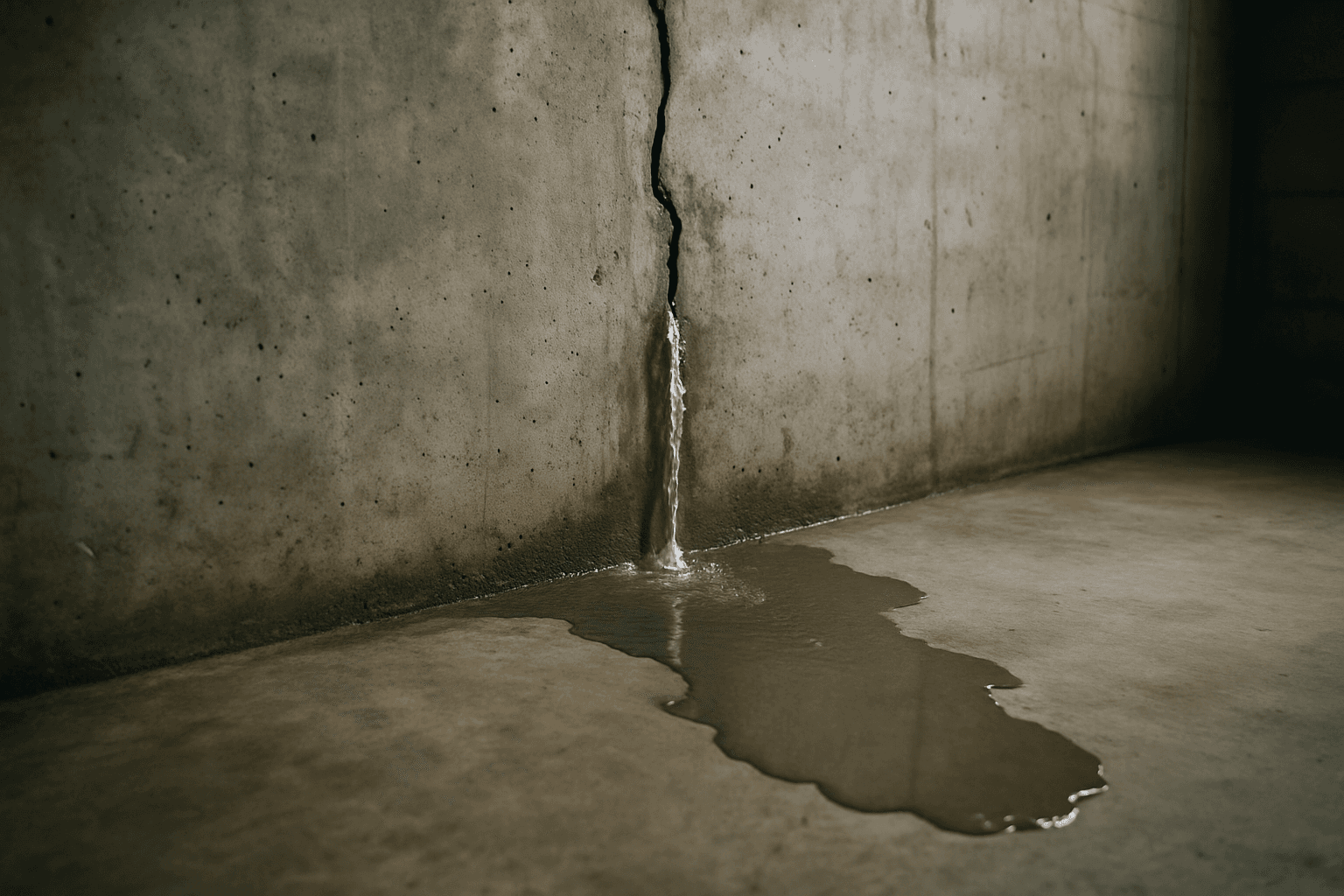
Hairline vertical cracks in a poured foundation are common settling and usually only need sealing. Horizontal cracks, stair-step cracks in block, or cracks wider than about a quarter inch suggest structural pressure and need an engineer's assessment. Water entering through any crack means hydrostatic pressure outside — sealing the crack alone rarely holds without also fixing grading and drainage. Call (888) 840-6512 to reach a certified water damage restoration company in your area; the line is answered 24/7.
Written by Marcus Reed
Reviewed by David Chen, PEProfessional Engineer (PE)
Reviewed July 1, 2026· Next review Jan 2027
Foundation Cracks & Basement Water Intrusion: A Homeowner's Guide
Not all foundation cracks are equal. A hairline vertical crack in poured concrete is almost always cosmetic — a normal result of concrete curing and shrinkage. A horizontal crack in a block wall under bowing pressure is a structural emergency. Knowing the difference determines whether you need a $200 epoxy injection or a $30,000 foundation repair.
Types of Foundation Cracks
Vertical cracks in poured concrete — The most common type. Usually caused by normal concrete shrinkage during curing (occurs in most poured foundations). Typically cosmetic unless actively leaking. Can be sealed with polyurethane injection from inside.
Horizontal cracks in block or poured concrete walls — The most serious type. Horizontal cracks indicate lateral soil pressure (hydrostatic pressure) exceeding the wall's structural capacity. A horizontal crack in a block foundation wall indicates the wall is failing under soil load. This requires immediate structural engineering assessment, not a waterproofing contractor visit.
Stair-step cracks in block foundations — Follow the mortar joints in a diagonal pattern. Usually indicate differential settlement — the foundation is moving unevenly. May be structural or cosmetic depending on severity. New cracks or cracks that are growing are always a concern.
Diagonal cracks from corners of windows and doors — Indicate settlement movement at points of structural weakness. Often cosmetic but can indicate foundation movement if they're growing or offset (one side higher than the other).
What Causes Hydrostatic Pressure?
Hydrostatic pressure is the force of water-saturated soil pushing against your foundation walls. Sources:
- Poor site grading — ground sloped toward the house rather than away
- Clogged or absent drain tile — the perimeter French drain system that was installed when the foundation was built
- Downspout discharge at foundation — concentrating roof runoff at the most vulnerable point
- High clay content soil — clay holds water rather than draining; soil swells and exerts pressure when wet
- Seasonal high water table — groundwater rising above the foundation footing during wet seasons
Does Insurance Cover Foundation Water Intrusion?
Generally no, for two reasons:
- 1Gradual/maintenance exclusion: Foundation crack seepage that occurs over months or years is classified as gradual damage — a homeowner maintenance responsibility.
- 2Flood exclusion: Water entering from the ground (hydrostatic pressure, groundwater) is classified as "flood" under insurance definitions — excluded from standard HO-3 policies and only covered under NFIP flood insurance, which has significant basement coverage limitations.
Exception: If a sudden storm event caused a previously intact foundation to crack and flood — with no prior seepage history — there's an argument for coverage as a sudden event. Document the cause carefully and have an attorney review any denial if the flooding was storm-related.
Waterproofing Options (Least to Most Expensive)
1. Exterior grading correction ($500–$2,000) Regrade soil to slope away from the foundation at 1 inch per foot for 6 feet around the perimeter. The least expensive, most effective preventive measure. Often reduces or eliminates water intrusion without interior work.
2. Downspout extensions ($50–$200) Extend all downspouts to discharge at least 6–10 feet from the foundation. Eliminates the most concentrated water source at your foundation.
3. Interior crack injection ($500–$1,500 per crack) Polyurethane foam injection through the crack from inside. Fills the crack and seals against water. Effective for isolated vertical cracks in poured concrete. Does not address the cause — only the symptom.
4. Interior drainage system with sump pump ($5,000–$15,000) A perimeter channel cut into the basement floor directs water to a sump pit and pump. The most common professional solution for chronic seepage. Does not waterproof the wall — manages water that enters. Highly effective.
5. Exterior waterproofing membrane ($15,000–$40,000) Excavate the full perimeter of the foundation, apply a waterproofing membrane to the exterior wall face, install new drain tile, and backfill. The most effective and most expensive solution — addresses the problem at its source.
When to Call a Structural Engineer First
If you see horizontal cracks, bowing walls, or stair-step cracks that appear to be growing: call a licensed structural engineer for an independent assessment before calling a waterproofing contractor. Waterproofing companies have a financial incentive to sell interior systems — a structural engineer has no stake in recommending one solution over another.
A structural engineer inspection costs $300–$600. It can save you from buying an interior drainage system when what you actually need is wall reinforcement with carbon fiber straps or steel I-beams.
Talk to a water damage pro now
Answered 24/7 · Toll-free · answered 24/7 · no obligation
(888) 840-6512- Describe the damage & give your ZIP
- You're routed to the on-call local crew
- They quote — you decide, no obligation
Reading to confirm what you already suspect?
Confirm it in two minutes instead — the pro on this line answers questions about YOUR situation all day: what it is, what it should cost, whether you even need service. If you want, they'll set the appointment on the same call.
Toll-free · no obligation · asking costs nothing
Frequently Asked Questions
- 1Exterior grading correction — regrade soil to slope away from the house at 1 inch per foot for 6 feet. Cost: $500–$2,000.
- 2Downspout extension — extend all downspouts 6–10 ft from the foundation. Cost: $50–$200.
- 3Interior crack injection — polyurethane or epoxy injection through poured concrete cracks. Cost: $500–$1,500 per crack.
- 4Interior drainage system (French drain + sump pump) — the most common and effective solution for chronic seepage. Cost: $5,000–$15,000.
- 5Exterior waterproofing — excavate the foundation and apply membrane coating. Most effective but most expensive. Cost: $15,000–$40,000.
- 1Hairline cracks (under 1/16 inch wide, horizontal or vertical): normal concrete shrinkage; usually cosmetic only but can be entry points for water. Monitor for widening; seal with hydraulic cement or polyurethane injection for waterproofing. No structural concern.
- 2Vertical cracks (wider than 1/4 inch): may indicate differential settlement; worth a structural engineer assessment if they are widening or if the crack runs the full height of the foundation wall. Typically sealed with epoxy injection
- 3Horizontal cracks: highest concern — indicate lateral soil pressure pushing the wall inward. This is a structural failure, not just a waterproofing issue. Requires immediate engineer assessment; common repair is carbon fiber strapping or wall anchors ($3,000–$8,000 per wall section)
- 4Stair-step cracks in block foundations: indicate differential settlement; structural if significant displacement is present
- 5Diagonal cracks from corners: indicate corner movement from soil expansion or tree roots. When in doubt, take a photograph of the crack with a coin for scale and have a structural engineer (not a waterproofing salesperson) assess it — waterproofing contractors are financially motivated to find problems.
What type of foundation crack is most serious?
Horizontal cracks in block or poured concrete walls are the most serious — they indicate lateral soil pressure (hydrostatic pressure) exceeding the wall's capacity. This is a structural failure and requires immediate professional assessment. Stair-step cracks in block foundations indicate differential settlement.
Diagonal cracks from corners of windows or doors indicate settlement movement. Hairline vertical cracks in poured concrete are usually caused by normal concrete shrinkage during curing and are generally cosmetic. When in doubt, have a structural engineer assess — not a waterproofing contractor whose financial interest is in selling expensive solutions.
Does homeowners insurance cover foundation crack water intrusion?
Generally noFoundation crack water intrusion is classified as either gradual seepage (excluded as maintenance failure) or ground/flood water intrusion (excluded as flood).
Standard HO-3 homeowners insurance covers sudden and accidental water damage from internal plumbing systems — not water coming through the foundation from outside. NFIP flood insurance covers foundation water intrusion only in a declared flood event, and only with significant limitations on basement coverage. Waterproofing your foundation is a homeowner maintenance responsibility.
What causes hydrostatic pressure on a foundation?
Hydrostatic pressure is water pressure from saturated soil pushing against your foundation walls. Causes: poor site drainage (ground graded toward the house), clogged or absent perimeter drain tile (French drain), downspout discharge too close to the foundation, high clay soil content (clay holds water instead of draining), and seasonal high water table conditions.
Extended rain events or rapid snowmelt saturate surrounding soil, and the trapped water presses against your foundation with significant force — eventually finding or creating a path through the concrete.
What are my waterproofing options for a leaking foundation?
Options from least to most expensive:
Which foundation cracks are structural concerns vs. which are just cosmetic seepage points?
Foundation crack classification determines urgency and repair approach:
Who do I call right now for water damage?
Call (888) 840-6512. The line is answered 24 hours a day, seven days a week, and connects you with an IICRC-certified water damage restoration company that serves your area. Describe what you can see — where the water is coming from, how long it has been there, and whether it smells — the more specific you are, the faster the right company is on the line.
If the source is a pipe or an appliance, shut the main water valve first. Have four things ready and the call goes quickly: the address, when the water started, what is wet now, and whether you have filed an insurance claim.
Still not sure which of these is your situation? (888) 840-6512 · toll-free · answered 24/7
Sources
- IICRC S500 — Water Damage Restoration(retrieved 2026-07-02)
- EPA — Mold and Water Cleanup Guidance(retrieved 2026-07-02)
Methodology: How we source and verify data · Report an error
Disclaimer: HearthDry is an independent educational resource. This article is for informational purposes only and does not constitute professional, legal, or insurance advice. Consult licensed professionals before making decisions about your property or insurance claims.
Professional Equipment
Crawl Space Moisture Control After Foundation Water Intrusion
Foundation water intrusion raises crawl space RH rapidly. The AlorAir Sentinel HDi65 is rated for crawl spaces up to 2,600 sq ft and operates at temperatures as low as 33°F — critical for basement and crawl space applications.
Affiliate link — HearthDry earns a commission from Sylvane via CJ at no extra cost to you
Watch
Source: Jay Schmid — YouTube
Free 2-day shipping
Amazon Prime members pay no shipping on restoration equipment
Dehumidifiers, air movers, and moisture meters qualify for free Prime delivery — bulk items that otherwise cost $15–$40 to ship.
Affiliate link — HearthDry earns a bounty if you sign up; costs you nothing extra.
Equipment
What each machine actually does
Removes the moisture the structure is still giving off — the machine that decides how long drying takes
See the picks →Moves air across wet surfaces so the dehumidifier has something to take out of the air
See the picks →Finds water behind walls and under floors, and tells you when a material is actually dry
See the picks →Alerts you the moment a leak starts — the cheapest thing on this list and the only preventive one
See the picks →Those pages carry affiliate links. As an Amazon Associate, HearthDry earns from qualifying purchases; it costs you nothing extra.
Our Amazon storefront →Advertisement
