
Quick answer
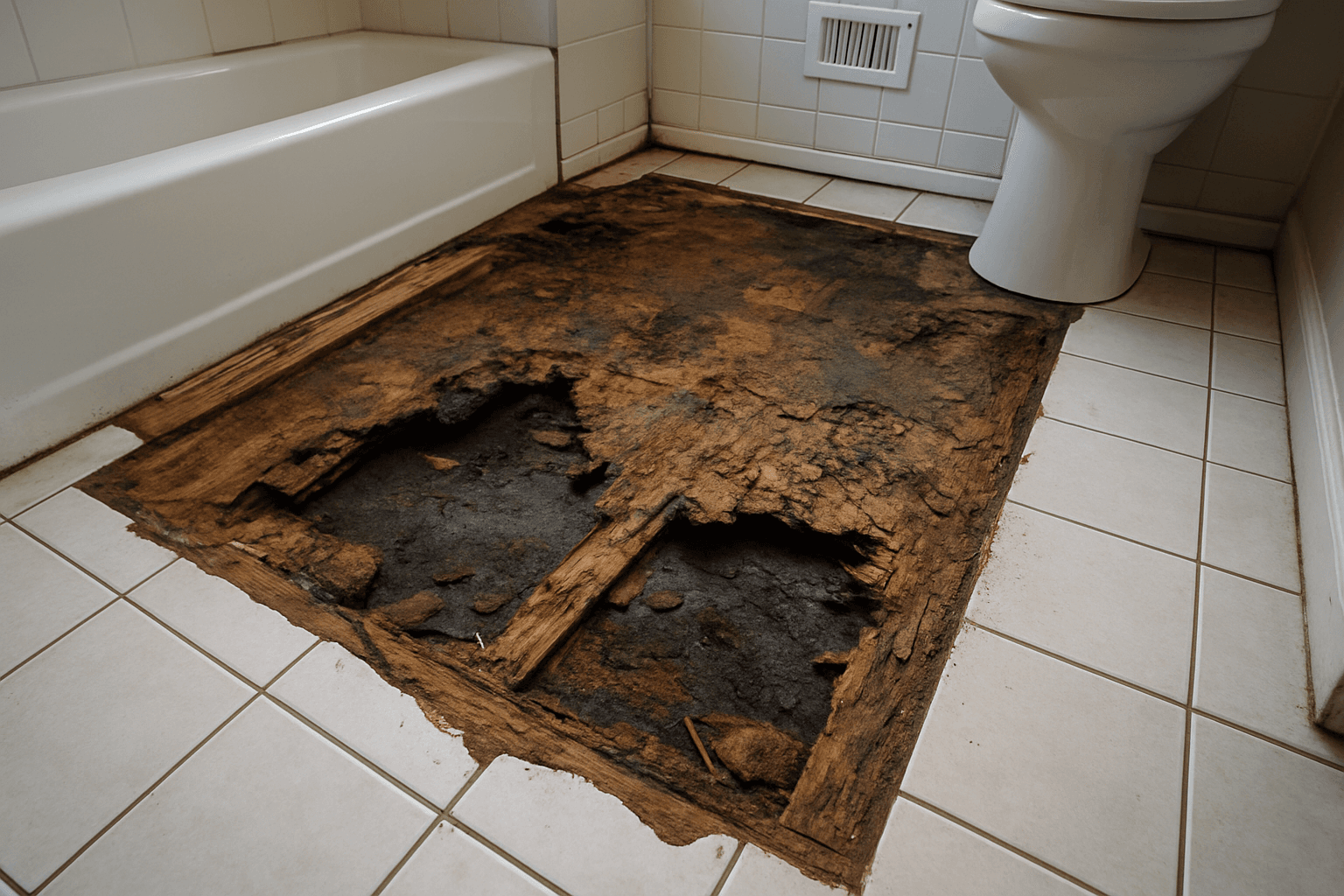
A leaking tub or shower shows up as a soft spot in the floor, stained ceiling below, or loose tiles — the leak is usually at the drain flange, the pan liner, or failed grout and caulk. Because the water runs down inside the assembly, the subfloor is typically wetter than the visible surface. Pressing along the tub edge for give is the quickest home test. Call (888) 840-6512 to reach a certified water damage restoration company in your area; the line is answered 24/7.
Written by Marcus Reed
Reviewed by David Chen, PEProfessional Engineer (PE)
Reviewed July 1, 2026· Next review Jan 2027
Bathtub & Shower Leak: Subfloor Damage Signs & Repair
Shower and bathtub leaks through failed grout or caulk are among the most silent water damage causes in American homes. Water escapes below the visible tile surface — running down the wall cavity or through the subfloor — for months before structural damage becomes visible. By the time you see soft floor outside the shower or staining on the ceiling below, significant damage has already occurred.
How Shower Leaks Happen
A properly functioning shower has three moisture barriers working together:
- 1Surface grout and caulk — visible joints between tiles and at corners
- 2Waterproof membrane behind the tile — cement board or waterproofing membrane applied during installation
- 3Shower pan liner — a waterproof membrane beneath the tile and mortar bed, extending up the curb
When grout or caulk fails, water reaches barrier #2. If the membrane is intact, no damage occurs. But if the membrane was improperly installed, too thin, or has aged, water reaches the substrate — and then the subfloor, floor joists, and eventually the ceiling below.
Warning Signs of a Shower Leak
On the bathroom floor:
- Soft, spongy, or bouncy feeling directly outside the shower threshold
- Vinyl or laminate floor lifting or bubbling near the shower curb
- Discoloration of baseboards at floor level adjacent to the shower
In the shower itself:
- Missing, crumbling, or black-stained grout between wall tiles
- Gaps in caulk at the corner where wall meets floor
- Tile that moves when pressed (indicating lost adhesion from moisture)
- Discoloration or soft drywall above the shower walls (if shower is not tiled to the ceiling)
Below the bathroom (most definitive):
- Water staining or soft drywall on the ceiling directly below
- Bubbling or peeling paint on the ceiling below
- Musty odor in the room or hallway below
Testing for an Active Leak
Flood test: Plug the shower drain and fill with 2–3 inches of water. Mark the water level and check after 30 minutes. A drop in level indicates drain seal failure (not grout failure). Then run the shower normally — if water appears outside the shower only during use (not during the flood test), the leak is from the walls, not the floor drain.
Moisture meter test: A pin moisture meter inserted into the floor just outside the shower curb will detect moisture inside the subfloor even when the surface appears dry. Readings above 15% in wood indicate active moisture.
Insurance Coverage
Coverage depends on the cause and whether it was sudden or gradual:
Likely covered: A shower pan liner that suddenly cracks and causes a single flooding event. A supply valve that fails, flooding the shower area. These are sudden and accidental.
Likely not covered: Grout and caulk that have slowly deteriorated over years. The adjuster will classify this as "maintenance failure" — a homeowner responsibility. If you've noticed the damaged grout for months and done nothing, coverage denial is likely.
Documentation matters: If you discovered the damage recently and called immediately, coverage is more likely. Establish the date of discovery clearly in your documentation.
What It Costs
| Repair | Typical Cost |
|---|---|
| Grout and caulk replacement only | $300–$800 |
| Subfloor replacement under bathroom | $1,500–$4,000 |
| Complete shower rebuild (new liner, tile, waterproofing) | $3,500–$9,000 |
| Ceiling repair below (drywall, paint) | $800–$2,500 |
| Mold remediation in subfloor and joists | $2,000–$6,000 |
Prevention
Regrout and recaulk every 5–7 years. Grout and caulk have a finite lifespan — especially in a shower used daily. Annual inspection of caulk lines at corners and the curb-to-floor transition catches failures before they become subfloor damage.
Never use a steam cleaner on tile. High-pressure steam forces water through micro-cracks in grout and behind tile, accelerating deterioration dramatically.
Inspect the caulk-to-grout transition. The joint where the shower wall meets the floor is the highest-stress point in the system — it flexes with every temperature change and user movement. This joint should be caulked (flexible), not grouted (rigid). Grout at this joint always cracks — replace with caulk at every regrout.
Talk to a water damage pro now
Answered 24/7 · Toll-free · answered 24/7 · no obligation
(888) 840-6512- Describe the damage & give your ZIP
- You're routed to the on-call local crew
- They quote — you decide, no obligation
Reading to confirm what you already suspect?
Confirm it in two minutes instead — the pro on this line answers questions about YOUR situation all day: what it is, what it should cost, whether you even need service. If you want, they'll set the appointment on the same call.
Toll-free · no obligation · asking costs nothing
Frequently Asked Questions
- 1Press the floor tiles around the tub perimeter and at the shower pan — soft, springy, or hollow-sounding tile (tap with a coin) indicates the tile has debonded from the subfloor due to moisture swelling
- 2Inspect the ceiling directly below the bathroom from the floor below — water stains, sagging drywall, or bubbled paint indicate the leak has reached the subfloor assembly and is dripping through
- 3Look for discoloration or warping at the toe kick under the adjacent vanity — water wicking through subfloor material often stains or swells the adjacent cabinet base before visible floor damage appears
- 4Check for soft spots by pressing on the floor near the tub edge and drain — soft, spongy, or deflecting floor indicates subfloor rot. Subfloor assessment by a contractor: they will probe the wood with a screwdriver; solid subfloor resists penetration, rotted subfloor accepts the tip without resistance. Subfloor replacement under a full bathroom typically costs $800–$2,500 and requires full tile demo and reinstallation — a job that snowballs significantly if the leak goes undetected for more than 6 months.
How can I tell if my shower is leaking into the subfloor?
Warning signs of shower/tub subfloor leaks: soft or bouncy floor immediately outside the shower or adjacent to the tub; discolored or stained grout or caulk lines; missing or cracked grout between wall tiles; black staining at the grout-wall or grout-floor joint (mold); musty smell in the bathroom even when dry; and — most definitive — visible moisture staining or soft drywall on the ceiling directly below the bathroom if it's on an upper floor.
Does homeowners insurance cover shower leak damage?
It dependsOn the cause and whether it was sudden or gradual. If a shower pan liner suddenly cracks and causes a single flooding event — yes, that's likely covered.
If grout and caulk have slowly deteriorated over years and water has been seeping for months — insurers typically deny this as 'gradual damage' or 'maintenance failure.' The critical distinction: document when you first noticed the problem. If you discovered the damage recently and acted promptly, coverage is more likely. If evidence shows long-term deterioration you failed to address, coverage may be denied.
What is a shower pan liner and why does it fail?
A shower pan liner is a waterproof membrane (usually PVC or CPE) installed beneath the shower tile and mortar bed, extending up the curb walls. It's the last line of defense if water penetrates the tile and grout.
Liner failure causes: punctures during tile installation (most common — a dropped tool through the liner), seam separation, PVC degradation after 20+ years, and movement stress from substrate settlement. A failed liner is not detectable without disassembly — water may run through the liner and drain to the subfloor for years before symptoms appear.
How much does shower/tub water damage repair cost?
Subfloor replacement under a bathroom: $1,500–$4,000. If mold is present in the subfloor and joist system: add $2,000–$5,000 for remediation. Complete shower rebuild with new liner, tile, and membrane: $3,000–$8,000.
If water damaged the ceiling below: $800–$2,500 additional for drywall repair and paint. Total range for a discovered shower leak with moderate damage: $3,000–$12,000.
How do I know if a slow bathtub or shower leak has already damaged my subfloor?
Subfloor damage from slow shower/tub leaks is often invisible until it is severe. Early detection methods:
Who do I call right now for water damage?
Call (888) 840-6512. The line is answered 24 hours a day, seven days a week, and connects you with an IICRC-certified water damage restoration company that serves your area. Describe what you can see — where the water is coming from, how long it has been there, and whether it smells — the more specific you are, the faster the right company is on the line.
If the source is a pipe or an appliance, shut the main water valve first. Have four things ready and the call goes quickly: the address, when the water started, what is wet now, and whether you have filed an insurance claim.
Still not sure which of these is your situation? (888) 840-6512 · toll-free · answered 24/7
Sources
- IICRC S500 — Water Damage Restoration(retrieved 2026-07-02)
- EPA — Mold and Water Cleanup Guidance(retrieved 2026-07-02)
Methodology: How we source and verify data · Report an error
Disclaimer: HearthDry is an independent educational resource. This article is for informational purposes only and does not constitute professional, legal, or insurance advice. Consult licensed professionals before making decisions about your property or insurance claims.
Professional Equipment
Subfloor Drying: Air Movers Are the Key Tool
Dri-Eaz Sahara Pro and B-Air Vantage low-profile air movers are designed for subfloor drying — they direct high-velocity airflow under flooring and into joist cavities. This is how restoration crews dry subfloors without full floor removal.
Affiliate link — HearthDry earns a commission from Sylvane via CJ at no extra cost to you
Watch
Source: Home Repair Tutor — YouTube
Free 2-day shipping
Amazon Prime members pay no shipping on restoration equipment
Dehumidifiers, air movers, and moisture meters qualify for free Prime delivery — bulk items that otherwise cost $15–$40 to ship.
Affiliate link — HearthDry earns a bounty if you sign up; costs you nothing extra.
Equipment
What each machine actually does
Removes the moisture the structure is still giving off — the machine that decides how long drying takes
See the picks →Moves air across wet surfaces so the dehumidifier has something to take out of the air
See the picks →Finds water behind walls and under floors, and tells you when a material is actually dry
See the picks →Alerts you the moment a leak starts — the cheapest thing on this list and the only preventive one
See the picks →Those pages carry affiliate links. As an Amazon Associate, HearthDry earns from qualifying purchases; it costs you nothing extra.
Our Amazon storefront →Advertisement
