
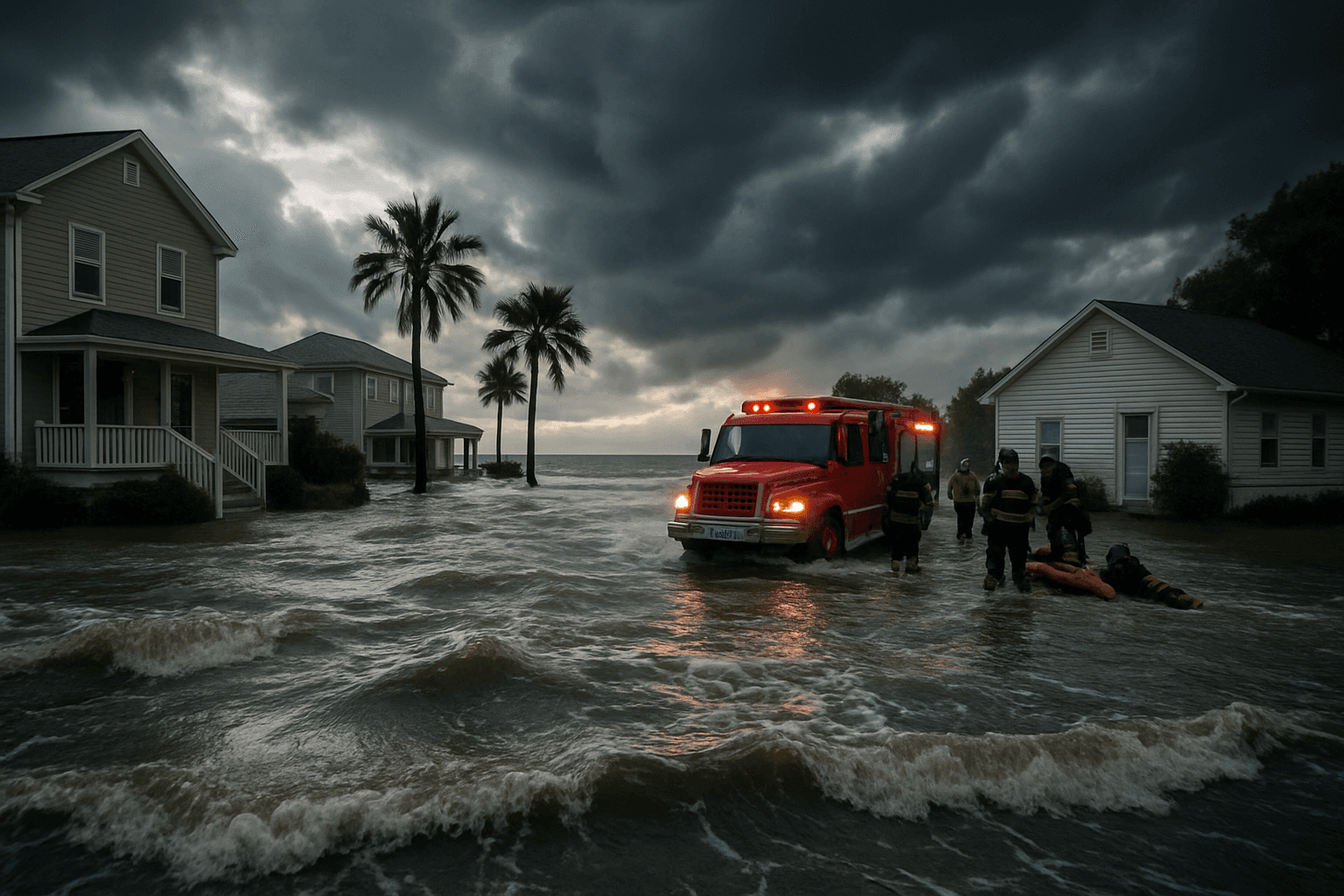
Quick answer
Storm surge is ocean water pushed inland by a hurricane, and it is the deadliest part of most storms. It is treated as flood, not wind damage, so a standard homeowners policy excludes it — NFIP or private flood coverage is required, and NFIP policies carry a 30-day waiting period, which is why coverage must be bought before the season, not before the storm. Call (888) 840-6512 to reach a certified water damage restoration company in your area; the line is answered 24/7.
Written by Marcus Reed
Reviewed by David Chen, PEProfessional Engineer (PE)
Reviewed July 1, 2026· Next review Jan 2027
Hurricane Storm Surge & Flooding: What Homeowners Must Know
Storm surge — not wind — is the deadliest and most costly aspect of coastal hurricanes. Yet millions of coastal homeowners carry no flood insurance, believing their homeowners policy covers hurricane damage comprehensively. Understanding the difference between wind, rain, and surge damage — and what each type of insurance actually pays for — can mean the difference between a full recovery and financial catastrophe.
Three Types of Hurricane Water Damage
Wind-driven rain — Rain that enters through openings created by wind damage: a hole in the roof, a broken window, a damaged door. This water comes from above and enters because wind compromised the building envelope. Covered by standard homeowners insurance.
Rainfall flooding — Rain that accumulates on the ground and rises into the structure, or overwhelms drainage systems and enters through doors and low openings. This is ground-level water. Covered only by NFIP or private flood insurance.
Storm surge — The abnormal rise of ocean or bay water pushed onto land by hurricane winds and pressure. Saltwater, contaminated with sewage, chemicals, and debris. Can arrive as a wall of water 10–20+ feet high. Covered only by NFIP or private flood insurance.
The adjuster's central question for every damaged item: did water come from above (wind damage), or did water rise from the ground? Wind entry is homeowners. Ground rise is flood.
What Homeowners Insurance Pays For in a Hurricane
Covered:
- Roof shingles and structure damaged or destroyed by wind
- Windows broken by wind or debris
- Walls damaged by direct wind force
- Water that entered through wind-created openings in the building
Not covered:
- Storm surge flooding
- Groundwater or rising floodwater that enters through doors, windows, or the foundation — even if driven by hurricane winds
- Flooding from streams, rivers, or drainage systems overflowing
The disputed zone: Wind-driven rain entering through an intact window or door (not broken — just allowing water penetration from wind pressure). This is the most frequently disputed claim type in hurricane insurance. Document the specific entry point thoroughly.
NFIP Flood Insurance: Coverage and Limitations
NFIP flood insurance (through the Federal Insurance program) covers direct physical loss from flooding. Key points:
What's covered: Structure (walls, floors, foundation, HVAC, electrical, plumbing, built-in appliances). Maximum building coverage: $250,000. Maximum contents coverage: $100,000 (separate policy purchase required).
Basement limitations: NFIP basement coverage is severely restricted. Covered: sump pumps, water heaters, furnaces, and electrical systems. Not covered: finished basement materials (drywall, flooring, paneling), basement contents.
What's not covered: Temporary housing/loss of use, financial loss, cars (covered under complete auto), outdoor property.
Private flood insurance (available through admitted carriers and the surplus market) typically offers higher limits, broader coverage including basements, and loss of use coverage. Costs are sometimes lower than NFIP for lower-risk properties under Risk Rating 2.0.
Before the Storm: Documentation and Preparation
72+ hours before landfall:
- Create a complete video walk-through of your home interior and exterior — every room, every appliance, every valuable item with serial numbers visible
- Store this documentation in cloud storage or email it to yourself — accessible even if your home is destroyed
- Photograph the exterior of the home and all outbuildings
- This pre-storm documentation establishes pre-loss condition and is the foundation of your insurance claim
48 hours before landfall:
- Install hurricane shutters or plywood on windows
- Move outdoor furniture, grills, decorations, and all loose items inside
- Move important documents (policies, passports, titles) to a waterproof container or offsite
- Elevate valuable items and electronics off the lowest floor
- Fill vehicles with gas; withdraw cash
24 hours before landfall:
- If in an evacuation zone — leave. Storm surge is unsurvivable in a single-story structure.
- Shut off electricity at the main panel if significant flooding is expected
- Shut off the main water supply if evacuating
- Leave faucets slightly open if the home will be unoccupied and could freeze
After the Storm: Documenting and Claiming
Before entering the structure:
- Verify structural integrity from outside — a damaged roof or shifted foundation makes entry dangerous
- Do not enter until officials indicate it is safe (no active gas leaks, structural hazards, downed lines)
Immediately upon entry:
- Photograph and video everything before touching or moving anything
- Record water lines on walls (the high-water mark)
- Photograph every damaged area and item
- Note and record the date clearly in your documentation
File both claims simultaneously:
- Call your homeowners insurer for wind and structural damage
- Call your flood insurer separately for water damage
- Do not let a single adjuster bundle both claims — wind and flood have different coverage rules, deductibles, and payout structures
Consider a public adjuster for claims over $25,000. Hurricane claims are complex, often involving coverage disputes between wind and flood classifications. A PA can maximize your combined recovery. Make sure any PA you hire is licensed in your state.
Talk to a water damage pro now
Answered 24/7 · Toll-free · answered 24/7 · no obligation
(888) 840-6512- Describe the damage & give your ZIP
- You're routed to the on-call local crew
- They quote — you decide, no obligation
Reading to confirm what you already suspect?
Confirm it in two minutes instead — the pro on this line answers questions about YOUR situation all day: what it is, what it should cost, whether you even need service. If you want, they'll set the appointment on the same call.
Toll-free · no obligation · asking costs nothing
Frequently Asked Questions
- 1Storm surge: the dome of ocean water pushed ashore by hurricane winds, distinct from normal tides. The primary cause of hurricane deaths and property damage. Can reach 20+ feet in major landfalling storms. Covered by NFIP or private flood insurance, NOT homeowners insurance
- 2Storm tide: storm surge plus the astronomical tide level at landfall. A 12-foot surge at high tide creates a 14-foot storm tide. Same coverage rules as storm surge — flood insurance only
- 3Inland freshwater flooding: rainfall flooding from the hurricane's moisture field, affecting areas 100+ miles from the coast (e.g., Hurricane Harvey's 50 inches of rain caused freshwater flooding throughout metropolitan Houston with zero storm surge involvement). Also covered by NFIP flood insurance, NOT standard homeowners.
What is storm surge and how is it different from rainfall flooding?
Storm surge is the abnormal rise of water level caused by the offshore wind and pressure of a hurricane pushing ocean water onto land. It is seawater — saltwater, contaminated with debris, chemicals, and sewage. Storm surge arrives as a massive wall of water, can be 20+ feet high in major hurricanes, and recedes over hours rather than days.
Rainfall flooding is freshwater from precipitation overwhelming drainage — it moves with gravity. The insurance distinction is critical: rainfall flooding from the storm (groundwater entering the home) is classified as 'flood' and requires NFIP or private flood insurance. Wind-driven rain entering through a damaged roof or window may be covered by homeowners insurance.
What does homeowners insurance cover in a hurricane?
Standard HO-3 homeowners insurance covers hurricane wind damage: roof shingles blown off, windows broken by debris, structural damage from wind, and — critically — water that enters through wind-created openings in the building envelope (a hole in the roof, a broken window).
It does NOT cover storm surge or groundwater flooding. It does NOT cover water that comes in under doors or through the foundation during flood events. The coverage question adjusters ask: did water enter through wind damage to the structure, or did water rise from the ground? Wind-entry is covered; ground-rise is not.
What does NFIP flood insurance cover in a hurricane?
NFIP flood insurance covers direct physical loss from flooding — water from storm surge, overflow of a body of water, or accumulated surface water (including rain accumulation).
Key limitations: basement coverage is very restricted (sump pumps, water heaters, and furnaces only — not finished basement contents or flooring); the building coverage maximum is $250,000; contents coverage maximum is $100,000 (separate policy); financial loss from temporary housing is not covered. Private flood insurance (available through admitted carriers) often provides broader coverage including basements, higher limits, and loss of use.
What should I do with my home before a hurricane makes landfall?
48–72 hours before landfall: document your home's contents and condition on video for insurance purposes; install hurricane shutters or plywood on windows; move outdoor furniture, grills, and decorations inside; fill vehicles with gas; withdraw cash; elevate valuable items in the lowest level of the home; shut off the main water supply if evacuating; shut off electricity at the main panel if significant flooding is expected; photograph and video the exterior of the home.
Insurance documentation before the storm is critical — post-storm photos alone cannot prove pre-storm condition.
What is the difference between storm surge, storm tide, and inland flooding, and does insurance cover all three?
Three distinct flood mechanisms from hurricanes — each with different insurance coverage:
The critical insurance gap: homeowners insurance covers wind damage (roof, windows, exterior) but explicitly excludes all three flood mechanisms above. In hurricane-prone states, this creates a dual-coverage requirement — homeowners for wind, flood policy for water. FEMA flood maps identify Zone AE, AH, VE properties where NFIP is required by mortgage lenders.
Who do I call right now for water damage?
Call (888) 840-6512. The line is answered 24 hours a day, seven days a week, and connects you with an IICRC-certified water damage restoration company that serves your area. Describe what you can see — where the water is coming from, how long it has been there, and whether it smells — the more specific you are, the faster the right company is on the line.
If the source is a pipe or an appliance, shut the main water valve first. Have four things ready and the call goes quickly: the address, when the water started, what is wet now, and whether you have filed an insurance claim.
Still not sure which of these is your situation? (888) 840-6512 · toll-free · answered 24/7
Sources
- IICRC S500 — Water Damage Restoration(retrieved 2026-07-02)
- EPA — Mold and Water Cleanup Guidance(retrieved 2026-07-02)
Methodology: How we source and verify data · Report an error
Disclaimer: HearthDry is an independent educational resource. This article is for informational purposes only and does not constitute professional, legal, or insurance advice. Consult licensed professionals before making decisions about your property or insurance claims.
Professional Equipment
High-Capacity Drying Equipment for Storm Surge Flooding
Storm surge flooding (Category 3 water) requires high-capacity commercial dehumidifiers rated for contaminated-water environments. AlorAir Storm Elite handles up to 198 pints/day — appropriate for whole-floor flooding scenarios.
Affiliate link — HearthDry earns a commission from Sylvane via CJ at no extra cost to you
Watch
Source: National Oceanic and Atmospheric Administration — US government, public domain
Free 2-day shipping
Amazon Prime members pay no shipping on restoration equipment
Dehumidifiers, air movers, and moisture meters qualify for free Prime delivery — bulk items that otherwise cost $15–$40 to ship.
Affiliate link — HearthDry earns a bounty if you sign up; costs you nothing extra.
Equipment
What each machine actually does
Removes the moisture the structure is still giving off — the machine that decides how long drying takes
See the picks →Moves air across wet surfaces so the dehumidifier has something to take out of the air
See the picks →Finds water behind walls and under floors, and tells you when a material is actually dry
See the picks →Alerts you the moment a leak starts — the cheapest thing on this list and the only preventive one
See the picks →Those pages carry affiliate links. As an Amazon Associate, HearthDry earns from qualifying purchases; it costs you nothing extra.
Our Amazon storefront →Advertisement
