
Best Gutter Cleaning Tools in 2026 — Telescoping Wands Matched to Your Gutter Height, and the Jobs a Wand Cannot Do

Best Gutter Cleaning Tools in 2026

Telescoping Wands Matched to Your Gutter Height, and the Jobs a Wand Cannot Do

4 picks compared · prices, ratings and stock checked October 12, 2026

Our Top Pick

For most one- and two-story homes, the TONYINGO 8–15 ft Telescopic Gutter Cleaning Wand, with a 24 in flexible wand and a built-in shut-off valve. For a low single-story eave, the shorter Orbit 58543 Telescoping Gutter Cleaning Wand is enough.

4.5 on Amazon · 200 ratings

Quick answer

If your gutters are on a one- or two-story house and hold loose leaves and grit, the best gutter cleaning tool is a telescoping hose wand used from the ground: the TONYINGO 8–15 ft Telescopic Gutter Cleaning Wand, rated 4.5 stars across 200 Amazon ratings. Its pole and 24 in wand add up to about 17 ft of hardware; the 24 ft reach on the listing also counts your own height and raised arm. For a low single-story eave, the Orbit 58543 Telescoping Gutter Cleaning Wand, at 40 to 70 in, is enough. A wand flushes loose debris but not packed sludge.

Our Picks at a Glance

Every pick below is currently stocked — ratings and stock read from Amazon on 12 October 2026.

How this page was made: we compare the current Amazon listings, the makers' published specs and what verified buyers report, then rank by fit for the job. Ratings, review counts and stock are read from Amazon and dated. We earn a commission on purchases through our links; it does not change the order. Reviewed by Marcus Reed, IICRC-certified Water Restoration Technician.

Full Reviews

Each pick in detail: what the listing states, what buyers report, and where it falls short.

#1
Best Overall

Check price

on Amazon ↗

Listing verified 13 Oct 2026

TONYINGO 8–15 ft Telescopic Gutter Cleaning Wand (24 in Flexible Wand, Shut-Off Valve, Up to 24 ft Reach)See it on Amazon ↗

Quick Verdict

TONYINGO 8–15 ft Telescopic Gutter Cleaning Wand: two-story reach with a flexible wand and a shut-off valve, on a listing that skips weight and materials.

Key Specs

Pole length (stated)

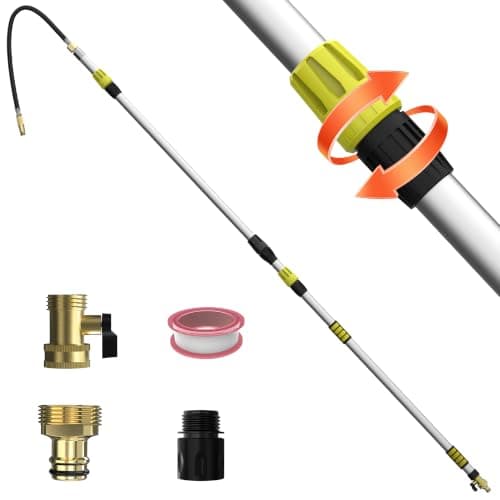
8 to 15 ft telescopic pole with a twist-knob lock and threaded joints

Wand (stated)

24 in flexible wand that bends to the angle you need

Reach (stated)

Up to 24 ft total, a figure that includes the person holding it

Water control (stated)

Built-in shut-off valve; rotating brass nozzle from a gentle rinse to a jet

In the box (stated)

Pole, flexible wand, shut-off valve, quick adapter, gaskets and Teflon tape

Water supply

Garden hose; maximum pressure not stated on this listing

Pros

  • A 15 ft pole plus a 24 in wand gives about 17 ft of hardware, enough for many two-story eaves
  • The built-in shut-off valve pauses the water between sections, so you do not walk back to the spigot
  • The flexible wand bends to point the nozzle down into the trough instead of across the roof
  • Gaskets and Teflon tape come in the box for tight joints

Cons

  • No pole material, weight or hose pressure limit on the listing
  • Any 15 ft pole is hard to hold steady at full length, so expect to rest your arms between sections
  • Like every hose wand, it moves loose debris; packed, wet sludge stays put

Suited to

One- and two-story homes whose gutters hold loose leaves, seeds and shingle grit

Our take

Reach is the number to read carefully on any gutter wand. TONYINGO lists an 8 to 15 ft pole and a 24 in flexible wand, about 17 ft of hardware, and calls the total up to 24 ft because it counts your height and raised arms. That covers many two-story eaves, but measure yours before ordering: a downspout's length from the ground to the elbow under the gutter is a close guide. The bend in the wand matters as much as the length, since the nozzle has to point down into the trough to push debris along it. The listing gives no pole material, weight or hose pressure limit, so treat the pole gently at full extension and start on a soft spray.

Check today's price on Amazon →

Affiliate link — commission at no extra cost to you

Compare elsewhere

These open a search for this model. We quote prices only where we can verify them — Amazon, Sylvane and eBay.

#2
Best for Single-Story Gutters

Check price

on Amazon ↗

Listing verified 13 Oct 2026

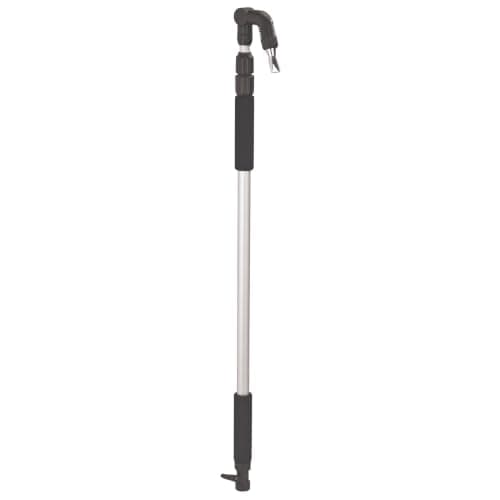
Orbit 58543 Telescoping Gutter Cleaning Wand (40 to 70 in, Rotating Nozzle)See it on Amazon ↗

Quick Verdict

Orbit 58543 Telescoping Gutter Cleaning Wand: a short, easy-to-aim wand for single-story gutters, with no shut-off valve listed.

Key Specs

Length (stated)

Extends from 40 in to 70 in

Nozzle (stated)

Zinc sweeper nozzle that rotates 180 degrees

Head (stated)

Four-position head angles the spray up or down

Grip (stated)

Padded foam grip that insulates hands from cold water

Construction (stated)

Lightweight and non-corrosive; the material is not named

Shut-off valve

Not stated on this listing

Pros

  • Short and lightweight, per the listing, so it is easy to aim at a low eave
  • The rotating nozzle and four-position head let you hook the spray down into the gutter
  • The longest buyer record of any tool on this page
  • The foam grip keeps cold hose water off your hands

Cons

  • At 70 in, it reaches only a low single-story eave from the ground
  • No shut-off valve is listed, so you control the water at the spigot or with an inline hose valve
  • Buyer feedback is more mixed than for the other wands here

Suited to

Ranch houses, garages and porches with low single-story eaves

Our take

Orbit's wand is the short tool on this page, and that is the reason to buy it. It runs from 40 in to 70 in, so once your own height and reach are added it suits a low single-story eave and not much more. In return it is easy to point: the zinc nozzle turns through 180 degrees and the head has four angle positions, so you can hook the spray down into the trough rather than over it. The listing does not mention a shut-off valve, so fit an inline hose valve or keep a helper at the spigot. If your gutter sits higher than about 12 ft, a 12 to 15 ft pole will save you from stretching on tiptoe under the eave.

Check today's price on Amazon →

Affiliate link — commission at no extra cost to you

#3
Best Mid-Length Wand

Check price

on Amazon ↗

Listing verified 13 Oct 2026

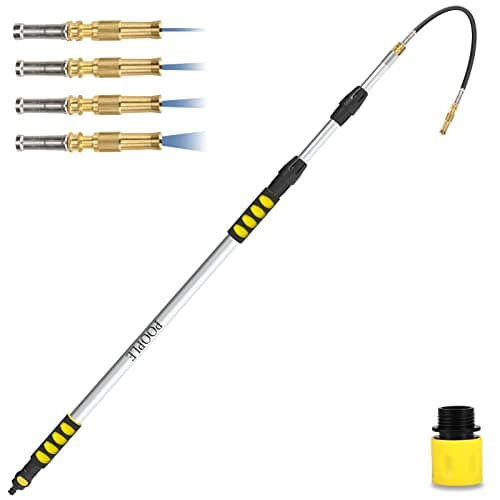
POOPLE 12 ft Telescopic Gutter Cleaning Wand (About 20 ft Reach, 4 Spray Patterns, Shut-Off Valve)See it on Amazon ↗

Quick Verdict

POOPLE 12 ft Telescopic Gutter Cleaning Wand: a steadier mid-length pole with flow control and four spray patterns, in limited stock.

Key Specs

Pole length (stated)

Extends up to 12 ft

Reach (stated)

About 20 ft, counting the person holding it

Nozzle (stated)

Rotating nozzle with 4 spray patterns and a built-in flow control valve

Valve (stated)

3/4 in shut-off valve with rubber gaskets

Material (stated)

Aluminum alloy with a non-slip handle

Hose fit (stated)

Standard US garden hose thread; assembles without tools

Pros

  • 12 ft of pole is easier to steady than 15 ft and still suits many low two-story eaves
  • Flow control and four spray patterns let you start soft and go harder only where debris sticks
  • A 3/4 in shut-off valve with gaskets, per the listing

Cons

  • The listing shows limited stock, so it may sell out
  • No weight or wand head length is given
  • A shorter buyer record than the TONYINGO

Suited to

Tall single-story rooflines and two-story eaves on the low side

Our take

POOPLE's 12 ft pole sits between the short Orbit and the 15 ft TONYINGO, and for plenty of houses it is the right size. The listing puts the reach at about 20 ft, which again includes the person holding it, so think of it as a tool for a tall single-story roofline or a low two-story eave. The useful detail is control. A flow control valve and a rotating nozzle with four spray patterns let you begin with a gentle shower that floats leaves toward the downspout, then switch to a jet only where grit has stuck. A shorter pole is also steadier when fully extended. Stock is listed as limited, so check it before you plan around this one.

Check today's price on Amazon →

Affiliate link — commission at no extra cost to you

#4
Best for Pressure Washer Owners

Check price

on Amazon ↗

Listing verified 13 Oct 2026

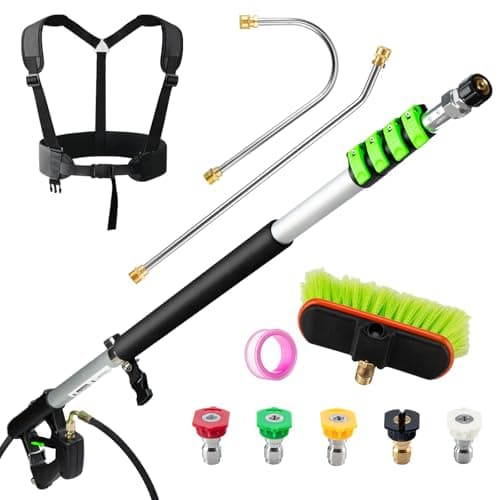
TOR 24 ft Telescoping Pressure Washer Wand (Gutter Cleaner Attachment, 5 Nozzle Tips, Up to 4,000 psi)See it on Amazon ↗

Quick Verdict

TOR 24 ft Telescoping Pressure Washer Wand: the most stated reach here, for pressure washer owners who keep the jet gentle around gutters and shingles.

Key Specs

Reach (stated)

Cleans up to 24 ft high from the ground

Pole (stated)

Lightweight aluminum lance, 4 adjustable sections with lever locks

Attachments (stated)

Gutter cleaner wand, 15-degree extension wand, brush head with jets, 5 spray nozzle tips, support belt

Pressure rating (stated)

For pressure washers up to 4,000 psi

Connections (stated)

3/8 in quick-connect inlet, M22-14 mm male outlet, 2 hose adapters

Garden hose use

No; it is built for a pressure washer

Pros

  • The tallest stated reach on this page, with a curved attachment made for the gutter trough
  • Pressure water moves stuck grit and shingle granules that a garden hose leaves behind
  • A support belt takes some of the pole's weight off your arms

Cons

  • Too strong a jet can dent thin gutters, open seams and drive water under shingles
  • More setup than a hose wand: a pressure washer, its hose, adapters and the right tip
  • The listing gives no weight for the extended lance

Suited to

Owners of a pressure washer with two-story gutters and grit a garden hose will not shift

Our take

This is the tool for someone who already owns a pressure washer and has gutters a hose wand cannot reach. TOR states a 24 ft working height, lever-locked aluminum sections and a curved gutter attachment, and rates the lance for washers up to 4,000 psi. That rating is a ceiling for the wand, not a setting for gutters. Pressure water can dent thin aluminum, push open a seam and drive water up under the first row of shingles, so fit the widest tip in the kit, keep the jet pointed along the trough or down, and never aim up under the roof edge. Wear eye protection, since pressure water throws debris, and rinse the siding afterward.

Check today's price on Amazon →

Affiliate link — commission at no extra cost to you

Buyer's Guide

What to know before you buy.

Why a Clogged Gutter Becomes a Basement Problem

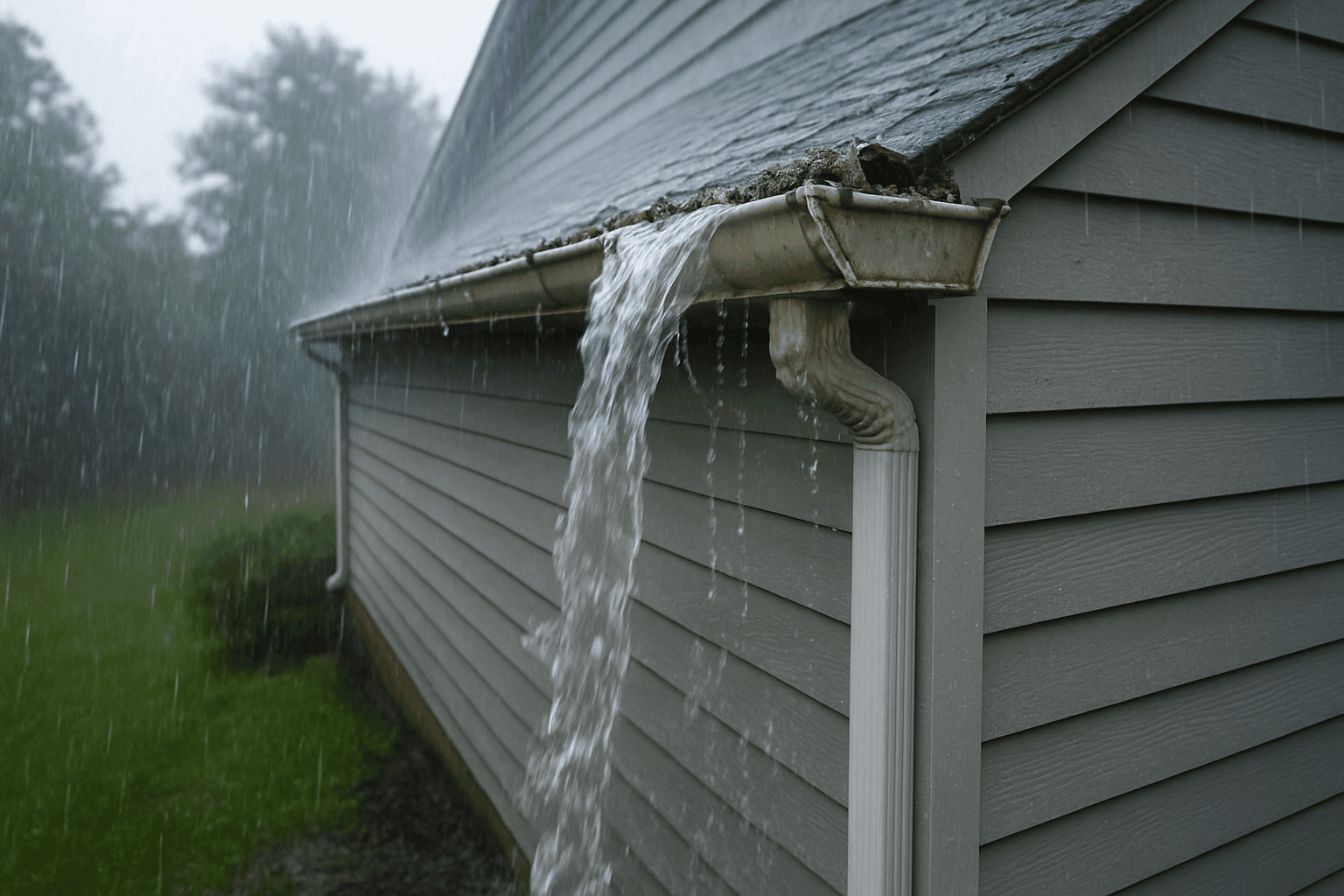
A gutter has one job: catch the water running off the roof and hand it to a downspout. When leaves and grit fill the trough, water spills over the front edge along the whole run and lands in the loose backfill beside the foundation, the soil most likely to send it through a crack or the joint where the wall meets the floor. Full gutters also get heavy and can pull away from the fascia board, which lets water run down behind them into the wall. EPA's guide to mold and moisture lists cleaning and repairing roof gutters regularly among its moisture steps, along with making sure the ground slopes away from the foundation. If your basement smells damp after rain, look at the gutters before you buy anything for the basement itself.

Measure Your Gutter Height Before You Pick a Length

Reach claims on gutter wands count you. A listing that says 24 ft of reach usually means a pole and wand of about 17 ft plus an adult with arms raised. So measure first. The easy way is to run a tape up a downspout from the ground to the elbow just under the gutter; the gutter sits a few inches above that. Take away the height you can reach with your arms up, about 7 ft for many adults, and the rest is the pole and wand length you need. As a rough guide, a 70 in wand like the Orbit suits a low single-story eave, a 12 ft pole suits a tall single-story roof or a low two-story eave, and a 15 ft pole with a 2 ft wand covers many two-story houses. Buy a little extra, since you will stand back from the wall to see into the trough.

Hose Wand, Pressure Washer or Scoop: What Each Can Clear

A garden-hose wand floats loose leaves, seeds and shingle grit along to the downspout. It works best on gutters cleaned once or twice a year that hold a few inches of loose material. It struggles with packed, wet sludge and with seedlings rooted in the trough, which come out only by scooping from a ladder or with a pro's visit. A pressure washer wand shifts more stuck grit, but the same force can dent thin gutters and push water under shingles, so it needs the widest tip and a careful aim. Long-pole rakes and scoops pull out dry leaves without any water; the ones reviewed for this page had weaker buyer records than the wands, so none made the list. Leaf blower attachments handle dry leaves well and wet ones poorly.

Safety: Power Lines, Ladders and Your Eyes

Every pole on this page is metal, and the power line feeding your house often meets the wall right at the eave. Find it before you start, and keep the pole, the wand and yourself at least 10 ft from it and from any other overhead line; a pole that touches a wire can carry the current to you, and running water makes that worse. Wear safety glasses, because a wand throws wet debris back down. If you do climb, set the ladder on firm, level ground with its base 1 ft out from the wall for every 4 ft of height, use a standoff so it does not rest on the gutter, keep three points of contact, and never climb above the highest rung the label allows. A ground tool exists to keep you off the ladder, so use it for the routine cleanings.

How to Clean Without Jamming the Downspout

Begin at the downspout, not the gutter. Push the hose up the downspout from the bottom outlet and make sure the water drains out freely; if it backs up, clear the downspout first, or every leaf you flush will jam inside it. Then work from the far end of the run toward the downspout in short sections, using a gentle spray to float leaves along and a jet only on stuck grit. Watch the bottom of the downspout as you go. When you finish, run the hose in the gutter for a minute and look for three things: drips at the seams, a stretch that holds water, which means the slope is off, and a downspout extension that carries the water at least 4 to 6 ft from the wall before it soaks in.

Who Should Not Buy a Ground Tool, and When to Call a Pro

A wand is the wrong buy if your gutters sit above about 24 ft, as on a three-story house or one built on a steep slope, or if a power line runs along the eave where you would be working. Skip it too if the gutters are packed solid or have plants growing in them; that takes hands and a scoop, and the first cleaning after years of neglect is often worth paying for. Call a gutter or roofing contractor when a gutter sags, pulls away from the fascia, leaks at its seams or holds standing water after rain, because those are repair and slope problems that no amount of cleaning fixes. If water has already reached the basement, EPA advises drying water-damaged areas and items within 24 to 48 hours to prevent mold growth.

Frequently Asked Questions

Can you clean gutters from the ground?

YesFor routine cleanings on one- and two-story homes, as long as the debris is loose.

A telescoping hose wand such as the TONYINGO 8–15 ft Telescopic Gutter Cleaning Wand pushes leaves and grit along to the downspout with no ladder. What a ground tool cannot do is let you see into the trough or lift out packed sludge, so run water through afterward, watch for overflow, and plan a cleaning by hand when debris has set hard.

Do gutter cleaning wands work?

They work well on loose leaves, seeds and grit, and poorly on packed, wet sludge. The curved end points the nozzle down into the gutter, and the water floats debris toward the downspout.

Results depend on the debris, the water pressure at your spigot and your aim. A wand cannot lift out sticks or rooted seedlings, and it can wash debris into a downspout, so check the downspout before and after.

How do I know how tall my gutters are?

Measure a downspout from the ground to the elbow under the gutter, then add a few inches. That is your target height.

Listings that quote a total reach, such as 20 ft or 24 ft, have already added the person holding the tool, so compare those figures with the full gutter height, not with the pole length. For a pole-only figure, subtract your own overhead reach from the gutter height.

Is it safe to pressure wash gutters?

It can be done safely with the widest tip, modest pressure and a careful aim, but it is the riskiest way to clean them. The force that shifts stuck grit can also bend thin aluminum, split seams, lift paint and push water beneath the shingles.

Keep the jet pointed along the trough or down, never up under the roof edge, and stand where falling debris will miss you. Try a garden-hose wand first and save the pressure washer for grit it will not shift.

How often should you clean your gutters?

Twice a year suits most homes: once in late spring and once after the leaves come down in autumn. Homes under pines or heavy tree cover may need more, and any gutter that overflows in an ordinary rain is due now.

A ground tool makes that schedule easier to keep, because a quick rinse takes less setup than a ladder. Gutter guards cut the frequency but do not end it, so check guarded gutters at least once a year.

Can you clean gutters with gutter guards from the ground?

Only partly. A hose wand can rinse leaves off the top of a guard and wash fine grit through micro-mesh, but it cannot clear what builds up underneath. Guards that lift off or hinge open still need a cleaning by hand now and then.

A soft brush on a pole clears a mesh surface better than a jet. If water sheets over a guarded gutter in heavy rain, the mesh is likely coated with fine debris and needs a scrub.

Who do I call right now for water damage?

Call (888) 840-6512. The line is answered 24 hours a day, seven days a week, and connects you with an IICRC-certified water damage restoration company that serves your area. A recorded menu picks up first: choose water damage or mold, key in your 5-digit ZIP code, and hold through the short silence while the call is passed to the company.

Describe what you can see — where the water is coming from, how long it has been there, and whether it smells — the more specific you are, the faster the right company is on the line. If the source is a pipe or an appliance, shut the main water valve first. Have four things ready and the call goes quickly: the address, when the water started, what is wet now, and whether you have filed an insurance claim.

Still not sure which of these is your situation? (888) 840-6512 · toll-free · answered 24/7

Sources

  1. EPA — A Brief Guide to Mold, Moisture, and Your Home

Methodology: How we source and verify data · Report an error

How we chose these picks

  • Every pick is a current listing. Stock, star ratings and rating counts are read from Amazon by script and carry the date they were read.
  • Nothing under 4.0 stars makes the list, and the top pick needs a large rating count, so one good week of reviews cannot put it there.
  • Specs are quoted from the listing or the maker, with the test condition behind the number where there is one, and sized against the job rather than the room on the box.
  • We do not run lab or field tests. Where a spec matters, we say what it is measured under and what it cannot tell you.

Free 2-day shipping

Amazon Prime members pay no shipping on restoration equipment

Dehumidifiers, air movers, and moisture meters qualify for free Prime delivery — bulk items that otherwise cost $15–$40 to ship.

Try Prime free →

Affiliate link — HearthDry earns a bounty if you sign up; costs you nothing extra.

Also Worth Comparing

Best Gutter Guards in 2026 — DIY Micro-Mesh and Aluminum Screens Sized for 5 in and 6 in Gutters, So Roof Water Reaches the Downspout

A clogged gutter spills roof water over its front edge and onto the soil right beside the foundation, which is where many basement leaks begin. These DIY guards are compared on the debris each type stops, the gutter width each listing states, how each one meets the roof edge, and the cleaning that no guard removes.

Read the comparison

Best Downspout Extensions in 2026 — Flexible Pipes Measured Against the 4 to 10 ft Rule, for a Drier Basement

Roof water that lands at the foundation is one of the most common reasons a basement gets wet, and an extension is the low-cost way to carry it out to ground that drains away. These picks are measured against how far each one reaches by its own listing, and against the grading, ice and mowing problems that decide whether an extension keeps working.

Read the comparison

Best Rain Barrels in 2026 — Barrels and a Diverter Kit Compared on Gallons, Screens and Overflow, So the Water Stays Off Your Foundation

A rain barrel saves roof water for the garden, but a barrel that overflows at the wall puts that water right where a wet basement starts. These barrels and one diverter kit are compared on stated gallons, lids and screens, spigots and overflow fittings, with the arithmetic on how fast a barrel fills and the winter routine it needs.

Read the comparison

Best Window Well Covers in 2026 — Clear Covers, Egress Wells and Grates Compared on Fit, Load and Water

A clear window well cover keeps rain, snow and leaves out of the well, which closes one of the usual routes for water to reach a basement window. It has to match the well's width, projection and shape, and over a bedroom egress well it must open from inside, so each pick here is checked against all three.

Read the comparison

Best Roof Leak Sealants, Patches and Tapes in 2026 — Temporary Repairs That Hold Until the Roofer Comes

A can, tube or roll from this page can stop a small roof leak at a seam, a flashing edge or a vent boot. It cannot replace missing shingles or rotted decking, and the place water gets in is often several feet uphill from the stain on your ceiling.

Read the comparison