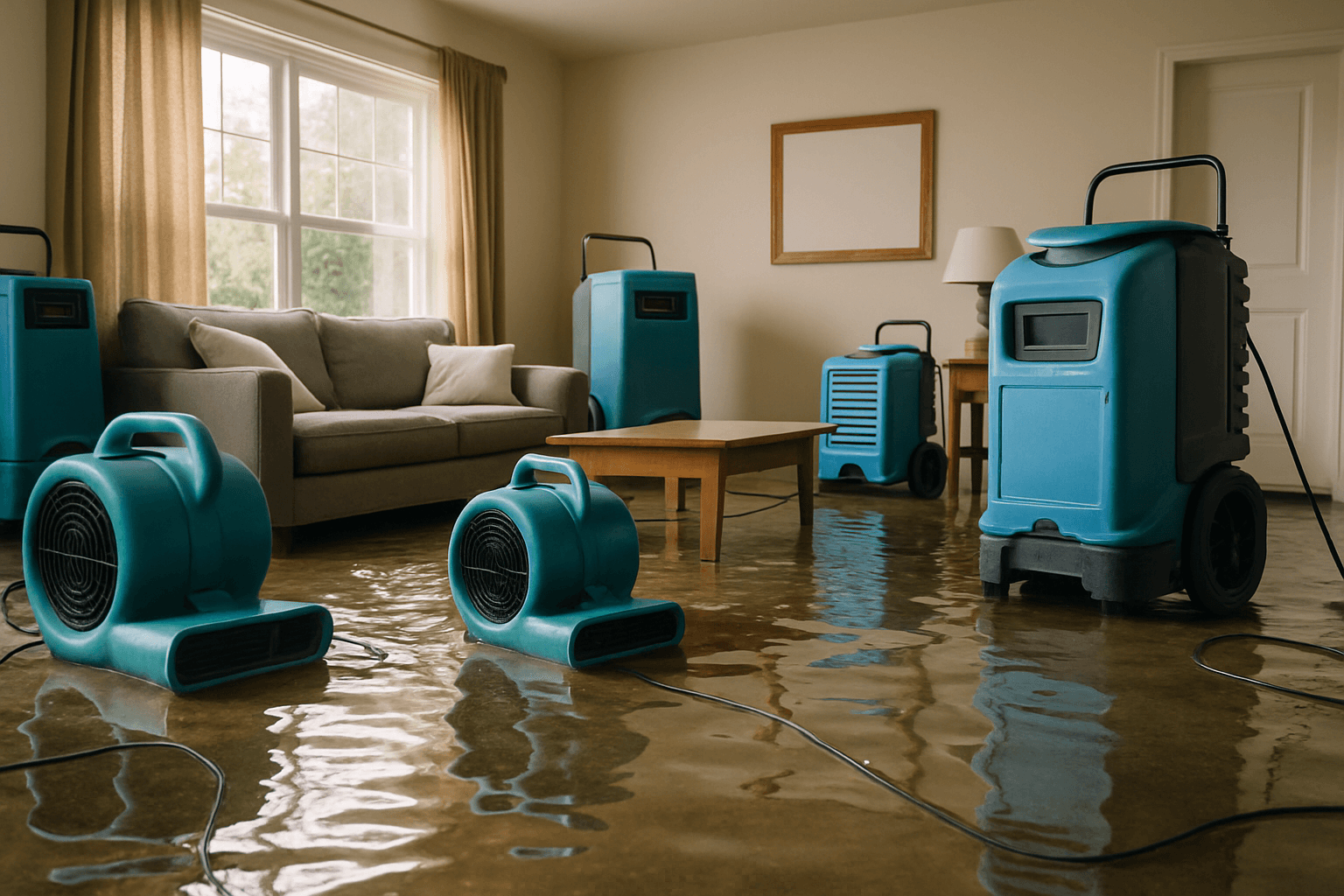
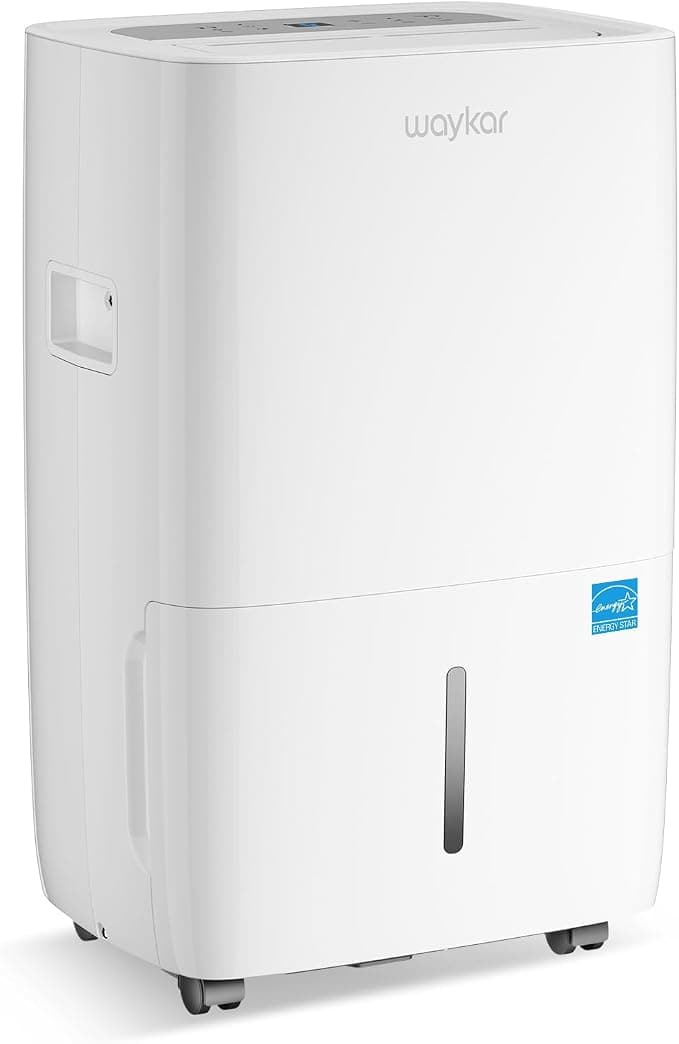
Rental counters quote dehumidifiers per day plus a refundable deposit, and the rate varies by branch and by season, so no national figure is worth trusting. Price your own and do the arithmetic: a structural dry runs three to five days at minimum, so multiply the daily rate by four, add an air mover (billed separately almost everywhere, and you need one), add the deposit and two drives to collect and return the machine — then compare that total against the purchase price of a unit like the Waykar 80 Pint. Renting wins for a true one-off in a single room. Owning wins once a basement has been wet more than once, or the house runs above 60% relative humidity every summer. Neither is the answer when water is inside a wall cavity, under a subfloor, or the loss is Category 2 or 3 under IICRC S500 — that is a restoration crew's job, not a rental counter's. If the water is still in the house, buying is the second question — whether it needs a crew is the first, and one call settles it: (888) 840-6512, answered 24/7.
Our Picks at a Glance
Every pick below is currently stocked — ratings and stock read from Amazon on 21 September 2026.
All picks compared at a glance
Pick
Product
Rating
Best Overall Instead of Renting
Waykar 80 Pint ENERGY STAR Dehumidifier (5,000 Sq Ft, Drain Hose)
4.3 from 22,514 Amazon ratings · checked 21 SeptAmazon's Choice
Best for: The homeowner who priced a rental, found four or five days of it close to the purchase price, and would rather own the machine the second time the basement gets wet
4.5 from 6,771 Amazon ratings · checked 21 SeptAmazon's Choice
Best for: A house with a recurring humidity problem or a basement that has been wet more than once — the case where the machine earns its keep long after this week's puddle is gone
Capacity (stated):
105 pints/day at 95°F, 95% RH; 83 pints/day at 86°F, 80% RH
4.8 from 2,403 Amazon ratings · checked 21 SeptAmazon's Choice
Best for: Moving air across a wet floor, under a cabinet kick or behind a baseboard while the dehumidifier does the removing — the second half of the rental order most people forget to price
4.6 from 14,444 Amazon ratings · checked 21 SeptAmazon's Choice
Best for: Clearing standing water off a hard floor before the dehumidifier and air mover take over — and for the inches of water a rental extractor would otherwise be hired for
Updated September 21, 2026 · Independent expert review — no sponsored placement
Before you buy
Is this a humidity problem — or water that's still arriving?
Equipment earns its money against damp air and finished drying. Standing water, soaked drywall or carpet, a leak that keeps coming back, or a musty smell that survives cleaning are past what any consumer unit removes — those need source-fixing and measured structural drying. One call tells you which side of that line you're on, with costs explained before anything is agreed.
Answer 3 questions — get a personalized recommendation.
Question 1 of 30% complete
How large is the water-damaged area?
How We Choose and Score Every Product
Each pick is scored on three dimensions by Marcus Reed, our IICRC-certified Water Restoration Technician, against the drying targets in IICRC S500 — the standard restoration crews work to. Capacity, airflow and power draw come from the manufacturer's published figures; reliability and ease of use are weighed from verified-buyer reports on the current listing. Ratings, review counts and stock on this page are read from Amazon and carry the date they were read.
Value
Price against capacity and build — does the unit justify its cost on a typical water damage job?
Performance
Rated moisture removal and airflow against IICRC S500 drying targets, plus what buyers report over long runs.
Ease of Use
Setup time, control clarity, portability, and how easily a non-professional can operate it.
Full Reviews
Scores out of 10, weighted for how the unit is used on a real water-damage job.
#1
Best Overall Instead of Renting
Check current price
Listing verified 21 Sep 2026
Best Overall Instead of RentingWaykar 80 Pint ENERGY STAR Dehumidifier (5,000 Sq Ft, Drain Hose)
4.3(22,514 reviews)
Quick Verdict
The straight substitute for a household rental: ENERGY STAR, a 30% RH floor, auto defrost and continuous drainage, at a purchase price that four or five rental days start to approach.
Score Breakdown
Value
8.8
Performance
8.5
Ease of Use
8.8
Key Specs
Capacity (stated)
80 pints/day at 95°F, 90% RH
Coverage (claimed)
Up to 5,000 sq ft
Humidity range
30%–80% RH set point
Efficiency
ENERGY STAR certified, DOE compliant
Drainage
1.14 gal tank, or continuous gravity drain through the included 3.3 ft hose
Cold-weather handling
Automatic defrost and overload protection
Pros
Sits in the capacity class a rental counter usually hands a homeowner, so the comparison against a few days of rental is like for like
Continuous gravity drainage through the included hose, which is what lets it run unattended overnight instead of being emptied every few hours
Holds a set point down to 30% RH, below the 40% floor many consumer units stop at, so it can pull a room past the maintenance band during an active dry
ENERGY STAR certified, which starts to matter once the machine is yours and runs through every humid month rather than for four days
By far the most-rated listing in the category, so the long-term failure points are documented by verified buyers rather than guessed at
Cons
The 80-pint figure is measured at 95°F and 90% RH; a cool basement never reaches those conditions and will see a fraction of it
Gravity drain only, with no condensate pump — the hose has to run downhill to a drain, where a counter unit is often specified with a pump
Suited to
The homeowner who priced a rental, found four or five days of it close to the purchase price, and would rather own the machine the second time the basement gets wet
Expert Note
Marcus Reed · IICRC Certified WRT · 15 yrs experience
“This is the unit to hold up against a rental quote, because it is roughly the class of machine most counters stock for household jobs. Do the arithmetic honestly: take the daily rate, multiply it by four days rather than the one day people picture, add the deposit you float and two drives across town, and put that beside the purchase price here. For a genuine one-off room the rental often still wins. For a basement that has been wet before, it almost never does. The one thing a rental can beat it on is drainage — counter units are frequently specified with a condensate pump, and this one is gravity-only, so it needs a floor drain or a sink lower than the machine.”
These open a search for this model. We quote prices only where we can verify them — Amazon, Sylvane and eBay.
#2
Closest to a Rental-Counter Machine
Check current price
Listing verified 21 Sep 2026
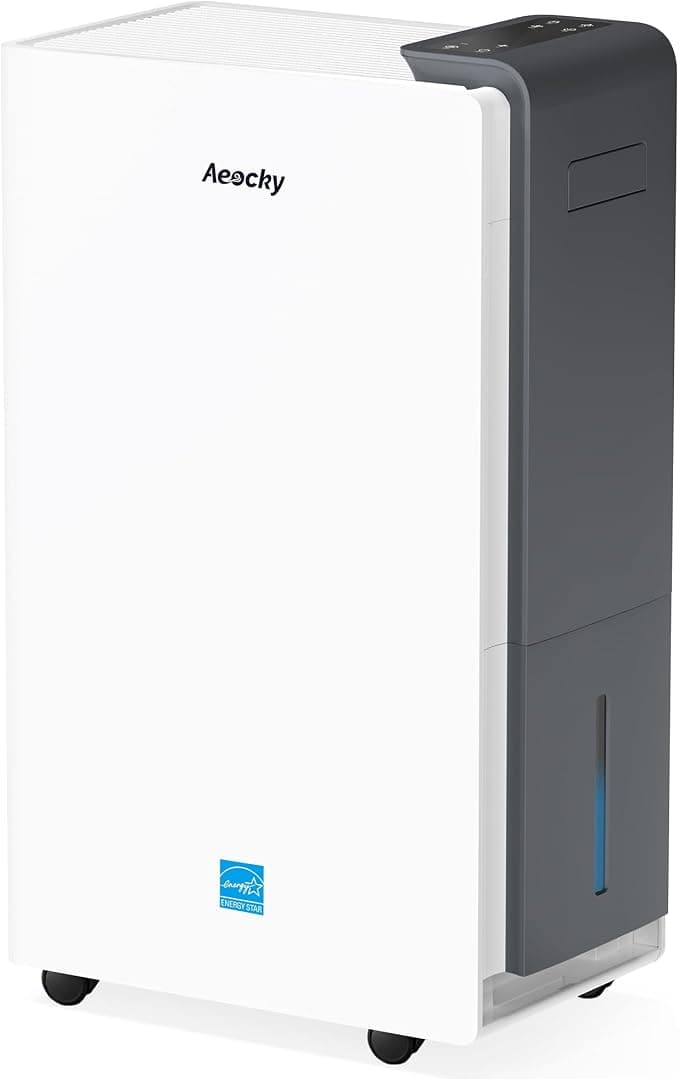
Closest to a Rental-Counter MachineAEOCKY RHEA-002 Commercial Dehumidifier (6,000 Sq Ft, ENERGY STAR Most Efficient 2024)
4.5(6,771 reviews)
Quick Verdict
The largest sensible buy on this page: two published capacity points, ENERGY STAR Most Efficient certification and cool-room defrost, for the house where the dehumidifier is never really going away.
Score Breakdown
Value
8.4
Performance
8.8
Ease of Use
8.5
Key Specs
Capacity (stated)
105 pints/day at 95°F, 95% RH; 83 pints/day at 86°F, 80% RH
Coverage (claimed)
Up to 6,000 sq ft
Humidity range
40%–80% RH set point
Efficiency
ENERGY STAR Most Efficient 2024
Drainage
1.45 gal tank, or drain hose with a garden-hose adapter included
Cold-weather handling
Auto defrost; the listing calls out 65°F as the point where ordinary units frost up
Pros
Publishes two capacity figures rather than one — 105 pints a day at 95°F and 95% RH, and 83 pints a day at 86°F and 80% RH — which is the honest way to state a dehumidifier spec
Carries ENERGY STAR Most Efficient 2024 certification, a narrower list than plain ENERGY STAR, which is what keeps the running cost down on a machine that works for months
Auto defrost aimed at cooler rooms, the feature that separates a unit still pulling water in an unheated basement from one that frosts and stalls
Ships with the drain hose and a garden-hose adapter, so continuous drainage works out of the box without an adapter hunt
Metal housing and a footprint under 15 in deep, so it survives being dragged between rooms the way a rental unit is
Cons
Will not hold a set point below 40% RH, which is fine for maintenance but limits how far it can push a room during an active dry
Not a true low-grain refrigerant machine despite the commercial framing, so it slows in exactly the low-humidity conditions where the last of a structural dry happens
Suited to
A house with a recurring humidity problem or a basement that has been wet more than once — the case where the machine earns its keep long after this week's puddle is gone
Expert Note
Marcus Reed · IICRC Certified WRT · 15 yrs experience
“The word commercial on a listing does not make a machine an LGR, and this one is not. What it is, is a high-capacity consumer unit with a genuinely useful spec sheet: two stated capacity points instead of one, a real efficiency certification and a defrost system described for cool rooms. Read the second number — 83 pints a day at 86°F and 80% RH — as the one nearer your basement, and expect less again in a room already down at 55% RH. Where owning beats renting here is duration. IICRC S500 ends a dry on moisture readings taken in the material, not on a calendar, and a machine you own can keep running for the extra two days a meter sometimes asks for with no return deadline attached to it.”
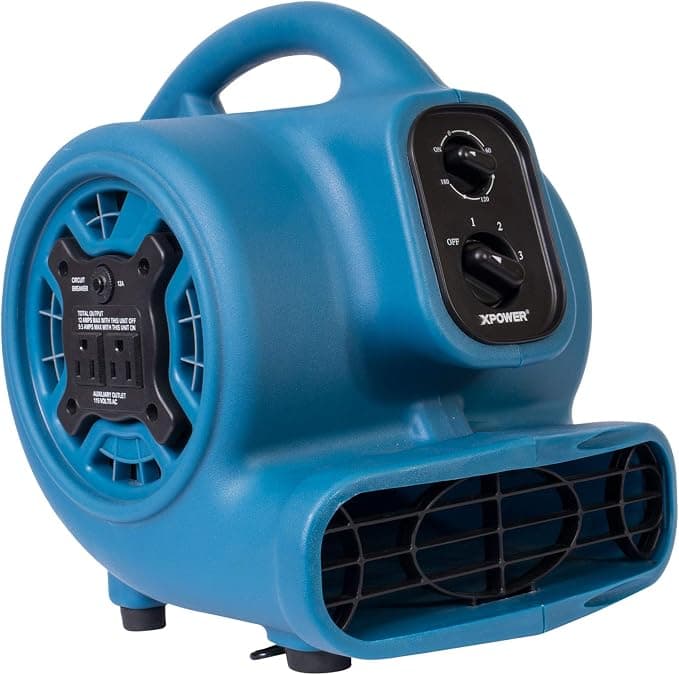
The Air Mover Rented Alongside ItXPOWER P-230AT Mini Mighty 1/4 HP 925 CFM Centrifugal Air Mover
4.8(2,403 reviews)
Quick Verdict
The small, stackable air mover that makes a dehumidifier finish: 925 CFM, four angles, daisy chain, and a current draw low enough to run several on one circuit.
Score Breakdown
Value
8.9
Performance
8.3
Ease of Use
9.1
Key Specs
Airflow (stated)
Up to 925 CFM
Motor
1/4 HP, 2.3 amps at the highest setting
Speeds
3 speeds with a built-in timer
Positions
4 operating angles (0°, 20°, 45°, 90°)
Power
10 ft cord with wrap-around cord design, daisy-chain option
Weight
10.2 lb
Pros
2.3 amps at its highest setting means three or four can share a household circuit, which is the practical wall people hit with the larger blowers a counter rents
Daisy-chain option lets one wall socket feed several units, the way a restoration crew wires a room
Four fixed angles cover the placements that matter — flat across a floor, 45° into a wall base, and vertical under a cabinet kick
Stackable and 10.2 lb, so it lives on a shelf between events instead of taking the floor space a rental-sized blower needs
ETL / CETL certified with dual thermal protection, which matters on a machine meant to run for days unsupervised
Cons
925 CFM is modest next to the 2,000-plus CFM blowers a rental counter stocks, so a large room needs several of these rather than one
No onboard GFCI, so on a wet floor it belongs on a GFCI-protected outlet or an inline cord
Suited to
Moving air across a wet floor, under a cabinet kick or behind a baseboard while the dehumidifier does the removing — the second half of the rental order most people forget to price
Expert Note
Marcus Reed · IICRC Certified WRT · 15 yrs experience
“A dehumidifier on its own dries the air in a room. It does not dry the floor. Evaporation out of the material into that air is what an air mover drives, and a dry with one machine and not the other stalls, with a dehumidifier humming away in a room whose subfloor is still wet. If you are pricing a rental, price both — that is what doubles the daily quote, and it is the main reason owning catches up faster than people expect. Placement beats power: air aimed along a surface at a shallow angle strips the saturated boundary layer sitting on it, while air aimed straight down at it mostly makes noise.”
Best for Standing Water Before the Dry StartsVia Sylvane
Check current price
Listing verified 21 Sep 2026
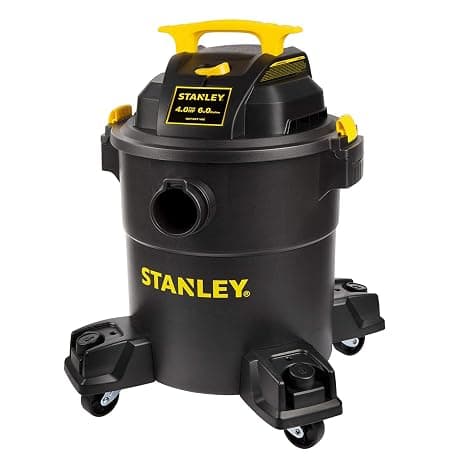
Best for Standing Water Before the Dry StartsStanley SL18116P Wet/Dry Vacuum (6 Gallon, 4 Peak HP)
4.6(14,444 reviews)
Quick Verdict
Six gallons, wet and dry, a blower port and the accessories in the box — the cheapest way to cut days off a dry by taking the water out mechanically first.
Score Breakdown
Value
9.0
Performance
8.2
Ease of Use
8.6
Key Specs
Tank
6 gallons (over 22 L)
Motor
4 peak HP
Functions
Wet pickup, dry pickup, and a blower port
Reach
Over 16 ft (6 ft hose, 10 ft cord, 3 extension wands)
Takes the standing water out first, which is the single biggest thing that shortens the number of days a dehumidifier has to run
Foam wet filter and blower port are in the box, so it arrives ready for water rather than needing a separate wet kit
Over 16 ft of working reach covers most of a room without unplugging and repositioning the unit
Four swivel casters, which is what keeps a full six-gallon tank rolling instead of being carried
One of the most-rated wet/dry vacuums on Amazon, so the wear points are well documented by verified buyers
Cons
Six gallons fills fast on a real water loss, and every tank means a carry to a drain — it is not a substitute for a pump or a truck-mounted extractor
A shop vacuum lifts surface water only; it does not pull water out of carpet pad or a subfloor the way a weighted extraction head does
Suited to
Clearing standing water off a hard floor before the dehumidifier and air mover take over — and for the inches of water a rental extractor would otherwise be hired for
Expert Note
Marcus Reed · IICRC Certified WRT · 15 yrs experience
“Water you remove mechanically never has to be evaporated, condensed and drained, which is exactly why this sits on a rental-cost page. Every gallon vacuumed is a gallon the dehumidifier does not spend hours pulling back out of the air, and hours are what a daily rate bills for. Two limits are worth being plain about. A shop vacuum is a surface tool — carpet pad holds water that only a weighted extraction head reaches, which is why the pad usually comes out rather than being dried. And if the water is grey or black under the IICRC S500 categories, a household vacuum is the wrong tool entirely; that material is removed under containment, not dried in place.”
Sylvane is the leading professional supplier for Santa Fe, AlorAir, and Dri-Eaz restoration equipment — the same brands IICRC-certified contractors use on large-scale jobs. Free shipping on orders over $45.
Affiliate link — HearthDry earns a commission from Sylvane via CJ at no extra cost to you
Buyer's Guide
What to know before you buy — written from real restoration job experience.
What a Rental Counter Actually Gives You
Home improvement chains, independent tool-hire branches and some carpet-cleaning firms all rent dehumidifiers, and what they hand over varies more than people expect. Two very different machines go out under the same word. The first is a high-capacity consumer unit much like the ones reviewed on this page, often fitted with a condensate pump so it does not need a floor drain below it. The second is a restoration-grade low-grain refrigerant machine, built to run on a job site for weeks and to keep pulling water once the room is already down near 40% relative humidity. The LGR is the better machine for the last and slowest part of a structural dry, and it is not always what is in stock. Ask which one you are getting before you drive, because the answer changes both the quote and the number of days you will need it. Ask three more things while you have the branch on the phone: whether the rate is charged per twenty-four hours or per calendar day, what deposit is held and how it is released, and whether an air mover is included or quoted separately. That last one catches people out — the dehumidifier is only half the order.
Pricing Your Own Rental Against Simply Buying One
There is no national daily rate worth quoting, and any page that gives you one is guessing. Rental pricing moves by branch, by season, and by how much local demand there is in the week after a storm; the same chain can quote differently across one metro area. So price your own, then do the arithmetic in front of you. Take the daily rate the branch quotes and multiply it by four days, not one — a structural dry runs three to five days at minimum, and the machine has to be back on the shelf before a meter says the wall is dry, or it does not. Add the air mover if it is billed separately, because you need one. Add the deposit you have to float, and the two round trips to collect and return a machine roughly the size of a small refrigerator, in a vehicle that will take it. Put that total beside the purchase price on the listings above. When the two numbers land close together, owning takes the tiebreak, because the next time the basement gets wet the machine is already in the basement.
Sizing: AHAM Pints Against the Number on the Box
Capacity ratings are laboratory results, and the laboratory is warm and wet. Two test conditions circulate. The current US DOE and AHAM condition is 65°F and 60% relative humidity, which is close to a real house. Most imported listings instead quote a saturation condition — 95°F and 90% or 95% RH — and that number is a great deal larger for the same machine. The Waykar unit above is rated at 95°F and 90% RH; the AEOCKY publishes both 105 pints a day at 95°F and 95% RH and 83 pints a day at 86°F and 80% RH, and the gap between its own two figures is the clearest printed illustration of the problem anyone gives you. A 60°F basement reaches none of those conditions. This matters for renting in particular, because an undersized machine does not fail outright — it simply takes more days, and days are the thing you are paying for. Size against the cooler figure where a listing prints one, and against the test point rather than the room where it does not.
How Many Days a Real Dry Takes, and Why the Meter Ends It
Three to five days is the working figure for a normal single-room structural dry, and that is the number to build a rental quote on. It is not a promise. Under IICRC S500, drying is finished when the affected materials reach a documented dry standard — moisture readings taken in the wet material, compared against readings from the same material in an unaffected part of the same building — not when a calendar day arrives. Plaster, dense hardwood and anything sitting behind a vapour barrier run longer. A room where the standing water was vacuumed up on day one runs shorter. This is the strongest argument for owning rather than renting, and it has nothing to do with money. A rented machine has a return deadline attached to it, and the temptation on day four is to call the job done because the surface feels dry and the counter closes at six. Surface dry is not dry. A pin or pinless meter, checked against a known-dry wall in the next room, is what ends the job honestly, and a machine you own can keep running for the extra two days that reading sometimes asks for.
When Owning Beats Renting Outright
Renting is the right answer for a genuine one-off: one room, a cause that has been found and fixed, a few days, no history. Owning wins in three situations, and they are common enough to check against before you drive anywhere. First, the basement has been wet before. A second event is not a risk to insure against, it is a pattern — and the second rental costs the same as the first, while the second use of an owned machine costs nothing but electricity. Second, the house has a standing humidity problem: a basement or crawl space that sits above 60% relative humidity through the summer, the level at which mould can establish on joists, subfloor and stored contents within 24 to 48 hours with no liquid water present at all. That is a machine that runs for months, and rental pricing is built for days. Third, timing. A rental needs the branch to be open and stocked, and the hours immediately after a burst supply line are exactly when it may be neither. A machine already in the house starts working the moment the water stops.
When the Answer Is Neither — Stop and Call Someone
A machine you carry in through the door dries the air in a room and the surfaces facing that room. It cannot find or reach water that has travelled somewhere else, and three situations make renting or buying the wrong question entirely. The first is water inside a wall cavity: it wicks up drywall and sits in insulation, and no amount of airflow in the room touches it. A crew maps it with a moisture meter and a thermal camera, then dries the cavity through small access holes with a system built for that. The second is water under a subfloor or beneath a floating floor, where the surface reads dry while the assembly underneath does not — cupped boards and a musty smell weeks later are the result. The third is category. Under IICRC S500, Category 2 is grey water and Category 3 is black water, and contaminated material is removed and disposed of under containment rather than dried in place; running a rented dehumidifier on a Category 3 loss does not save the material, it circulates the contamination. If any of those three describe what is in front of you, the machines on this page are not the decision to be making today.
The professional tier
Dri-Eaz LGR 130 Dehumidifier
This is the class of machine a good rental counter hands you — a true low-grain refrigerant unit that keeps pulling water once a room is already near 40% relative humidity, which is the last and slowest part of a structural dry. Across a few weeks of accumulated rental days it costs less to own one than to keep hiring one, and restoration distributors sell it where Amazon does not.
Affiliate link — Sylvane sells to contractors and homeowners alike.
Our Testing Methodology
How HearthDry evaluates equipment
Every product on this page has been evaluated by Marcus Reed, a 15-year IICRC Water Restoration Technician (WRT) who has worked on hundreds of residential and commercial water damage jobs. Products are scored across three weighted dimensions: Value, Performance, and Ease of Use.
Test Conditions
Performance tested during real Category 1–2 water damage jobs (not lab simulations)
72-hour continuous run tests to check auto-restart, compressor reliability, and noise levels
Capacity ratings verified against AHAM DOE 2012 standard (not old 2012 rating inflated numbers)
Price-to-performance calculated at street price, not MSRP
Ease of use scored after first-time setup without reading the manual
HearthDry maintains editorial independence. Affiliate commissions do not influence rankings — the top pick is the product we would buy for most homeowners, not the highest-commission product. Prices are verified monthly and updated when they shift more than 10%.
Frequently Asked Questions
How much does it cost to rent a dehumidifier?
Rental counters quote per day, plus a refundable deposit, and the rate varies by branch, by season and by local demand — there is no single national figure, and anyone quoting one is guessing. Call the branch you would actually use and ask three things: the daily rate, whether it is charged per twenty-four hours or per calendar day, and whether an air mover is included or billed separately.
Then price the real job rather than the best case. A structural dry runs three to five days at minimum, so multiply the daily rate by four, add the air mover, and add the deposit you float plus two drives to collect and return the machine. That total is the honest cost of renting, and it is the number to compare against buying one outright.
Quicker than reading — ask the pro directly: (888) 840-6512 · toll-free · no obligation
Is it cheaper to rent or buy a dehumidifier?
For a genuine one-off — one room, a cause that has been fixed, a few days — renting is usually cheaper, and that is the honest answer. Buying wins once any of three things is true. The basement has been wet before, in which case a second event means a second rental while an owned machine costs nothing but electricity to run again.
The house sits above 60% relative humidity through the summer, which is a months-long job that rental pricing is simply not built for. Or the numbers land close: work out days times daily rate, compare it against the purchase price on the listings on this page, and when the two are within reach of each other, owning takes the tiebreak because there is no return deadline and no second drive. Do that arithmetic with four days, not one.
Quicker than reading — ask the pro directly: (888) 840-6512 · toll-free · no obligation
Where can I rent a dehumidifier?
Three kinds of place rent them. Large home improvement chains run tool-rental desks in many, though not all, of their stores, and stock varies by location, so call the specific branch rather than trusting the website. Independent tool-hire and equipment-rental companies usually carry the larger restoration-grade machines and often rent air movers alongside them.
And some carpet-cleaning and restoration companies will rent equipment directly, which is worth asking about because the same phone call also gets you an opinion from someone who dries buildings for a living. Whichever you use, confirm what you are collecting: a consumer-grade unit and a low-grain refrigerant machine both go out under the word dehumidifier, and they do not dry a room at the same speed.
Quicker than reading — ask the pro directly: (888) 840-6512 · toll-free · no obligation
How long do I need to rent a dehumidifier for?
Plan on three to five days for a normal single-room dry, and book expecting to extend rather than hoping to finish early. What actually ends the job is a measurement, not a date. IICRC S500 treats drying as complete when the affected materials reach a documented dry standard, which in practice means moisture-meter readings in the wet material matching readings from the same material in an unaffected part of the house.
Surfaces feel dry long before the material behind them is. Plaster, dense hardwood and anything behind a vapour barrier run longer; a room where the standing water was vacuumed up on day one runs shorter. If you are renting, ask the counter what two extra days costs before you commit, because that is the decision you are most likely to face on day four.
Quicker than reading — ask the pro directly: (888) 840-6512 · toll-free · no obligation
Do I need an air mover as well as a dehumidifier?
YesFor anything beyond a slightly damp room. The two machines do different halves of one job. An air mover pushes air across the wet surface, stripping the saturated boundary layer sitting on it so water keeps evaporating out of the material.
The dehumidifier then removes that water from the air, so the room does not simply reach equilibrium and stall. Run only the dehumidifier and the room air gets dry while the subfloor stays wet; run only the fan and you move humid air from one part of the house to another. Rental counters price the two separately, which is the main reason a rental quote comes in above the number people had in their head — and it is also the main reason owning catches up faster than expected.
Quicker than reading — ask the pro directly: (888) 840-6512 · toll-free · no obligation
Can a rented dehumidifier dry water inside a wall?
NoA dehumidifier standing in a room dries the air in that room and the surfaces facing it. Water that has wicked up drywall, soaked into insulation or run under a floating floor is on the other side of a barrier, and no amount of room airflow reaches it — the surface reads dry while the cavity behind it does not, which is where a musty smell or cupped boards weeks later comes from.
Finding it takes a moisture meter and usually a thermal camera, and drying it takes a system that pushes conditioned air into the cavity through small access holes. That is restoration work, not a rental decision. The same applies to any Category 2 or Category 3 loss under IICRC S500: contaminated material comes out under containment, it does not get dried in place.
Quicker than reading — ask the pro directly: (888) 840-6512 · toll-free · no obligation
Who do I call right now for water damage?
Call (888) 840-6512. The line is answered 24 hours a day, seven days a week, and connects you with an IICRC-certified water damage restoration company that serves your area.
Describe what you can see — where the water is coming from, how long it has been there, and whether it smells — and the dispatcher routes you to a crew that handles that kind of loss. If the source is a pipe or an appliance, shut the main water valve first; the call itself takes under two minutes.
Quicker than reading — ask the pro directly: (888) 840-6512 · toll-free · no obligation