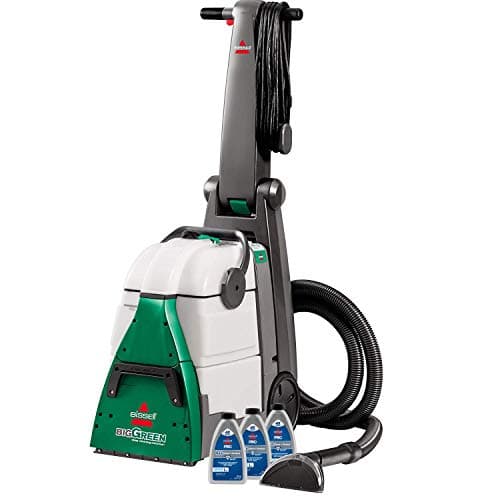
Best for: Pulling clean leak water out of a room of carpet once any standing water is gone
- Type:
- Upright home carpet extractor
- Tank (stated):
- 1.75 gallons
Listing verified 13 Oct 2026

Pulling Water Out of Carpet After a Clean-Water Leak, What Water Lift Means, and When the Carpet Has to Go
4 picks compared · prices, ratings and stock checked October 12, 2026
Our Top Pick
For carpet in a home after a clean-water leak, the BISSELL Big Green Professional Carpet Cleaner, once a wet/dry vac has taken up any standing water. For one machine that does both jobs, the Shop-Vac 5-Gallon 3-in-1 Wet/Dry/Upholstery Shampoo Vacuum.
4.7 on Amazon · 16,618 ratings
Quick answer
A carpet extractor pulls water out of carpet by suction, and after a clean-water leak the best home choice is the BISSELL Big Green Professional Carpet Cleaner, rated 4.7 stars across 16,618 Amazon ratings, used once a wet/dry vac has removed any standing water. Its 1.75-gallon tank fills fast on a soaked room, so expect to empty it often. Extraction only starts the drying: the pad underneath usually needs replacing, the room needs air movers and a dehumidifier so it is dry within 24 to 48 hours, and carpet soaked by sewage or outside floodwater should be thrown away, not extracted.
Every pick below is currently stocked — ratings and stock read from Amazon on 12 October 2026.
Best for: Pulling clean leak water out of a room of carpet once any standing water is gone
Listing verified 13 Oct 2026
Best for: Landlords, small offices and anyone extracting carpet often enough to want a commercial machine
Listing verified 13 Oct 2026
Best for: Taking up standing water first and then extracting and shampooing with the same machine
Listing verified 13 Oct 2026
Best for: Shop vac owners extracting wet stair treads, upholstery edges and carpet corners
Listing verified 13 Oct 2026
How this page was made: we compare the current Amazon listings, the makers' published specs and what verified buyers report, then rank by fit for the job. Ratings, review counts and stock are read from Amazon and dated. We earn a commission on purchases through our links; it does not change the order. Reviewed by Marcus Reed, IICRC-certified Water Restoration Technician.
Full Reviews
Each pick in detail: what the listing states, what buyers report, and where it falls short.
Check price
on Amazon ↗
Listing verified 13 Oct 2026
See it on Amazon ↗Best Overall
Quick Verdict
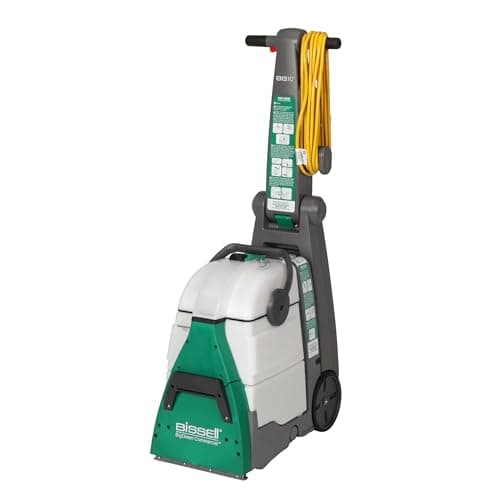
BISSELL Big Green Professional Carpet Cleaner: a full-size home extractor for carpet wet with clean water, once the standing water is gone.
Key Specs
Type
Upright home carpet extractor
Tank (stated)
1.75 gallons
Power (stated)
12 amps
Brushes (stated)
Rotating DirtLifter power brushes
Passes (stated)
Cleans on both the forward and backward pass
Included (stated)
Stain tool and BISSELL 2x Professional Deep Cleaning Formula
Pros
Cons
Suited to
Pulling clean leak water out of a room of carpet once any standing water is gone
Our take
A home deep cleaner is the extractor most homeowners can actually get on the day of a leak, and the Big Green Professional is the full-size version, with powered brushes and a 12 amp rating stated on the listing. Use it in the right order. Pick up standing water with a wet/dry vac first, because a 1.75-gallon recovery tank fills quickly and this machine is not made for puddles. Then make slow, overlapping passes with the spray trigger released, so it only pulls water up; most uprights spray only while the trigger is held, but check your manual. Save the cleaning formula until the carpet is dry, or skip it if the pad is coming out anyway. With no water lift figure listed, judge it by how much water reaches the tank on each pass.
Affiliate link — commission at no extra cost to you
Compare elsewhere
These open a search for this model. We quote prices only where we can verify them — Amazon, Sylvane and eBay.
Check price
on Amazon ↗
Listing verified 13 Oct 2026
See it on Amazon ↗Best Commercial Extractor
Quick Verdict
Bissell Commercial BigGreen BG10 Deep Cleaning 2-Motor Extractor: a commercial two-motor machine for frequent use, sold on a thin listing.
Key Specs
Type
Commercial upright carpet extractor
Motors (stated)
2 motors
Tanks (stated)
2 large-capacity tanks; the clean water tank lifts out for filling
Level indicator (stated)
Flow indicator for water and solution levels
Suction (stated)
Edge-to-edge
Tank volume
Not stated on the listing
Pros
Cons
Suited to
Landlords, small offices and anyone extracting carpet often enough to want a commercial machine
Our take
The BG10 is the commercial sibling of the Big Green, sold under Bissell's commercial label with two motors, a flow indicator and a lift-out clean tank. The problem is the listing. It gives no tank volume, no water lift and no spray pressure, so on paper you cannot compare it with the home model or with the professional portables restoration companies carry. What the commercial label does tell you is the intended use: frequent jobs, by staff or owners who clean carpet more than once a year. That fits a rental owner who deals with a leak in one unit and a spill in another. For one clean-water leak in your own house, the home model or a rented machine does the same job, and the money is better spent on air movers.
Affiliate link — commission at no extra cost to you
Compare elsewhere
Check price
on Amazon ↗
Listing verified 13 Oct 2026
See it on Amazon ↗Best for Standing Water and Extraction
Quick Verdict
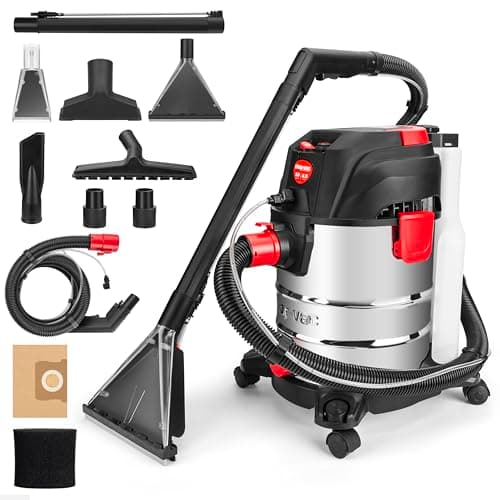
Shop-Vac 5-Gallon 4.5 Peak HP 3-in-1 Wet/Dry/Upholstery Shampoo Vacuum: one machine to take up standing water and then extract the carpet.
Key Specs
Type
Wet/dry vac with a spray-and-extract shampoo function
Recovery tank (stated)
5 gallons
Clean water tank (stated)
4.5 liters
Motor (stated)
4.5 peak HP
Reach (stated)
6 ft hose, 10 ft cord
Tools (stated)
Carpet shampoo nozzle, upholstery nozzle, handheld shampoo nozzle, crevice tool and floor brush
Pros
Cons
Suited to
Taking up standing water first and then extracting and shampooing with the same machine
Our take
After a leak the first job is volume, and a carpet cleaner's small tank is the wrong tool for it. This Shop-Vac holds 5 gallons in its recovery drum, close to three times the Big Green's 1.75. It also empties through a drain at the bottom, which matters: a gallon of water weighs about 8.3 lb, so a full drum carries roughly 40 lb of water. Once the puddles are gone, the same machine sprays and extracts through a carpet shampoo nozzle. The 4.5 peak HP figure is a motor rating, not suction at the floor, and the listing gives no water lift, so technique counts. Hold the carpet nozzle flat, pull it slowly toward you, and overlap each stroke.
Affiliate link — commission at no extra cost to you
Compare elsewhere
Check price
on Amazon ↗
Listing verified 13 Oct 2026
See it on Amazon ↗Best Add-On for a Shop Vac
Quick Verdict
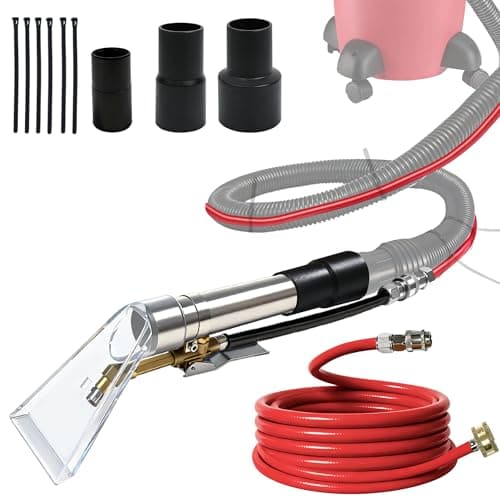
Happy Tree Shop Vac Extractor Hose Kit: turns a shop vac you own into a detail extractor for stairs, edges and upholstery.
Key Specs
Type
Spray-and-extract kit that attaches to an existing wet/dry vac
Adapters (stated)
1-1/4 in and 1-7/8 in for 1 to 9 gallon vacs; 2-1/2 in for 10 to 20 gallon vacs
Head (stated)
Clear shampoo head, described as unbreakable
Water supply (stated)
Spray nozzle with a 25 ft water hose that connects to a garden spigot
Install (stated)
No tools; connects to the hose cuff or extension wand
Vacuum
Not included
Pros
Cons
Suited to
Shop vac owners extracting wet stair treads, upholstery edges and carpet corners
Our take
Many people with a wet carpet already own a shop vac, and its drum is far bigger than any carpet cleaner's tank. What a shop vac lacks is a head that seals against fabric and a way to rinse. This kit adds both: a clear shampoo head, a spray nozzle fed by a 25 ft hose from a garden spigot, and three adapter sizes for vacs from 1 to 20 gallons. For pulling clean water out of carpet, you can skip the spray entirely and use the head for suction on stairs, edges and furniture skirts, then switch back to the vac's wide floor nozzle for open floor. The head is small, so treat this as a detail tool. Upholstery soaked by anything other than clean supply water is a professional's job or a discard.
Affiliate link — commission at no extra cost to you
Compare elsewhere
What to know before you buy.
Every carpet cleaner is an extractor. It sprays water or solution into the pile and sucks it back out. After a leak, you want only the second half. Water pulled out as liquid is water your fans and dehumidifier never have to evaporate, which is why restoration crews extract before they set up drying equipment. The order matters. Stop the source. Take up standing water with a wet/dry vac. Extract the carpet with slow suction-only passes. Lift a corner and check the pad. Then run air movers and a dehumidifier with the room closed. EPA's moisture guide says to dry water-damaged areas and items within 24 to 48 hours to prevent mold, so the whole sequence should start the day the water is found, not after the weekend.
Two numbers show up on extractor listings, and they measure different things. PSI is the spray pressure from the pump, which matters for cleaning. Water lift, quoted in inches, is how strongly the vacuum pulls, measured as how high it can lift a column of water in a sealed tube. For pulling water out of carpet, water lift is the one that counts, along with airflow in CFM. None of the four picks on this page states a water lift figure. The commercial portables we found that did state lift and pressure had almost no buyer record, and the professional machines from Mytee and Kärcher that came up had buyer ratings too thin or too weak to recommend. Peak horsepower is a motor rating, not suction. In practice, judge a machine by how much water reaches its tank.
Whether carpet is worth extracting depends on what soaked it. IICRC S500, the restoration industry's standard, sorts water by contamination. Category 1 is clean supply water, such as a burst supply line or an overflowing sink with the tap still running. That carpet is a candidate for extraction and drying. Category 2 carries some contamination, such as washer discharge or a dishwasher overflow, and needs more caution: the pad goes, and the carpet often goes with it. Category 3 is sewage or floodwater from outside, and carpet and pad soaked by it are thrown away, not cleaned. EPA's guidance is direct: if the water damage was caused by sewage or other contaminated water, call in a professional. Clean water also turns worse with time, so carpet left wet for days should not be treated as Category 1.
An extractor works from the top. The pad underneath is foam that holds several times its weight in water, and suction through the carpet barely reaches it. Standard practice after a clean-water leak is to pull the carpet back from the tack strip, cut out and discard the wet pad, dry the carpet and the subfloor with air movers and a dehumidifier, and then re-lay the carpet over new pad. EPA lists the underside of carpets and pads among the places hidden mold grows, which is why a pad that only looks dry from above is a risk. Before new pad goes down, check the subfloor with a moisture meter. A floor that reads wet will keep feeding moisture into the new pad and the carpet back.
Tank size decides how long a wet room takes. The Big Green holds 1.75 gallons of dirty water, the Shop-Vac 3-in-1 holds 5, and the Happy Tree kit uses whatever drum your shop vac has. Water is heavy: a gallon weighs about 8.3 lb, so a full 5-gallon drum carries roughly 40 lb, and a bottom drain saves your back. On a soaked room, the gap shows quickly. If the first pass with a carpet cleaner fills its tank in a few feet, stop and switch to a wet/dry vac until the pile is merely wet. Many hardware stores rent carpet cleaners by the day, which suits a single leak. Buy one if you have pets, kids or a basement that floods often, because you will use it again.
A home extractor is the wrong tool for several situations. Do not use one on carpet soaked by sewage, a toilet with waste in it or floodwater from outside; that carpet comes out, and the room needs professional cleaning. Call a restoration company when water has spread across more than one room or under the walls, when the drywall is wet above the baseboard, when the carpet stayed wet longer than about 48 hours, or when the room already smells musty. Restoration crews use truck-mounted or portable flood extractors and weighted extraction tools that press water out of the pad, and they map the moisture with meters. Renters should report the leak to the landlord before extracting, since the carpet and the claim belong to the owner.
A carpet extractor is a machine that sprays water or cleaning solution into carpet and sucks it back out with a vacuum motor. Home carpet cleaners work the same way on a smaller scale.
Commercial extractors add bigger tanks, stronger vacuums and sometimes heated water. After a leak, the vacuum half is the part that matters, used without the spray.
Mostly, yes. Extractor is the trade name for a machine that sprays and recovers water, and a home carpet cleaner is a smaller version of the same design.
The real differences are tank size, vacuum strength, durability for daily use and whether the water is heated. For a single clean-water leak at home, a full-size home model does the job.
It can pull water out of a wet carpet, but it is the wrong tool for standing water. A carpet cleaner's tank is small, the Big Green's holds 1.75 gallons, so take up puddles with a wet/dry vac first.
Then run slow passes with the spray trigger released. If the flooding came from sewage or outside floodwater, do not extract the carpet at all.
Often, if the water was clean and the carpet is dried within 24 to 48 hours. The pad underneath usually needs replacing, because suction from above barely reaches it.
Carpet soaked by sewage, outside floodwater or water that sat for days should be thrown away. A musty smell or visible mold on the backing means it is past saving.
Rent for a one-time leak and buy if you expect to use it again. Many hardware stores rent carpet cleaners by the day, and a single wet room needs the machine for a day or two. Buying makes sense with pets, a basement that takes water, or rental units, which is where a commercial model like the BigGreen BG10 fits.
Water lift is a measure of vacuum strength: how many inches a vacuum can raise a column of water in a sealed tube. Higher water lift pulls more water out of the carpet on each pass.
PSI is different; it is the spray pressure used for cleaning. For drying a wet carpet, water lift matters more, though many home machines, including every pick here, do not state it.
Call (888) 840-6512. The line is answered 24 hours a day, seven days a week, and connects you with an IICRC-certified water damage restoration company that serves your area. A recorded menu picks up first: choose water damage or mold, key in your 5-digit ZIP code, and hold through the short silence while the call is passed to the company.
Describe what you can see — where the water is coming from, how long it has been there, and whether it smells — the more specific you are, the faster the right company is on the line. If the source is a pipe or an appliance, shut the main water valve first. Have four things ready and the call goes quickly: the address, when the water started, what is wet now, and whether you have filed an insurance claim.
Still not sure which of these is your situation? (888) 840-6512 · toll-free · answered 24/7
Methodology: How we source and verify data · Report an error
Free 2-day shipping
Amazon Prime members pay no shipping on restoration equipment
Dehumidifiers, air movers, and moisture meters qualify for free Prime delivery — bulk items that otherwise cost $15–$40 to ship.
Affiliate link — HearthDry earns a bounty if you sign up; costs you nothing extra.

Before you run a dehumidifier, you need to remove standing water. These are the best wet/dry vacuums for water damage — compared on capacity, suction, and filtration.
Read the comparisonAir movers dry wet carpet, walls and floors by keeping a fast stream of air on the wet surface. These are three air movers for residential water damage, plus a high-velocity floor fan to use beside them.
Read the comparisonAfter a flood or pipe burst, a dehumidifier is your single most powerful drying tool. These are the 3 best dehumidifiers for water damage restoration, ranked on published specifications against IICRC S500 drying targets and verified-buyer reports.
Read the comparisonA moisture meter tells you what your eyes can't see — wet drywall, soggy subfloor, and moisture in framing. These are the four best moisture meters for homeowners dealing with water damage.
Read the comparisonA wet/dry vac is sized by what you can lift, not by what the label promises: water weighs about 8.3 lb a gallon, so a full 6-gallon drum is a 50 lb load. These five picks run from a cordless 2-gallon vac for the car to a 16-gallon drum with a drain port for the garage.
Read the comparisonA carpet cleaner machine washes carpet that is already dry; it does not pull a leak's worth of water out of a soaked carpet and pad. These Hoover and Bissell picks are compared on what each listing states about tanks, brushes, hoses and drying, with the technique that keeps carpet from staying damp and the cases where the carpet should be thrown out instead.
Read the comparison