
Quick answer
For black mould on bathroom grout, silicone or a painted wall, a bleach-based spray left on for the time the label gives is the quickest fix, and HG Mould Remover Spray is our pick: rated 4.6 stars across 44,451 Amazon.co.uk ratings and an Amazon Best Seller, it suits walls, tiles, seals and window frames. If you are spraying overhead or dislike strong smells, choose the HG foam version. Mould covering more than about 1 m² needs the cause found, not just a spray.
Black mould in a British home usually shows up where condensation sits: shower grout, the silicone round a bath, window reveals and the corners of north-facing bedrooms. A good remover bleaches the stain and kills surface growth so the area can be dried and protected. It will come back if the moisture stays, so pair any of these with ventilation or a dehumidifier. The four sprays below were read on Amazon.co.uk on 15 October 2026 and are among the most bought in the mould remover category.
Our picks

Pick 1 · Best overall, Amazon Best Seller
HG Mould Remover Spray 500ml
Best for: General black mould on bathroom grout, silicone and painted walls.
Check price on Amazon.co.ukHG's spray is the one most UK buyers reach for, and it covers the widest list of surfaces, including plastered walls. Because it bleaches, spot-test it on coloured grout, fabric or painted wood before spraying a whole area. Open a window, spray, leave it for the time on the bottle, then rinse or wipe. On silicone that has gone black deep inside, a spray lightens the stain but cannot reach mould under the bead; at that point the sealant needs replacing.
Pros
- Works on walls as well as tiles and grout
- Targeted spray reduces splashing
- Indoor and outdoor use
Cons
- Bleaching effect can lighten coloured surfaces
- Strong smell, needs ventilation
Key specs (from the listing)
- Size:
- 500 ml
- Form:
- Trigger spray
- Active effect:
- Bleaching (per listing)
- Surfaces:
- Plaster walls, tiles, seals, grout, windows, outdoor furniture
- Use:
- Indoor and outdoor
- Label advice:
- Test on a hidden spot first

Pick 2 · Foam, lower odour
HG Mould Remover Foam Spray 500ml
Best for: Ceilings, vertical walls and anyone sensitive to strong smells.
Check price on Amazon.co.ukThe foam version of the same HG product stays where you spray it instead of running down the wall, which makes it easier to use on a ceiling corner or above a shower. HG describes it as low odour, though a mask and an open window are still sensible. Give it the contact time on the label before wiping. Choose this over the standard spray if you are treating overhead areas or a small, poorly ventilated bathroom.
Pros
- Foam clings to walls and ceilings
- Less splashing and drift
- Low odour formula
Cons
- Still a bleaching product
- Foam needs a thorough rinse
Key specs (from the listing)
- Size:
- 500 ml
- Form:
- Foam spray
- Contact time:
- Stains gone in under 30 minutes (listing)
- Odour:
- Low odour formula (listing)
- Surfaces:
- Walls, tiles, seals, grout, windows
- Label advice:
- Test on a hidden spot first
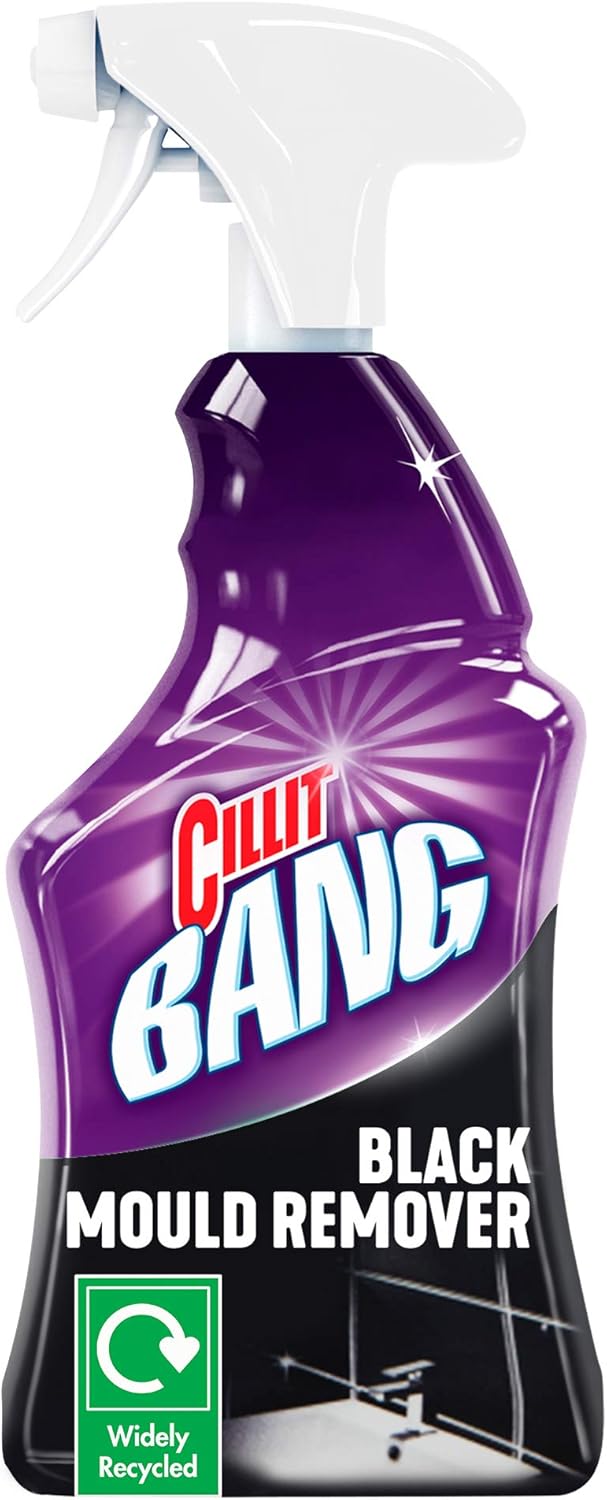
Pick 3 · Largest bottle
Cillit Bang Black Mould & Mildew Remover 750ml
Best for: Shower screens, trays and tiled surrounds with regular mildew.
Check price on Amazon.co.ukCillit Bang's spray is aimed at the shower and bath, where mildew comes back every few weeks, and the 750 ml bottle lasts longer for regular cleaning. The listing states it kills 99.9% of viruses under EN 14476, which is a disinfection claim rather than a mould-prevention one. For painted walls, HG's listing is clearer about suitability. Keep it away from other cleaners, especially anything acidic.
Pros
- Biggest bottle on this page
- Spray-and-wipe use on shower surfaces
- Widely sold brand
Cons
- Listing focuses on bathroom surfaces rather than walls
- Strong chemical smell
Key specs (from the listing)
- Size:
- 750 ml
- Form:
- Trigger spray
- Use:
- Showers, baths, damp surfaces
- Disinfection:
- Kills 99.9% of viruses, EN 14476 (listing)
- Method:
- Spray and wipe (listing)

Pick 4 · Best for shine on tiles
Cif Perfect Finish Mould Stain Remover 435ml
Best for: Tiled bathrooms where you want the mould gone and the surface polished.
Check price on Amazon.co.ukCif's spray is a bleach-based stain remover with a finish that leaves tiles and enamel shiny, which suits a bathroom you clean weekly. It is not sold as a wall treatment, so use HG on plaster or painted surfaces. Like every bleach product, never mix it with acidic descalers or ammonia, and rinse well before using a different cleaner on the same surface.
Pros
- Leaves a shiny finish on tiles and enamel
- Also lifts other stains
- Easy to find in UK supermarkets for refills
Cons
- Smallest bottle
- Not described for plaster walls
Key specs (from the listing)
- Size:
- 435 ml
- Form:
- Trigger spray
- Contains:
- Bleach (per listing)
- Targets:
- Mould, mildew, tea and wine stains
- Use:
- Indoor and outdoor surfaces
Buying guide
Bleach, foam or fungicidal wash?
Most black mould removers sold in the UK rely on sodium hypochlorite (bleach), which kills surface mould and lightens the dark staining. Foam versions cling to vertical surfaces and ceilings. Fungicidal washes without bleach exist and are kinder to coloured surfaces, but they leave the stain visible for longer. For white grout and silicone, a bleach spray is the most effective choice. For coloured paint, test first or use a fungicidal wash.
How to use a mould spray safely
Open a window and run the extractor fan. Wear rubber gloves and eye protection, and a mask if you are spraying above head height. Spray from about 20 cm, let it sit for the time on the label, then wipe with a damp cloth and dry the area. Never mix bleach-based sprays with other cleaners, especially acids or ammonia, as toxic gas can form. Keep children and pets out of the room until it has aired.
Stop it coming back
Spraying only removes what you can see. If the mould returns within weeks, the room is too humid. Run the extractor for 15 to 20 minutes after every shower, wipe down tiles and the screen, keep a window on trickle vent, and use a dehumidifier in rooms with no fan. Once a wall is clean and dry, an anti-mould paint or additive gives a few years of protection.
When a spray is not enough
A spray is the wrong answer for mould that covers more than about a square metre, keeps returning in the same place after cleaning, sits behind wallpaper or furniture on an outside wall, or follows a leak. Those point to damp in the structure, a plumbing leak or poor ventilation that needs fixing first. Tenants should report persistent damp and mould to their landlord in writing. Anyone with asthma, allergies or a weakened immune system should not clean large areas themselves.
Questions people ask
What kills black mould permanently?
Nothing kills black mould permanently while the area stays damp. A bleach-based spray removes visible growth, but spores return if humidity stays high. Lasting results come from cleaning, then fixing the moisture source with ventilation, a dehumidifier or a leak repair.
Does vinegar kill black mould?
White vinegar kills some mould on porous surfaces but does not remove the black staining. It is a gentler option for coloured surfaces. Never use vinegar on the same surface straight after a bleach spray, because mixing acids with bleach releases chlorine gas.
How do you get black mould off silicone sealant?
Spray a bleach-based remover, leave it for the contact time, then rinse. If the black stays after two treatments, the mould is growing under the surface of the silicone, and the only fix is to cut the old bead out, clean, dry and reseal.
Is black mould dangerous?
Black mould can irritate airways and trigger asthma and allergies, and the NHS advises people with breathing problems, eczema or weakened immunity to avoid it. Small patches can be cleaned with care. Large or recurring growth should be dealt with at the source.
Can I paint over black mould?
No. Paint over live mould will blister and the stain comes through within months. Clean the area with a mould remover, let it dry fully, then use an anti-mould paint or a paint with a fungicidal additive.