
Quick answer
A leaking dishwasher usually fails at the door gasket, the supply line, or the drain hose connection, and the water runs under the cabinets and flooring before it appears in the kitchen. Shut off the supply valve under the sink, pull the unit forward, and check the subfloor and cabinet base. Kick plates hide the early damage, which is why these leaks are often found late. Call (888) 840-6512 to reach a certified water damage restoration company in your area; the line is answered 24/7.
Written & reviewed by Marcus ReedIICRC WRT
Reviewed July 1, 2026· Next review Jan 2027
Dishwasher Leak: Immediate Steps & Damage Prevention
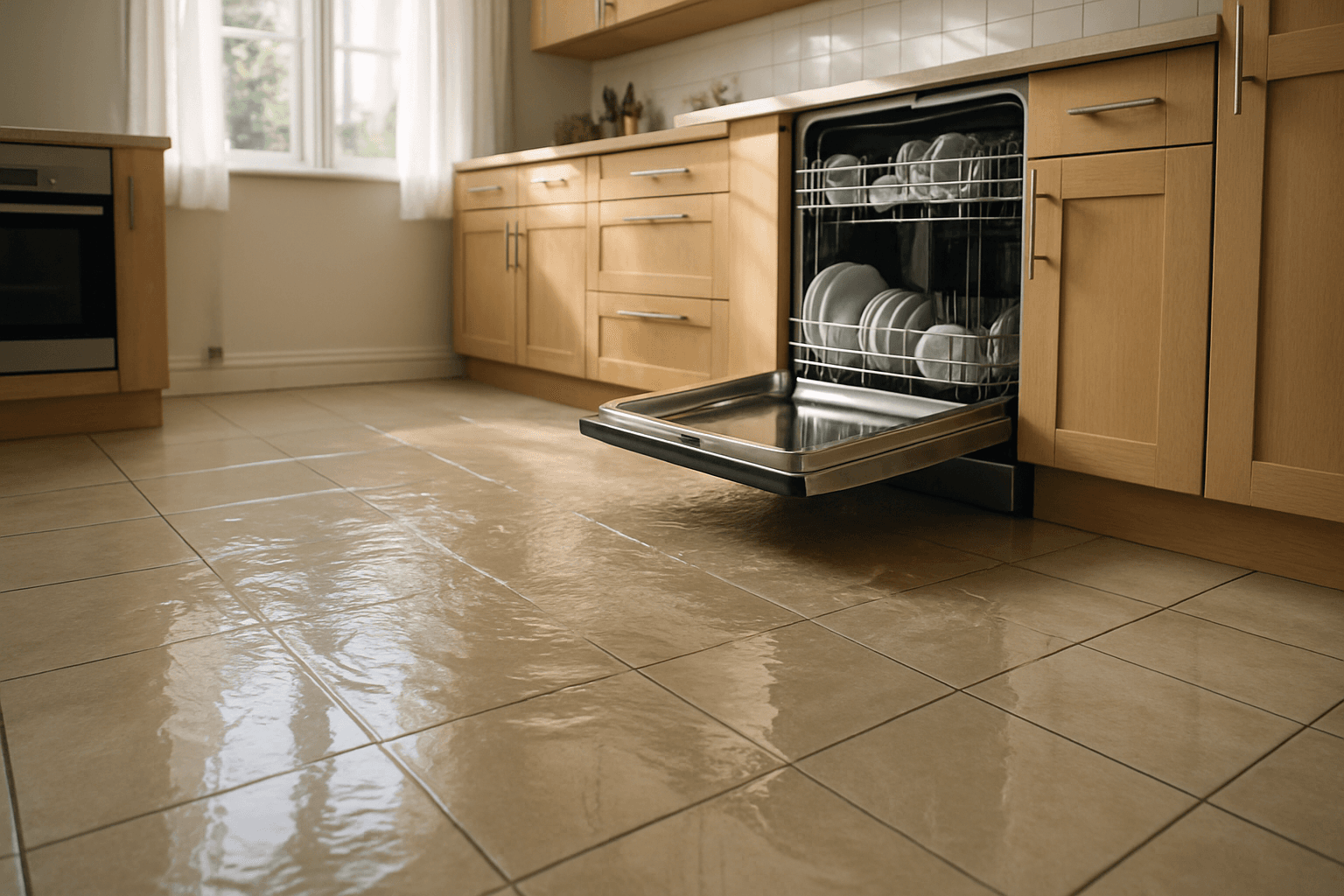
Dishwasher leaks are deceptively damaging. Water escapes under the unit and along the subfloor — often traveling 3–6 feet from the appliance before becoming visible on the floor. By the time water is visible at the dishwasher door seal, the subfloor, adjacent base cabinets, and the cabinet toe kicks may already be saturated.
Why Dishwasher Leaks Are Particularly Dangerous
Unlike a burst pipe that floods dramatically and is immediately obvious, dishwasher failures often occur in small increments during each cycle. A failing door gasket or loose drain hose connection may drip a cup of water per cycle — invisible until weeks of cumulative damage have rotted adjacent cabinet floors or grown mold under the flooring.
Five Most Common Failure Points
1. Door gasket deterioration The rubber seal around the dishwasher door degrades over time, allowing water to escape during the wash cycle. Symptoms: water on the floor at the front of the appliance during or after a cycle. A deteriorating gasket feels stiff, cracked, or has visible tears. Replacement: $15–$40 and 30 minutes.
2. Drain hose connection loosening The drain hose connects the dishwasher to the garbage disposal or sink drain. The connection can loosen from vibration. Water escapes under the sink or under the dishwasher during drain cycles. Check by running a cycle and looking under the sink immediately after the pump activates.
3. Water inlet valve failure The inlet valve controls water flow into the dishwasher. If it cracks or fails to close completely, water can drip internally — often running under the unit before appearing on the floor.
4. Spray arm cracking A cracked or loose spray arm sends water in unintended directions, potentially spraying the door seal area from inside rather than the dishes.
5. Float switch failure The float switch prevents overfilling. If it sticks in the "down" position, the dishwasher may overfill and overflow. This is typically sudden — a full cycle's worth of water on the kitchen floor.
Immediate Steps
Step 1 — Cancel the cycle and shut off the water supply Cancel the active cycle immediately. The hot water supply valve for the dishwasher is typically under the kitchen sink (right-hand valve). Turn clockwise to close. If you can't find it, shut off the main water supply.
Step 2 — Photograph everything before touching the water Before mopping, moving the dishwasher, or touching any water — take a complete video and photo walk-through. Capture the inside of the dishwasher, under the toe kick, adjacent cabinet floors, and all water on the kitchen floor. Date-stamped photos before cleanup are your insurance claim foundation.
Step 3 — Check adjacent cabinets for hidden moisture Open all base cabinet doors adjacent to the dishwasher and press on the interior floor of each. Soft or flexing particleboard indicates water absorption. Check the back wall of the cabinet that shares a wall with the dishwasher space. Use a moisture meter if available — readings above 15% in wood indicate active moisture.
Step 4 — Pull the dishwasher and identify the failure After photographing, pull the dishwasher forward to access the supply line, drain hose connection, and the floor beneath the unit. Photograph the failure point — this is evidence for your insurance claim.
Does Insurance Cover It?
Yes — sudden and accidental dishwasher leaks are covered under standard HO-3 homeowners insurance. Where the sudden-versus-gradual line falls decides most of these claims. The key qualifier: "sudden." If the adjuster classifies the damage as "gradual" (implying you knew about the leak and ignored it), coverage may be denied.
Protect your claim:
- Do not use the dishwasher after discovering the leak — continued use implies acceptance of the condition
- Photograph and retain the failed component (gasket, hose) as evidence
- Call your insurer within 24–48 hours of discovery
The appliance itself is not covered under homeowners insurance — only the resulting structural and property damage.
What It Costs
| Damage Type | Typical Cost |
|---|---|
| Minor — vinyl floor, small area | $800–$2,500 |
| Moderate — subfloor saturation, adjacent cabinets | $2,500–$6,000 |
| Hardwood flooring requiring section replacement | $3,000–$8,000 |
| With mold remediation | Add $2,000–$6,000 |
Prevention
Run a test cycle and watch under the sink. Once per year, run the dishwasher through a full cycle and check under the sink while it drains. This 10-minute test catches drain hose loosening before it becomes a flood.
Inspect the door gasket annually. Run your finger along the full perimeter of the door gasket. If it feels stiff, cracked, or has gaps, replace it — it's a $15–$40 part and 30 minutes of work.
Install a water leak detector under the dishwasher. A smart leak sensor placed under the toe kick will alert you to any drip before it becomes structural damage.
Talk to a water damage pro now
Answered 24/7 · Toll-free · answered 24/7 · no obligation
(888) 840-6512- Describe the damage & give your ZIP
- You're routed to the on-call local crew
- They quote — you decide, no obligation
Reading to confirm what you already suspect?
Confirm it in two minutes instead — the pro on this line answers questions about YOUR situation all day: what it is, what it should cost, whether you even need service. If you want, they'll set the appointment on the same call.
Toll-free · no obligation · asking costs nothing
Frequently Asked Questions
- 1door gasket degradation — the rubber seal around the door wears and allows water to escape during the wash cycle
- 2drain hose connection loosening where the hose connects to the garbage disposal or sink drain
- 3water inlet valve failure — valve cracks or sticks open
- 4spray arm cracking — water escapes incorrectly
- 5float switch failure allowing overfill. Door gasket failure is the most common consumer-serviceable issue.
- 1Door seal (gasket) failure — water on the floor directly in front of the dishwasher during cycle; visible cracked or hardened rubber on the door perimeter
- 2Inlet water valve failure — slow drip at the point where the supply hose connects under the sink; valve cracks from age or mineral deposits
- 3Drain hose connection — leak under the sink during or after drain cycle; hose clamp at the disposal or drain tail piece has loosened
- 4Float switch failure — dishwasher overfills because float switch (a small plastic dome on the dishwasher floor) is stuck; water overflows the tub through the door seals
- 5Lower spray arm crack — water hits the crack in the rotating arm and sprays against the door rather than the dishes
- 6Tub rust hole (in older stainless units) — rusting through the bottom of the dishwasher tub; requires replacement. Diagnosis method: run a short cycle and use a flashlight to look under the dishwasher with the toe kick removed. Water pooling at specific locations during specific parts of the cycle pinpoints the source. Most gasket replacements are under $50 in parts; valve and hose replacements are $75–$200.
Does homeowners insurance cover dishwasher leaks?
YesSudden and accidental dishwasher leaks are covered under standard HO-3 homeowners insurance. The leak must be sudden (not a slow drip you knew about and ignored).
Document the failure point with photos, call your insurer within 48 hours, and do not let the adjuster classify it as gradual/maintenance failure without disputing it if the failure was sudden. The appliance itself is not covered — only the resulting structural and property damage.
How do I know if my dishwasher leaked under my floor?
Signs of subfloor dishwasher damage: soft or spongy feeling when stepping near the dishwasher, discoloration or warping of adjacent baseboards, interior base cabinet floors that flex when pressed, buckling vinyl or laminate flooring near the unit, or a musty odor.
Use a pin-type moisture meter to check the floor surface and inside adjacent base cabinets — readings above 15% in wood indicate active moisture.
What are the most common dishwasher leak causes?
The five most common failure points:
How much does it cost to repair dishwasher water damage to floors?
Costs depend on how long the leak was undetected and what flooring is affected. Vinyl or laminate over a small area: $800–$2,500. Hardwood flooring requiring section replacement: $2,500–$6,000.
Subfloor damage requiring board replacement: add $1,500–$4,000. Adjacent cabinet base damage: $500–$2,500 per cabinet run. If mold develops (leak was undetected for 48+ hours), add $2,000–$6,000 for remediation.
What are the most common dishwasher leak sources, and how do I find which one is leaking?
Dishwasher leaks originate from six common sources, each with distinct symptoms:
Who do I call for a leaking dishwasher?
For the machine: an appliance technician (door gasket, pump, inlet valve are the usual suspects). For the damage: it depends where the water went — dishwasher leaks are sneaky because they run under the unit and into the cabinet base and subfloor, where nobody looks.
If the leak was ongoing or water reached the cabinet toe-kick, wood floor boards, or the ceiling below, have a restoration company put a moisture meter on it before you accept a 'it dried on its own.' The visible puddle is usually the smallest part of a dishwasher loss.
Who do I call right now for water damage?
Call (888) 840-6512. The line is answered 24 hours a day, seven days a week, and connects you with an IICRC-certified water damage restoration company that serves your area. Describe what you can see — where the water is coming from, how long it has been there, and whether it smells — the more specific you are, the faster the right company is on the line.
If the source is a pipe or an appliance, shut the main water valve first. Have four things ready and the call goes quickly: the address, when the water started, what is wet now, and whether you have filed an insurance claim.
Still not sure which of these is your situation? (888) 840-6512 · toll-free · answered 24/7
Sources
- IICRC S500 — Water Damage Restoration(retrieved 2026-07-02)
- EPA — Mold and Water Cleanup Guidance(retrieved 2026-07-02)
Methodology: How we source and verify data · Report an error
Disclaimer: HearthDry is an independent educational resource. This article is for informational purposes only and does not constitute professional, legal, or insurance advice. Consult licensed professionals before making decisions about your property or insurance claims.
Professional Equipment
Stop the Moisture Before Mold Starts Under Your Cabinets
Dishwasher leaks saturate cabinet bases and subfloor — areas that trap moisture and can't dry without active drying equipment. A commercial dehumidifier and air mover placed under the cabinets can prevent a $3,000 mold job.
Affiliate link — HearthDry earns a commission from Sylvane via CJ at no extra cost to you
Watch
Source: RepairClinic.com — YouTube
Free 2-day shipping
Amazon Prime members pay no shipping on restoration equipment
Dehumidifiers, air movers, and moisture meters qualify for free Prime delivery — bulk items that otherwise cost $15–$40 to ship.
Affiliate link — HearthDry earns a bounty if you sign up; costs you nothing extra.
Equipment
What each machine actually does
Removes the moisture the structure is still giving off — the machine that decides how long drying takes
See the picks →Moves air across wet surfaces so the dehumidifier has something to take out of the air
See the picks →Finds water behind walls and under floors, and tells you when a material is actually dry
See the picks →Alerts you the moment a leak starts — the cheapest thing on this list and the only preventive one
See the picks →Those pages carry affiliate links. As an Amazon Associate, HearthDry earns from qualifying purchases; it costs you nothing extra.
Our Amazon storefront →Advertisement
