
Appliance Leak Cleanup Services Near You
Water heater, washing machine, and dishwasher leak cleanup and structural drying
Washer, dishwasher, fridge line or water heater — the floor under it has been wet longer than you think. Certified crews dry what the appliance soaked.
Response
ASAP
24/7 dispatch
Cost
Depends
on your job
Duration
Varies
by the damage
Your three numbers take one call — no obligation.
Not sure who to call first? See the correct call order guide →

The service
What you get when you call for appliance leak cleanup
- Moisture mapping around and under the appliance and into adjacent rooms
- Extraction and drying of flooring, subfloor and the wall behind
- Removal of materials that have been wet too long to save
- Antimicrobial treatment where the leak has been slow
- Documentation of the appliance failure and the damage
A dry floor and wall — and an honest answer about whether the appliance leak was sudden or slow.
Call now if
- Water under or behind an appliance
- Flooring near an appliance is soft, warped or discoloured
- A slow leak you've only just discovered
Answered 24/7 · costs explained before any work · no obligation
Is this your situation?
Signs you need appliance leak cleanup
- Water under or behind a washer, dishwasher, fridge or heater
- Flooring near an appliance that is soft, warped or discoloured
- A cabinet base that is swollen or stained
- A slow leak you have only just discovered
- A musty smell near an appliance
Recognise more than one? Call (888) 840-6512 and describe what you're seeing — the pro tells you what it is before anything is agreed.
How the work is done
Appliance Leak Cleanup, step by step
Every crew in this network works to IICRC S500, the written industry standard — so the sequence is the same whoever arrives.
- 1
Map
how far under and behind the water travelled
- 2
Extract
standing water and saturated materials
- 3
Dry
subfloor and wall cavity to standard, logged
- 4
Treat
antimicrobial on materials that stay
- 5
Document
the failed part, the photos, the readings
Why this line
Three ways to handle appliance leak cleanup — two cost more than they look
Calling companies yourself
- Dial down a list until someone answers
- Each one scopes and quotes differently
- Licence and insurance checks are on you
- Nights and weekends go to voicemail
Waiting to see
- Mold starts within 24–48 hours on wet material
- Hidden moisture keeps spreading
- Insurers question delayed mitigation
- A drying job becomes a rebuild
One call to this line
- Describe it once — routed to a pro covering your ZIP
- IICRC-certified, licensed and insured companies
- Costs explained before anything is agreed
- Answered 24/7 by a live person
Pros in this network carry



Insurance and paperwork
Sudden appliance failures are typically covered; the worn-out appliance itself is not, and slow leaks can be contested as gradual. Save the failed hose or part — ask the pro on the call about documenting the failure.
The complete claims guide →Answered right now
Two minutes on the phone beats an hour of reading.
Your arrival window, your scope, your ballpark — before anything is agreed.
Call (888) 840-6512Understanding the problem
About appliance leak cleanup
A failed appliance discharges tens of gallons in minutes and it runs under flooring into adjacent rooms while it does, so the scope is always larger than the puddle. Shut the valve behind the machine or the main, cut power to the room at the panel before standing in water, and photograph everything before moving it — a supply hose failure is a sudden accidental discharge, which is what makes it a covered loss. Keep the failed hose. Insurance normally pays for the damage and not for the appliance, because the appliance wore out and wear is not a peril.
Quick answer
Appliance leak cleanup covers water damage from washing machines, dishwashers, refrigerator ice makers and water heaters. Typical cost is $800–$4,500 over about three days. Because these leaks run under cabinets and flooring before they are visible, the subfloor is usually wetter than the surface — which is why the repair scope is often larger than homeowners expect. Call (888) 840-6512 to reach a certified water damage restoration company in your area; the line is answered 24/7.
Common Causes of Appliance Leak Cleanup
- Water heater tank corrosion and rupture
- Washing machine supply hose burst
- Dishwasher door seal or supply line failure
- Refrigerator ice-maker line pinhole leak
- AC condensate drain overflow
Your first moves before the crew arrives
- 1Close the appliance's supply valve. Washer valves are behind the machine, dishwasher valves under the kitchen sink, water heater inlets on top of the tank. If you cannot find it, close the home's main shut-off.
- 2Cut power to the appliance and wet floor area. Unplug from a dry position or flip the breaker. Gas water heaters: turn the gas control to OFF before touching anything wet.
- 3Photograph the appliance and the failed part. The split hose, corroded tank seam, or cracked line is your insurance evidence. Photograph it in place before anyone repairs or replaces it.
- 4Check the room below. If the appliance sits on an upper floor, inspect the ceiling underneath for sagging or staining. Water that reached a ceiling cavity needs professional drying even if the floor above looks manageable.
- 5Call a certified drying crew — then your insurer. A restoration company documents moisture readings that prove the damage timeline. Open the claim while the crew is on-site to keep everything in one report.
- 6Leave the failed part with the adjuster. Do not throw away the burst hose or old tank. Adjusters and subrogation teams may need the physical part to process the claim.
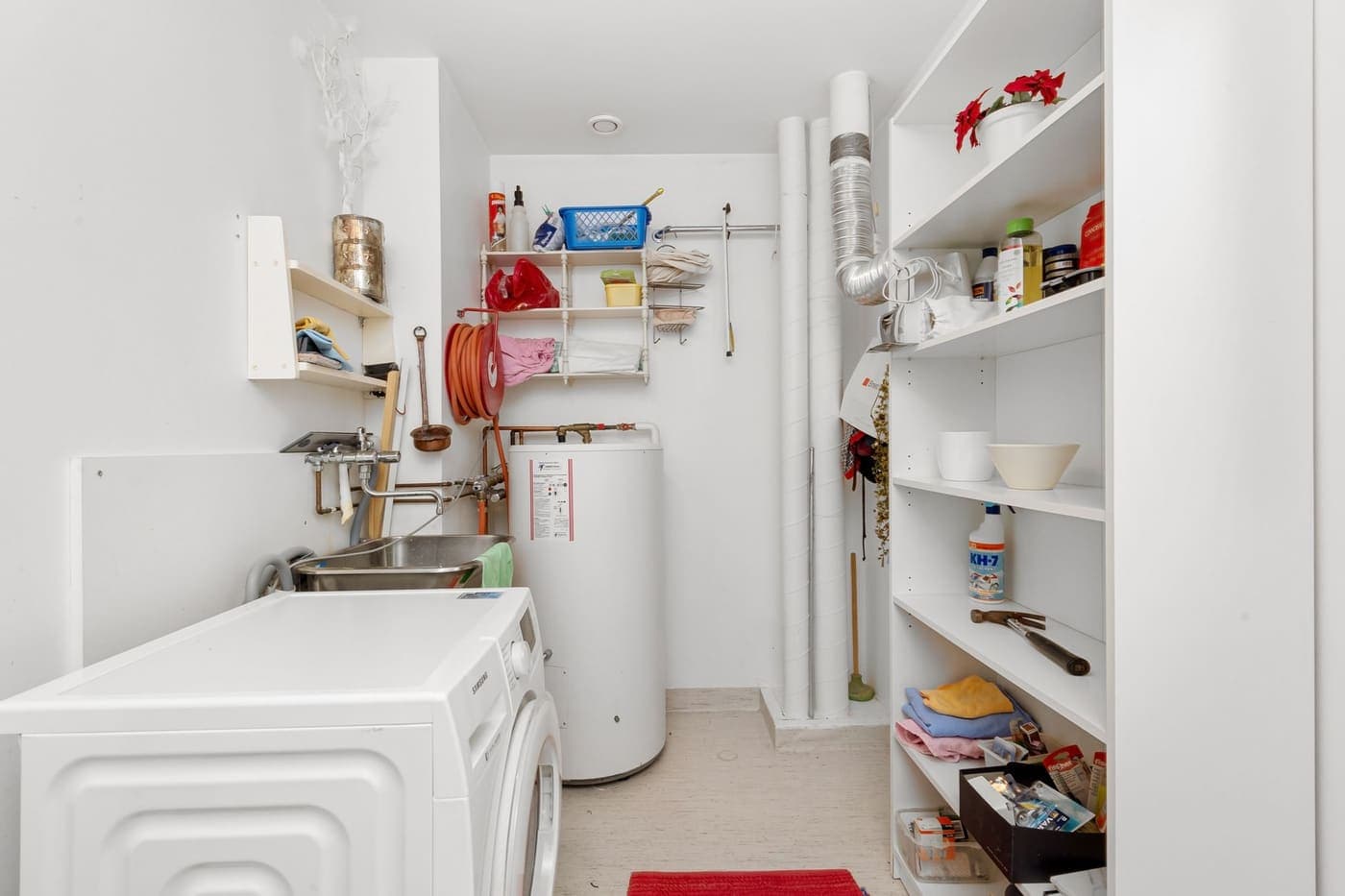
What Appliance Leak Cleanup Looks Like
Appliance Leak Cleanup by City
Appliance Leak Cleanup Questions
My water heater burst — what do I do first?
Close the cold-water inlet valve on top of the tank, then shut off the tank's power (breaker) or gas valve. A ruptured 50-gallon tank keeps refilling and leaking until the inlet is closed. Once the water stops, photograph the tank and the water path before any cleanup begins.
Does insurance cover appliance leak damage?
The water damage caused by a sudden appliance failure is typically covered; the appliance itself usually is not. Insurers distinguish sudden failures (covered) from slow leaks that existed for weeks (often denied as neglect).
This is why same-day professional drying and photos of the failed part matter — they establish the sudden-event timeline.
How much damage can a washing machine hose cause?
A burst supply hose flows at roughly 6–10 gallons per minute — around 500 gallons in an hour if nobody is home. That volume reaches adjacent rooms and the floor below. Rubber hoses past five years old are the usual culprits; braided stainless replacements cost little and prevent the most common appliance disaster.
Can floors and cabinets under an appliance be dried without demolition?
Often, yes. Crews use cavity-drying systems that push filtered air under cabinets and inside toe-kicks, and rescue mats that pull moisture out of hardwood. The window is short: if drying starts within about 48 hours, in-place drying succeeds far more often than after materials have swollen or delaminated.
How do I prevent appliance leaks from happening again?
Replace rubber washer hoses with braided stainless every 5 years, replace water heaters near the 10-year mark before they fail, clean the AC condensate line each spring, and consider leak-detector shutoff valves for the water heater and laundry.
A $30 sensor pays for itself hundreds of times over in avoided drying costs.
My washing machine flooded the house — what happens now?
Stop the water at the valve behind the machine, or the main if that valve will not turn, and cut power to the room at the panel before standing in it. Then photograph everything before you move anything, because a supply hose failure is a sudden accidental discharge and that is what makes it a covered loss.
The scope is bigger than the puddle: a washer discharges tens of gallons in minutes, and it runs under the flooring and into adjacent rooms while it does. The failed hose is worth keeping — it is physical evidence that the loss was sudden rather than a slow leak that had been going for months.
Does insurance cover a dishwasher or washing machine leak?
The damage, normally yes; the appliance, normally no. A standard policy covers sudden and accidental discharge of water from an appliance, so the flooring, cabinets, subfloor and contents are covered, subject to the deductible. The machine that failed is not — it wore out, and wear is not a peril.
The exclusion that catches people is the slow one: a dishwasher that has been seeping at the door seal for months, rotting the cabinet base, falls under gradual damage. That is why the discovery date and same-day moisture readings matter more on an appliance claim than on almost any other.
Who do I call right now for water damage?
Call (888) 840-6512. The line is answered 24 hours a day, seven days a week, and connects you with an IICRC-certified water damage restoration company that serves your area.
Describe what you can see — where the water is coming from, how long it has been there, and whether it smells — and the dispatcher routes you to a crew that handles that kind of loss. If the source is a pipe or an appliance, shut the main water valve first; the call itself takes under two minutes.
HearthDry is an independent resource. We do not perform restoration work. We connect homeowners with licensed, IICRC-certified third-party contractors. Cost ranges are estimates only. Verify contractor licensing before hiring.