
Quick answer
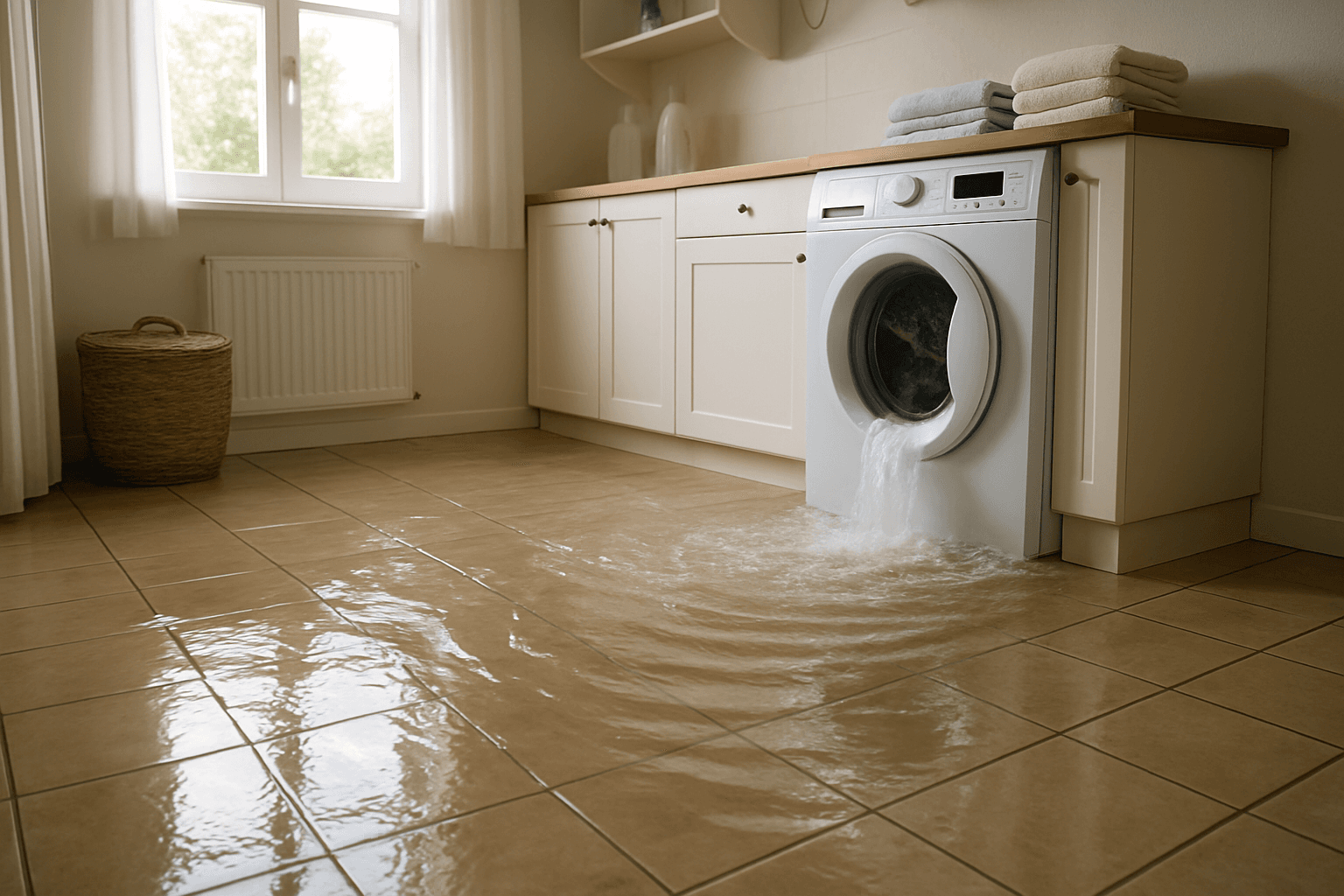
Homeowners insurance covers water damage from a dishwasher or washing machine when the leak is sudden, such as a supply hose that bursts, a door seal that fails mid-cycle or a drain hose that slips out. It pays for the floor, subfloor, cabinets, drywall, any ceiling below and belongings, less your deductible. It does not cover a slow leak that ran for weeks, which is treated as maintenance, and it does not replace the appliance itself unless you carry equipment breakdown coverage. Call (888) 840-6512 to reach a certified water damage restoration company in your area; the line is answered 24/7.
Written by Marcus Reed
Reviewed by Elena VargasLicensed Public Adjuster (TX, FL, LA)
Reviewed September 27, 2026· Next review Mar 2027
Yes, when the leak is sudden. A supply hose that bursts, a door seal that lets go mid-cycle or a drain hose that pops off the standpipe are all sudden and accidental discharges of water from a household appliance, and a standard homeowners policy pays for the damage the water does. That includes flooring, subfloor, cabinets, drywall, the ceiling below a second-floor laundry, and belongings, less your deductible.
Two things are almost never covered: the machine itself, and a leak that had been dripping for weeks.
Sudden Versus Gradual Is the Whole Claim
Insurers draw one line through appliance leaks, and everything else follows from it.
| What happened | Usually covered? |
|---|---|
| Washing machine supply hose burst | Yes |
| Dishwasher door seal failed during a cycle and flooded the kitchen | Yes |
| Drain hose slipped out of the standpipe | Yes |
| Water valve inside the machine stuck open and overfilled | Yes |
| A slow drip under the dishwasher that warped the floor over months | No, this is gradual damage |
| A washer hose you knew was weeping and meant to replace | No, this is maintenance |
| Replacing the dishwasher or washer | No, that is the failed appliance |
| Mold that grew after a covered leak | Up to the mold sublimit, commonly $1,000–$10,000 |
The awkward part of dishwasher claims is that dishwashers are built to hide leaks. Water runs down behind the kick plate and under the cabinets, where nobody sees it until the floor cups or the cabinet base swells. By then an adjuster can reasonably ask how long it had been going on. The strongest evidence you have is the date you found it, photographs taken that day, and moisture readings that show a fresh, active wet area rather than an old one. The dishwasher leak guide covers what to look for, and the washing machine overflow guide does the same for the laundry.
Why the Machine Is Not Paid For
A homeowners policy pays for what the water damaged, not for the thing that failed. A washer that broke through wear is mechanical breakdown, and mechanical breakdown is excluded, the same way a burst-pipe claim pays for the ceiling and not the pipe. The exceptions are narrow. The appliance is covered if a separate covered peril destroyed it (a fire, or a tree through the roof), or if you carry equipment breakdown coverage, an endorsement some carriers sell for a small annual cost. A home warranty, if you have one, is the other place a failed appliance gets paid.
Need a contractor your insurer accepts?
Claims live or die on documentation. Crews that estimate in Xactimate and log moisture readings give adjusters what they need.
(888) 840-6512- Describe the loss and where the claim stands
- You're routed to a crew that documents for insurers
- They scope it in writing — you decide, no obligation
The Damage That Hides
Appliance leaks rarely stay where they start.
- A dishwasher sits on the kitchen subfloor, usually under a run of cabinets and often under hardwood or laminate that continues beneath them. Water wicks along the subfloor and up the cabinet sides.
- A washer on a second floor sends water through the floor to the ceiling below, where it spreads along the joists before it shows.
- A washer on a slab pushes water under the baseboards and into the bottom of the drywall on both sides of the wall.
This is why the visible puddle is a poor guide to the claim. A moisture meter and a thermal camera find the edge of the wet area, which is almost always further out than you think. Drying that stops at the visible edge is how a covered leak becomes an uncovered mold problem three weeks later.
What to Do in the First Hour
- 1Shut the water to the machine. For a washer, close both valves on the wall behind it. For a dishwasher, close the valve under the sink, usually the smaller of the two on the hot side. If you cannot reach or turn either, shut the main.
- 2Cut the power to the appliance. Unplug it, or switch off its breaker if the plug is wet or out of reach. Do not stand in water to do it.
- 3Photograph everything before you move anything. Get the water, the hose or seal that failed, the floor, the cabinets and the ceiling below. Keep the failed hose, because it is the proof the leak was sudden.
- 4Start drying the same day. Pull the kick plate, get air under the cabinets, and if the floor, the wall or a ceiling below is wet, have it measured. Mold begins establishing within 24–48 hours. Your policy requires you to prevent further damage, so drying now is part of the claim, not a risk to it.
If the water has gone under cabinets, through a floor or into a ceiling, that is a restoration job, and (888) 840-6512 is answered 24/7 and reaches an IICRC-certified company covering your ZIP. The company gives you an arrival window for your address on the call and explains costs before anything is agreed.
Before It Happens Again
Rubber washer hoses are the most common single cause of laundry floods. Replace them with braided stainless hoses every few years, leave a few inches between the machine and the wall so they do not kink, and turn the valves off when you go away. A smart water shutoff closes the main on its own when a sensor gets wet, and some insurers give a discount for one. That is worth asking about at renewal.
Reading to confirm what you already suspect?
Confirm it in two minutes instead — the pro on this line answers questions about YOUR situation all day: what it is, what it should cost, whether you even need service. If you want, they'll set the appointment on the same call.
Toll-free · no obligation · asking costs nothing
Frequently Asked Questions
Does homeowners insurance cover a washing machine leak?
YesWhen the leak is sudden and accidental, such as a burst supply hose, a drain hose that comes loose or a valve that sticks open.
The policy pays for the resulting water damage, less the deductible. A hose that had been weeping for weeks, or damage from a leak you knew about and left, is excluded as gradual damage or maintenance.
Does homeowners insurance cover damage from a leaking dishwasher?
It covers sudden leaks, such as a door seal that fails during a cycle or a supply line that splits. Because dishwashers hide leaks under the cabinets, insurers often ask how long the leak ran.
Photographs taken the day you found it and moisture readings showing a fresh wet area are the strongest evidence that it was sudden.
Will insurance replace my washing machine or dishwasher?
Usually notA standard homeowners policy pays for the damage the water caused, not for the appliance that failed through wear.
The appliance is covered only if a separate covered peril such as a fire destroyed it, or if you carry equipment breakdown coverage.
What should I do right after a washer or dishwasher floods?
Shut off the water to the machine, cut its power, photograph everything including the failed hose or seal, and start drying the same day. Keep the failed part, since it shows the leak was sudden. If water went under cabinets, through the floor or into a ceiling below, have the area measured with a moisture meter.
How can I prevent a washing machine flood?
Replace rubber supply hoses with braided stainless steel ones every few years, leave room behind the machine so they do not kink, turn the valves off when you travel, and consider an automatic water shutoff valve. Some insurers discount a policy for one.
Who do I call right now for water damage?
Call (888) 840-6512. The line is answered 24 hours a day, seven days a week, and connects you with an IICRC-certified water damage restoration company that serves your area. Describe what you can see — where the water is coming from, how long it has been there, and whether it smells — the more specific you are, the faster the right company is on the line.
If the source is a pipe or an appliance, shut the main water valve first. Have four things ready and the call goes quickly: the address, when the water started, what is wet now, and whether you have filed an insurance claim.
Still not sure which of these is your situation? (888) 840-6512 · toll-free · answered 24/7
Sources
- Insurance Information Institute — Water damage and the homeowners policy
- NAIC — Homeowners insurance consumer guide
- IICRC S500 Standard for Professional Water Damage Restoration
Methodology: How we source and verify data · Report an error
Disclaimer: HearthDry is an independent educational resource. This article is for informational purposes only and does not constitute professional, legal, or insurance advice. Consult licensed professionals before making decisions about your property or insurance claims.
Free 2-day shipping
Amazon Prime members pay no shipping on restoration equipment
Dehumidifiers, air movers, and moisture meters qualify for free Prime delivery — bulk items that otherwise cost $15–$40 to ship.
Affiliate link — HearthDry earns a bounty if you sign up; costs you nothing extra.
Equipment
What each machine actually does
Removes the moisture the structure is still giving off — the machine that decides how long drying takes
See the picks →Moves air across wet surfaces so the dehumidifier has something to take out of the air
See the picks →Finds water behind walls and under floors, and tells you when a material is actually dry
See the picks →Alerts you the moment a leak starts — the cheapest thing on this list and the only preventive one
See the picks →Those pages carry affiliate links. As an Amazon Associate, HearthDry earns from qualifying purchases; it costs you nothing extra.
Our Amazon storefront →Advertisement
