
Appliance Leak Cleanup in Little Rock, AR
Most appliance leak cleanup jobs cost $800–$4,500; the final price depends on how much of the home is affected and what is found. The line is answered 24/7 and reaches an IICRC-certified restoration company covering Little Rock.
Washer, dishwasher, fridge line or water heater — the floor under it has been wet longer than you think. Certified crews dry what the appliance soaked.
- Moisture mapping around and under the appliance and into adjacent rooms
- Extraction and drying of flooring, subfloor and the wall behind
- Removal of materials that have been wet too long to save
Why Little Rock homes see this
- Arkansas River flooding — the 2019 flood set a record crest of 30.86 feet (highest since 1945)
- Fourche Creek overflow through southwest Little Rock — Fourche drains a large portion of the
- Ice storm pipe bursts — Little Rock sits in the heart of the Southern ice storm belt; major
The Riverdale neighborhood sits within the Arkansas River's FEMA AE floodplain and suffered direct water intrusion during the record May 2019 flood, which crested at 30.


Answered 24/7
Talk to a company that covers Little Rock
Appliance Leak Cleanup
Call (888) 840-6512Toll-free · no obligation · no charge for the referral
- 1Press 1 for water damage, 2 for mold
- 2Enter your 5-digit ZIP, then stay on through about 30 quiet seconds
- 3A company covering your address picks up and gives you an arrival window
Have ready
- • Address and ZIP
- • When it started
- • What is wet now
- • Claim opened yet?
Covers Little Rock & Pulaski County · 72201 · 72202 · 72203
Quick answer
Appliance leak cleanup covers water damage from washing machines, dishwashers, refrigerator ice makers and water heaters. Typical cost is $800–$4,500 over about three days. Because these leaks run under cabinets and flooring before they are visible, the subfloor is usually wetter than the surface — which is why the repair scope is often larger than homeowners expect. In Little Rock, AR, water damage jobs run $1,500–$8,500 for a residential home. Call (888) 840-6512 to reach a certified water damage restoration company serving Little Rock, AR; the line is answered 24/7.
Sound like your situation? Skip the rest of the reading — the Little Rock line confirms it and gives you an arrival window for your address: (888) 840-6512 · toll-free · no obligation
What Appliance Leak Cleanup Involves
What causes it
- Water heater tank corrosion and rupture
- Washing machine supply hose burst
- Dishwasher door seal or supply line failure
- Refrigerator ice-maker line pinhole leak
- AC condensate drain overflow
How the work is done
- 1Close the appliance's supply valve. Washer valves are behind the machine, dishwasher valves under the kitchen sink, water heater inlets on top of the tank. If you cannot find it, close the home's main shut-off.
- 2Cut power to the appliance and wet floor area. Unplug from a dry position or flip the breaker. Gas water heaters: turn the gas control to OFF before touching anything wet.
- 3Photograph the appliance and the failed part. The split hose, corroded tank seam, or cracked line is your insurance evidence. Photograph it in place before anyone repairs or replaces it.
- 4Check the room below. If the appliance sits on an upper floor, inspect the ceiling underneath for sagging or staining. Water that reached a ceiling cavity needs professional drying even if the floor above looks manageable.
- 5Call a certified drying crew — then your insurer. A restoration company documents moisture readings that prove the damage timeline. Open the claim while the crew is on-site to keep everything in one report.
- 6Leave the failed part with the adjuster. Do not throw away the burst hose or old tank. Adjusters and subrogation teams may need the physical part to process the claim.
Work follows IICRC S500. Typical duration 3 days; national cost range $800–$4,500.
Appliance Leak Cleanup in Little Rock: the numbers
What this work actually costs and takes locally — and what a certified pro confirms for your exact address in one call.
| What | Little Rock figure | What it means |
|---|---|---|
| Typical cost range | $1,500 – $8,500 | Little Rock homes; your job is quoted on the call |
| Typical duration | 3 days | On site; drying-dependent work can run longer |
| Typical structural drying | 3–5 days | Verified with moisture meters, not guessed |
| Line answered | 24/7 | A short menu asks for your ZIP first |
| Work standard | IICRC S500 | The written industry standard for this work |
| Service area | Little Rock, Pulaski · 3 ZIP codes | Routed to a pro covering your ZIP |
What moves the price
Affected area, how long moisture sat, whether porous materials come out, and equipment days.
What moves the timeline
Daily moisture readings decide the end date — a job ends when materials hit dry standard.
What never changes
Work follows IICRC S500, and costs are explained before anything is agreed.
A range is national. Your number is a two-minute conversation.
Describe the room and what you're seeing — a certified Little Rock pro gives you the real figure and arrival window, with no obligation.
What to do in Little Rock before help arrives
- 1Stop the sourceFixture or appliance valve if you know it, the main shut-off if you don't.
- 2Cut power to wet roomsWater tracks along wiring to outlets and fixtures before it pools.
- 3Photograph before cleanupTimestamped photos of the source, the water line and every wet item.
- 4Lift what's porousRugs up, furniture on blocks or foil, boxes off the floor.
Not sure which of these applies to your situation? Call (888) 840-6512 and describe what you're looking at — the pro walks you through the next ten minutes while a crew is arranged. Full response guide →
Three ways Little Rock homeowners handle this
Two of them cost more than they look. Here is the honest comparison.
Calling companies yourself
- You dial down a list until someone answers
- Each company scopes and quotes differently
- License and insurance checks are on you
- Nights and weekends are voicemail roulette
Waiting to see if it dries
- Mold begins within 24–48 hours on wet material
- Hidden moisture keeps spreading behind finishes
- Insurers question delayed mitigation
- A drying job becomes a rebuild job
One call to this Little Rock line
- Describe it once — routed to a pro covering your ZIP
- IICRC-certified, licensed and insured companies
- Costs explained before anything is agreed
- Answered 24/7, menu first, then a person
Pros in this network carry




Answered right now — 24/7
Get appliance leak cleanup answers for your Little Rock address
Tonight's emergency or next week's appointment — the same call books whichever you need.
Call (888) 840-6512No obligation · costs explained before any work
Equipment and reading for appliance leak cleanup
Whether you hire a crew in Little Rock or handle part of it yourself, these are the tools the job actually needs and the background worth reading first.

Best Wi-Fi Water Leak Detectors (2026)
Top pick: X-Sense SWS54 Wi-Fi Water Leak Detector Kit

Best Water Leak Detectors & Flood Sensors (2026)
Top pick: YoLink Leak Sensor 4 Kit, 6 Sensors + Hub (105 dB, LoRa)
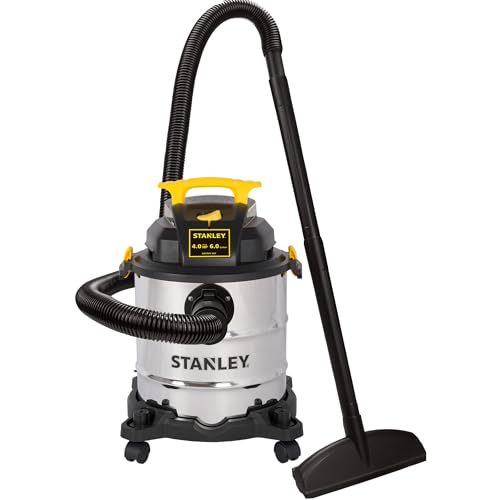
Best Wet/Dry Vacuums for Water Damage (2026)
Top pick: STANLEY SL18116 Wet/Dry Vacuum (6 Gallon, 4 Peak HP, Stainless Steel Tank)
Why Little Rock Homes Face Appliance Leak Cleanup Risks
Local geography, climate, and housing stock all affect how water damage occurs in Little Rock. These are the most common causes our certified teams respond to in this area.
- 1Arkansas River flooding — the 2019 flood set a record crest of 30.86 feet (highest since 1945), inundating Riverdale homes and Rebsamen Park Road for weeks
- 2Fourche Creek overflow through southwest Little Rock — Fourche drains a large portion of the metro and regularly overtops with only 3 inches of rain, flooding homes built before modern floodplain regulations
- 3Ice storm pipe bursts — Little Rock sits in the heart of the Southern ice storm belt; major events hit in 2000, 2009, and 2023, each causing widespread frozen and burst pipes
- 4Spring tornado season structural breaches allowing water intrusion — roof and wall damage from May-June storms creates secondary moisture damage that can take months to discover
- 5Cammack Creek flooding in the Cammack Village enclave and adjacent neighborhoods — this small urban stream has limited channel capacity and overtops frequently
Local Risk Notes
The Riverdale neighborhood sits within the Arkansas River's FEMA AE floodplain and suffered direct water intrusion during the record May 2019 flood, which crested at 30.86 feet — dozens of homes along Rebsamen Park Road received 1-4 feet of water and many were not insured for flood. Fourche Creek, Little Rock's most problematic urban waterway, regularly overtops during 3-inch rain events, flooding homes in the South End and Woodson neighborhoods that were constructed before FEMA's 1978 floodplain management regulations required minimum finished floor elevations.
AR Insurance Tip
Arkansas has some of the highest rates of uninsured flood losses in the South — only about 8% of Pulaski County homes carry flood insurance despite the Arkansas River floodplain; Little Rock homeowners should verify their property's Flood Insurance Rate Map designation and note that Arkansas HB 1470 (2023) now requires insurers to clearly disclose flood exclusions at policy renewal, creating a formal record if you choose to waive coverage.
Appliance Leak Cleanup in Little Rock — FAQs
- ✓National range for appliance leak cleanup: $800–$4,500
- ✓The spread is size, water category and how long materials stayed wet — no article can price YOUR rooms.
How fast can you get appliance leak cleanup help in Little Rock?
As fast as a crew is free — the line is answered 24/7 and the pro gives you a real arrival window for your Little Rock address on the call, because it depends on the hour, the crew load and where you are.
Active water is prioritised over scheduled work; assessments that are not urgent are usually booked same-day or next-day, whenever suits you.
What does appliance leak cleanup cost in Little Rock?
Little Rock rates: $1,500–$8,500 for residential projects (3.2–11 per sq ft).
Skip the estimating: the Little Rock line quotes your exact job in one call — (888) 840-6512 (toll-free, no obligation).
My water heater burst — what do I do first?
Close the cold-water inlet valve on top of the tank, then shut off the tank's power (breaker) or gas valve. A ruptured 50-gallon tank keeps refilling and leaking until the inlet is closed. Once the water stops, photograph the tank and the water path before any cleanup begins.
Does insurance cover appliance leak damage?
The water damage caused by a sudden appliance failure is typically covered; the appliance itself usually is not. Insurers distinguish sudden failures (covered) from slow leaks that existed for weeks (often denied as neglect).
This is why same-day professional drying and photos of the failed part matter — they establish the sudden-event timeline.
How much damage can a washing machine hose cause?
A burst supply hose flows at roughly 6–10 gallons per minute — around 500 gallons in an hour if nobody is home. That volume reaches adjacent rooms and the floor below. Rubber hoses past five years old are the usual culprits; braided stainless replacements cost little and prevent the most common appliance disaster.
Can floors and cabinets under an appliance be dried without demolition?
Often, yes. Crews use cavity-drying systems that push filtered air under cabinets and inside toe-kicks, and rescue mats that pull moisture out of hardwood. The window is short: if drying starts within about 48 hours, in-place drying succeeds far more often than after materials have swollen or delaminated.
How do I prevent appliance leaks from happening again?
Replace rubber washer hoses with braided stainless every 5 years, replace water heaters near the 10-year mark before they fail, clean the AC condensate line each spring, and consider leak-detector shutoff valves for the water heater and laundry.
A $30 sensor pays for itself hundreds of times over in avoided drying costs.
My washing machine flooded the house — what happens now?
Stop the water at the valve behind the machine, or the main if that valve will not turn, and cut power to the room at the panel before standing in it. Then photograph everything before you move anything, because a supply hose failure is a sudden accidental discharge and that is what makes it a covered loss.
The scope is bigger than the puddle: a washer discharges tens of gallons in minutes, and it runs under the flooring and into adjacent rooms while it does. The failed hose is worth keeping — it is physical evidence that the loss was sudden rather than a slow leak that had been going for months.
Does insurance cover a dishwasher or washing machine leak?
The damage, normally yes; the appliance, normally no. A standard policy covers sudden and accidental discharge of water from an appliance, so the flooring, cabinets, subfloor and contents are covered, subject to the deductible. The machine that failed is not — it wore out, and wear is not a peril.
The exclusion that catches people is the slow one: a dishwasher that has been seeping at the door seal for months, rotting the cabinet base, falls under gradual damage. That is why the discovery date and same-day moisture readings matter more on an appliance claim than on almost any other.
Who do I call right now for water damage?
Call (888) 840-6512. The line is answered 24 hours a day, seven days a week, and connects you with an IICRC-certified water damage restoration company that serves your area. A recorded menu picks up first: choose water damage or mold, key in your 5-digit ZIP code, and hold through the short silence while the call is passed to the company.
Describe what you can see — where the water is coming from, how long it has been there, and whether it smells — the more specific you are, the faster the right company is on the line. If the source is a pipe or an appliance, shut the main water valve first. Have four things ready and the call goes quickly: the address, when the water started, what is wet now, and whether you have filed an insurance claim.
Still not sure which of these is your situation? (888) 840-6512 · toll-free · answered 24/7
24/7 Emergency Response
We connect you with pros available around the clock — nights, weekends, and holidays.
IICRC-Certified Pros
Referrals go to restoration professionals working to IICRC standards (S500 water, S520 mold).
Ask for License and Insurance
Referred contractors are expected to hold state licensing and liability insurance — ask for both before work starts.
No-Obligation Consultation
Call anytime. Describe the damage, get pointed at the right trade, decide afterwards.
HearthDry is an independent resource and does not perform restoration work. All referred contractors are independently licensed and IICRC-certified.