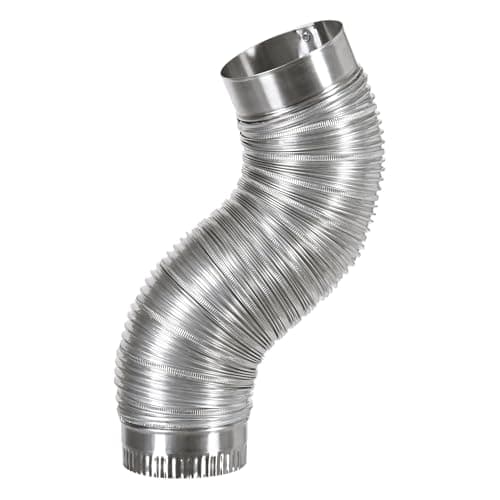
Best for: The connection from dryer to wall when the dryer can stand 4 to 6 in off the wall
- Material (stated):
- Semi-rigid aluminum
- Length:
- 8 ft
Listing verified 5 Nov 2026

Semi-Rigid Aluminum, Short Foil Connectors and a Magnetic Coupling, and Why the Plastic Hose Has to Go
5 picks compared · prices, ratings and stock checked November 5, 2026
Our Top Pick
For most dryers, the Eastman 8 Foot ArmorFlex Semi-Rigid Dryer Vent (69028): semi-rigid aluminum that holds its shape through 90-degree bends, cut to the length you need. For a dryer pushed close to the wall, the Steelsoft 3 ft Heavy Duty Aluminum Dryer Vent Hose or the Jeevony DV180 Magnetic Dryer Vent Coupling.
4.3 on Amazon · 1,203 ratings
Quick answer
The best dryer vent hose for most homes is a 4 in semi-rigid aluminum duct no longer than the gap it spans: the Eastman 8 Foot ArmorFlex Semi-Rigid Dryer Vent (69028), rated 4.3 stars across 1,203 Amazon ratings, holds its shape through 90-degree bends and is rated for -22°F to 482°F per the listing. If the dryer sits within a few inches of the wall, use a 2 to 3 ft connector or a magnetic coupling instead of a long coil. Replace any plastic or vinyl hose, which the CPSC advises against, and keep the flexible piece in the laundry room, never inside a wall.
Every pick below is currently stocked — ratings and stock read from Amazon on 5 November 2026.
Best for: The connection from dryer to wall when the dryer can stand 4 to 6 in off the wall
Listing verified 5 Nov 2026
Best for: Typical laundry rooms where the dryer outlet sits within 5 ft of the wall duct
Listing verified 5 Nov 2026
Best for: Closet and stacked installs where a semi-rigid duct cannot make the bend
Listing verified 5 Nov 2026
Best for: Owners who clean the vent often and want to pull the dryer out without disconnecting clamps
Listing verified 5 Nov 2026
Best for: A dryer outlet lined up almost directly with the wall duct
Listing verified 5 Nov 2026
How this page was made: we compare the current Amazon listings, the makers' published specs and what verified buyers report, then rank by fit for the job. Ratings, review counts and stock are read from Amazon and dated. We earn a commission on purchases through our links; it does not change the order. Reviewed by Marcus Reed, IICRC-certified Water Restoration Technician.
Full Reviews
Each pick in detail: what the listing states, what buyers report, and where it falls short.
Check price
on Amazon ↗
Listing verified 5 Nov 2026
See it on Amazon ↗Best Overall
Quick Verdict
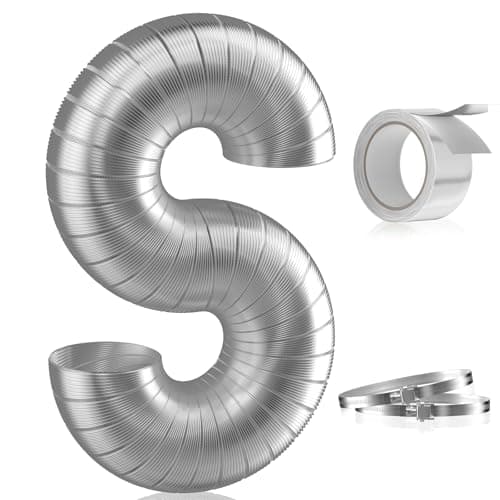
Eastman 8 Foot ArmorFlex Semi-Rigid Dryer Vent (69028): the semi-rigid transition hose that holds its bend, cut to fit.
Key Specs
Material (stated)
Semi-rigid aluminum
Length
8 ft
Diameter
4 in, the standard dryer duct size
Temperature range (stated)
-22°F to 482°F
Fire rating (stated)
Fire Class 0; will not spread flame or smoke
Bends (stated)
Allows 90-degree bends and holds its shape without kinking or crushing
Pros
Cons
Suited to
The connection from dryer to wall when the dryer can stand 4 to 6 in off the wall
Our take
Semi-rigid aluminum is the middle ground between foil, which crushes and traps lint in its ridges, and rigid pipe, which cannot make the jog from the dryer outlet to the wall. Eastman's version holds the shape you bend it to, which is the property that matters: a hose that keeps its curve does not get flattened when the dryer slides back. Buy 8 ft and cut it, rather than leaving loops. A hose two or three times longer than the gap sags, and every sag collects lint and, on a cold outside wall, condensation that can drip back into the drum. Cut with tin snips, fit each end over the collar, and tighten the included clamps. Seal joints with foil tape, not screws, which catch lint.
Affiliate link — commission at no extra cost to you
Compare elsewhere
These open a search for this model. We quote prices only where we can verify them — Amazon, Sylvane and eBay.
Check price
on Amazon ↗
Listing verified 5 Nov 2026
See it on Amazon ↗Best Short Semi-Rigid
Quick Verdict
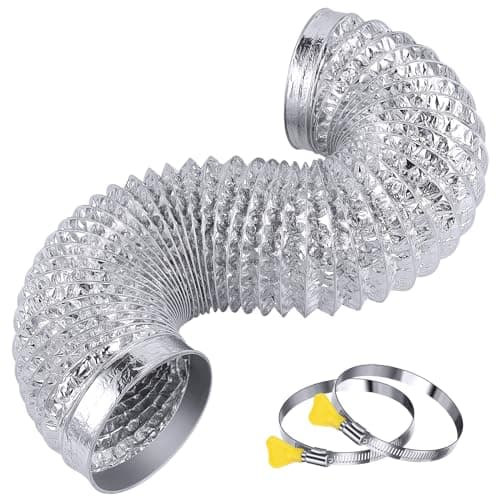
Hon&Guan 4 in Semi-Rigid Dryer Vent Hose, 5 ft: a shorter semi-rigid duct with tape in the box.
Key Specs
Material (stated)
Semi-rigid aluminum foil
Length
5 ft; an 8 ft version is listed separately
Diameter (stated)
4 in inside when fully stretched
Temperature range (stated)
-22°F to 482°F
Fire rating (stated)
Class 0
Interior (stated)
Smooth inner surface
Pros
Cons
Suited to
Typical laundry rooms where the dryer outlet sits within 5 ft of the wall duct
Our take
This is the same class of duct as the Eastman pick in a 5 ft length, which covers most installs with the dryer pulled a few inches from the wall. Its listing adds two details worth reading. It ships with aluminum foil tape, the right sealant for duct joints, where screws would project into the airflow and snag lint. And it states the 4 in inside diameter applies when the hose is fully stretched, which is a useful warning: a semi-rigid hose squashed into a short gap narrows, and a narrowed duct is the same airflow problem as a clogged one. Stretch it to length, cut off any excess, and bend it in a smooth curve rather than a tight elbow.
Affiliate link — commission at no extra cost to you
Compare elsewhere
Check price
on Amazon ↗
Listing verified 5 Nov 2026
See it on Amazon ↗Best for Tight Spaces
Quick Verdict
Steelsoft Heavy Duty 4 in Dryer Vent Hose, 3 ft: the thick all-aluminum foil connector for gaps semi-rigid duct cannot make.
Key Specs
Material (stated)
Aluminum foil with a wire helix, twice as thick as typical 3-ply foil hose
Length
3 ft; a 6 ft version is listed separately
Diameter
4 in
Maximum temperature (stated)
215°F
Clamps (stated)
Two clamps tightened by hand
Ends (stated)
Collars on both ends to slide onto the dryer and wall outlet
Pros
Cons
Suited to
Closet and stacked installs where a semi-rigid duct cannot make the bend
Our take
Foil is the material CPSC and most dryer makers would rather you avoid, and this pick is here because some installs leave no other choice: a stacked unit in a closet, or a dryer that must sit almost against the wall. If you are in that spot, this is the version to buy. It is all aluminum, with no plastic film in the layers, and the listing says it is about twice as thick as common 3-ply foil, which matters because a torn hose leaks lint into the wall cavity. Keep it short, which the 3 ft length helps with, and check it more often than a semi-rigid duct: pull the dryer out once a year, look for crushing or tears, and clear the ridges. Its listing caps heat at 215°F, so keep it clear of the dryer's back panel.
Affiliate link — commission at no extra cost to you
Compare elsewhere
Check price
on Amazon ↗
Listing verified 5 Nov 2026
See it on Amazon ↗Best for Easy Cleaning
Quick Verdict
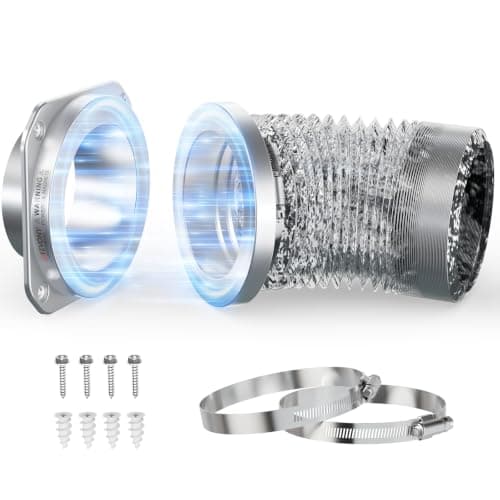
Jeevony DV180 Magnetic Dryer Vent Coupling: a self-aligning wall joint for dryers that get pulled out often.
Key Specs
Type (stated)
Magnetic quick-connect coupling between the dryer hose and the wall vent
Offset range (stated)
0 to 8 in center to center between the dryer outlet and wall vent
Hose (stated)
2.6 ft of 4 in aluminum foil hose
Seal (stated)
Built-in seal ring and a recessed wall assembly
Materials (stated)
Aluminum alloy shell, zero-flame-spread foil hose, stainless steel clamps
Included (stated)
Wall assembly, dryer adapter, hose, two clamps, four anchors and four screws
Pros
Cons
Suited to
Owners who clean the vent often and want to pull the dryer out without disconnecting clamps
Our take
The wall connection is where most hoses get crushed or knocked loose, since it is hard to reach and must be undone at every vent cleaning. A magnetic coupling moves that joint to a plate on the wall and a magnetic ring on the hose, so the dryer pulls away and pushes back with the joint lining itself up, per the listing. It suits a dryer that can sit close to the wall, within the stated 0 to 8 in offset between outlets, and it ships with anchors for the wall plate. The trade is the hose: 2.6 ft of foil rather than semi-rigid. Check after each push-back that the dryer has not crushed it, and that the seal ring is seated; a coupling that does not close fully leaks warm, damp, linty air behind the dryer.
Affiliate link — commission at no extra cost to you
Compare elsewhere
Check price
on Amazon ↗
Listing verified 5 Nov 2026
See it on Amazon ↗Best Short Connector
Quick Verdict
Deflecto AM42 Semi-Rigid Aluminum Duct, 4 in x 2 ft: the short semi-rigid piece for outlets that already line up.
Key Specs
Material (stated)
30 gauge aluminum, semi-rigid and flexible
Length
2 ft
Diameter
4 in
Maximum temperature (stated)
284°F
Use (stated)
Connecting two ducts
Clamps
Not stated on the listing bullets
Pros
Cons
Suited to
A dryer outlet lined up almost directly with the wall duct
Our take
Sometimes the dryer outlet lines up almost straight with the wall duct, and the best hose is the shortest one. This 2 ft semi-rigid section covers that case without leftover length to sag or coil. The listing states 30 gauge aluminum and a 284°F maximum temperature, two numbers that let you compare it with the others: thinner than rigid pipe but sturdier than foil, and rated well above the temperature of normal dryer exhaust. It does not mention clamps, so buy two 4 in stainless clamps or use foil tape at each end. The short length is also its limit: if the outlets are offset by more than a few inches, it will be bent too tightly, and the 5 ft Hon&Guan is the better fit.
Affiliate link — commission at no extra cost to you
Compare elsewhere
What to know before you buy.
Dryer exhaust is hot, wet and full of lint, and the hose has to carry it without crushing, sagging or burning. The CPSC recommends replacing plastic or foil accordion ducts with rigid or semi-rigid metal, and most dryer installation instructions say the same. Semi-rigid aluminum is the usual choice for the short connection behind the dryer: it bends, holds its shape and has shallower ridges than foil. Heavy foil is the fallback where semi-rigid cannot make the bend, kept as short as possible. Plastic and vinyl hose should go. Be careful when shopping: some of the best-selling listings under this search are grow-room ducts with a PVC jacket and a PET liner, sold as dryer hose, which is the material the CPSC advises against. Read the material line on the listing, and choose one that says aluminum all the way through.
The flexible hose is a transition duct: it joins the dryer to the fixed duct in the wall, and nothing more. Building codes in most US states treat it that way, keeping it short, commonly a single length of no more than 8 ft, and keeping it in the room, never inside a wall, floor or ceiling where it cannot be seen or cleaned. Inside the wall the duct should be rigid metal with a smooth interior. The whole run, including the transition, also has a maximum length, set by the dryer maker's installation instructions and by local code, with each bend counting against it. That is why a longer hose is not better. Measure the gap between the dryer outlet and the wall collar with the dryer where it will sit, and buy the shortest hose that spans it in a gentle curve.
Unplug the dryer, and on a gas dryer take care not to kink the gas line as you pull it out. Remove the old hose and look inside the wall collar: if it is packed with lint, clean the run before fitting a new hose, or the new one will clog within weeks. Slide the hose fully over the dryer outlet and the wall collar, and tighten a clamp at each end. Seal the joints with aluminum foil tape; avoid screws through the duct, since their tips catch lint, and avoid duct cloth tape, which dries out with heat. Push the dryer back slowly while watching the hose so it curves rather than folds. Then run the dryer on air-only and check the flap outside opens firmly. If it barely moves, the restriction is still somewhere in the run.
A hose often tells you what is wrong with a dryer. Water drops in the drum after a cycle usually mean warm, wet exhaust is cooling and condensing on the way out, which happens in long hose loops, in sagging sections and where the duct passes through a cold space. A shorter, straighter hose fixes many of those cases, and insulating a duct in a cold attic or crawlspace fixes others. A flattened section, a tear, or lint around the joints means air is not leaving fast enough, and a dryer that cannot exhaust overheats, which is how thermal fuses blow. Lint behind the dryer means a joint has come loose. When you replace a hose, look at the old one: a heavy coat of lint inside means the wall duct and outside hood need cleaning too.
A new hose fixes a crushed or torn connector. It will not fix a wall duct that is clogged, collapsed or too long for the dryer, and a fresh hose on a blocked run still leaves the dryer overheating; clean the whole run with a rod kit first. If the duct inside the wall or ceiling is foil or plastic, that is a bigger job than a hose swap and is often worth handing to a dryer vent service or a contractor, since it means opening a wall to fit rigid metal. A dryer that still runs hot or shuts off with a clear, short vent has a fault inside it, such as a failed thermostat, blower or fuse. And a ventless heat pump or condenser dryer needs no exhaust hose at all; adding one does nothing.
Semi-rigid aluminum is the best choice for most dryers, because it bends to fit but holds its shape and has a smoother interior than foil.
The CPSC recommends rigid or semi-rigid metal over plastic or foil accordion duct. Use heavy all-aluminum foil only where semi-rigid cannot make the bend, and never use plastic or vinyl hose.
Almost every household dryer uses a 4 in diameter vent, and every hose on this page is 4 in. Check the outlet on the back of your dryer and the dryer's installation instructions to confirm.
Do not step down to a smaller diameter, which restricts airflow, and choose the shortest length that reaches the wall collar in a gentle curve.
YesExtra length sags into loops that collect lint and condensation, and it counts against the maximum vent length in the dryer's installation instructions.
Many building codes also limit the flexible transition hose to a single length of 8 ft that stays in the room. Cut a semi-rigid hose to fit rather than coiling the excess behind the dryer.
YesSemi-rigid and foil hoses can be cut to length with tin snips or sturdy scissors.
Cut on a ridge, trim any sharp wire end, and fit the cut end fully over the collar before clamping. Sealing the joint with aluminum foil tape gives a cleaner seal than a clamp alone, and screws through the duct should be avoided because they catch lint.
NoBut it should run in smooth, gentle curves, with no kinks, sags or crushed sections.
Each bend adds resistance and counts against the maximum vent length set by the dryer maker. A semi-rigid hose holds a smooth curve well, and a magnetic coupling or short connector helps when the dryer must sit close to the wall.
Warm, yes; too hot to hold, no. Dryer exhaust warms the hose during a cycle, but a hose that is very hot, a dryer top that is hot to the touch, or long dry times point to restricted airflow from lint or a crushed duct. Turn the dryer off, check the hose and outside flap, and clean the vent before running it again.
Call (888) 840-6512. The line is answered 24 hours a day, seven days a week, and connects you with an IICRC-certified water damage restoration company that serves your area. A recorded menu picks up first: choose water damage or mold, key in your 5-digit ZIP code, and hold through the short silence while the call is passed to the company.
Describe what you can see — where the water is coming from, how long it has been there, and whether it smells — the more specific you are, the faster the right company is on the line. If the source is a pipe or an appliance, shut the main water valve first. Have four things ready and the call goes quickly: the address, when the water started, what is wet now, and whether you have filed an insurance claim.

Still not sure which of these is your situation? (888) 840-6512 · toll-free · answered 24/7
Methodology: How we source and verify data · Report an error
Free 2-day shipping
Amazon Prime members pay no shipping on restoration equipment
Dehumidifiers, air movers, and moisture meters qualify for free Prime delivery — bulk items that otherwise cost $15–$40 to ship.
Affiliate link — HearthDry earns a bounty if you sign up; costs you nothing extra.
A dryer that needs two cycles, feels hot on top or shuts off after a few minutes is often pushing air through a vent half full of lint. These picks are rod-and-brush kits from 15 ft to 60 ft and two lint-trap vacuum attachments, compared from their listings and buyer ratings, with how to match rod length to your vent and when the duct itself needs replacing instead.
Read the comparisonA washing machine's two fill hoses sit under full house pressure whenever the valves are open, and an old rubber hose that splits keeps releasing water until someone closes the valve. These picks are braided stainless hoses compared on fittings, length, elbows and what each listing actually states, with the replacement habit and the shutoff valve that a better hose does not replace.
Read the comparisonA washing machine drain pan catches drips and small overflows under the washer, and only a pan with a drain port can send that water away instead of holding it. These picks are compared on inside size, wall height, drain port and material, with the gallons-per-inch math and the burst-hose risk that no pan covers.
Read the comparison