
Best Water Hammer Arrestors in 2026 — Screw-On Washer Arrestors, Angle Fittings and Sweat Arrestors for Pipes That Bang, and the Noises They Will Not Stop

Best Water Hammer Arrestors in 2026

Screw-On Washer Arrestors, Angle Fittings and Sweat Arrestors for Pipes That Bang, and the Noises They Will Not Stop

5 picks compared · prices, ratings and stock checked November 5, 2026

Our Top Pick

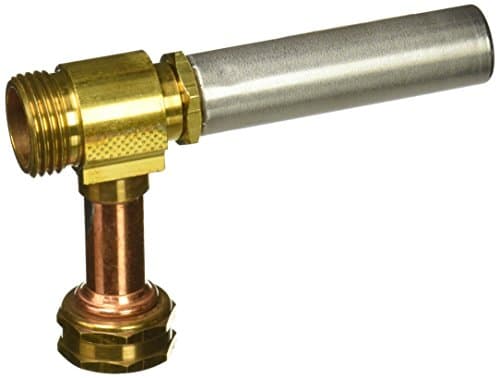
For a washing machine that makes the pipes bang, the EFIELD HAMMER021-2 Stainless Steel Water Hammer Arrestor 2 Pack: one for the hot valve, one for the cold, screwed on by hand between valve and hose. Where the outlet box is shallow, the EFIELD HAMMER018-2 angle version.

4.4 on Amazon · 1,196 ratings

Quick answer

The best water hammer arrestor for most homes is a pair of 3/4 in hose-thread arrestors screwed on between the washing machine valves and the supply hoses: the EFIELD HAMMER021-2 Stainless Steel Water Hammer Arrestor 2 Pack, rated 4.4 stars across 1,196 Amazon ratings, has a swivel female inlet and male outlet and a 250 PSI working pressure per the listing. If the box behind the washer is shallow, choose the EFIELD angle version. If pipes bang at every fixture, measure house pressure first: above 80 psi, a pressure reducing valve is the fix, not an arrestor.

Our Picks at a Glance

Every pick below is currently stocked — ratings and stock read from Amazon on 5 November 2026.

Best for Permanent Plumbing
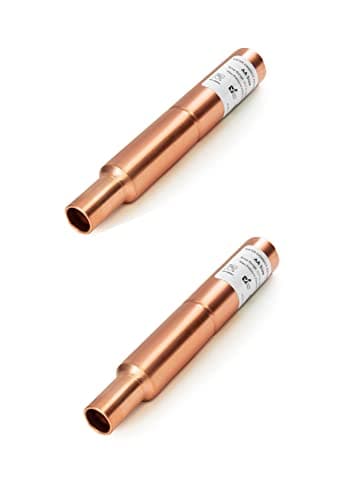
EFIELD MH-260 Copper Water Hammer Arrestor, 2 Pack (1/2 in Male Sweat, Size AA, cUPC and NSF)
4.3 from 118 Amazon ratings · checked 5 NovAmazon's Choice

Best for: Plumbers and capable DIYers adding an arrestor near a dishwasher, ice maker or quick-closing faucet during a repair or remodel

Connection (stated):
1/2 in male sweat
Compatible with (stated):
Copper tubing, copper press systems such as Viega ProPress, and push-fit systems

Listing verified 5 Nov 2026

How this page was made: we compare the current Amazon listings, the makers' published specs and what verified buyers report, then rank by fit for the job. Ratings, review counts and stock are read from Amazon and dated. We earn a commission on purchases through our links; it does not change the order. Reviewed by Marcus Reed, IICRC-certified Water Restoration Technician.

Full Reviews

Each pick in detail: what the listing states, what buyers report, and where it falls short.

#1
Best Overall for Washers

Check price

on Amazon ↗

Listing verified 5 Nov 2026

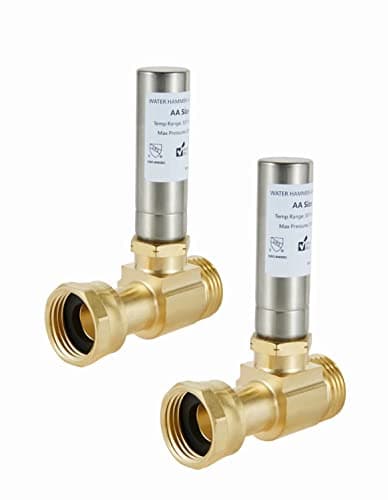
EFIELD HAMMER021-2 Stainless Steel Water Hammer Arrestor, 2 Pack (3/4 in Swivel FHT x MHT, Straight, 250 PSI)See it on Amazon ↗

Quick Verdict

EFIELD HAMMER021-2 2 Pack: the screw-on 3/4 in arrestor pair for washers that bang the pipes when they fill.

Key Specs

Connection (stated)

3/4 in female swivel hose thread x 3/4 in male hose thread

Pack

Two arrestors, one for each washer valve

Max working pressure (stated)

250 PSI

Body (stated)

Stainless steel arrestor with a low-lead brass body

Orientation (stated)

Horizontal or vertical

Shape

Straight

Pros

  • Screws on by hand between valve and hose, with no cutting or soldering
  • Two in the box, so the hot and cold lines are both covered
  • Works mounted in any direction, per the listing

Cons

  • A straight arrestor adds several inches of depth, which can push the hoses against the wall
  • No temperature rating on the listing, though the hot line needs one
  • No plumbing certification named on this listing, unlike the TTFLEX pick

Suited to

Washing machines that bang the pipes when they fill, with room behind the machine for straight fittings

Our take

A washing machine's fill valves are solenoids that slam shut in a fraction of a second, which is why the bang comes from the laundry room when nothing else in the house does it. An arrestor at each valve catches that spike right where it starts. This pair is the plain retrofit: turn off both washer valves, unscrew the hoses, thread an arrestor onto each valve's outlet, then thread the hose onto the arrestor. The swivel female end spins on its own, so you tighten it without twisting the arrestor body. Put a fresh rubber washer in each connection and tighten by hand plus a little with pliers; hose threads seal on the washer, not the threads. Check both joints for drips after the first fill, since a weeping joint behind a washer goes unseen.

Check today's price on Amazon →

Affiliate link — commission at no extra cost to you

Compare elsewhere

These open a search for this model. We quote prices only where we can verify them — Amazon, Sylvane and eBay.

#2
Best Known Plumbing Brand

Check price

on Amazon ↗

Listing verified 5 Nov 2026

Sioux Chief 660-HB Water Hammer Hose Arrestor (3/4 in Hose Thread)See it on Amazon ↗

Quick Verdict

Sioux Chief 660-HB: the plumbing-brand washer arrestor, if it is in stock and you confirm the pack count.

Key Specs

Model

660-HB

Connection

3/4 in hose thread, per the listing title

Use (stated)

Hose arresters install on washing machine supply valves or directly to the washing machine

Pack count

Not stated in the listing title; check before ordering one per valve

Pressure and temperature rating

Not stated on the listing bullets

Availability

Listed for a future ship date when checked

Pros

  • Sioux Chief is a long-standing US plumbing maker whose arrestors plumbers recognize
  • Higher rating count than any other arrestor in this category
  • Made for the same valve-to-hose position as the EFIELD pair

Cons

  • The listing bullets describe the whole Sioux Chief arrester family rather than this model's specs
  • Pack count and pressure rating are not stated on the listing
  • Showed a future ship date rather than in stock when checked

Suited to

Buyers who want a recognized plumbing brand at the washer valves and can wait for stock

Our take

On buyer evidence alone this is the strongest listing here, with a higher star average and almost twice the ratings of the EFIELD pair, and Sioux Chief is a name you will also find in plumbing supply houses. It ranks second for two practical reasons. The listing's bullets describe the company's whole arrester range, from sweat and PEX models to tee fittings, and say little about this exact model, so the pressure rating and the number in the box have to be checked on the product photos or packaging. And it was listed for a future ship date when checked, not in stock. If it is available when you shop, it is a sound choice for the same job: one on each washer valve, installed exactly like the EFIELD pair, with fresh hose washers.

Check today's price on Amazon →

Affiliate link — commission at no extra cost to you

#3
Best for Shallow Washer Boxes

Check price

on Amazon ↗

Listing verified 5 Nov 2026

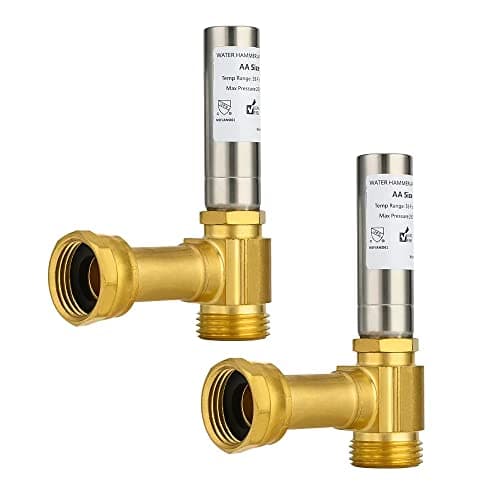
EFIELD HAMMER018-2 Angle Stainless Steel Water Hammer Arrestor, 2 Pack (3/4 in Swivel FHT x MHT, 250 PSI)See it on Amazon ↗

Quick Verdict

EFIELD HAMMER018-2 Angle 2 Pack: the same washer arrestor turned 90 degrees, for shallow boxes and tight gaps.

Key Specs

Connection (stated)

Female swivel hose thread inlet and male hose thread outlet, both 3/4 in

Shape (stated)

Angle

Pack

Two arrestors

Max working pressure (stated)

250 PSI

Body (stated)

Stainless steel arrestor with a low-lead brass body

Orientation (stated)

Horizontal or vertical

Pros

  • The angle turns the hose down or sideways, so the washer can sit closer to the wall
  • Same connections and pressure rating as the straight EFIELD pair
  • Two in the box

Cons

  • A lower buyer rating than the straight version
  • The bend has to point the right way for your box layout before you tighten it
  • No temperature rating stated

Suited to

Washer outlet boxes recessed in the wall, where straight arrestors would push the hoses into a kink

Our take

The common complaint about straight arrestors is depth: a few extra inches of fitting on each valve pushes the hose out into a tight bend behind the washer, and a sharply kinked supply hose is a burst hose waiting to happen. The angle version solves that by turning the outlet, so the hose can drop toward the floor and the washer can stay close to the wall. Everything else matches the straight pair, including the 250 PSI working pressure and swivel inlet. Before tightening, turn each arrestor so the hose leaves in a smooth curve with no strain on the valve. Then pull the washer out a few inches after the first fill and check both joints, because an angled fitting puts more leverage on a valve stem than a straight one.

Check today's price on Amazon →

Affiliate link — commission at no extra cost to you

#4
Best Stated Certification

Check price

on Amazon ↗

Listing verified 5 Nov 2026

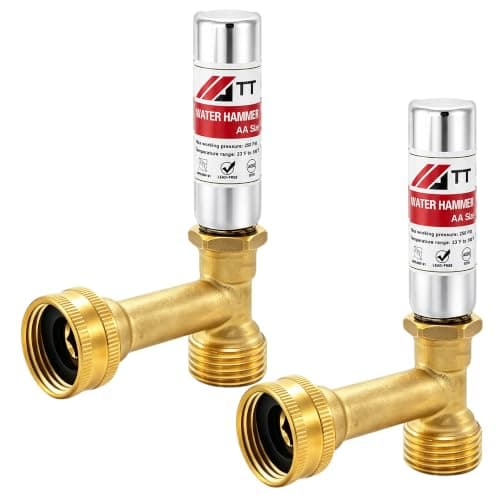
TTFLEX Water Hammer Arrestor, 2 Pack (3/4 in FHT x MHT, NSF-61 and cUPC Listed, 250 PSI)See it on Amazon ↗

Quick Verdict

TTFLEX 2 Pack: the washer arrestor that states NSF-61 and cUPC listings and a 33°F to 180°F range.

Key Specs

Connection (stated)

3/4 in female hose thread x 3/4 in male hose thread

Pack

Two arrestors

Max working pressure (stated)

250 PSI

Temperature range (stated)

33°F to 180°F

Certification (stated)

cUPC/UPC and NSF-61; lead content stated as compliant

Orientation (stated)

Horizontal, vertical or any position between

Pros

  • States NSF-61 and cUPC listings, the drinking-water and plumbing-code marks the EFIELD washer pairs do not name
  • States a temperature range that covers a normal hot water line
  • Also fits an outdoor spigot where a hose-end valve causes hammer

Cons

  • Far fewer ratings than the EFIELD and Sioux Chief picks
  • A straight body, with the same depth issue as other straight arrestors
  • Swivel inlet is not stated on this listing

Suited to

Owners or landlords who want stated plumbing certifications on a washer or spigot arrestor

Our take

Two things set this listing apart: it names its certifications, cUPC and NSF-61, and it states a temperature range, 33°F to 180°F. NSF-61 is the standard for parts in contact with drinking water, and cUPC is the listing many US inspectors look for under the Uniform Plumbing Code, so for a rental, a permitted remodel or anyone who wants the paperwork, this is the pair to choose. The temperature figure matters because one of the two arrestors sits on the hot line; most homes keep water heaters well under 180°F. Install it like the other washer arrestors. It has far fewer ratings than the EFIELD pair, so the buyer evidence is thinner, and the listing does not say the inlet swivels, so hold the body while tightening.

Check today's price on Amazon →

Affiliate link — commission at no extra cost to you

#5
Best for Permanent Plumbing

Check price

on Amazon ↗

Listing verified 5 Nov 2026

EFIELD MH-260 Copper Water Hammer Arrestor, 2 Pack (1/2 in Male Sweat, Size AA, cUPC and NSF)See it on Amazon ↗

Quick Verdict

EFIELD MH-260 Copper 2 Pack: a 1/2 in AA sweat arrestor for in-line installs near dishwashers, ice makers and faucets.

Key Specs

Connection (stated)

1/2 in male sweat

Compatible with (stated)

Copper tubing, copper press systems such as Viega ProPress, and push-fit systems

Size class (stated)

AA

Max working pressure (stated)

250 PSI

Temperature range (stated)

33°F to 180°F

Certification (stated)

cUPC and NSF

Pros

  • Installs in the supply line itself, so it serves a dishwasher, ice maker, toilet or sink, not only a washer
  • States its size class, pressure, temperature and certifications
  • Works with press and push-fit fittings as well as solder, per the listing

Cons

  • Requires cutting into the pipe and soldering, pressing or push-fitting a tee
  • Should stay accessible after install, which may mean an access panel
  • Fewer ratings than the screw-on picks

Suited to

Plumbers and capable DIYers adding an arrestor near a dishwasher, ice maker or quick-closing faucet during a repair or remodel

Our take

Hose-thread arrestors only fit where there is a hose valve. When the hammer comes from a dishwasher, an ice maker, a single-handle faucet or a toilet fill valve, the arrestor has to go in the pipe near that fixture, usually on a tee in the 1/2 in supply line, and that is what this copper model is for. Its listing gives the facts you need: a 1/2 in male sweat end, size AA, which is the smallest common class and suits a single fixture, 250 PSI, 33°F to 180°F, and cUPC and NSF marks. Installing it means draining the line, cutting in a tee and soldering or pressing it, so it is plumber work for most homeowners. Ask that it be placed where it can be reached later, since arrestors can fail and are replaced, not repaired.

Check today's price on Amazon →

Affiliate link — commission at no extra cost to you

Buyer's Guide

What to know before you buy.

What Water Hammer Is and What an Arrestor Does

Water moving through a pipe has momentum. When a valve closes quickly, the moving column stops all at once, and the pressure spikes and bounces back and forth through the pipe, which is the thud or bang you hear in the wall. Washing machines and dishwashers cause it most, because their solenoid valves close almost instantly, and single-handle faucets and some toilet fill valves do it too. An arrestor is a small chamber holding a sealed cushion of air or gas behind a piston. When the spike arrives, the piston compresses the cushion and absorbs the shock before it reaches the pipes and joints. Older homes often have plain capped pipe stubs, called air chambers, that did the same job until water absorbed the trapped air. Repeated spikes stress joints, valves and washer hoses, so a bang is worth fixing rather than living with.

Screw-On or In-Line: Choosing the Right Type

Pick the type by where the bang comes from. If it happens when the washing machine fills, a 3/4 in hose-thread arrestor screwed onto each washer valve is the fix, and it takes ten minutes with no tools beyond pliers; the EFIELD, Sioux Chief and TTFLEX picks are this type. If the washer box is recessed and straight fittings would kink the hoses, the angle version keeps the hoses tidy. If the bang comes from a dishwasher, an ice maker, a kitchen faucet or a toilet, there is no hose valve to screw onto, and an in-line arrestor such as the 1/2 in sweat model goes on a tee in the supply pipe close to that fixture. Arrestors work best near the valve that causes the shock, so one arrestor in the basement will not quiet a dishwasher two floors up.

Specs That Matter on the Listing

Check four things. The connection must match: washer valves use 3/4 in hose thread, often written GHT or MHT and FHT, while in-wall arrestors come in 1/2 in sweat, press, PEX or threaded ends, and the sweat model here states which systems it fits. The pressure rating should sit far above your house pressure; every rated pick here states 250 PSI working pressure. A temperature rating matters on the hot side, and the TTFLEX and copper EFIELD listings state 33°F to 180°F. Finally, certification: NSF-61 covers parts in contact with drinking water, and cUPC is the plumbing-code mark many inspectors check. The TTFLEX and copper EFIELD listings name both; the straight and angle EFIELD washer pairs do not. None of these listings mentions ASSE 1010, the performance standard used for engineered arrestors, so treat sizing claims beyond the AA class as unstated.

Pressure First: When the Bang Is a Bigger Problem

Water hammer gets much worse as house pressure rises, because faster water carries more momentum. Many plumbing codes cap household pressure at 80 psi, and a pressure reducing valve on the main line is how homes on high city pressure are kept under it. A screw-on gauge on an outdoor spigot or the washer valve gives a reading in a minute. If it shows more than 80 psi, or the needle jumps when a fixture closes, the arrestors are treating a symptom; the pressure reducing valve guide covers how to tell if yours has failed. High pressure is also hard on washer hoses, toilet fill valves and water heaters, so fixing it protects more than the quiet. If pressure is normal and only the washer bangs, the washer arrestors are the right fix on their own.

Noises an Arrestor Will Not Fix

Not every pipe noise is water hammer. A single bang when a valve closes is hammer. Ticking or creaking as hot water runs is the pipe expanding against its straps and framing, which needs looser or padded straps, not an arrestor. Rattling or knocking while water flows means a loose pipe, which needs a strap or clamp where it moves. A whistle or squeal usually comes from a partly closed or worn valve, a failing fill valve or a pressure reducing valve, which the whistling-pipes guide sorts out. A shut-off valve that drips at its stem needs its packing nut snugged or the valve replaced before you add anything to it. And if banging began right after work on the main line, the old air chambers may simply have filled with water; draining the house plumbing and refilling it can restore them for a while.

Frequently Asked Questions

Do water hammer arrestors work?

YesWhen they are installed close to the quick-closing valve that causes the bang, such as a washing machine's fill valves.

The sealed air cushion absorbs the pressure spike before it travels through the pipes. They do not stop noise from loose pipes, thermal expansion or high house pressure, so match the fix to the sound you hear.

Where do you put a water hammer arrestor for a washing machine?

Between each washer supply valve and its hose: screw the arrestor onto the valve's 3/4 in hose-thread outlet, then screw the hose onto the arrestor.

You need two, one for hot and one for cold, which is why the EFIELD and TTFLEX listings come as 2 packs. Use new rubber hose washers and check for drips after the first fill.

Do water hammer arrestors have to be installed vertically?

NoNot the piston type sold today: the EFIELD and TTFLEX listings say they can go horizontal, vertical or any angle between.

Old-style air chambers, which are capped pipe stubs, had to stand upright to hold their air. If your installation instructions say otherwise, follow them.

How many water hammer arrestors do I need?

Usually one per quick-closing valve that bangs: two for a washing machine, one each for hot and cold, and one near a dishwasher or ice maker if those cause the noise too.

Arrestors work best close to the fixture, so a single unit far away is unlikely to help. If every fixture in the house bangs, check pressure before adding more.

Do water hammer arrestors wear out?

YesThey can: the seal around the piston can wear and let water into the air cushion, and then the arrestor stops absorbing shock.

When banging returns after a quiet spell, replace the arrestor rather than trying to repair it. That is why an in-wall arrestor should stay reachable through an access panel.

Can water hammer damage pipes?

It can, over time: each spike stresses joints, valves and hoses, and repeated hammer is a common suspect when a washer hose or fitting fails. One bang will not burst a sound pipe, but a daily bang at the washer is worth a pair of arrestors. Fix high house pressure too, since it makes every spike larger.

Who do I call right now for water damage?

Call (888) 840-6512. The line is answered 24 hours a day, seven days a week, and connects you with an IICRC-certified water damage restoration company that serves your area. A recorded menu picks up first: choose water damage or mold, key in your 5-digit ZIP code, and hold through the short silence while the call is passed to the company.

Describe what you can see — where the water is coming from, how long it has been there, and whether it smells — the more specific you are, the faster the right company is on the line. If the source is a pipe or an appliance, shut the main water valve first. Have four things ready and the call goes quickly: the address, when the water started, what is wet now, and whether you have filed an insurance claim.

Still not sure which of these is your situation? (888) 840-6512 · toll-free · answered 24/7

Sources

  1. EPA — Basic Information about Lead in Drinking Water
  2. Sioux Chief Manufacturing

Methodology: How we source and verify data · Report an error

How we chose these picks

  • Every pick is a current listing. Stock, star ratings and rating counts are read from Amazon by script and carry the date they were read.
  • Nothing under 4.0 stars makes the list, and the top pick needs a large rating count, so one good week of reviews cannot put it there.
  • Specs are quoted from the listing or the maker, with the test condition behind the number where there is one, and sized against the job rather than the room on the box.
  • Each comparison is reviewed by Marcus Reed, an IICRC-certified Water Restoration Technician, against the IICRC drying standards and public guidance listed under Sources.

Free 2-day shipping

Amazon Prime members pay no shipping on restoration equipment

Dehumidifiers, air movers, and moisture meters qualify for free Prime delivery — bulk items that otherwise cost $15–$40 to ship.

Try Prime free →

Affiliate link — HearthDry earns a bounty if you sign up; costs you nothing extra.

Also Worth Comparing

Best Water Pressure Regulator in 2026 — Whole-House Pressure Reducing Valves vs Hose and RV Regulators, and the Gauge Test to Run First

A water pressure regulator comes in two very different kinds: a whole-house pressure reducing valve (PRV) that a plumber fits on the main line, and a small hose-thread regulator for an RV, a camper or a garden hose. These picks say plainly which kind each one is, compared on connection, stated adjustment range and what each listing leaves out, with the gauge test to run first and the expansion tank a PRV can make necessary.

Read the comparison

Best Water Pressure Gauge in 2026 — Hose-Thread Test Gauges With a Max Needle, Where to Screw One On, and What the Reading Means

A water pressure gauge shows the pressure your pipes, hoses and fill valves sit under all day, and if it passes the 80 psi line many plumbing codes draw. These picks are hose-thread test gauges compared on range, max needle, case and stated accuracy, with the test method and the reading that means it is time for a regulator.

Read the comparison

Best Washing Machine Shut Off Valves in 2026 — Automatic Leak-Sensing Shutoffs, Single-Lever Valves and No-Solder Replacements

A washing machine's hoses hold full house pressure every hour the supply valves are open, so the valve is the part that decides how much water a burst hose can release. These picks cover automatic shutoffs that close when a floor sensor gets wet, single-lever valves that make closing the water a habit, and replacement valves for copper, PEX and outlet boxes, judged on what each listing states.

Read the comparison

Best Washing Machine Hoses in 2026 — Braided Stainless Supply Lines, Elbows for Tight Spaces, and the Shutoff a Hose Still Needs

A washing machine's two fill hoses sit under full house pressure whenever the valves are open, and an old rubber hose that splits keeps releasing water until someone closes the valve. These picks are braided stainless hoses compared on fittings, length, elbows and what each listing actually states, with the replacement habit and the shutoff valve that a better hose does not replace.

Read the comparison