
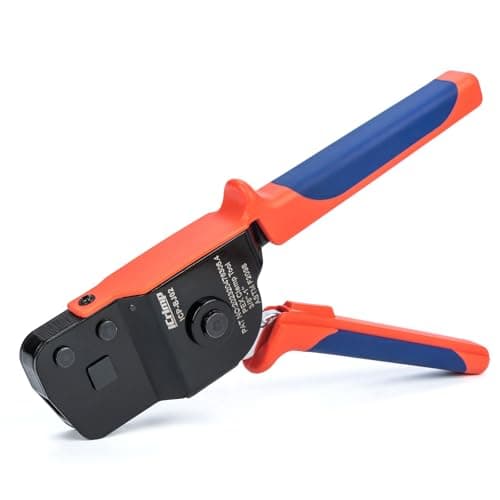
Best for: Homeowners making PEX repairs and small runs with stainless steel cinch clamps
- Ring type (stated):
- Stainless steel PEX clamp (cinch) rings
- Standard (stated):
- Meets ASTM F2098
Listing verified 5 Nov 2026

Cinch Tools for Stainless Clamps, Crimpers for Copper Rings, and How to Check Every Joint Before the Wall Closes
5 picks compared · prices, ratings and stock checked November 5, 2026
Our Top Pick
For stainless steel cinch clamps, the iCrimp PC-CRP1096 PEX Cinch and Removal Tool Kit. For copper crimp rings, the iCrimp IWS-1807CN Angle-Head Crimper Kit with its go/no-go gauge.
4.8 on Amazon · 1,945 ratings
Quick answer
The best PEX crimp tool is the one that matches your rings: if you use stainless steel cinch clamps, buy the iCrimp PC-CRP1096 PEX Cinch and Removal Tool Kit, which covers 3/8 in to 1 in clamps, meets ASTM F2098 per the listing and is rated 4.8 stars across 1,945 Amazon ratings. If your fittings take copper crimp rings, buy a crimper that meets ASTM F1807 and comes with a go/no-go gauge, such as the iCrimp IWS-1807CN kit for 1/2 in and 3/4 in rings. A cinch tool cannot crimp a copper ring, and a copper ring crimper cannot cinch a stainless clamp.
Every pick below is currently stocked — ratings and stock read from Amazon on 5 November 2026.
Best for: Homeowners making PEX repairs and small runs with stainless steel cinch clamps
Listing verified 5 Nov 2026
Best for: PEX-B systems already plumbed with copper crimp rings in 1/2 in and 3/4 in
Listing verified 5 Nov 2026
Best for: Copper ring jobs that include 3/8 in or 1 in PEX as well as the common sizes
Listing verified 5 Nov 2026
Best for: Cinch clamp repairs where hand strength matters more than tight-space reach
Listing verified 5 Nov 2026
Best for: Repairs in cramped spots such as under sinks, behind toilets or overhead between joists
Listing verified 5 Nov 2026
How this page was made: we compare the current Amazon listings, the makers' published specs and what verified buyers report, then rank by fit for the job. Ratings, review counts and stock are read from Amazon and dated. We earn a commission on purchases through our links; it does not change the order. Reviewed by Marcus Reed, IICRC-certified Water Restoration Technician.
Full Reviews
Each pick in detail: what the listing states, what buyers report, and where it falls short.
Check price
on Amazon ↗
Listing verified 5 Nov 2026
See it on Amazon ↗Best Overall (Cinch Clamps)
Quick Verdict
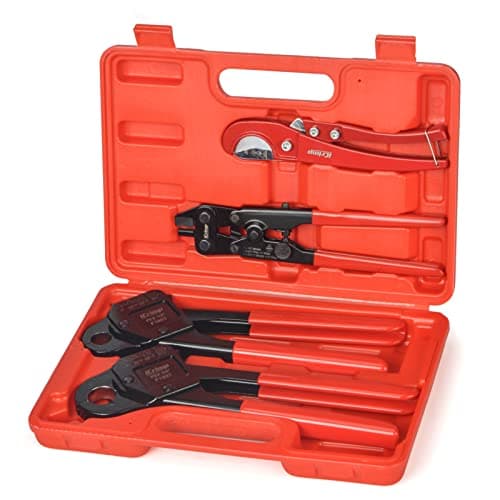
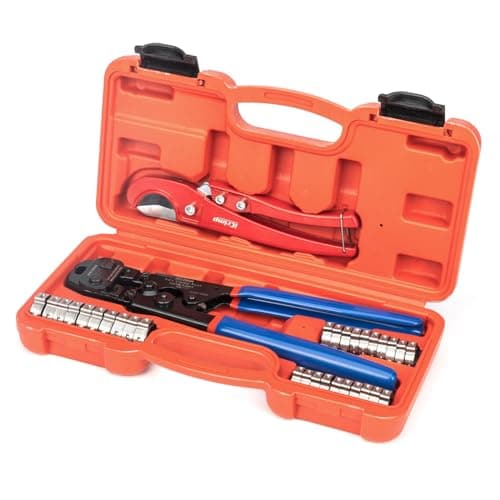
iCrimp PC-CRP1096 PEX Cinch and Removal Tool Kit: one ratcheting tool for 3/8 to 1 in stainless clamps, with removal, a cutter and clamps in the case.
Key Specs
Ring type (stated)
Stainless steel PEX clamp (cinch) rings
Standard (stated)
Meets ASTM F2098
Clamp sizes (stated)
3/8, 1/2, 5/8, 3/4 and 1 in
Functions (stated)
Cinches clamps and removes them, so fittings can be reused
In the kit (stated)
Tool, PEX tubing cutter up to 1 in, twenty 1/2 in and ten 3/4 in clamps, carrying case
Fittings (stated)
Brass or poly PEX crimp-style barb fittings
Pros
Cons
Suited to
Homeowners making PEX repairs and small runs with stainless steel cinch clamps
Our take
This kit is built around stainless steel cinch clamps, the single-ear rings that a ratcheting tool pinches shut. That suits most home repair work, because one tool handles 3/8 in through 1 in clamps and there are no jaws to swap. The listing states ASTM F2098, the clamp standard, and says the same tool can switch to cutting a clamp off so the brass or poly fitting can be reused. That matters on a repair, where a clamp set too far from the pipe end is a leak waiting to happen. The cutter and 30 clamps get a first job done. Before you buy, look at the fittings or the bag of rings you already own: if they are copper bands rather than stainless rings with an ear, this is the wrong tool.
Affiliate link — commission at no extra cost to you
Compare elsewhere
These open a search for this model. We quote prices only where we can verify them — Amazon, Sylvane and eBay.
Check price
on Amazon ↗
Listing verified 5 Nov 2026
See it on Amazon ↗Best for Copper Crimp Rings
Quick Verdict
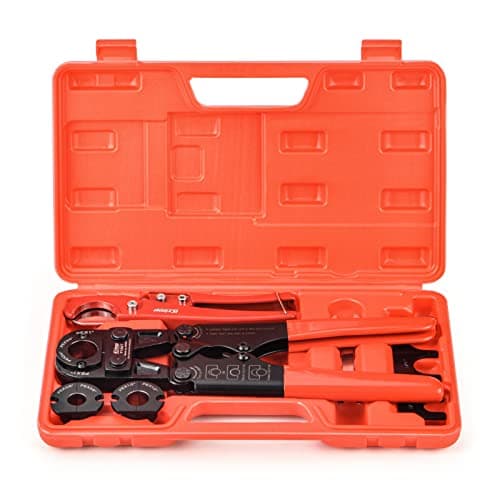
iCrimp IWS-1807CN Angle-Head PEX Crimper Kit: two compact F1807 crimpers, a go/no-go gauge and a ring remover for 1/2 and 3/4 in copper rings.
Key Specs
Ring type (stated)
Copper crimp rings
Standard (stated)
Meets ASTM F1807
Crimpers (stated)
Angle-head crimpers for 1/2 in and 3/4 in rings
Gauge (stated)
Go/no-go gauge included
Calibration (stated)
Factory calibrated
Removal tool (stated)
Removes 1/2, 3/4 and 1 in copper rings
Pros
Cons
Suited to
PEX-B systems already plumbed with copper crimp rings in 1/2 in and 3/4 in
Our take
Copper crimp rings are the other common PEX joint, and they need a different tool from cinch clamps: a crimper whose jaws close fully around the band. This kit has two angle-head crimpers, one for 1/2 in and one for 3/4 in rings, and the listing states ASTM F1807, the copper ring standard. The angle matters in a repair, since a straight crimper needs room to swing both handles open. The gauge is the part not to skip. A copper crimp can look fine and still be too loose or too tight, and the go/no-go slot is how you find out before the wall goes back up. The included removal tool works on 1/2, 3/4 and 1 in rings, per the listing. Factory calibration still drifts with use, so gauge every joint.
Affiliate link — commission at no extra cost to you
Compare elsewhere
Check price
on Amazon ↗
Listing verified 5 Nov 2026
See it on Amazon ↗Best Copper Crimper With Swappable Jaws
Quick Verdict
iCrimp (IWISS) PEX Copper Ring Crimper Kit: one F1807 crimper for 3/8 to 1 in copper rings by swapping jaws, with a gauge and spanner.
Key Specs
Ring type (stated)
Copper crimp rings on brass or poly fittings
Standard (stated)
Meets ASTM F1807
Sizes (stated)
1 in crimper with 3/8, 1/2 and 3/4 in jaws
In the kit (stated)
Crimper, three jaw sets, gauge, spanner, PEX pipe cutter
Grips (stated)
Comfort grips
Ring removal tool
Not stated on the listing
Pros
Cons
Suited to
Copper ring jobs that include 3/8 in or 1 in PEX as well as the common sizes
Our take
Where the IWS-1807CN covers two ring sizes, this kit uses one crimper with interchangeable jaws for 3/8, 1/2 and 3/4 in, and the frame itself crimps 1 in rings, per the listing. That makes it the pick when a job runs from a 3/8 in supply line up to a 1 in main. The listing states ASTM F1807 and includes a gauge and a spanner. The spanner is there for calibration, since copper ring crimpers are adjustable, and a joint that fails the gauge usually means the tool needs adjusting, not more squeezing. Swapping jaws takes a minute each time, and the long handles want space. No removal tool is listed, so plan on buying one if you are reworking old joints.
Affiliate link — commission at no extra cost to you
Compare elsewhere
Check price
on Amazon ↗
Listing verified 5 Nov 2026
See it on Amazon ↗Best Cinch Kit With Longer Handles
Quick Verdict
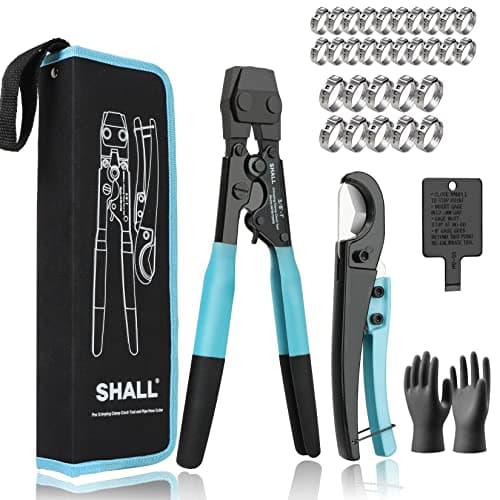
SHALL PEX Clamp Cinch Tool Kit: a longer-handled F2098 cinch tool with clamps, cutter and a backup calibration tool, but no removal function.
Key Specs
Ring type (stated)
Stainless steel clamps from any maker
Standard (stated)
Meets ASTM F2098
Clamp sizes (stated)
3/8 in to 1 in
Handle (stated)
8.5 in with anti-slip rubber grip
Mechanism (stated)
Ratchet with self-release
In the kit (stated)
Tool, PEX cutter, twenty 1/2 in and ten 3/4 in clamps, calibration tool, two pairs of gloves, storage bag
Pros
Cons
Suited to
Cinch clamp repairs where hand strength matters more than tight-space reach
Our take
SHALL's kit does the same job as our top pick, cinching stainless steel clamps from 3/8 in to 1 in, and the listing states ASTM F2098. The difference is the handle: 8.5 in with a rubber grip, which gives more leverage per squeeze and helps if your hands tire on a run of joints. The ratchet holds until the clamp ear is fully closed and then releases, which is the built-in check a cinch tool relies on. SHALL says the tool is factory adjusted and the included calibration tool is only a backup. What the kit lacks is removal. A clamp set in the wrong spot has to come off with side cutters or a removal tool, so add one if you expect to rework joints.
Affiliate link — commission at no extra cost to you
Compare elsewhere
Check price
on Amazon ↗
Listing verified 5 Nov 2026
See it on Amazon ↗Best for Tight Spaces
Quick Verdict
iCrimp ICP-BJ02 One-Handed PEX Clamp Cinch Tool: a one-hand F2098 cinch tool for cramped repairs, sold without clamps or a cutter.
Key Specs
Ring type (stated)
Stainless steel PEX clamp rings
Standard (stated)
Meets ASTM F2098
Clamp sizes (stated)
3/8, 1/2, 3/4 and 1 in
Operation (stated)
One-handed ratcheting design
Release (stated)
Will not release until the connection is properly secured
Calibration (stated)
Factory calibrated
Pros
Cons
Suited to
Repairs in cramped spots such as under sinks, behind toilets or overhead between joists
Our take
Most leaks you repair yourself sit somewhere awkward: under a vanity, behind a toilet, or between joists overhead. A standard cinch tool needs two hands on the handles, which leaves nothing to hold the pipe and fitting together. The ICP-BJ02 ratchets with one hand, per the listing, and like the other cinch tools here it meets ASTM F2098 and will not release until the clamp is fully closed. It is cinch only, with no removal mode and no cutter or clamps in the box, so treat it as a second tool next to a kit, or buy clamps and a cutter with it. It has fewer Amazon ratings than the kits above, which is why it sits lower on this list.
Affiliate link — commission at no extra cost to you
Compare elsewhere
What to know before you buy.
People say PEX crimp tool for two different tools. A copper ring crimper squeezes a plain copper band evenly all the way around the pipe over a barbed fitting; the listings on this page tie those rings to ASTM F1807. A cinch tool, also sold as a clamp or pinch tool, closes the single raised ear on a stainless steel clamp; those listings cite ASTM F2098. Both joints go on the same crimp-style brass or poly barb fittings, but the tools are not interchangeable. A cinch tool cannot compress a copper band, and a copper ring crimper cannot pinch an ear. Look at what is already in your walls or your parts bin. Smooth copper bands mean a crimper; stainless rings with a tab mean a cinch tool. For new work, a cinch tool is simpler because one tool covers 3/8 to 1 in.
A go/no-go gauge is a flat steel plate with two slots cut for each ring size, and it checks copper ring crimps. After crimping, slide the GO slot over the ring. It should pass over the band. Then try the NO-GO slot, which should not slip over it. If the GO slot will not fit, the ring was not squeezed enough and the joint is loose; if the NO-GO slot slides on, the ring was crushed too far. Either way, cut the ring off, adjust the crimper as its instructions direct, and make the joint again. Check each crimp at more than one point around the ring, and gauge every joint rather than a sample. Cinch clamps do not use this gauge, because the ratchet will not release until the ear is fully closed. A calibration tool for a cinch tool checks the tool itself, not each joint.
Most failed crimp joints come from the pipe cut or the ring position rather than the tool. Cut the PEX square with a proper tubing cutter; all of the kits here except the one-handed tool include one. Slide the ring or clamp on first, then push the pipe fully onto the barb fitting until it bottoms out. Fitting makers commonly direct placing the ring 1/8 to 1/4 in from the end of the pipe, so the band sits over the barbs; follow the instructions printed for your fittings. Hold the tool square to the pipe while crimping, because a ring crushed at an angle can leak. On a repair, open the supply slowly afterward and watch the joint dry with a paper towel for several minutes. On a new run, pressure test before the drywall goes back.
A PEX joint that fails rarely bursts. More often it weeps a few drops a minute inside a wall, a ceiling or under a floor, where nobody sees it for weeks. By the time a stain shows, the drywall, insulation and subfloor can be wet through, and EPA advises drying water-damaged materials within 24 to 48 hours to prevent mold growth. That is the case for gauging every copper crimp, using the right tool for the ring, and leaving a new joint visible until it has held under pressure. If you are repairing a leak that has already soaked a wall or ceiling, the pipe repair is only half the job. Open the wet area, dry it fully, and check it with a moisture meter before closing it up.
Skip the tool if you need one emergency repair. A push-to-connect fitting goes on with no tool and is often the faster way to stop a single leak until a plumber can look at it. Do not use crimp rings on polybutylene pipe without checking the fittings first: polybutylene uses its own sizing, and a house plumbed with it is usually better repiped than patched. Homes plumbed with PEX-A on expansion fittings were built for an expansion tool; some PEX-A pipe is also rated for crimp fittings, so read the print line on the pipe before mixing systems. A crimp tool will not join copper or galvanized steel either. Those need solder, compression or transition fittings, and a house with failing galvanized lines needs a repipe estimate from a licensed plumber.
They use different rings and different tools. A crimp joint uses a plain copper ring compressed evenly by a jawed crimper, tied to ASTM F1807 on the listings here.
A cinch joint uses a stainless steel clamp with a raised ear that a ratcheting tool pinches closed, tied to ASTM F2098. Both go on the same crimp-style barb fittings.
Cinch tools are close to universal; copper ring crimpers are not. The cinch tools here state they work with ASTM F2098 stainless clamps from any maker in 3/8 to 1 in. A copper ring crimper needs jaws sized to the ring, so a 1/2 in crimper will not close a 3/4 in ring, and neither type works on the other's rings.
Not in a way you should trust behind a wall. Pliers cannot compress a copper ring evenly or close a cinch ear fully, and a joint that looks tight can still weep. If you have no tool for a one-time repair, use a push-to-connect fitting made for PEX, which needs no crimping.
Check a copper ring with a go/no-go gauge: the GO slot should slide over the crimped ring and the NO-GO slot should not. A cinch clamp is good when the ratcheting tool releases by itself and the ear is fully closed. Then turn the water on and watch the joint stay dry before you close the wall.
Use a removal tool or cut the ring carefully without scoring the fitting. The iCrimp PC-CRP1096 switches into a mode that cuts stainless clamps off, and the IWS-1807CN kit includes a copper ring remover for 1/2, 3/4 and 1 in rings, per the listings. With the ring off, cut the pipe end square and make a new joint.
Often it can, but check the pipe first. PEX-A is usually joined with expansion fittings and an expansion tool, while crimp and cinch rings are common on PEX-B. Many PEX-A pipes are also marked as suitable for crimp-style fittings; the print line on the pipe and the maker's instructions say which joints it is rated for.
Call (888) 840-6512. The line is answered 24 hours a day, seven days a week, and connects you with an IICRC-certified water damage restoration company that serves your area. A recorded menu picks up first: choose water damage or mold, key in your 5-digit ZIP code, and hold through the short silence while the call is passed to the company.
Describe what you can see — where the water is coming from, how long it has been there, and whether it smells — the more specific you are, the faster the right company is on the line. If the source is a pipe or an appliance, shut the main water valve first. Have four things ready and the call goes quickly: the address, when the water started, what is wet now, and whether you have filed an insurance claim.
Still not sure which of these is your situation? (888) 840-6512 · toll-free · answered 24/7
Methodology: How we source and verify data · Report an error
Free 2-day shipping
Amazon Prime members pay no shipping on restoration equipment
Dehumidifiers, air movers, and moisture meters qualify for free Prime delivery — bulk items that otherwise cost $15–$40 to ship.
Affiliate link — HearthDry earns a bounty if you sign up; costs you nothing extra.
SharkBite fittings push onto PEX, copper, CPVC, PE-RT or HDPE pipe and seal without solder, glue or a crimp tool, which is why one lives in so many basements next to the main shutoff. This comparison of the SharkBite Max coupling, elbow, ball valve and threaded adapter, plus one brass alternative, is built from the Amazon listings, SharkBite's published specs and buyer ratings, not from our own installs.
Read the comparisonA pipe repair clamp, a wrap of self-fusing tape or a lump of epoxy putty can stop a leaking pipe within the hour, but only after the main valve is off and only until the damaged section is properly replaced. These picks are matched to the kind of damage, the pipe material and the size, using each listing's own pressure and temperature figures and noting what it leaves unsaid.
Read the comparisonA water pressure gauge shows the pressure your pipes, hoses and fill valves sit under all day, and if it passes the 80 psi line many plumbing codes draw. These picks are hose-thread test gauges compared on range, max needle, case and stated accuracy, with the test method and the reading that means it is time for a regulator.
Read the comparison