Quick answer
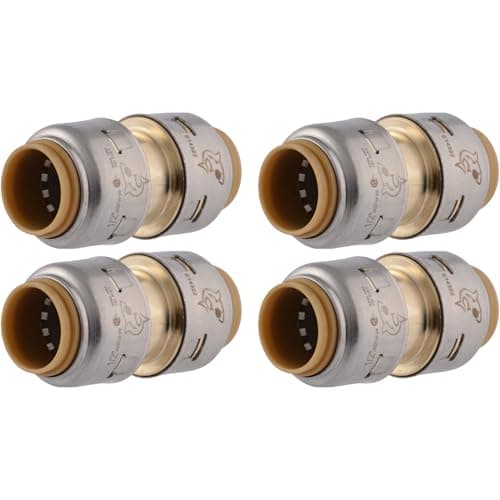
SharkBite fittings are push-to-connect brass fittings that join PEX, copper, CPVC, PE-RT and SDR-9 HDPE pipe in any combination without soldering or glue, per the listings; if you want one fitting in the house for a burst 1/2 in line, buy the SharkBite Max 1/2 in Push-to-Connect Coupling UR008A4, rated 4.8 stars across 1,424 Amazon ratings and rated to 400 psi and 200°F. The repair is shut the main, drain, cut the split out square, deburr, mark the insertion depth and push. The listings do not say whether a fitting may be sealed behind drywall or buried, so check SharkBite's guidance and your local code before closing a wall.
Buyer's Guide
What to know before you buy.
What a SharkBite Fitting Is, and Which Pipes It Joins
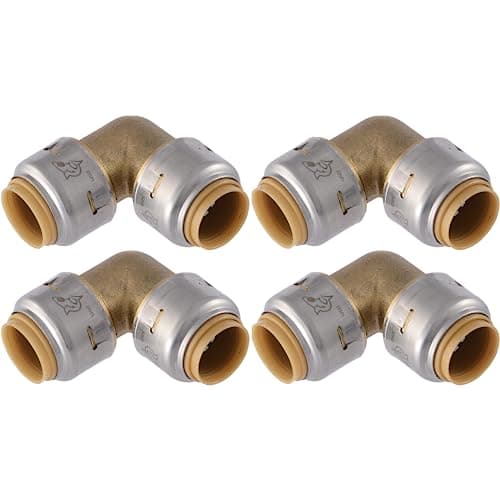
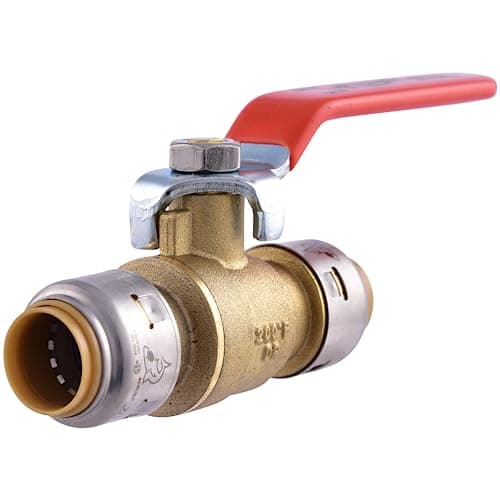
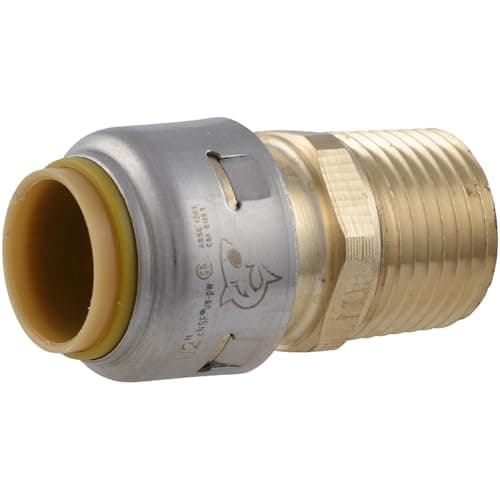
A push-to-connect fitting holds pipe with a toothed ring inside the collar and seals it with an O-ring, so a joint is made by pushing a prepared pipe end in until it bottoms out. Per the SharkBite Max listings on this page, the fittings take PEX, copper, CPVC, PE-RT and SDR-9 HDPE pipe in any combination, which is what makes them useful in an old house: a split in a copper line can be bridged with PEX, and a CPVC stub can meet a copper one. The Max line also states that no PEX liner is needed and that a reinforced stainless steel collar cuts the insertion force by half. Galvanized steel and polybutylene are not on the list, so do not push a fitting onto either. Every fitting here is sized to copper tube size, which PEX, copper and CPVC all share.
The Burst-Pipe Sequence: Shut Off, Drain, Cut, Deburr, Mark, Push
Close the main shutoff first, at the meter or where the service enters the house, then open the lowest faucet and the one nearest the break so the line drains. If the pipe is frozen rather than split, the Red Cross says to keep the faucet open while you warm the pipe with a heating pad, a hair dryer or hot towels, never a blowtorch or any open flame, and to call a licensed plumber if you cannot find, reach or thaw the frozen section. Once the water is off, cut the damaged part out square with a tube cutter, deburr the cut ends, mark the insertion depth from SharkBite's chart, and push each coupling on with a slight twist until the mark meets the collar. Open the main slowly and watch every new joint for a minute before you walk away.
Insertion Depth and Deburring Are Where Push Fittings Fail
The reports of SharkBite fittings letting go, on forums and in buyer reviews, mostly describe the same three mistakes. A burr left on cut copper scores the O-ring as the pipe goes in, and the scratch becomes a leak path. A pipe pushed short of its full depth can hold at first and let go later under a pressure spike. And a hacksaw cut that leaves the end out of round, or a pipe scratched when a fitting was pulled off, does not seat the seal evenly. None of the listings on this page states the insertion depth, so take it from SharkBite's instruction sheet or packaging, or use a depth-and-deburr gauge, and mark the pipe with a marker before you push. Use a tube cutter on copper and CPVC and a PEX cutter on PEX, and look at the cut end under a light before it goes in.
Behind a Wall, Underground, Hot Water: What the Listings Do and Do Not Say
The SharkBite Max listings state a 200°F and 400 psi rating, which covers a residential water heater's output with room to spare. They do not say whether the fittings may be sealed inside a wall or buried, they do not mention a warranty term, and they say nothing about hydronic or boiler lines. SharkBite publishes its own guidance on concealed and underground use on its site, with conditions, and that guidance is the place to look rather than a listing. Even then, your local plumbing code and the inspector decide what is allowed in your town, and some homeowners leave an access panel anyway so the joint can be checked. Anything behind a wall that your local code requires a permit for is a licensed plumber's call, and so is any work on a gas water heater or the main service line.
SharkBite Max, the Original Line, and the Brass Alternatives
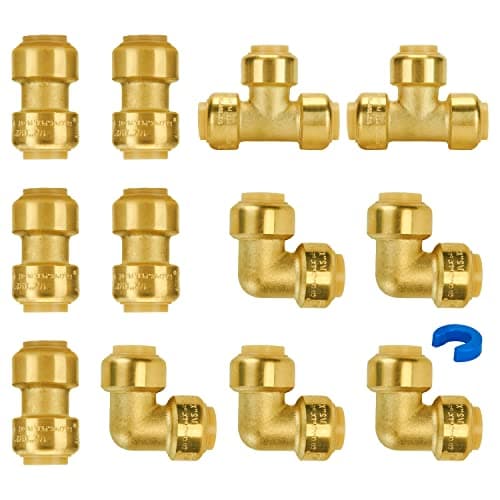
SharkBite's original push fittings are not in this comparison; the Max listings lead with three details that set them apart, the reinforced stainless collar, the halved insertion force and the fact that no PEX liner is needed, along with a stated 400 psi rating. The brass alternatives in the candidate set, SUNGATOR, RUBY.Q and HeSun, all state 200 psi at 200°F, and their listings name PEX, copper and CPVC without PE-RT or HDPE. HeSun's elbow listing is the only one of the three that names standards, cUPC, NSF-61, NSF-372 and ASSE 1061, and ASSE 1061 is the performance standard push-fit fittings are judged against, so look for it on packaging whichever brand you buy. Apollo's push fittings, the other name plumbers mention, were not in stock in the listings read for this page. Cash Acme is SharkBite's maker, not a rival.
Who Should Not Use a Push Fitting, and When to Call a Plumber
A push coupling fixes a short, clean break in sound pipe. It is the wrong answer when the copper is green and pitted along its length, because the next pinhole opens a foot away; when the pipe is polybutylene or galvanized steel, which the listings do not cover; when there is no straight pipe left to reach full insertion depth; or when the leak is on the service line between the street and the meter, which is the utility's or a plumber's job. Gas lines are never a push-fit job. A fitting stops the water; it does not dry the wall. EPA's mold guide says water-damaged areas and items should be dried within 24 to 48 hours to prevent mold growth, and it lists the inside of walls around pipes among the places mold hides. If the water reached drywall, insulation or a ceiling below, that is a drying job, and the referral line on this site reaches restoration companies, not plumbers.
Free 2-day shipping
Amazon Prime members pay no shipping on restoration equipment
Dehumidifiers, air movers, and moisture meters qualify for free Prime delivery — bulk items that otherwise cost $15–$40 to ship.
Affiliate link — HearthDry earns a bounty if you sign up; costs you nothing extra.