
Quick answer
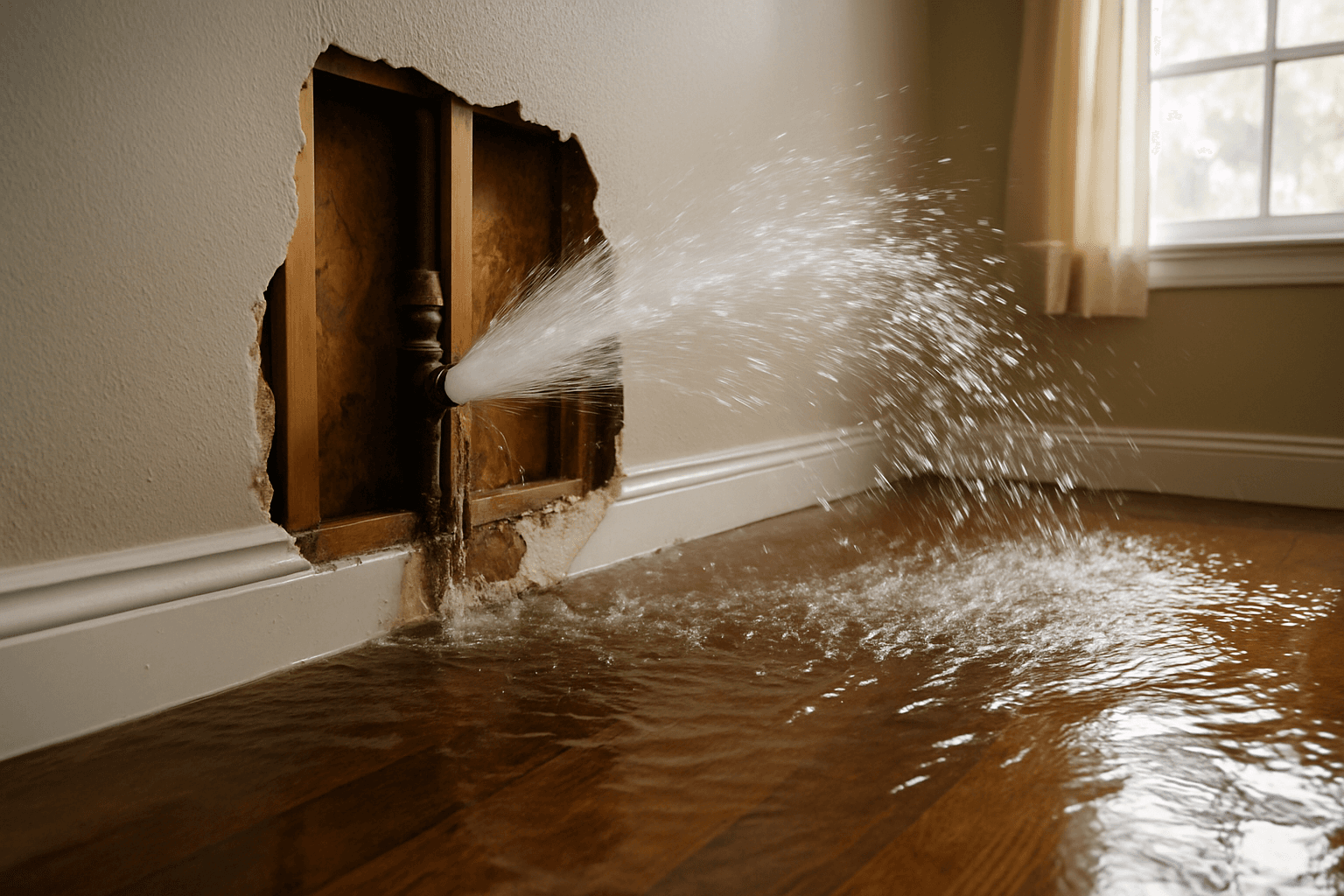
The main water shut-off valve is on the largest pipe where water enters the house: front basement wall in cold climates, garage/exterior wall or a covered outdoor box in slab and warm-climate homes. Lever valves close with a quarter-turn to perpendicular; wheel valves turn clockwise. The backup is the street curb stop, opened with a $12 meter key. A burst pipe releases up to 8 gallons a minute — find, tag, and test your valve this weekend, not during the flood. Call (888) 840-6512 to reach a certified water damage restoration company in your area; the line is answered 24/7.
Written & reviewed by Marcus ReedIICRC WRT
Reviewed August 19, 2026· Next review Feb 2027
Eight Gallons a Minute: Why This Page Exists
A burst supply pipe releases up to eight gallons a minute — a bathtub every five minutes, delivered to your floors. Every water emergency on this site ends at the same first instruction: *shut the main.* This page is that instruction, expanded into the thing it actually requires: knowing where the valve is, whether it works, and what to do when it doesn't — learned this weekend, not mid-flood.
Where the Main Valve Hides
| House type / climate | Look... |
|---|---|
| Basement (cold climates) | front wall facing the street, within feet of where the main enters |
| Crawl space | where the supply enters — sometimes reachable from a closet above |
| Slab, warm climate | garage near the water heater, exterior wall, or a covered ground box |
| Condo / apartment | water heater closet or a laundry-area manifold |
You're looking for the largest pipe entering the house wearing either a wheel (gate valve) or a lever (ball valve). Found it? Tag it brightly — emergencies happen by flashlight.

Turning It Off (and the Valve That Won't)
Lever: quarter-turn until it sits *across* the pipe. Parallel = open, perpendicular = closed. Wheel: clockwise, often several full turns. Then open a faucet — flow should die to a trickle in seconds.
Old gate valves seize, and here is the rule that saves stems: don't wrestle it. A wheel that won't move by hand should not meet a cheater bar — a snapped valve stem mid-emergency upgrades the problem. Go to the street valve below, and put "replace main with a ball valve" on the plumber list at non-emergency prices.
The Street Valve: Your $12 Backup
Near your sidewalk or property line sits a small lid marked WATER — the curb box, containing the utility's curb stop. A water meter key ($12–$20, any hardware store) reaches down and quarter-turns it closed (slot perpendicular to the pipe). Buy the key this week, confirm it reaches your curb stop, and hang it where the household knows. If the curb stop itself resists, call the utility's emergency line rather than forcing their valve — but know that every utility prefers a customer-closed valve to a flooded house.
What the Main Does and Doesn't Stop
Shutting the main kills everything fed by supply pressure: burst pipes, failed washer hoses, a leaking water heater's refill, running fixtures. It does not empty what's already inside — the water heater's 40–80 gallons (close its cold-inlet valve too), toilet tanks, and upper-floor pipes draining by gravity (open the lowest faucet to relieve it all). And it does nothing for the water problems that aren't supply at all: sewer backups, groundwater, roof leaks.
The Per-Fixture Stops: Precision Instead of Blackout
Every toilet, sink, washer, dishwasher, fridge line, and the water heater has — or should have — its own small stop valve. Fixture stops let you kill the leaking toilet without killing the shower. Walk the house once, turn each a quarter and back (they seize from disuse), and list any fixture without one for the plumber.
Talk to a water damage pro now
Answered 24/7 · Toll-free · answered 24/7 · no obligation
(888) 840-6512Mold can establish within 24–48 hours of water exposure — drying started today stays a drying job.
- Describe the damage & give your ZIP
- You're routed to the on-call local crew
- They quote — you decide, no obligation
After the Valve: The First Ten Minutes
Water stopped is half the emergency. The other half: electricity off in wet areas, belongings up, and photographs of everything before cleanup — the habit insurance claims are won with. Then triage: plumber vs restoration is a five-minute decision, and the honest rule is that wet flooring, drywall, or more than one room means both.
Bottom Line
Find the valve, tag it, test it, buy the meter key, drill the family once — thirty minutes total, this weekend. The difference between a puddle and a gutted room is rarely the pipe; it's how long the water ran while somebody searched for a valve nobody had ever touched.
When the Main Isn't Yours to Turn
Apartments and condos. Many units have a shut-off for the unit only — in the water heater closet, behind an access panel in the bathroom, or under the kitchen sink at a manifold. If there is none, the riser valve is in a common area and the building's emergency line is the call while you close every fixture stop you can reach. Know which case you are in before the night you need it.
Shared wells and mobile homes. The shut-off is often at the pressure tank or at the base of the home where the supply comes up; where household plumbing fails covers the usual points.
Slab homes with the main outside. The valve is in a box at the meter or against the foundation; it can fill with dirt and insects. Clear it once a year so it turns when it matters.
Before You Travel
Water emergencies happen to empty houses. For any trip longer than a weekend: close the main (or at minimum the washer and water heater valves), set the water heater to vacation mode or off, and in winter keep the heat at 55°F or above so pipes do not freeze — a freeze loss in a house with the heat off is one insurers decline. A neighbor with the meter key and the valve's location is the second-best protection.
The Valve That Turns Itself
An automatic shut-off valve — a motorised valve on the main, controlled by leak sensors or a flow meter — closes the water when a sensor gets wet or when flow looks like a burst rather than a shower. Installed cost runs roughly $400–$1,500 depending on the model and whether a plumber fits it; insurers increasingly discount premiums for them. For a house that is empty for stretches, or that has already had one loss, it is the difference between a text message and an emergency call. Smart leak detection compares the sensor-only and valve options.
After a Freeze
If the main was closed because pipes froze, do not reopen it until you have found the frozen section and checked it for splits: a pipe that froze and thawed with the main closed shows nothing; the same pipe with the main open puts eight gallons a minute into the wall. Open the main slowly with someone watching the suspect area, and the burst-pipe sequence if it lets go.
Reading to confirm what you already suspect?
Confirm it in two minutes instead — the pro on this line answers questions about YOUR situation all day: what it is, what it should cost, whether you even need service. If you want, they'll set the appointment on the same call.
Toll-free · no obligation · asking costs nothing
Frequently Asked Questions
Where is my main water shut-off valve?
By climate and house type: in basements, on the street-facing wall near the front, usually within a few feet of where the main enters; in crawl-space homes, where the supply enters — sometimes accessible from a closet or the crawl entrance; in slab homes and warm climates, in the garage near the water heater, on an exterior wall, or in a covered box near the hose bib; in condos, often at the water heater or a laundry closet manifold.
It's a wheel (gate valve) or a lever (ball valve) on the largest pipe entering the house.
How do I shut off water at the street?
The curb box — a small round or rectangular lid marked 'WATER' near the sidewalk or property line — contains the utility's curb stop valve. A $12–$20 water meter key (a long T-handle) turns it a quarter-turn until the slot is perpendicular to the pipe.
It's the backup for a failed or seized inside valve; many utilities allow customer operation in emergencies, and all of them prefer it to a flooded house — but if the valve resists, call the utility rather than forcing it.
Which way do I turn a water valve off?
Lever (ball valve): quarter-turn until the handle sits perpendicular (across) the pipe — parallel is open, crossed is closed. Wheel (gate valve): clockwise — righty-tighty — often several full turns.
Old gate valves seize; if it won't move by hand, don't wrestle it with a wrench hard enough to snap the stem. Use the street valve and put 'replace main valve with ball valve' on the plumber's list.
Does shutting the main stop every leak?
It stops everything fed by supply pressure — burst pipes, failed hoses, running fixtures. It does not stop what's already in the system: the water heater's 40–80 gallons (its own cold-inlet valve stops refill), toilet tanks, and gravity drainage from upper floors.
And it does nothing for sewer backups, groundwater seepage, or roof water, which have nothing to do with your supply.
What should I do in the first ten minutes after shutting off the water?
Open the lowest faucet in the house (and one high tap) to drain remaining pressure, kill electricity to affected areas if water is near outlets or appliances, move what's movable, and start photographing everything for insurance before cleanup begins.
Then triage the leak — plumber for the pipe, restoration if flooring, drywall or multiple rooms are wet.
Who do I call right now for water damage?
Call (888) 840-6512. The line is answered 24 hours a day, seven days a week, and connects you with an IICRC-certified water damage restoration company that serves your area. Describe what you can see — where the water is coming from, how long it has been there, and whether it smells — the more specific you are, the faster the right company is on the line.
If the source is a pipe or an appliance, shut the main water valve first. Have four things ready and the call goes quickly: the address, when the water started, what is wet now, and whether you have filed an insurance claim.
Still not sure which of these is your situation? (888) 840-6512 · toll-free · answered 24/7
Sources
- American Red Cross — Home Emergency Preparedness
- IICRC S500 Standard for Professional Water Damage Restoration
Methodology: How we source and verify data · Report an error
Disclaimer: HearthDry is an independent educational resource. This article is for informational purposes only and does not constitute professional, legal, or insurance advice. Consult licensed professionals before making decisions about your property or insurance claims.
Watch
Source: This Old House — YouTube
Watch: How to Replace a Main Shutoff Valve | Ask This Old House — 5 min
Free 2-day shipping
Amazon Prime members pay no shipping on restoration equipment
Dehumidifiers, air movers, and moisture meters qualify for free Prime delivery — bulk items that otherwise cost $15–$40 to ship.
Affiliate link — HearthDry earns a bounty if you sign up; costs you nothing extra.
Equipment
What each machine actually does
Removes the moisture the structure is still giving off — the machine that decides how long drying takes
See the picks →Moves air across wet surfaces so the dehumidifier has something to take out of the air
See the picks →Finds water behind walls and under floors, and tells you when a material is actually dry
See the picks →Alerts you the moment a leak starts — the cheapest thing on this list and the only preventive one
See the picks →Those pages carry affiliate links. As an Amazon Associate, HearthDry earns from qualifying purchases; it costs you nothing extra.
Our Amazon storefront →Advertisement
