
Best Natural Gas Detectors in 2026 — A Plug-In Alarm That Watches the Air, and Handheld Sniffers That Find the Fitting That Leaks

Best Natural Gas Detectors in 2026

A Plug-In Alarm That Watches the Air, and Handheld Sniffers That Find the Fitting That Leaks

4 picks compared · prices, ratings and stock checked November 5, 2026

Our Top Pick

For a home alarm, the Kidde Plug-In Carbon Monoxide + Explosive Gas Alarm (3rd Edition), which sounds for both CO and natural gas or propane per the listing. To find a small leak at a stove, dryer or water heater connection, the Klein Tools ET120 Gas Leak Detector with its 18 in gooseneck.

4.5 on Amazon · 852 ratings

Quick answer

The best natural gas detector for most homes is a plug-in alarm that senses both explosive gas and carbon monoxide: the Kidde Plug-In Carbon Monoxide + Explosive Gas Alarm (3rd Edition), rated 4.5 stars across 852 Amazon ratings, sounds an 85 dB alarm and shows "GAS" on its display when natural gas or propane is present, per the listing. If you smell gas, leave the building first and call the gas utility's emergency line or 911 from outside; a detector backs up your nose and never replaces it. To pinpoint a slow leak at one fitting, add a handheld sniffer such as the Klein Tools ET120.

Our Picks at a Glance

Every pick below is currently stocked — ratings and stock read from Amazon on 5 November 2026.

How this page was made: we compare the current Amazon listings, the makers' published specs and what verified buyers report, then rank by fit for the job. Ratings, review counts and stock are read from Amazon and dated. We earn a commission on purchases through our links; it does not change the order. Reviewed by Marcus Reed, IICRC-certified Water Restoration Technician.

Full Reviews

Each pick in detail: what the listing states, what buyers report, and where it falls short.

#1
Best Overall Home Alarm

Check price

on Amazon ↗

Listing verified 5 Nov 2026

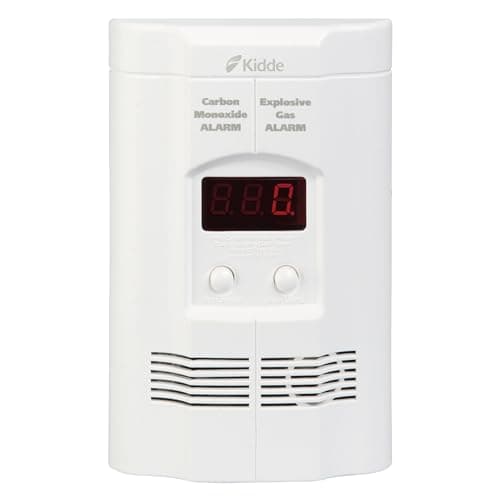
Kidde Plug-In Carbon Monoxide + Explosive Gas Alarm, 3rd Edition (Natural Gas and Propane, 9V Backup)See it on Amazon ↗

Quick Verdict

Kidde Plug-In Carbon Monoxide + Explosive Gas Alarm (3rd Edition): one plug-in alarm for gas leaks and CO, with a 9V backup and a display that says which.

Key Specs

Detects (stated)

Carbon monoxide plus explosive gas, including natural gas and propane

Type

Fixed alarm that monitors the room continuously

Power

Plugs into a standard 120V outlet; 9-volt battery backup for outages

Display (stated)

Digital LED shows the CO level, or reads "GAS" when explosive gas is present

Alarm

85 dB

Memory (stated)

Peak level memory records the last CO detection or the last test

Pros

  • One unit covers two different hazards: explosive gas from a leak and carbon monoxide from poor combustion
  • Names both natural gas and propane on the listing, so it fits either fuel
  • The 9V battery backup keeps it sensing during a power outage
  • The display separates the two alarms, showing a CO number or the word GAS

Cons

  • A plug-in unit sits at outlet height, which is low for natural gas; read Kidde's placement instructions before choosing the outlet
  • The listing bullets state no UL listing and no replacement interval

Suited to

A home with gas appliances that has no gas alarm yet and wants CO coverage in the same unit

Our take

This is the only pick here that watches the air while you sleep or are away. Most homes with a gas furnace, stove or water heater need two warnings, and they are not the same gas: carbon monoxide comes from a burner that is not burning cleanly, while a leak releases unburned gas that can ignite. This Kidde covers both from one outlet and tells you which one tripped. The catch is placement. Natural gas rises, so an outlet a foot above the floor is not where general guidance would put a methane sensor; check Kidde's manual for where it wants this model and whether a higher outlet is available near the appliance. Look on the back label for the manufacture date and any replace-by date.

Check today's price on Amazon →

Affiliate link — commission at no extra cost to you

Compare elsewhere

These open a search for this model. We quote prices only where we can verify them — Amazon, Sylvane and eBay.

#2
Best Leak Finder

Check price

on Amazon ↗

Listing verified 5 Nov 2026

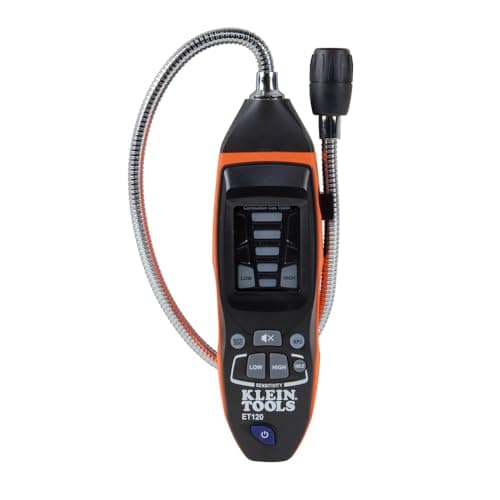
Klein Tools ET120 Gas Leak Detector (18 in Gooseneck, 50 to 10,000 ppm)See it on Amazon ↗

Quick Verdict

Klein Tools ET120 Gas Leak Detector: two sensitivity ranges and an 18 in gooseneck for finding which fitting leaks.

Key Specs

Detects (stated)

Combustible gas; range based on methane

Type

Handheld sniffer, not a fixed alarm

Range (stated)

About 50 to 10,000 ppm (methane)

Sensitivity (stated)

High, 50 to 1,000 ppm; Low, 1,000 to 10,000 ppm

Alerts (stated)

Five red LEDs and an 85 dB tone that rise with concentration

Probe

18 in flexible gooseneck that clips to the meter

Pros

  • Two sensitivity ranges: high to find a faint leak, low to tell a big leak from a trace
  • The 18 in gooseneck reaches behind a dryer, under a range or up to a water heater valve
  • Automatic zeroing at power-up, with lights that show it is calibrating
  • Batteries and a pouch come in the box, per the listing

Cons

  • It only senses gas at its tip, so it gives no warning when it is switched off in a drawer
  • Does not detect carbon monoxide

Suited to

Checking stove, dryer and water heater connections after a repair or when a faint smell comes and goes

Our take

A sniffer answers a different question from an alarm: not whether there is gas in the room, but which joint it is coming from. That makes it the tool for the reader who has just reconnected a dryer, swapped a range or noticed a faint smell near the water heater. The two-range switch is the useful detail. On high sensitivity it picks up the trace around a weeping fitting; switching to low tells you whether the reading is a whiff or a real leak. Power it on in clean outdoor air so the zero is set away from the suspect area, then move the tip slowly along each joint. Any confirmed leak goes to the gas utility or a licensed plumber.

Check today's price on Amazon →

Affiliate link — commission at no extra cost to you

#3
Best Budget Sniffer

Check price

on Amazon ↗

Listing verified 5 Nov 2026

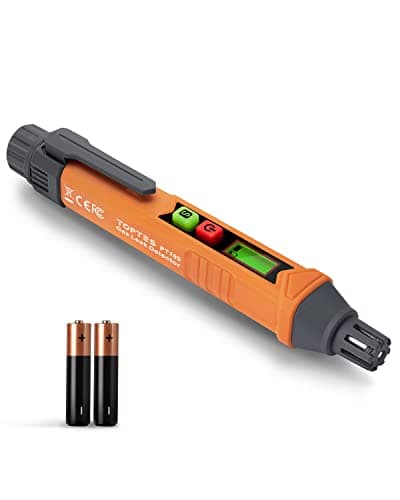
TOPTES PT199 Natural Gas Leak Detector (Pocket Size, 50 to 1,000 ppm)See it on Amazon ↗

Quick Verdict

TOPTES PT199 Natural Gas Leak Detector: a pocket sniffer for checking a fitting up close, for natural gas or propane.

Key Specs

Detects (stated)

Natural gas, methane, propane, butane, LPG

Type

Pocket handheld sniffer, not a fixed alarm

Range (stated)

50 to 1,000 ppm (based on methane)

Detection distance (stated)

1 to 5 cm from the leak

Response (stated)

Alarm within 0.5 seconds; screen turns red at high levels

Power

2 AAA batteries, included; low battery warning below 2.4V

Pros

  • Pocket size, with a storage bag, so it lives in a drawer near the gas appliances
  • Names natural gas and propane, so it suits a home on either fuel or an RV
  • The alarm rises with concentration, which helps you home in on the joint

Cons

  • No gooseneck, so reaching behind a range or dryer means moving the appliance
  • The stated range tops out at 1,000 ppm, so it cannot tell a moderate leak from a large one

Suited to

A homeowner who wants a simple sniffer on hand to check a connection now and then

Our take

This is the simplest way to check a joint without soapy water. The listing is unusually specific about how it works, and those numbers set expectations: it has to be within 1 to 5 cm of the leak, and it reads up to 1,000 ppm of methane. In practice that means you trace each fitting slowly, almost touching it, rather than waving it around the room. The low ceiling is fine for its job, because a reading that maxes out a sniffer is already a reason to shut the appliance valve, leave and call the utility. Warm it up for the full 30 seconds in clean air before you start.

Check today's price on Amazon →

Affiliate link — commission at no extra cost to you

#4
Best for Heavy Use

Check price

on Amazon ↗

Listing verified 5 Nov 2026

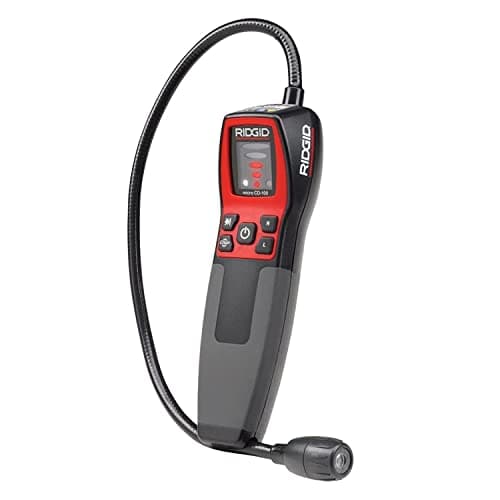
RIDGID CD-100 Micro Combustible Gas Detector, 36163 (16 in Probe, Replaceable Sensor)See it on Amazon ↗

Quick Verdict

RIDGID CD-100 Micro Combustible Gas Detector (36163): a trade sniffer with a replaceable sensor and vibration alerts.

Key Specs

Detects (stated)

Combustible gases including methane, propane, butane, ethanol, ammonia and hydrogen

Type

Handheld diagnostic sniffer, not a fixed alarm

Probe

16 in flexible probe

Alerts (stated)

Visual, audible and vibration (Tri-Mode)

Sensitivity

Adjustable; ppm range not stated on the listing

Sensor (stated)

Field replaceable

Pros

  • A sensor you can replace, so a worn sensor does not mean a new tool
  • Vibration alert works where a tone is hard to hear, such as a loud furnace room
  • A 16 in probe for tight spaces behind appliances

Cons

  • The listing does not state a ppm range
  • Built for trade use, which is more tool than most homeowners need for an occasional check

Suited to

A handy homeowner or landlord who checks several gas appliances and wants a tool that lasts

Our take

Sniffer sensors age, and on most cheap models a tired sensor ends the tool's life. The replaceable sensor is the reason to pay for this one if you look after more than one house or check appliances often. The vibration mode is a small but practical detail in a mechanical room where a fan or burner masks a beep. The weak spot is the listing itself: it gives no concentration range, so you cannot compare its sensitivity number for number with Klein or TOPTES. Stock was listed as limited when checked, so confirm availability before you plan around it.

Check today's price on Amazon →

Affiliate link — commission at no extra cost to you

Buyer's Guide

What to know before you buy.

If You Smell Gas Now, Leave First

Gas utilities and fire safety guidance agree on the order: if you smell gas, get everyone out of the building first, then call the gas utility's emergency line or 911 from outside or from a neighbor's home. Do not switch lights on or off, unplug anything, use a phone inside or try to find the leak yourself. Utilities add an odorant to natural gas so it smells of rotten eggs or sulfur, and that smell is the main warning system. A detector is a backup for the times your nose cannot help, such as when you are asleep, have a cold or are in another part of the house. None of the products on this page is a reason to stay inside and investigate a strong smell.

Gas Alarm, Leak Sniffer or CO Alarm: Three Different Tools

A fixed gas alarm plugs in or mounts on the wall and sounds when combustible gas builds up in the room. A handheld sniffer senses gas only at its tip, so it finds which fitting leaks but warns nobody when it is switched off. A carbon monoxide alarm senses CO, the poison made by a burner that is not burning cleanly, and does not respond to a raw gas leak. The reverse is also true: a gas-only alarm does not warn of CO. The Kidde on this page is a combination unit that senses both, per its listing. The three sniffers sense combustible gas only. A home with gas appliances needs working CO alarms whichever of these you buy.

Mount High for Natural Gas, Low for Propane

General gas safety guidance places a detector by the weight of the gas it watches for. Natural gas is mostly methane, which is lighter than air and rises, so a natural gas sensor belongs high on the wall, near the ceiling. Propane is heavier than air and settles, so a propane sensor belongs low, near the floor. A home with both fuels needs a sensor at each height. Put it in the room with the appliance but not directly above a burner, and keep it away from vents, fans and damp spots like a shower. A plug-in alarm is limited by where the outlets are, so read the maker's instructions for the fuel you have before you settle on an outlet.

Plug-In, Battery or Hardwired

A plug-in alarm is the easiest to install, but it stops sensing when the power goes out unless it has a battery backup; the Kidde here carries a 9-volt backup. A sealed battery alarm can go anywhere on a wall, including high up where natural gas collects, with no outlet needed. A hardwired alarm is installed by an electrician on a household circuit, often interconnected with smoke alarms, and suits new construction or a remodel. Some cities require gas alarms in homes, so check local rules before you choose. Whatever the power source, every alarm has a working life. Use the replacement interval printed on the unit or in its manual, because the listings here do not state one.

How to Use a Sniffer Safely

Switch the sniffer on outdoors or in clean air and let it finish warming up, because it sets its zero point at power-up; the TOPTES listing calls for 30 seconds. Then move the tip slowly along each joint: the shutoff valve, the flex connector at the appliance and the union at the regulator. The TOPTES listing says its sensor must be within 1 to 5 cm of the leak, so hold the tip close. A reading at one joint that fades as you move away points to that fitting. Shut the appliance valve, leave the area if the reading is strong, and have the utility or a licensed plumber repair it. A brushed-on soap solution that bubbles is the traditional check that confirms it.

Who Should Not Rely on a Detector

If the stove clicks but will not light, the burner ports are clogged after cleaning, or the water heater smells of sulfur, a detector will not fix any of it; those are repair jobs covered in the guides linked here. A rotten egg smell from hot water usually comes from the water itself, not the gas line, and a sniffer will not tell you that. Anyone who smells gas often should have the utility check the meter and lines rather than buy a sniffer to hunt for it. Renters should tell the landlord and the utility about any smell, because the gas piping is not theirs to work on. And a gas alarm never replaces a CO alarm.

Frequently Asked Questions

Does a carbon monoxide detector detect natural gas?

NoA carbon monoxide alarm does not detect a natural gas leak.

It senses CO, which comes from a burner that is not burning cleanly, while a leak releases raw methane that a CO sensor does not respond to. To be warned of both, use a combination unit that lists explosive gas as well as CO, such as the Kidde Plug-In Carbon Monoxide + Explosive Gas Alarm, or separate alarms.

Will a natural gas detector detect propane?

Some will and some will not, so check the gases named on the listing. The Kidde alarm and the TOPTES sniffers on this page name both natural gas and propane.

Placement differs too: propane is heavier than air and settles low, while natural gas rises, so a single alarm placed for one fuel may sit at the wrong height for the other.

Where should a natural gas detector be installed?

Install a natural gas detector high on the wall, close to the ceiling, in the room with the gas appliance, because methane is lighter than air and rises.

Keep it a little away from the burner itself and out of the path of fans, vents and steam. For a plug-in model, follow the maker's placement instructions for natural gas, since an outlet near the floor is low for this gas.

How many natural gas detectors do I need?

Most homes need at least one natural gas alarm near each area with gas appliances, such as the kitchen and the furnace or water heater room.

Add one near sleeping areas if they are on a different level from the appliances. A two-fuel home needs both high and low placements. Check local rules too, because some cities now require gas alarms in homes.

Are natural gas detectors reliable?

They are a useful backup, but not a replacement for your sense of smell or for acting on it. A fixed alarm only senses gas that reaches it, so placement matters as much as the unit, and every sensor has a working life printed by its maker. Test the alarm as the manual directs and replace it by the date on the label.

How does a gas leak detector work?

A gas leak detector uses a sensor whose electrical reading changes when combustible gas reaches it, and the electronics turn that change into a tone, lights or a number.

A fixed alarm samples the room around it continuously. A handheld sniffer draws on the air at its tip, which is why the listings tell you to warm it up in clean air and hold it close to each joint.

Who do I call right now for water damage?

Call (888) 840-6512. The line is answered 24 hours a day, seven days a week, and connects you with an IICRC-certified water damage restoration company that serves your area. A recorded menu picks up first: choose water damage or mold, key in your 5-digit ZIP code, and hold through the short silence while the call is passed to the company.

Describe what you can see — where the water is coming from, how long it has been there, and whether it smells — the more specific you are, the faster the right company is on the line. If the source is a pipe or an appliance, shut the main water valve first. Have four things ready and the call goes quickly: the address, when the water started, what is wet now, and whether you have filed an insurance claim.

Still not sure which of these is your situation? (888) 840-6512 · toll-free · answered 24/7

Sources

  1. US Consumer Product Safety Commission
  2. National Fire Protection Association
  3. US Fire Administration
  4. Kidde (manufacturer)
  5. Klein Tools (manufacturer)
  6. RIDGID (manufacturer)

Methodology: How we source and verify data · Report an error

How we chose these picks

  • Every pick is a current listing. Stock, star ratings and rating counts are read from Amazon by script and carry the date they were read.
  • Nothing under 4.0 stars makes the list, and the top pick needs a large rating count, so one good week of reviews cannot put it there.
  • Specs are quoted from the listing or the maker, with the test condition behind the number where there is one, and sized against the job rather than the room on the box.
  • Each comparison is reviewed by Marcus Reed, an IICRC-certified Water Restoration Technician, against the IICRC drying standards and public guidance listed under Sources.

Free 2-day shipping

Amazon Prime members pay no shipping on restoration equipment

Dehumidifiers, air movers, and moisture meters qualify for free Prime delivery — bulk items that otherwise cost $15–$40 to ship.

Try Prime free →

Affiliate link — HearthDry earns a bounty if you sign up; costs you nothing extra.

Also Worth Comparing

Best Air Quality Monitor for Home in 2026 — What Each Sensor Reads, and Why Humidity Is the Number That Warns of Mold

A home air quality monitor reads humidity, temperature and, depending on the model, CO2, fine particles, VOCs or radon, but none of them can tell you that mold is growing. These picks are compared on what each listing says its sensors measure, whether you need an app to see the numbers, and the humidity range EPA advises for keeping mold away.

Read the comparison

Best Radon Detectors in 2026 — Continuous Home Monitors Compared on First Reading, Power and Display, and What a Monitor Cannot Replace

A continuous radon monitor shows how radon rises and falls in your home, but its first reading is not a result, and a one-day number is not the long-term average EPA's guidance is built on. These monitors are compared on what each listing states about first reading, averages shown, power and app, with where to put one and when a qualified tester is still the right call.

Read the comparison

Best Oven Thermometers in 2026 — Dial and Probe Models Compared, and How to Tell an Oven That Needs Calibrating From One That Needs a Repair

An oven thermometer is the tool that settles whether an oven really runs hot or cold, and whether the fix is a calibration offset or a failed part. These picks are four leave-in dial thermometers and one probe model compared from their listings and buyer ratings, with a step-by-step test and the readings that point to a repair.

Read the comparison