
Written by Marcus Reed
Reviewed by Elena VargasLicensed Public Adjuster (TX, FL, LA)
Reviewed August 1, 2026· Next review Feb 2027
Quick answer
In Florida, homeowners insurance covers sudden and accidental water damage such as a burst pipe or storm-driven roof opening, but excludes flood and storm surge, which require separate NFIP or private flood coverage. Florida policies also commonly carry separate hurricane deductibles of 2–5% of dwelling value, and some limit non-weather water damage claims — check those endorsements before you need them. Call (888) 840-6512 to reach a certified water damage restoration company in your area; the line is answered 24/7.
Sound like your situation? Confirm it in one call instead of ten more minutes of reading — (888) 840-6512 · toll-free · no obligation
Florida Is a Different Insurance Market — and Water Is Why
Every state's homeowners policy draws the same basic line: sudden and accidental water is covered, gradual leaks and flooding are not. Florida draws that line in the middle of the most water-exposed housing market in the country, and adds two structures nobody else deals with at this scale — percentage hurricane deductibles and a state-backed insurer of last resort.
What a Standard Florida Policy Covers
| Cause | Typically covered? |
|---|---|
| Burst supply line, appliance failure | ✅ Yes — sudden and accidental |
| Roof opening from wind, then rain inside | ✅ Usually — if the opening was storm-caused |
| Gradual leak found months later | ❌ No — maintenance |
| Storm surge, rising water, king tides | ❌ No — needs flood insurance |
| Sewer or drain backup | ⚠️ Only with a backup endorsement |
| Mold following a covered loss | ⚠️ Usually sublimited, often around $10,000 or less |
The Flood Exclusion Matters More Here Than Anywhere
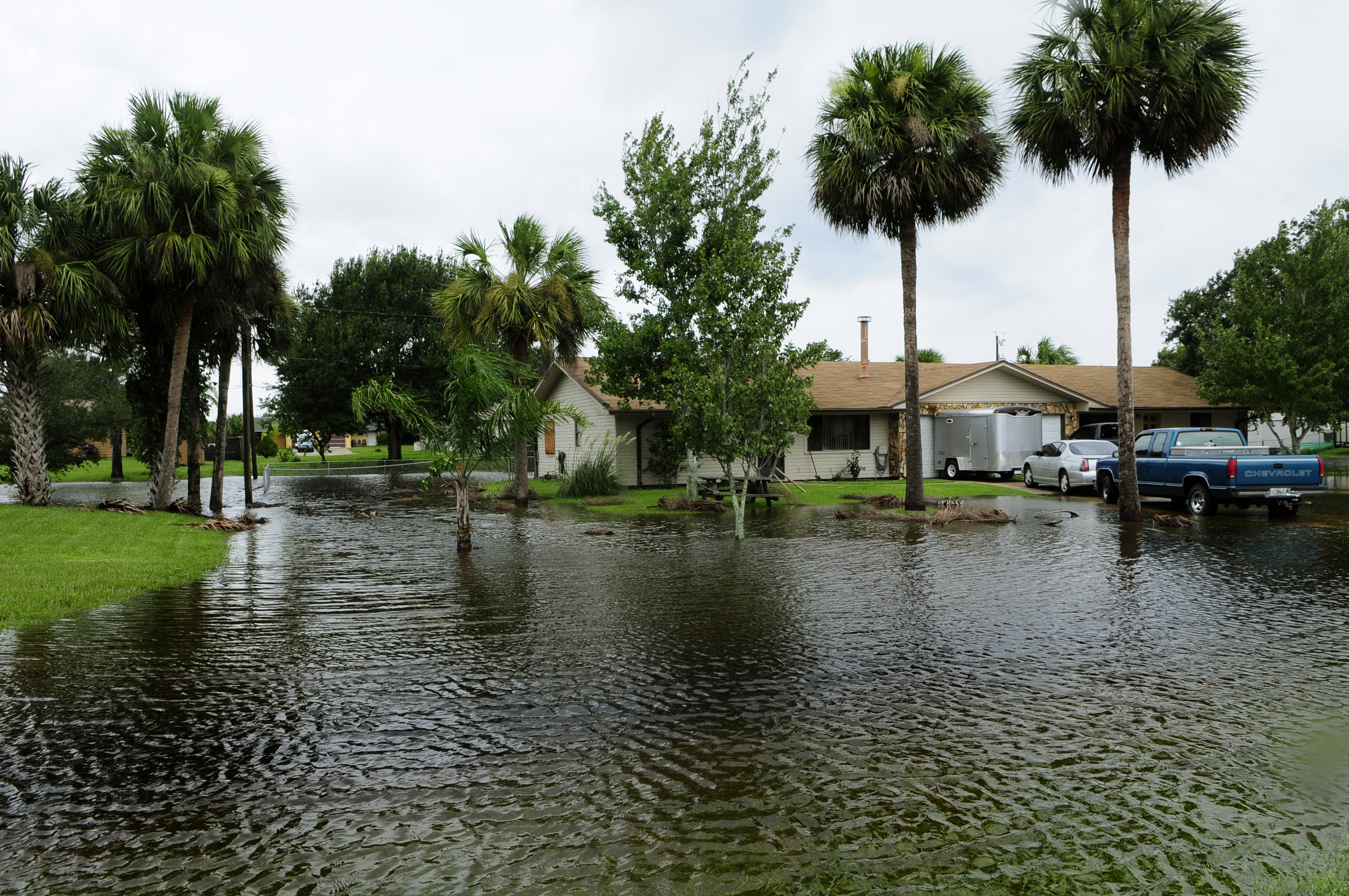
Standard Florida homeowners insurance does not cover flood — and in Florida that distinction gets tested constantly. Water entering from the ground, from storm surge, or from an overflowing waterway is flood, and it needs a separate policy from the NFIP or a private flood carrier.
The same storm can produce both: wind opens the roof (homeowners policy) while surge enters at ground level (flood policy). Adjusters split those claims, which is exactly why photographs establishing where water entered matter more in Florida than almost anywhere else. Our guide on water damage vs flood damage covers the distinction the adjuster will apply.
Citizens Is Now Requiring Flood Coverage
Citizens Property Insurance — the state-backed insurer many Floridians end up with — has phased in a flood requirement. From January 1, 2026, Citizens policyholders with homes insured above $400,000 must carry flood insurance to keep their wind coverage. By January 1, 2027, that extends to all Citizens personal residential policyholders with wind coverage, regardless of home value or flood zone.
If you are on Citizens, this is a scheduled cost, not a suggestion. Check which phase applies to you now rather than at renewal.
Need a contractor your insurer accepts?
Claims live or die on documentation. Crews that estimate in Xactimate and log moisture readings give adjusters what they need.
(888) 840-6512- Describe the loss and where the claim stands
- You're routed to a crew that documents for insurers
- They scope it in writing — you decide, no obligation
Hurricane Deductibles Are a Percentage, Not a Number
This is the detail that shocks people at claim time. Florida policies carry a separate hurricane deductible calculated as a percentage of dwelling coverage — typically 2% to 10%, not a flat dollar figure.
On a home insured for $400,000, a 2% hurricane deductible is $8,000. At 5%, it is $20,000. Many water damage claims after a named storm never pay out at all — not because coverage was denied, but because the loss did not exceed the deductible.
Two practical consequences: know your percentage before hurricane season, and understand that a non-hurricane water loss — a burst pipe in March — falls under your regular deductible, which is usually far smaller.
What to Do Before the Next Storm
- 1Read your declarations page for three numbers: standard deductible, hurricane deductible percentage, and any water damage sublimit.
- 2Confirm whether you carry flood — and whether the Citizens requirement now applies to you.
- 3Ask about a sewer backup endorsement — usually inexpensive, and Florida's storm-loaded systems back up.
- 4Photograph the house now, inside and out, so pre-loss condition is documented. This single habit wins disputes about whether damage predated the storm.
When a Claim Happens
The Florida-specific documentation burden is proving entry point and timing — surge versus wind-driven rain versus plumbing. Photograph waterlines, the direction water travelled, and any roof opening, before mitigation. Then follow the sequence in our insurance claim checklist, and if the claim is denied, the appeal process is the same everywhere: read the stated reason, then counter it point by point.
Bottom Line
Florida covers sudden water like everyone else — but flood is excluded and increasingly mandatory to buy separately, hurricane deductibles are percentages that can run five figures, and the wind-versus-surge split decides which policy pays. Know your deductible percentage and your flood status before the season, not during it.
Reading to confirm what you already suspect?
Confirm it in two minutes instead — the pro on this line answers questions about YOUR situation all day: what it is, what it should cost, whether you even need service. If you want, they'll set the appointment on the same call.
Toll-free · no obligation · asking costs nothing
Frequently Asked Questions
Does standard Florida homeowners insurance cover water damage?
Standard Florida homeowners insurance (HO-3 form) covers sudden and accidental water damage from internal sources: burst pipes, appliance malfunctions, plumbing failures, and roof leaks caused by a covered windstorm. The damage must originate from inside the home or from a covered external cause — coverage does not extend to water that enters from outside through the ground, drainage systems, or storm surge.
Florida policies frequently carry additional exclusions or sublimits beyond the standard HO-3 framework, including a mandatory mold sublimit (usually $10,000), restrictions on coverage for losses attributed to poor maintenance, and limitations on coverage for older roofs. Policies issued through Citizens Property Insurance Corporation have their own specific terms that may differ from private market policies. Before assuming you are covered, review your declarations page and exclusions section, or ask your agent to confirm coverage for specific water-related scenarios in writing.
What is Citizens Property Insurance and does it cover water damage?
Citizens Property Insurance Corporation is Florida's state-created nonprofit insurer of last resort, established to provide coverage to Florida property owners who cannot obtain insurance in the private market. Citizens has grown dramatically as private insurers have exited the Florida market or raised premiums to unaffordable levels, becoming one of the largest homeowners insurers in the state by policy count. Citizens policies do cover sudden and accidental water damage under the same general framework as private homeowners policies, but with important differences.
Citizens applies a mandatory $10,000 mold sublimit, limits coverage for losses on older roofs, and has been subject to legislative changes affecting policy terms. Citizens policyholders are also subject to periodic 'depopulation' — transfer of policies to private carriers — which can change coverage terms at renewal. Citizens premiums are capped by statute and generally lower than private alternatives, but policyholders should compare coverage terms carefully, not just price.
What changed about Assignment of Benefits (AOB) in Florida in January 2023?
Florida SB 2-A, signed into law in December 2022 and effective January 1, 2023, fundamentally restructured the AOB landscape for property insurance in Florida. The law eliminated one-way attorney fees for AOB-related property insurance lawsuits, which had been the primary financial incentive for contractors to pursue inflated claims through litigation. Under the prior system, a contractor holding an AOB could sue an insurer and, if they prevailed on even a small disputed amount, collect full legal fees from the insurer.
This incentivized mass litigation and inflated claims that destabilized Florida's market for years. The 2023 reform also significantly restricted use of AOB agreements in property insurance and changed how attorney fee awards work in all property insurance disputes. For homeowners, the practical effect is that contractors can no longer use AOB agreements as litigation use against your insurer, and can no longer file suit in your name without your active ongoing participation in the claim.
Is hurricane flood damage covered by homeowners insurance in Florida?
NoHurricane flood damage, specifically storm surge and surface water flooding, is not covered by standard Florida homeowners insurance policies regardless of the insurer. This is one of the most costly misunderstandings in Florida property insurance. When a hurricane makes landfall, it causes two types of water damage: wind-driven rain entering through openings in the building envelope (covered by homeowners insurance when wind damage caused the opening) and storm surge — seawater pushed inland by the storm — which is legally classified as flood and excluded.
After major hurricane events, thousands of Florida homeowners discovered this distinction when their surge damage claims were denied. Wind damage to roofing, walls, and windows is covered; water entering through storm surge, overflowing waterways, or saturated ground is not. Flood coverage requires a separate policy through the NFIP or a private flood insurer, and that policy must be in force before the storm — it cannot be purchased after a named storm has formed.
What are Florida's limits on mold coverage under homeowners insurance?
Florida statute and standard insurance policy language in Florida cap mold coverage at $10,000 per occurrence on most homeowners and Citizens policies — a sublimit established in the early 2000s after a wave of mold litigation drove carriers out of the state. The $10,000 sublimit applies to mold remediation costs regardless of the overall dwelling policy limit, meaning a homeowner with $500,000 in dwelling coverage may still have only $10,000 available for mold resulting from a covered water event.
In Florida's humid subtropical climate, where mold can colonize drywall and structural framing within 24–48 hours of saturation, $10,000 rarely covers full professional remediation in a mid-size home — average mold remediation costs in Florida run $3,000–$30,000 or more depending on affected area. Some private insurers offer higher mold sublimits as endorsements at additional premium. Given Florida's climate, requesting the highest available mold sublimit from your insurer is strongly advisable — the incremental premium cost is typically modest relative to the exposure.
Should I buy NFIP or private flood insurance in Florida?
Florida homeowners have access to both the National Flood Insurance Program (NFIP) and a growing private flood insurance market, and the right choice depends on your property, flood zone designation, and risk tolerance. The NFIP caps dwelling coverage at $250,000 and contents at $100,000 — limits that are often insufficient for higher-value Florida homes. NFIP premiums are determined by FEMA's Risk Rating 2.0 methodology and vary significantly based on flood zone, first-floor elevation, and construction type.
Private flood insurance can offer higher coverage limits, broader coverage terms (including additional living expenses, which NFIP does not cover), and in many cases lower premiums — particularly for properties in lower-risk zones. However, private carriers can exit the Florida market during adverse conditions, creating non-renewal risk. For properties in FEMA Special Flood Hazard Areas (Zone AE or VE), maintaining continuous NFIP coverage also preserves eligibility for Increased Cost of Compliance benefits after a flood event, which private policies do not provide.
Who do I call right now for water damage?
Call (888) 840-6512. The line is answered 24 hours a day, seven days a week, and connects you with an IICRC-certified water damage restoration company that serves your area.
Describe what you can see — where the water is coming from, how long it has been there, and whether it smells — the more specific you are, the faster the right company is on the line. If the source is a pipe or an appliance, shut the main water valve first; the call itself takes under two minutes.
Still not sure which of these is your situation? (888) 840-6512 · toll-free · answered 24/7
Sources
- Florida Office of Insurance Regulation — Citizens Property Insurance(retrieved 2026-07-15)
- Florida SB 2-A (2022) — Property Insurance Reform Act(retrieved 2026-07-15)
- FEMA Flood Map Service Center(retrieved 2026-07-15)
- FEMA — National Flood Insurance Program Policyholder Resources(retrieved 2026-07-15)
- Insurance Information Institute — Homeowners Insurance Facts and Statistics(retrieved 2026-07-15)
Methodology: How we source and verify data · Report an error
Disclaimer: HearthDry is an independent educational resource. This article is for informational purposes only and does not constitute professional, legal, or insurance advice. Consult licensed professionals before making decisions about your property or insurance claims.
Equipment
What each machine actually does
Removes the moisture the structure is still giving off — the machine that decides how long drying takes
See the picks →Moves air across wet surfaces so the dehumidifier has something to take out of the air
See the picks →Finds water behind walls and under floors, and tells you when a material is actually dry
See the picks →Alerts you the moment a leak starts — the cheapest thing on this list and the only preventive one
See the picks →Those pages carry affiliate links. As an Amazon Associate, HearthDry earns from qualifying purchases; it costs you nothing extra.
Advertisement
