
Quick answer
A leak under a bathroom sink comes from the supply lines and shutoff valves, the faucet, the drain (pop-up, tailpiece, P-trap) or the drain flange seal. Dry everything, put paper towel on the cabinet floor, and test each: a drip with the sink off is the supply side; water only while the faucet runs is the faucet; water only while the basin drains is the trap or pop-up; water only with the basin full is the drain seal. Water under the sink with the water turned off usually means a pipe in the wall, a shower on the other side or a leak above, and a plumber should trace it. Call (888) 217-6781 to reach a plumbing company taking calls in your ZIP.
Follow the short menu, then your 5-digit ZIP. The line goes quiet for a few seconds while it connects; stay on. If it does not connect, call once more: companies taking calls change minute to minute.

Written & reviewed by Marcus ReedIICRC WRT
Reviewed October 20, 2026· Next review Apr 2027
A leak under a bathroom sink comes from one of four places: the supply lines and their shutoff valves, the faucet itself, the drain (pop-up stopper, tailpiece, P-trap) or the seal between the sink and the drain. The trick is finding which, because water runs along pipes and drips from the lowest point, not from where it escapes. Most of these are a small plumbing repair. What turns them into a bigger job is how long the cabinet base and the floor under it have been wet.
How to Find the Leak
- 1Empty the cabinet and dry everything. Wipe every pipe and fitting dry and put a paper towel flat on the cabinet floor.
- 2Test the supply side with the sink off. Leave the faucet off for ten minutes. Wet paper or a drip now means a supply line, a shutoff valve or the faucet's connections, because those are under pressure all the time.
- 3Test the drain side. Close the stopper, fill the basin, then let it drain while you watch the pop-up rod, the tailpiece and the P-trap with a dry paper towel wrapped around each joint. Water only now means the drain.
- 4Check the cabinet floor and the wall behind it. Press the cabinet base for softness, look for swelling or dark staining, and check the floor in front of the vanity.
What Each Leak Means
| When it leaks | Most likely source | Fix |
|---|---|---|
| Sink off, slow drip | Supply line, compression nut, shutoff valve stem | Tighten or replace the supply line or valve; plumber if the valve is seized |
| Only when the faucet runs | Faucet body or its connections | Replace cartridge or faucet; plumber |
| Only when the sink drains | P-trap slip nuts, tailpiece, pop-up rod | Tighten or replace the trap; reseat the pop-up |
| Only when the basin is full | Drain flange seal (plumber's putty or gasket) | Reseat the drain with new putty |
| Even when the water is turned off | Water coming from elsewhere: a wall pipe, a shower on the other side, the floor above | Plumber to trace it |
Water under the sink with every valve closed and nothing running is worth taking seriously. It usually means a pipe inside the wall, the shower valve on the far side of the wall or a toilet supply nearby, and it is often found because the cabinet floor went soft rather than because anyone saw a drip.
Talk to a plumber about this
One call reaches a plumbing company taking calls in your ZIP.
When It Needs More Than a Plumber
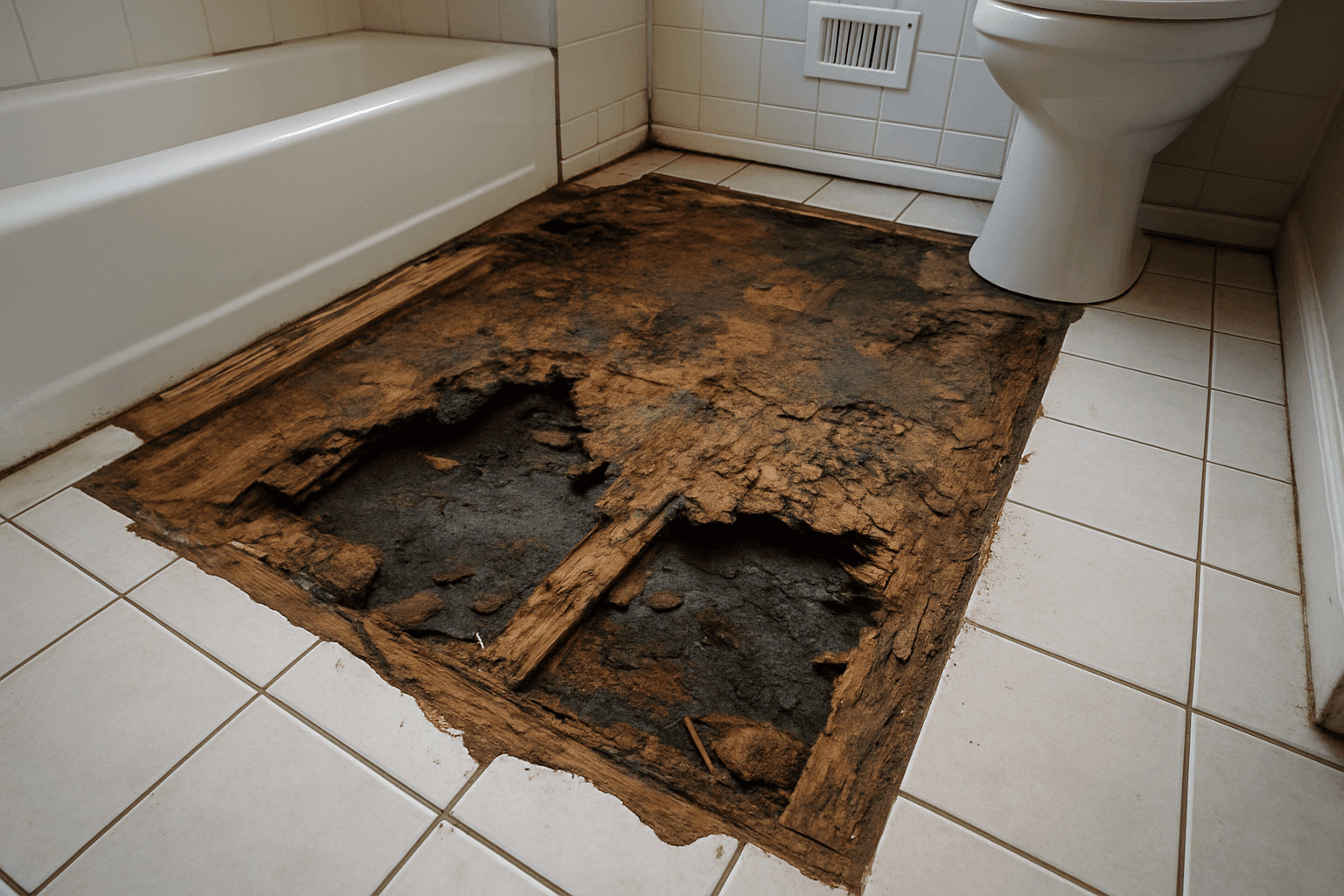
A vanity cabinet floor is usually particleboard, which swells and does not come back. That part is a replacement, not a dry-out. What matters more is what is under and behind it: the subfloor, the bottom of the drywall and, on a second floor, the ceiling below. If the leak had been going for weeks, look for a musty smell under the sink and staining on the ceiling of the room below, and see our guide to a bathroom leaking through the ceiling.
(888) 217-6781 connects you to a plumbing company taking calls in your ZIP. Follow the short menu, enter your 5-digit ZIP, and stay on through about half a minute of quiet while it connects. If it does not connect, call once more: the companies taking calls change minute to minute.
Bathroom Sink Leak FAQ
Why is water under my bathroom sink when the water is turned off? Either a supply valve is passing water through a worn stem, or the water is coming from somewhere else: a pipe in the wall, a shower on the other side, or a leak above.
Is a leak under a sink an emergency? A slow drip is not, once you close the shutoff valves. A leak that runs when the valves are closed, or a soft cabinet floor, should be traced this week.
How much does it cost to fix a leak under a bathroom sink? A P-trap or a supply line is a small part and short visit; the cost grows with the cabinet and floor damage, which is why the leak should be fixed early.
Reading to confirm what you already suspect?
Confirm it in two minutes instead — the pro on this line answers questions about YOUR situation all day: what it is, what it should cost, whether you even need service. If you want, they'll set the appointment on the same call.
No obligation to book
Frequently Asked Questions
Why is there water under my bathroom sink when the water is turned off?
Either a supply valve is passing water through a worn stem, or the water is coming from somewhere else: a pipe in the wall, a shower valve on the other side, a toilet supply nearby or a leak above.
Is a leak under a bathroom sink an emergency?
A slow drip is not, once the shutoff valves are closed. A leak that continues with the valves closed, or a soft cabinet floor, should be traced promptly.
Who do I call for a leak under the bathroom sink?
A plumber for the leak. If the cabinet base, subfloor, wall or ceiling below are wet or moldy, a water damage restoration company handles the drying and removal.
Can I fix a leaking P-trap myself?
Often yes: hand-tighten the slip nuts, and if it still drips replace the washers or the trap. A seized shutoff valve or a leak inside the wall is a plumber's job.
Sources
- ANSI/IICRC S500 Standard for Professional Water Damage Restoration
- EPA — A Brief Guide to Mold, Moisture and Your Home
Methodology: How we source and verify data · Report an error
Disclaimer: HearthDry is an independent educational resource. This article is for informational purposes only and does not constitute professional, legal, or insurance advice. Consult licensed professionals before making decisions about your property or insurance claims.