Best for: Most household toilet clogs that a flange plunger has not cleared
- Cable (stated):
- 3/8 in x 3 ft high-carbon spring wire
- Bowl protection (stated):
- Poly safety tube to prevent scratching
Listing verified 13 Oct 2026

3 ft and 6 ft Closet Augers With Bowl Guards, and the Signs the Clog Is in the Main Line Instead
5 picks compared · prices, ratings and stock checked October 12, 2026
Our Top Pick
For most clogged toilets, the Cobra Products 40030 3/8 in x 3 ft Home Toilet Auger, with a poly safety tube to protect the bowl. For a clog deeper than 3 ft, the Klein Tools 53018 6-Foot Extendable Steel Toilet Auger, which can also be driven by a drill.
4.2 on Amazon · 3,758 ratings
Quick answer
The best toilet auger for most clogged toilets is a 3 ft closet auger with a guard that keeps the cable off the porcelain, and the Cobra Products 40030 3/8 in x 3 ft Home Toilet Auger fits that, rated 4.2 stars across 3,758 Amazon ratings. Reach for it after a plunger fails. If the clog sits past the toilet, or returns within days, step up to a 6 ft auger such as the Klein Tools 53018. If the tub or a floor drain backs up when you flush, the main line is blocked, and no toilet auger reaches that far.
Every pick below is currently stocked — ratings and stock read from Amazon on 12 October 2026.
Best for: Most household toilet clogs that a flange plunger has not cleared
Listing verified 13 Oct 2026
Best for: A clog that a 3 ft auger cannot find or clear, or a toilet that clogs again a few days later
Listing verified 13 Oct 2026
Best for: A second choice of standard 3 ft closet auger, with a clip that keeps the toolbox cleaner
Listing verified 13 Oct 2026
Best for: Occasional paper clogs in a home that wants a basic tool in the bathroom cabinet
Listing verified 13 Oct 2026
Best for: A clog past the toilet trap when you would rather crank by hand than use a drill
Listing verified 13 Oct 2026
How this page was made: we compare the current Amazon listings, the makers' published specs and what verified buyers report, then rank by fit for the job. Ratings, review counts and stock are read from Amazon and dated. We earn a commission on purchases through our links; it does not change the order. Reviewed by Marcus Reed, IICRC-certified Water Restoration Technician.
Full Reviews
Each pick in detail: what the listing states, what buyers report, and where it falls short.
Check price
on Amazon ↗
Listing verified 13 Oct 2026
See it on Amazon ↗Best Overall
Quick Verdict
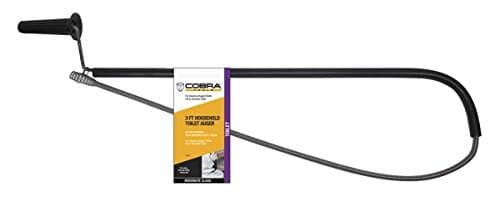
Cobra Products 40030 3/8 in x 3 ft Home Toilet Auger: the standard length with a bowl guard, on a thin but well-proven listing.
Key Specs
Cable (stated)
3/8 in x 3 ft high-carbon spring wire
Bowl protection (stated)
Poly safety tube to prevent scratching
Handle (stated)
Molded plastic turning handle
Drive
Hand crank; drill use not stated
Head type
Not stated on this listing
Warranty
Not stated on this listing
Pros
Cons
Suited to
Most household toilet clogs that a flange plunger has not cleared
Our take
Cobra's 40030 is the classic closet auger: a 3 ft length of 3/8 in high-carbon spring wire inside a bent tube, with a poly safety tube where the tool rests in the bowl. That guard is the reason to buy a toilet auger instead of borrowing a sink snake, because a bare steel cable spinning against the bowl can scratch or mark the glazed porcelain. Three feet is enough to work through the trap cast into the toilet itself, where most clogs of paper and waste lodge. The listing says little else, so expect a basic tool, and check the guard for splits or wear before each use.
Affiliate link — commission at no extra cost to you
Compare elsewhere
These open a search for this model. We quote prices only where we can verify them — Amazon, Sylvane and eBay.
Check price
on Amazon ↗
Listing verified 13 Oct 2026
See it on Amazon ↗Best for Deeper Clogs (Manual or Drill)
Quick Verdict
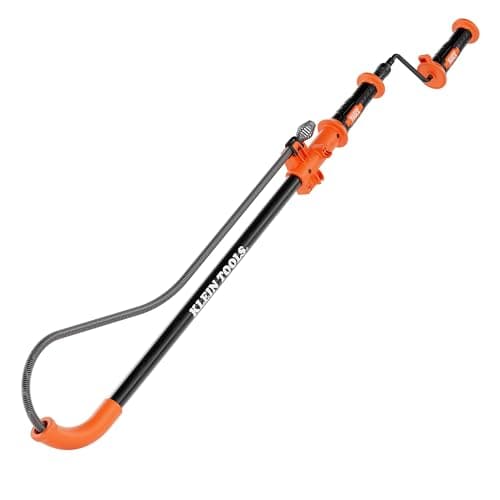
Klein Tools 53018 6-Foot Extendable Steel Toilet Auger: 3 to 6 ft of reach with a drill option, for clogs past the toilet's own trap.
Key Specs
Reach (stated)
Extends from 3 ft to 6 ft
Drive (stated)
Hand crank, or a drill on the chuck-compatible end
Handle (stated)
Quick-release, stores on the tool while a drill is used
Bowl protection (stated)
Protective boot against marring and scratching
Storage (stated)
Dual-lock coil clip
Cable diameter
Not stated on this listing
Pros
Cons
Suited to
A clog that a 3 ft auger cannot find or clear, or a toilet that clogs again a few days later
Our take
The Klein 53018 covers both jobs a toilet auger faces. Set short, it works like a standard 3 ft closet auger inside the toilet's trap. Extended to 6 ft, it reaches past the toilet into the bend and first stretch of drain line under the floor, where a wad of wipes or paper can sit beyond a 3 ft cable. The drill option helps with a packed clog, but go slowly: a cable forced against an obstruction at drill speed can kink or whip. Use a low speed and let the head do the cutting. The listing gives no cable diameter, and its ratings are shared with Klein's 3 ft version, so read them as a record for the design rather than this length.
Affiliate link — commission at no extra cost to you
Compare elsewhere
Check price
on Amazon ↗
Listing verified 13 Oct 2026
See it on Amazon ↗Runner-Up 3 ft Auger
Quick Verdict
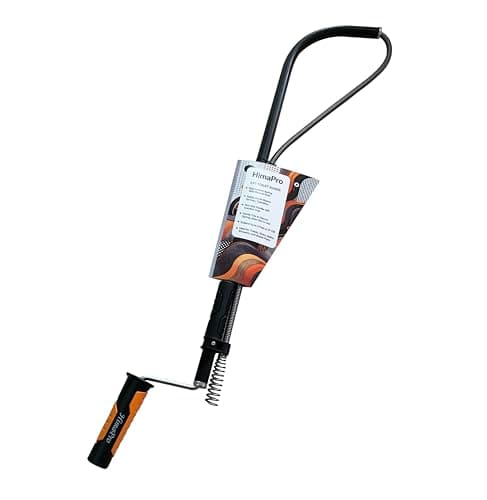
HimaPro Professional Closet Auger, 3 Feet: a standard-length auger with a vinyl sleeve and a tidy storage clip.
Key Specs
Reach (stated)
Up to 3 ft
Cable (stated)
High-carbon spring wire, described as rust-resistant
Bowl protection (stated)
Protective vinyl sleeve
Drive (stated)
Hand crank with a non-slip handle
Storage (stated)
Integrated clip for the coil
Cable diameter
Not stated on this listing
Pros
Cons
Suited to
A second choice of standard 3 ft closet auger, with a clip that keeps the toolbox cleaner
Our take
HimaPro's auger is a standard 3 ft closet auger with two practical touches. The vinyl sleeve covers the tube where it sits against the bowl, and a storage clip holds the coiled cable once you pull it out, so a wet, dirty cable cannot spring loose in a bucket or toolbox. The listing says the high-carbon wire resists rust, which matters because an auger usually goes back on the shelf damp. It also names sinks, tubs and showers, but a closet auger's tube is bent to sit in a toilet bowl, and a small drum snake suits those drains better. Rinse and dry the cable after each use, whichever auger you own.
Affiliate link — commission at no extra cost to you
Compare elsewhere
Check price
on Amazon ↗
Listing verified 13 Oct 2026
See it on Amazon ↗Best Rubber Bowl Guard
Quick Verdict
PlumbCraft 3 Ft Toilet Auger: a light-duty auger with a rubber bowl guard for routine paper clogs.
Key Specs
Reach (stated)
3 ft
Cable (stated)
3/8 in steel
Bowl protection (stated)
Rubber bowl guard
Build (stated)
Solid steel turning rod with a vinyl grip handle
Type (stated)
Light auger for household toilets
Warranty
Not stated on this listing
Pros
Cons
Suited to
Occasional paper clogs in a home that wants a basic tool in the bathroom cabinet
Our take
PlumbCraft sells this as a light auger for household toilets, and that is a fair label. A 3 ft run of 3/8 in steel cable turns inside a solid steel rod, with a rubber guard at the bend that rests against the bowl. The guard is the part to watch: if it splits or slides off, bare metal can touch the porcelain. A light auger suits the common clog of too much paper. With a toy, a bottle cap or a wad of wipes, it may push the object deeper instead of hooking it, and a stuck object usually means the toilet has to come off the floor. Keep it for routine clogs and call a plumber for anything harder.
Affiliate link — commission at no extra cost to you
Compare elsewhere
Check price
on Amazon ↗
Listing verified 13 Oct 2026
See it on Amazon ↗Best Hand-Cranked 6 ft Auger
Quick Verdict
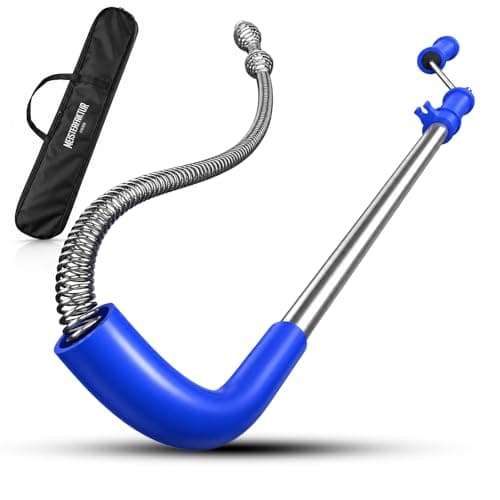
Meisterfaktur 6 ft Toilet Auger: double the standard reach with silicone bowl protection, for hand cranking only.
Key Specs
Reach (stated)
6 ft
Bowl protection (stated)
Silicone protection
Help (stated)
Instruction video on the listing
Drive
Hand crank; drill use not stated
Cable diameter
Not stated on this listing
Pros
Cons
Suited to
A clog past the toilet trap when you would rather crank by hand than use a drill
Our take
Meisterfaktur's auger runs 6 ft, twice the usual closet length, with silicone protection on the part that rests in the bowl. Its listing makes a fair point about why a toilet needs its own tool: a regular drain spiral can damage the ceramic and can also jam in the toilet's tight trap. Six feet lets the cable pass through the toilet and into the drain line beneath it, which helps when the clog sits just past the flange. The claim of clearing the heaviest blockages in under 10 minutes is marketing rather than a spec. Feed the cable slowly while cranking, and keep turning as you draw it back out.
Affiliate link — commission at no extra cost to you
Compare elsewhere
What to know before you buy.
Start with a flange plunger, the kind with a soft sleeve that folds out of the cup to seal the toilet's outlet. It clears most paper clogs. A toilet auger, also called a closet auger, comes next. Its cable runs inside a bent rigid tube, so you can feed it into the bowl's outlet without reaching into the water, and a guard at the bend keeps the steel off the porcelain. A regular drain snake is the wrong tool here. The 25 ft drum snakes sold for sinks are built for small pipes, and one popular listing states plainly that it is not for toilets. Air-pressure plungers are a separate category again, and one popular model says it is meant for soft clogs only, not toys or plastics.
Every toilet has a trap cast into the porcelain, a tight curved passage that holds water in the bowl. Most clogs lodge there, within the first couple of feet, and a 3 ft closet auger reaches through it. That is why 3 ft is the standard length, and why Cobra, HimaPro and PlumbCraft all sell it. A 6 ft auger such as the Klein 53018 or the Meisterfaktur reaches past the toilet into the bend and first stretch of drain line beneath the floor. Choose 6 ft if a 3 ft auger runs its full length without finding the clog, or if the toilet clears and then clogs again a few days later. The extra length takes more effort to feed and retract, so do not buy it by default.
Pull the cable back so the head sits just inside the end of the tube. Set the curved end into the bowl's outlet with the guard resting on the porcelain and the bend aimed up into the trap. Hold the tube still with one hand, then turn the crank clockwise while pushing gently, so the cable feeds through. When it stops, keep cranking to bore through or hook the clog rather than shoving harder. Pull back slowly while you keep turning. For the test flush, lift the tank lid and push the flapper open by hand, so you can drop it shut if the water rises. Never let bare cable spin against the bowl, and never lever the tube against the rim, because porcelain can crack.
What caused the clog decides whether an auger will clear it. Toilet paper and waste break up when the auger head bores through them, and that is the easy case. So-called flushable wipes hold together and wrap around the cable, so expect to pull back a mat of material rather than push it through. A solid object, such as a toy, a phone, a toothbrush or a bottle cap, is the hard case. The auger may hook it and drag it back, but it can just as easily push it deeper into the trap, where it wedges. If you know a hard object went down and the auger does not bring it back in a couple of tries, stop. A plumber can lift the toilet and clear the trap from below, which is safer than forcing it.
A toilet auger only works inside the toilet and the first few feet beyond it, so it is the wrong purchase when the trouble is the main drain. These are the signs of a main line clog: the tub or shower gurgles or backs up when you flush, water rises in a basement floor drain, several fixtures drain slowly at once, or the lowest toilet in the house fills when the washer empties. Those point to a blockage, tree roots or a damaged section in the line to the street, which needs a plumber with a powered sewer machine or a camera. If sewage has come up through a floor drain, keep children and pets away, wear gloves and boots, and treat the cleanup as contaminated water. Once the line is clear, ask about a backwater valve.
A clogged toilet that overflows leaves two jobs. First, stop the water: turn the shutoff valve behind the toilet clockwise, or lift the tank lid and press the flapper down. Then deal with the floor. Water from a toilet bowl can carry waste, so wear gloves, mop or wet-vac it up, and clean hard surfaces with a household disinfectant. Water that ran under the toilet base or into the ceiling below needs drying fast, and EPA advises drying water-damaged areas within 24 to 48 hours to prevent mold growth. Once the bowl drains normally, check the tank as well. EPA WaterSense suggests a few drops of food coloring in the tank; if color shows in the bowl after 10 minutes, the flapper leaks.
Set the curved end of the tube into the bowl's outlet, then crank clockwise while pushing gently so the cable feeds into the trap. Start with the cable pulled back inside the tube and the guard resting on the porcelain.
When the cable meets resistance, keep turning to break up or hook the clog instead of forcing it. Retract while still turning, then test with a controlled flush, holding the tank lid off so you can drop the flapper shut.
A toilet auger with an intact guard should not scratch the bowl, but bare cable can mark the glaze and forcing the tool can crack porcelain. The guard, whether a poly tube, vinyl sleeve, rubber boot or silicone cover, is there to keep the spinning steel off the bowl.
Check it before each use, keep the tube still while you crank, and never pry against the rim. Using a drill makes damage more likely if you rush.
A toilet auger is better for clogs a plunger cannot shift, but a plunger should still come first. A flange plunger clears most paper clogs with pressure alone and cannot scratch anything.
The auger reaches into the trap and physically breaks up or hooks what is stuck, which is why it works on packed clogs and wipes. Keep both in the house, and use the auger when several firm plunges have not cleared the bowl.
A 3 ft closet auger is enough for most clogs, because most lodge in the trap cast into the toilet itself.
Choose 6 ft when a 3 ft auger runs its full length without finding the clog, or when the toilet clears and clogs again within days, which suggests something lodged past the flange. The Klein 53018 extends from 3 ft to 6 ft, so one tool covers both cases.
It is better not to. A regular drain snake has a bare metal cable that can scratch the bowl's glaze, and its thin coil can tangle or jam in the toilet's tight trap.
Many sink snakes are not built for toilets at all, and at least one popular 25 ft model says so on its own listing. A closet auger has a guarded, rigid tube made for the job.
Usually the head is pressing against the trap wall rather than following the bend, or it has hit a solid object. Pull back a few inches, turn the crank, and push again gently so the head finds the curve.
If it still stops at the same point, there may be a dropped item wedged in the trap; stop forcing it and call a plumber, who can lift the toilet and remove it from below.
Call (888) 840-6512. The line is answered 24 hours a day, seven days a week, and connects you with an IICRC-certified water damage restoration company that serves your area. A recorded menu picks up first: choose water damage or mold, key in your 5-digit ZIP code, and hold through the short silence while the call is passed to the company.
Describe what you can see — where the water is coming from, how long it has been there, and whether it smells — the more specific you are, the faster the right company is on the line. If the source is a pipe or an appliance, shut the main water valve first. Have four things ready and the call goes quickly: the address, when the water started, what is wet now, and whether you have filed an insurance claim.
Still not sure which of these is your situation? (888) 840-6512 · toll-free · answered 24/7
Methodology: How we source and verify data · Report an error
Free 2-day shipping
Amazon Prime members pay no shipping on restoration equipment
Dehumidifiers, air movers, and moisture meters qualify for free Prime delivery — bulk items that otherwise cost $15–$40 to ship.
Affiliate link — HearthDry earns a bounty if you sign up; costs you nothing extra.

The right drain snake depends on where the clog sits: hair near a bathroom drain, a soft clog past the trap, or a toilet, which needs a tool of its own. These picks are hair tools and 25 ft cable augers compared on reach, cable size and what each listing states, with the signs that the clog is in the sewer line and a snake is the wrong tool.
Read the comparisonA toilet supply line sits under full house pressure day and night, and an old plastic line that cracks at its nut keeps running until someone closes the valve. These picks are braided stainless connectors in the standard 3/8 in compression x 7/8 in ballcock size, compared on length, nut material and what each listing states, with the fitting habits and the leak sensor that matter as much as the hose.
Read the comparisonA wet/dry vac is sized by what you can lift, not by what the label promises: water weighs about 8.3 lb a gallon, so a full 6-gallon drum is a 50 lb load. These five picks run from a cordless 2-gallon vac for the car to a 16-gallon drum with a drain port for the garage.
Read the comparisonSewage water (Category 3) contains E. coli, hepatitis A, Norovirus, and dozens of other pathogens. The right PPE is not optional — it's the difference between a cleanup job and a biohazard exposure.
Read the comparisonA backwater valve is a one-way flap in your drain line that swings shut when the city sewer backs up toward your house. These picks are in-line valves and a floor-drain float compared on pipe size, access and what each listing actually states, with the plumbing-code test, the install, and the rule for the hours the valve is closed.
Read the comparisonA toilet needs a plunger with a flange or beehive head, because a flat cup cannot seal in the curved outlet at the bottom of the bowl. These picks are compared on head shape, handle and storage as each listing states them, alongside the steps that stop a rising bowl from reaching the floor and the point where a toilet auger should take over.
Read the comparisonThe seal between the toilet and the drain flange is the one plumbing joint in the house that sits under the fixture where no one can see it fail. When it does, a little water escapes at the base on every flush and soaks the subfloor for months before the floor feels soft. These picks are wax rings and waxless seals compared on the flange heights each one covers, whether you can lift the toilet and reset it, and what each listing includes.
Read the comparisonMost toilet overflows start with a bowl that did not clear, so a flush that does the job in one go is the first line of water-damage prevention in a bathroom. These picks are compared on the flush score and trapway each listing states, gallons per flush, seat height and rough-in, with the measuring and the parts an install needs before the box arrives.
Read the comparison