
Quick answer
A ceiling leaking under an upstairs bathroom traces to five sources, identified by timing: toilet wax ring (leaks at flush, $150–$300 fix), tub drain (leaks when draining), shower pan (slow leak during showers, $1,000–$3,500), supply line (constant — shut the main), or failed grout letting spray into walls. Run one fixture at a time with a watcher at the stain; the fixture that produces fresh moisture within minutes is your answer. Call (888) 840-6512 to reach a certified water damage restoration company in your area; the line is answered 24/7.
Written & reviewed by Marcus ReedIICRC WRT
Reviewed August 19, 2026· Next review Feb 2027
The Ceiling Stain Under the Bathroom: A Controlled Experiment
A water stain on the ceiling below a bathroom is one of the most common — and most misdiagnosed — leaks in a house, because five different failures all exit at the same spot. The fix costs anywhere from $5 to $3,500 depending on which one you have, so the half hour of testing below is the highest-paid half hour in this entire repair.
The Five Sources and Their Signatures
| Source | Leaks when... | Typical fix |
|---|---|---|
| Toilet wax ring | you flush | $150 – $300 |
| Tub/shower drain connection | tub drains | $150 – $350 |
| Shower pan / liner | showers, worsening over weeks | $1,000 – $3,500+ |
| Supply line or valve | constantly, fixtures off | $150 – $400 + urgency |
| Grout / caulk failure | spray hits walls or door seams | $50 DIY |
Run the Diagnostic
Two people, thirty minutes: one runs fixtures, one watches the stain with a flashlight.
Flush test first — the wax ring under the toilet is the most common culprit and the least expensive fix. Flush repeatedly over ten minutes; fresh moisture below means the seal or the closet flange. A toilet that rocks even slightly has been grinding its seal for months. While you're there: dye-tab the tank, because a silently running toilet also feeds hidden leaks.
Tub fill-and-drain — leaks that appear only as the tub empties implicate the drain shoe or overflow gasket, both usually reachable from below once the ceiling is open.
Two-stage shower test — water at the drain only, then spray at walls and door seams. The first stage failing points at the pan or its liner (the expensive one — tile comes up). The second stage failing is good news: failed grout or caulk is a $50 weekend job, not a plumbing bill.
Everything off, still spreading? That's a pressurized supply line. Stop reading and shut the house main — constant-feed leaks are the ones that sag and drop ceilings.
Talk to a water damage pro now
Answered 24/7 · Toll-free · answered 24/7 · no obligation
(888) 840-6512Mold can establish within 24–48 hours of water exposure — drying started today stays a drying job.
- Describe the damage & give your ZIP
- You're routed to the on-call local crew
- They quote — you decide, no obligation
What the Water Already Did on the Way Down
The stain is the exit point, not the extent. Between the bathroom subfloor and the ceiling paint lies a joist cavity that has been catching water every use since the failure started:
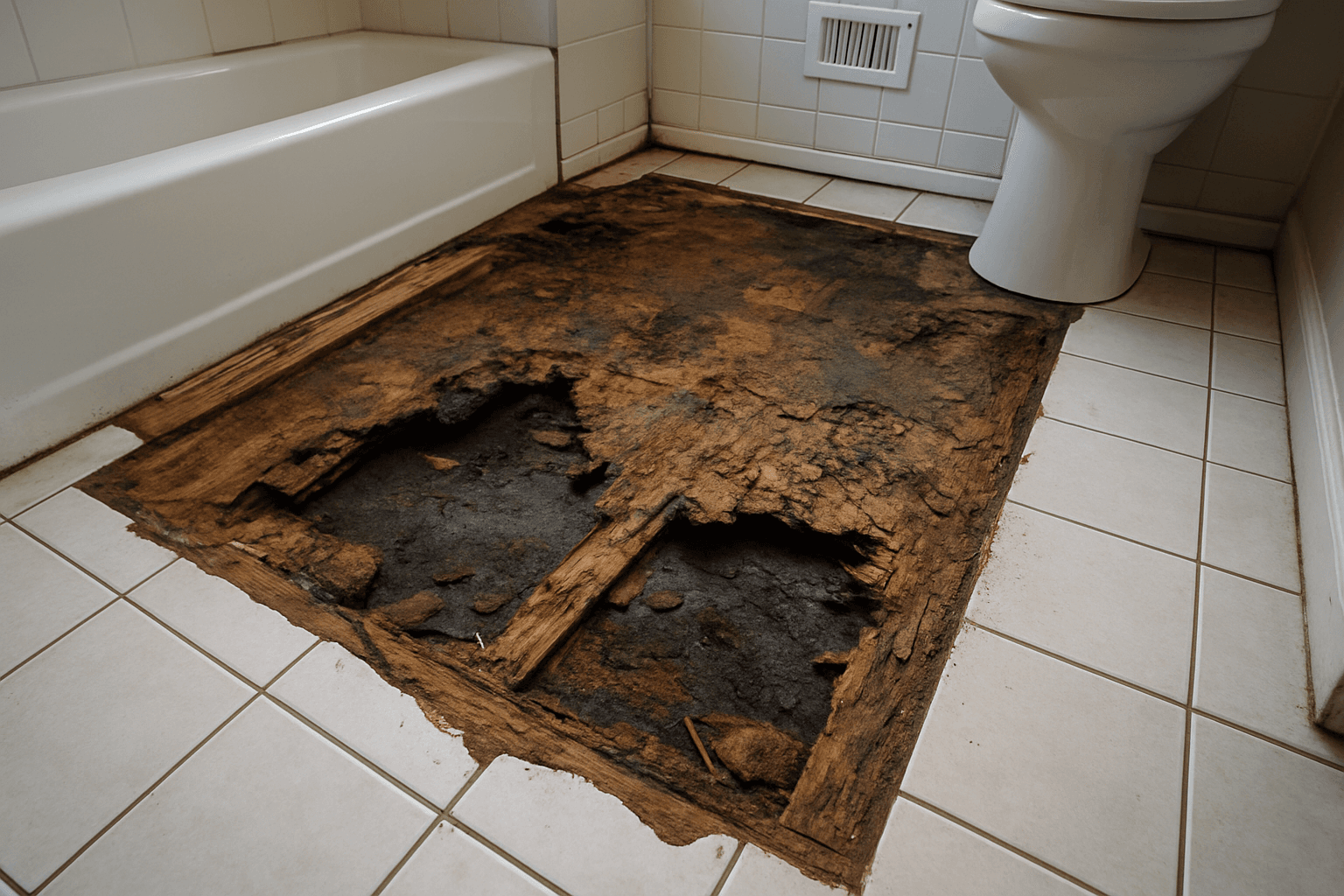
- Subfloor around the fixture — a wax ring that leaked for months often means soft, darkened subfloor around the flange; plumbers routinely find rot the homeowner never saw.
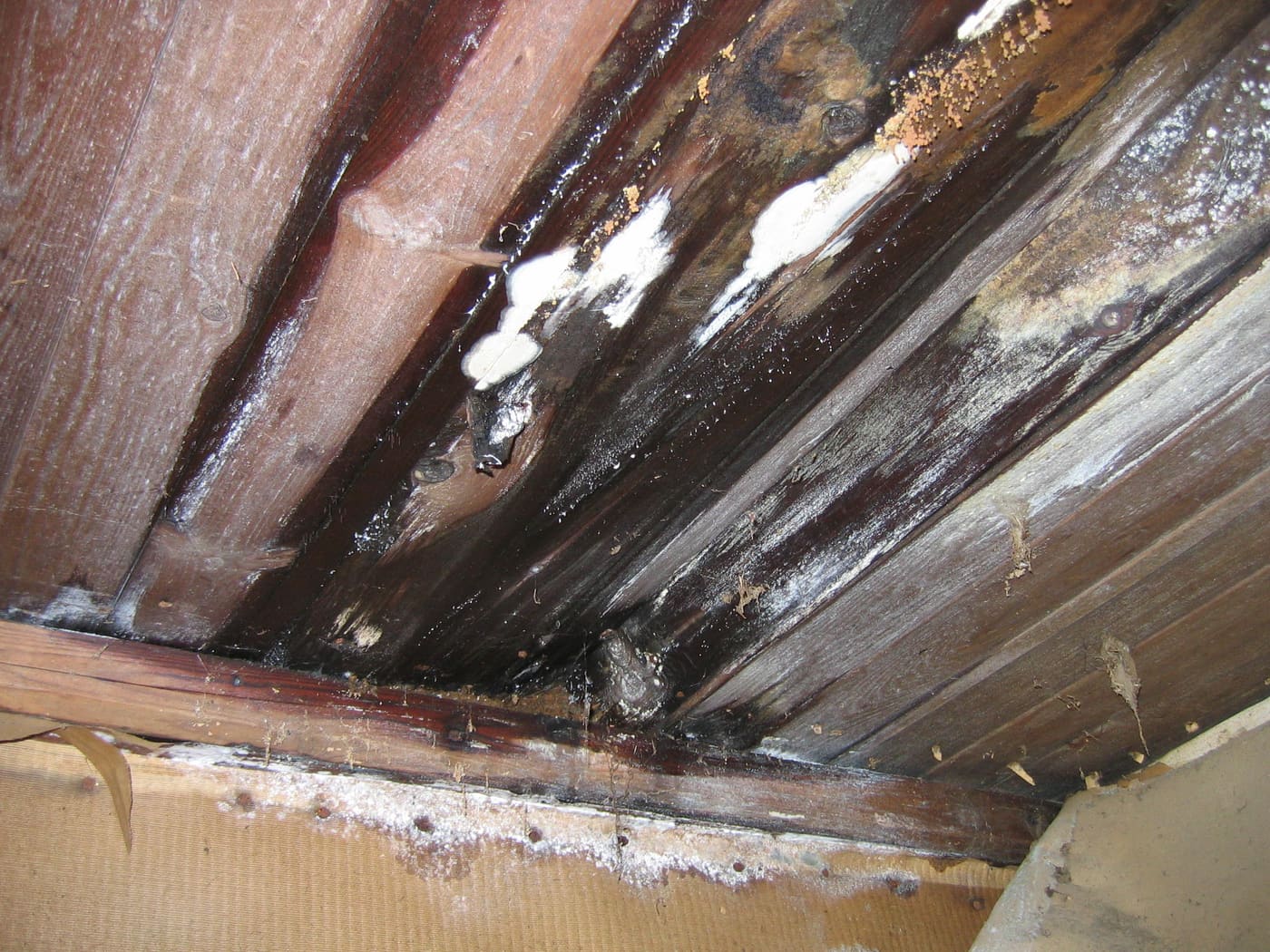
- The cavity itself — insulation holds moisture like a sponge, and mold establishes in dark, damp cavities within 24–48 hours.
- The drywall decision — stained-but-dry drywall (verify with a meter) can be sealed and painted; drywall that sagged, softened, or meters wet comes out. Closed cavities don't air-dry, and paint over trapped moisture converts an $800 repair into a $4,000 remediation.
If more than a small patch is involved, or the leak ran for weeks before you caught it, this is where a restoration company earns its fee: open, dry to verified numbers, document for insurance, then patch — who to call for water damage covers how they coordinate with the plumber. Water dripping specifically from a light fixture below changes the order of operations entirely — read the electrical-first sequence before touching anything.
The Insurance Note
Sudden failures — a supply line letting go, a wax ring discovered at first stain — are commonly covered, including the ceiling, drying, and repairs. Slow leaks that visibly ran for months get disputed as maintenance. The difference at claim time is documentation: photograph the stain, the source, the cavity when opened, and every meter reading, before anything is cleaned or repaired. Our insurance claim checklist sequences it.
Bottom Line
Match the leak to the fixture with a thirty-minute controlled test: flush, fill-and-drain, two-stage shower, then the supply-line check. Fix the source, but grade the cavity honestly — the drywall stain is the receipt, not the bill, and drying to real numbers before patching is what keeps this a plumbing story instead of a mold story.

Reading to confirm what you already suspect?
Confirm it in two minutes instead — the pro on this line answers questions about YOUR situation all day: what it is, what it should cost, whether you even need service. If you want, they'll set the appointment on the same call.
Toll-free · no obligation · asking costs nothing
Frequently Asked Questions
Why is my ceiling leaking under the upstairs bathroom?
Five causes account for most bathroom-to-ceiling leaks: a failed toilet wax ring (leaks at flush), a tub or shower drain connection (leaks during/after bathing), a cracked shower pan or failed pan liner (slow, worsening leaks with showers), a pressurized supply line or valve (constant leak, any time), and failed grout or caulk letting shower spray into the wall (slow staining near walls).
The leak's timing against fixture use identifies the source.
How do I find which fixture is leaking?
Run one fixture at a time while someone watches the ceiling: flush the toilet several times (wax ring), fill and drain the tub (drain connection), run the shower aimed at the drain only (pan), then aimed at walls (grout/caulk).
A leak that appears with none of these running is a supply line — shut the water main. Thirty minutes of controlled testing beats cutting exploratory holes.
How much does it cost to fix a bathroom leaking through the ceiling?
The plumbing fix is often cheap: a wax ring is $5–$25 in parts ($150–$300 plumber visit), a tub drain reseal $150–$350, supply valve $150–$400.
A failed shower pan is the expensive one: $1,000–$3,500+ because tile comes up. Add the ceiling: drywall repair with proper drying runs $500–$2,500, and skipping the drying step converts it into a mold job.
Does the ceiling need to be cut open?
If the drywall is stained but meters dry, sometimes paint-sealing suffices. But drywall that took real water — sagging, soft, or metering wet — must be opened: closed ceiling cavities don't air-dry, and trapped moisture grows mold within days.
A moisture meter (or a restoration company's inspection) makes this call objectively; guessing with paint is how $800 repairs become $4,000 remediations.
Is a bathroom leak through the ceiling covered by insurance?
Usually yesFor sudden failures — a burst supply, a failed wax ring you just discovered — covering the ceiling, drying, and repairs (not always the fixture itself).
Long-term slow leaks get disputed as maintenance. Photograph the stain, the source, and every step before repairs; documentation is what separates paid claims from denied ones.
What actually happens when a ceiling gets wet?
Drywall is gypsum in paper — it wicks water sideways and loses structural strength as it saturates, which is why a wet ceiling sags and can eventually drop. The sequence: staining within hours, sagging as the core softens, and mold on the hidden top side within 24–48 hours if the cavity stays damp.
A bulging ceiling is holding trapped water and is a stay-out-from-under-it situation. Small stains from a stopped leak can dry and be sealed; sagging, dripping or large saturated areas mean the material is coming down — controlled, by someone expecting the water above it.
Who do I call right now for water damage?
Call (888) 840-6512. The line is answered 24 hours a day, seven days a week, and connects you with an IICRC-certified water damage restoration company that serves your area. Describe what you can see — where the water is coming from, how long it has been there, and whether it smells — the more specific you are, the faster the right company is on the line.
If the source is a pipe or an appliance, shut the main water valve first. Have four things ready and the call goes quickly: the address, when the water started, what is wet now, and whether you have filed an insurance claim.
Still not sure which of these is your situation? (888) 840-6512 · toll-free · answered 24/7
Sources
- IICRC S500 Standard for Professional Water Damage Restoration
- InterNACHI — Moisture Intrusion Inspection
Methodology: How we source and verify data · Report an error
Disclaimer: HearthDry is an independent educational resource. This article is for informational purposes only and does not constitute professional, legal, or insurance advice. Consult licensed professionals before making decisions about your property or insurance claims.
Watch
Source: This Old House — YouTube
Free 2-day shipping
Amazon Prime members pay no shipping on restoration equipment
Dehumidifiers, air movers, and moisture meters qualify for free Prime delivery — bulk items that otherwise cost $15–$40 to ship.
Affiliate link — HearthDry earns a bounty if you sign up; costs you nothing extra.
Equipment
What each machine actually does
Removes the moisture the structure is still giving off — the machine that decides how long drying takes
See the picks →Moves air across wet surfaces so the dehumidifier has something to take out of the air
See the picks →Finds water behind walls and under floors, and tells you when a material is actually dry
See the picks →Alerts you the moment a leak starts — the cheapest thing on this list and the only preventive one
See the picks →Those pages carry affiliate links. As an Amazon Associate, HearthDry earns from qualifying purchases; it costs you nothing extra.
Our Amazon storefront →Advertisement
