
Quick answer
A main water line leak is confirmed by the meter test: with every fixture off, a moving meter (or spinning low-flow indicator) means a leak on your side. Then isolating with the house-side valve splits underground from indoor. Spot repairs run $500–$1,500, full replacement $1,500–$5,000+ (trenchless often cheaper than open trench), the buried pipe is yours from the meter to the house — and standard insurance covers the damage it causes, not the pipe, unless you carry a service-line rider. Call (888) 840-6512 to reach a certified water damage restoration company in your area; the line is answered 24/7.
Written & reviewed by Marcus ReedIICRC WRT
Reviewed August 19, 2026· Next review Feb 2027
The Leak You Can't See: Your Main Water Line
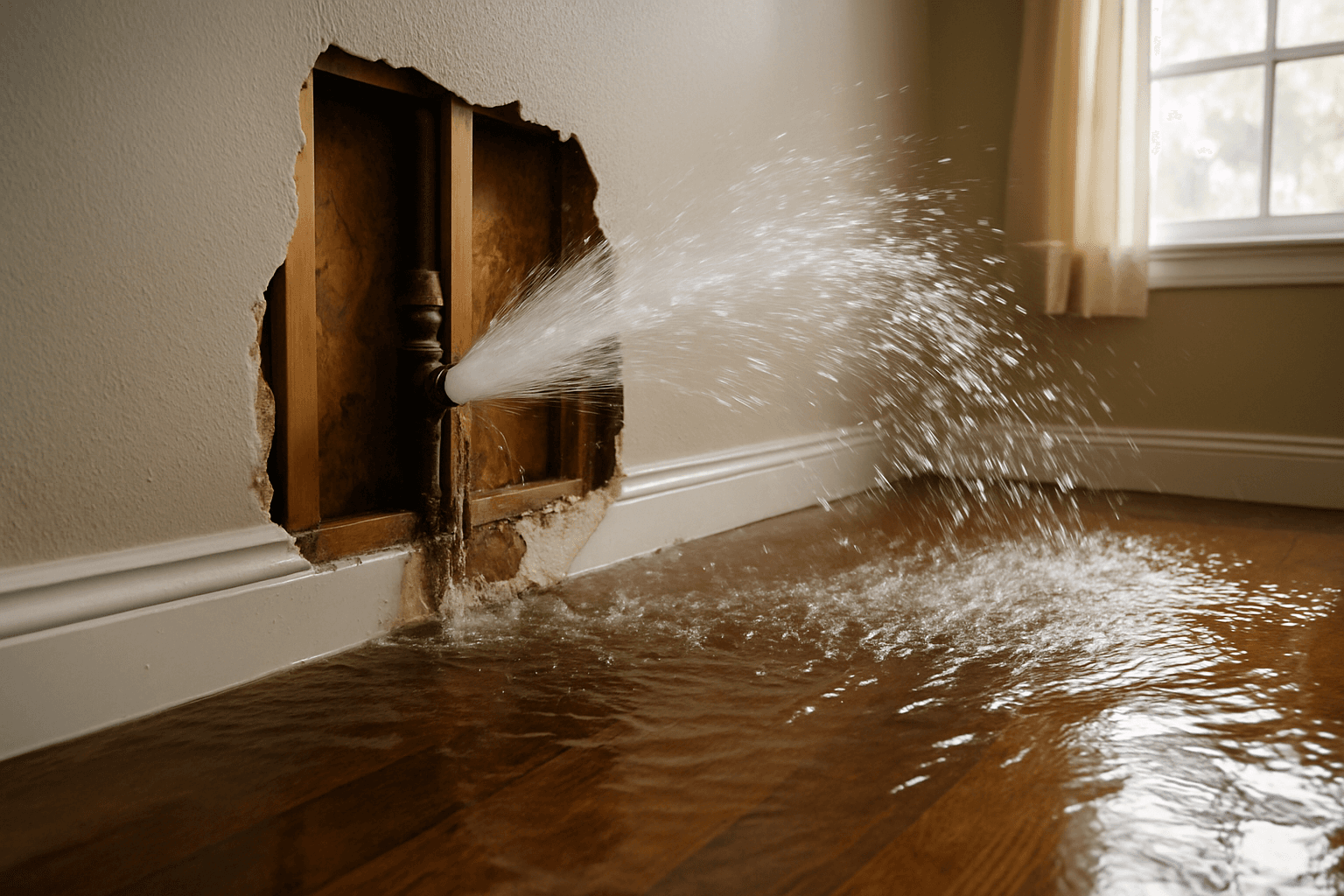
The pipe between the street meter and your house carries pressurized water 24/7, buried where you'll never see it fail. It announces failure indirectly — through the meter, the bill, the yard, or the basement wall — and nearly 900 people a month search for what to do about it. Here is the confirmation test, the real costs, and the responsibility line that decides who pays.
The Five Signs
- 1The meter moves with everything off — the definitive sign; the test below confirms it in 20 minutes.
- 2A bill jump of 30%+ with no usage change — a modest 1/8-inch leak wastes thousands of gallons a month.
- 3A wet, soft, or suspiciously lush strip in the yard tracing the line between meter and house — the lawn drinks the evidence.
- 4Hissing near the meter box or where the line enters the house.
- 5Whole-house low pressure — pressure lost to the soil before it reaches your fixtures.
Water arriving in the basement near the entry point deserves its own attention — water coming up through the basement floor covers separating a supply leak from groundwater, which look alike and get fixed very differently.
The 20-Minute Meter Test
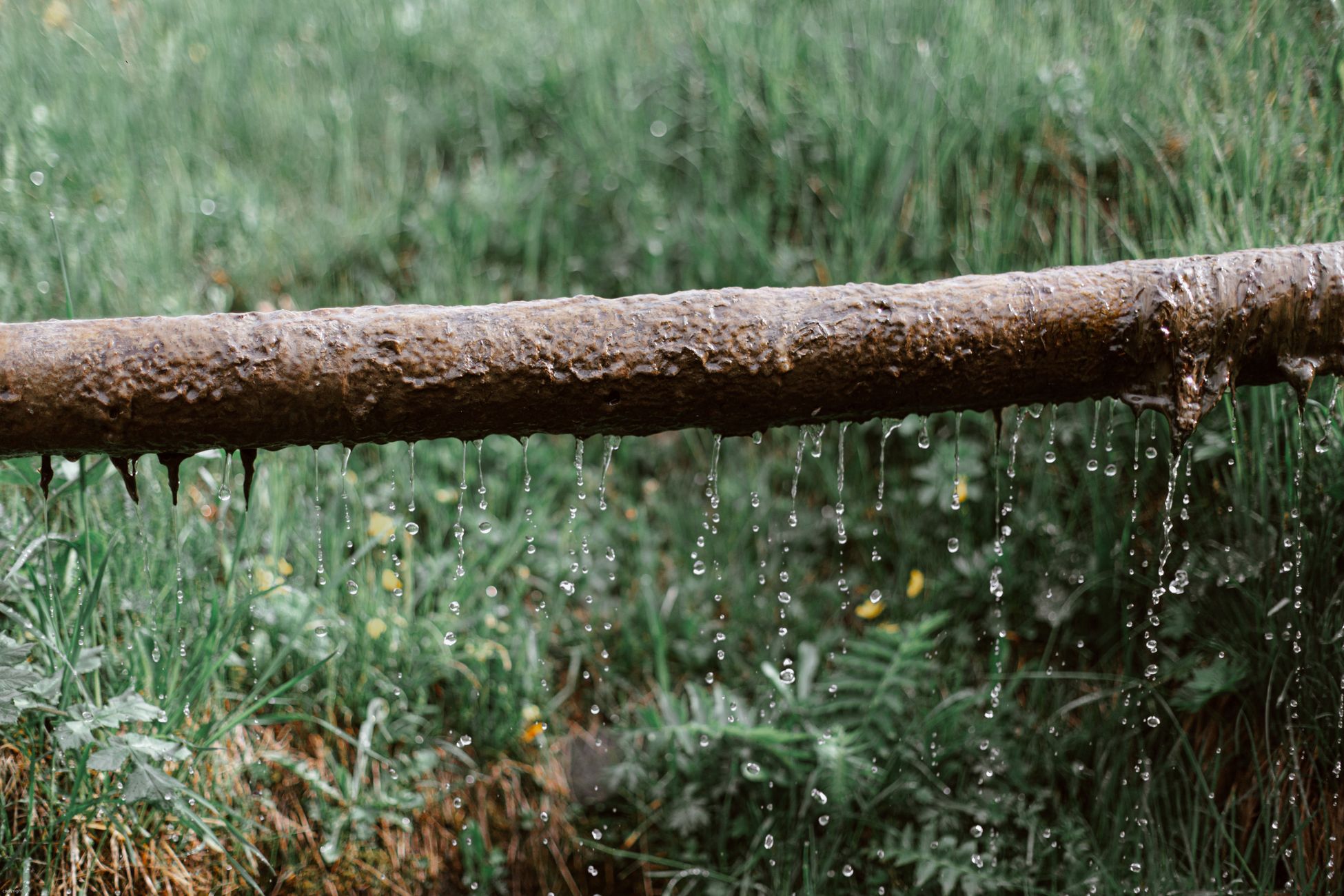
Shut every fixture and water-using appliance (irrigation and ice maker included), photograph the meter — especially the low-flow indicator, the small triangle that spins at any flow — wait 20–30 minutes touching nothing, and look again. Movement with the house at zero draw is a leak on your side of the meter, full stop.
Then the isolating step most people skip: shut the house-side main valve and watch again. Still moving → the leak is in the buried line (the underground repair). Stopped → the leak is *inside* the house, which is a cheaper hunt and a different guide. This one valve-turn is the difference between calling the right trade and paying for exploratory digging.
Talk to a water damage pro now
Answered 24/7 · Toll-free · answered 24/7 · no obligation
(888) 840-6512Mold can establish within 24–48 hours of water exposure — drying started today stays a drying job.
- Describe the damage & give your ZIP
- You're routed to the on-call local crew
- They quote — you decide, no obligation
What the Repair Costs
| Repair | Typical 2026 cost | When |
|---|---|---|
| Spot repair, accessible section | $500 – $1,500 | localized failure, good pipe otherwise |
| Full replacement, open trench | $1,500 – $5,000+ | old galvanized/polybutylene, multiple failures |
| Trenchless (bursting / sliplining) | $1,500 – $4,500 | where soil and layout allow |
| Add: concrete/driveway above line | +$500 – $2,000 | cutting and restoring hardscape |
Three cost drivers: length and depth of the run, what sits above it (grass is cheap, driveways and tree roots aren't), and pipe material — a failing polybutylene or 60-year-old galvanized line should be replaced, not patched, because the next failure is already scheduled. Ask specifically about trenchless options: pulling a new line through the old one's path skips the excavation-and-restore cycle that dominates open-trench quotes.
Whose Pipe Is It?
The near-universal US rule: the utility owns up to the meter; you own meter-to-house. Confirm with one call to your utility — and while on that call, ask whether the leak might be on their side (pre-meter leaks are their repair, free to you).
The insurance picture has the same split: standard homeowners policies typically cover the damage the water causes to your home but not the buried pipe repair — the gap that service-line riders ($20–$50/year) exist to fill. If your policy lacks one, add it after this repair, not before the next. Either way, document everything before repairs begin: the bill spike, the meter photos, the wet yard, and any indoor damage.
Who to Call
A licensed plumber who does service-line and underground work — ask directly, because not every plumber digs, and the ones who don't will happily bill a visit to tell you so. For active water in the basement, the pipe repair and the indoor water are two scopes: shut the main (a $12 meter key opens the curb box if your inside valve fails), and treat the wet basement as its own restoration decision — drying subfloor and framing to verified numbers is what keeps a plumbing bill from growing a mold addendum. What that restoration side costs is worth knowing before the plumber's backhoe becomes the day's only focus.
Bottom Line
Confirm with the meter test, isolate with the house valve, get two quotes from underground-capable plumbers (one must price trenchless), check the utility side and your rider situation before paying — and if the basement got wet along the way, dry it like it matters, because it does.
Reading to confirm what you already suspect?
Confirm it in two minutes instead — the pro on this line answers questions about YOUR situation all day: what it is, what it should cost, whether you even need service. If you want, they'll set the appointment on the same call.
Toll-free · no obligation · asking costs nothing
Frequently Asked Questions
How do I know if my main water line is leaking?
Five signs: the water meter spins with every fixture off (the definitive test), a water bill 30%+ above normal with no usage change, a persistently wet or lush green strip in the yard along the line's path, hissing near the meter or shutoff, and new low pressure across the whole house.
The meter test confirms it in 20 minutes: shut everything off, photograph the meter, wait, re-check — movement means a leak on your side.
How much does it cost to repair a main water line?
A spot repair on an accessible section runs $500–$1,500. Full line replacement runs $1,500–$5,000+ depending on length, depth, material, and what sits above it (lawn is cheap; driveway and mature trees aren't).
Trenchless methods (pipe bursting, sliplining) often beat open-trench costs where soil and layout allow, precisely because they skip the excavation-and-restore cycle.
Who is responsible for a main water line leak — me or the city?
In most US jurisdictions the utility owns the line up to the meter, and the homeowner owns everything from the meter to the house. A leak on your side of the meter is your repair. Some utilities and insurers sell service-line coverage riders for exactly this — worth checking your policy before you need it.
Who do I call for a main water line leak?
A licensed plumber who does underground/service-line work — not every plumber digs.
If water is actively entering the basement, shut the main (or the meter valve at the street with a meter key) and treat the water indoors as its own restoration problem alongside the pipe repair. For a leak before the meter, call the utility: that repair is theirs.
Does homeowners insurance cover a main water line leak?
Standard policies usually cover sudden water damage the leak causes to the house, but not the buried pipe repair itself — that gap is what service-line riders (typically $20–$50/year) exist to fill.
Document with photos and the utility bill spike before repairs; the damage claim and the pipe repair are two separate conversations.
Who do I call right now for water damage?
Call (888) 840-6512. The line is answered 24 hours a day, seven days a week, and connects you with an IICRC-certified water damage restoration company that serves your area. Describe what you can see — where the water is coming from, how long it has been there, and whether it smells — the more specific you are, the faster the right company is on the line.
If the source is a pipe or an appliance, shut the main water valve first. Have four things ready and the call goes quickly: the address, when the water started, what is wet now, and whether you have filed an insurance claim.
Still not sure which of these is your situation? (888) 840-6512 · toll-free · answered 24/7
Sources
Methodology: How we source and verify data · Report an error
Disclaimer: HearthDry is an independent educational resource. This article is for informational purposes only and does not constitute professional, legal, or insurance advice. Consult licensed professionals before making decisions about your property or insurance claims.
Watch
Source: Mike Klimek — YouTube
Free 2-day shipping
Amazon Prime members pay no shipping on restoration equipment
Dehumidifiers, air movers, and moisture meters qualify for free Prime delivery — bulk items that otherwise cost $15–$40 to ship.
Affiliate link — HearthDry earns a bounty if you sign up; costs you nothing extra.
Equipment
What each machine actually does
Removes the moisture the structure is still giving off — the machine that decides how long drying takes
See the picks →Moves air across wet surfaces so the dehumidifier has something to take out of the air
See the picks →Finds water behind walls and under floors, and tells you when a material is actually dry
See the picks →Alerts you the moment a leak starts — the cheapest thing on this list and the only preventive one
See the picks →Those pages carry affiliate links. As an Amazon Associate, HearthDry earns from qualifying purchases; it costs you nothing extra.
Our Amazon storefront →Advertisement
