Quick answer
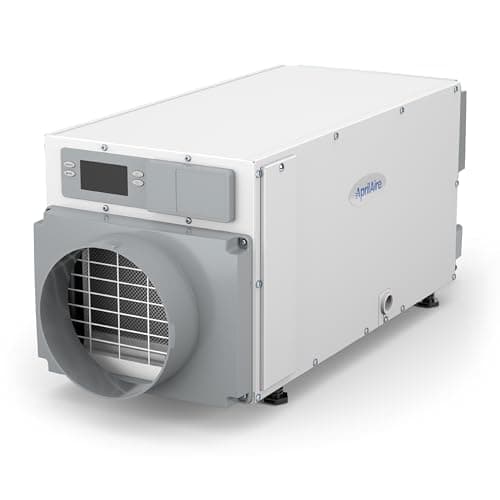
If you want one AprilAire dehumidifier for a basement or a whole house, buy the AprilAire E080 Pro, rated 4.6 stars across 248 Amazon ratings, which its listing puts at up to 80 pints a day for homes up to 4,400 sq ft. Choose the E070 Pro for a sealed crawl space, since it measures 12.5 by 12.5 by 25 in, and the E100 Pro or E130 Pro only past 4,400 sq ft or in a very damp house. No listing states the temperature and humidity behind its pints figure. A standalone unit over a floor drain is a weekend job; ducting one into the furnace is HVAC contractor work.
Buyer's Guide
What to know before you buy.
Which AprilAire Model Fits Your Space
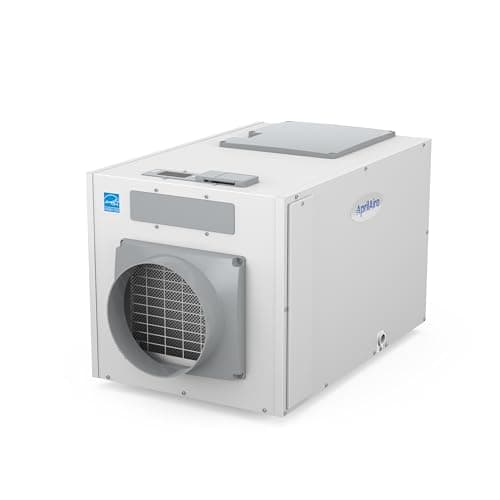
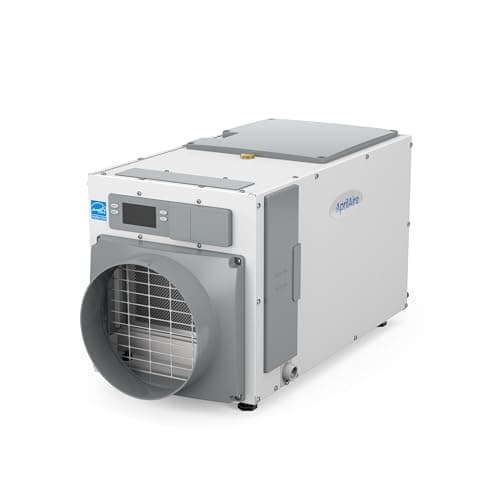
AprilAire sizes its line by pints per day and a square-foot ceiling. On the listings read on 12 Oct 2026, the E070 is 70 pints for up to 2,200 sq ft, the E080 is 80 pints for up to 4,400 sq ft, the E100 is 100 pints for up to 5,500 sq ft, and the E130 is 130 pints for up to 7,200 sq ft. A smaller E050 kit, 50 pints for up to 1,600 sq ft, was listed with a shipping lead time. Divide any pints figure by 8 to get gallons. Treat the square footage as a ceiling for a fairly tight house, not a target. A wet basement, an unsealed crawl space or a humid climate puts more moisture into each square foot, and that is when you move up one size. A week of hygrometer readings tells an installer more than the floor plan does.
Pro Listings, Install Kits and Wi-Fi Versions
The same capacities appear under three kinds of listing, and what changes is the box. The Pro listings are the bare unit; the E070 Pro adds a drain hose, and none of them includes a pump. Newer kit listings for the E070, E080 and E100 add a condensate pump (Model 4856) with tubing, a drain hose, a hanging kit for joists and a washable MERV 8 filter, and they state R32 refrigerant and a 6-year warranty made up of 5 years full replacement plus 1 year parts. The W versions add built-in Wi-Fi, the AprilAire Connect app and a MERV 11 filter. The Pro units rank on this page because they carry most of the buyer ratings, while the kits and Wi-Fi models had thin records or delivery dates when checked. If you need a pump anyway, compare a kit against a Pro plus a separate pump.
Standalone or Ducted: Who Should Install It
An AprilAire can run two ways. Standalone, it sits on the floor or hangs from joists in a basement or crawl space and dries that space, draining to a floor drain or a pump. Ducted, it ties into the home's air system or its own duct run, so dry air reaches every room. The kit listings are written for a DIY install and say detailed instructions are in the manual, which fits the standalone setup: level placement or the hanging kit, power at the spot, and a drain line that falls the whole way. A ducted install is different work. It means cutting into the return or supply duct, matching airflow to the furnace blower and wiring controls, and that is a job for an HVAC contractor. Get the duct plan and the control wiring in writing before the unit is ordered, since none of the Pro listings describes either one.
Plan the Drain Before You Buy the Machine
Every AprilAire here is bucketless, so the water has to leave on its own, around the clock. A gravity line works when a floor drain, sump pit or laundry sink sits lower than the unit's outlet and the hose can slope down the whole way with no loop or rise. If the drain is higher, or the unit sits in a crawl space with no low point, you need a condensate pump; the kit listings include one with 10 ft of 3/4-in tubing from the dehumidifier to the pump. Check where the line leaves the crawl space, too. A hose run out through a foundation wall can freeze in winter, and a blocked line backs water up toward the unit. After the install, watch the first few cycles and confirm the water actually reaches the drain.
Who Should Not Buy an AprilAire
An AprilAire is the wrong buy for a renter, for one damp room, and for a crawl space that is still vented. Renters cannot tie into a furnace, and a single bedroom or bathroom is better served by a portable unit or a ducted exhaust fan. In a vented crawl space, open vents let humid summer air straight back in, so seal it first or the machine runs without end. No dehumidifier fixes liquid water either. Standing water, a seeping foundation wall or a plumbing leak has to be stopped before any machine can hold a target. If mold already covers more than about 10 square feet, the EPA's guidance points past a homeowner cleanup, and the job becomes professional drying and remediation, with a dehumidifier afterward to keep the space dry.
Setting the Target and Keeping It Running
Set the target near 50% relative humidity, then check it with a separate hygrometer in the space; the EPA advises keeping indoor humidity below 60% and ideally between 30% and 50%. In winter, very dry air brings static and cracked wood trim, so raise the target in cold months if the unit runs at all. ENERGY STAR gives three habits worth copying: keep the doors and windows of the space shut while the unit runs, keep it away from dust sources such as a woodworking bench that can clog the coils, and do not worry if the air around the unit feels warm. The kit listings name a washable MERV 8 filter and say AprilAire recommends washing it once a year. A basement workshop or a dusty crawl space calls for more frequent checks.
Free 2-day shipping
Amazon Prime members pay no shipping on restoration equipment
Dehumidifiers, air movers, and moisture meters qualify for free Prime delivery — bulk items that otherwise cost $15–$40 to ship.
Affiliate link — HearthDry earns a bounty if you sign up; costs you nothing extra.