Quick answer
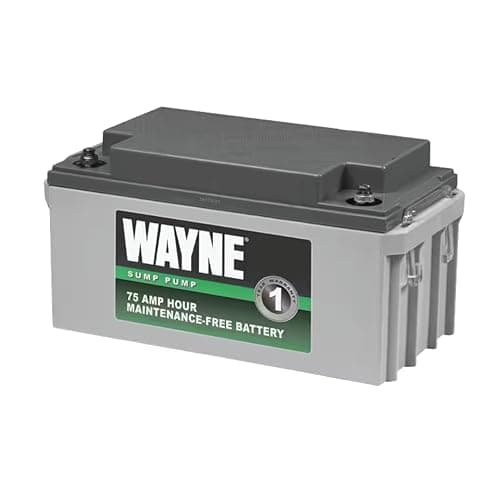
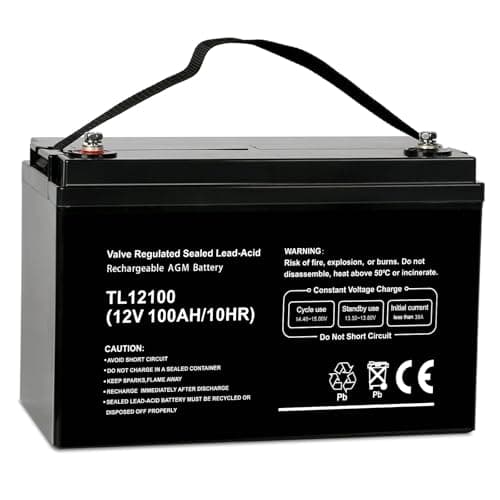
The best sump pump battery is a sealed 12 V deep-cycle battery, AGM for most basements, sized to your backup pump's manual; for most systems that is the WEIZE 12V 100Ah Deep Cycle AGM Battery, rated 4.5 stars across 16,974 Amazon ratings, if its stated case fits your battery box. If you run a Wayne backup, buy the Wayne WSB1275 12V 75Ah Standby Battery the maker names. Runtime is arithmetic: amp-hours divided by the pump's amp draw gives hours of nonstop pumping, and a pump that cycles a few minutes an hour stretches that across a day or more. Replace any lead-acid battery every 3 to 5 years.
Buyer's Guide
What to know before you buy.
Why the Battery Sets the Runtime, Not the Pump
A backup sump pump has two ratings that matter, and they belong to different parts. The pump sets how fast water leaves the pit, in gallons per hour at a given lift. The battery sets how long that can go on, in amp-hours. When the power fails during a storm, the primary pump stops, the pit fills, the backup float lifts and the 12 V pump starts drawing on the battery. Nothing refills the battery until grid power returns and the controller's charger comes back on. So the question on a stormy night is never whether the pump is strong enough; it is whether the amp-hours left in the battery outlast the outage. A tired battery holding half its rated capacity cuts the protection you paid for in half, with no warning on the controller's lights. That is why the battery, not the pump, is the part to size, date and replace.
Amp-Hours to Hours: The Arithmetic
Start with your backup pump's amp draw, printed on its label or in the manual. Divide the battery's amp-hours by that number for hours of nonstop running: a 100 Ah battery feeding a pump that draws 10 A gives about 10 hours on paper, and a 75 Ah battery about 7.5 hours. Two things shrink the figure. Lead-acid amp-hours are usually rated at a slow 20-hour discharge, and a pump pulls far harder than that, so the capacity you can actually draw is lower; none of the listings on this page states the rate behind its number. And running a lead-acid battery flat shortens its life, so the common advice is to plan around half the rating. One thing stretches it: the pump does not run nonstop. If the float trips the pump for 5 minutes in every hour, that half-capacity covers a day or more. Count the minutes your primary pump runs during a heavy rain, and use that figure.
AGM, Gel, Flooded or LiFePO4: What Each Listing Says
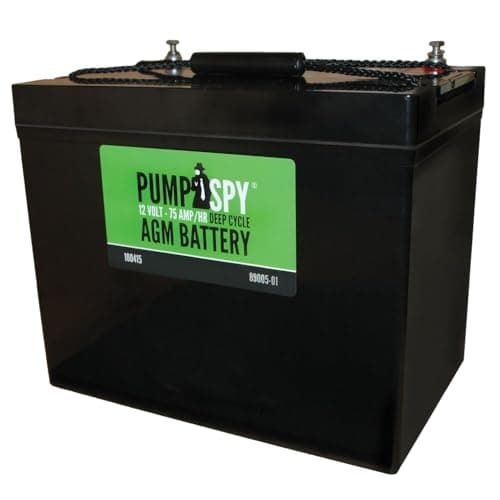
Every battery on this page is a sealed lead-acid type, and four of the five say AGM, which holds the acid in glass mat so there is nothing to spill if the case tips and, per the PumpSpy listing, no hydrogen venting to arrange. Wayne's listing says sealed and maintenance-free without naming AGM or gel. Gel is the other sealed type; the one gel listing seen, an ExpertPower 55 Ah, was too small and too thin a listing to rank. Flooded lead-acid batteries cost less at an auto parts counter but give off hydrogen while charging, need their water topped up, and belong in a vented box in a ventilated spot, which is why none appears here. No LiFePO4 battery made the list either. The inverter-type backup systems sold on Amazon, OLTEANP and VEVOR among them, state that they accept LiFePO4 alongside AGM, gel and flooded; a dedicated 12 V backup pump controller may not, so read its manual before buying lithium.
Fit: Group Size, Case Dimensions and Terminals
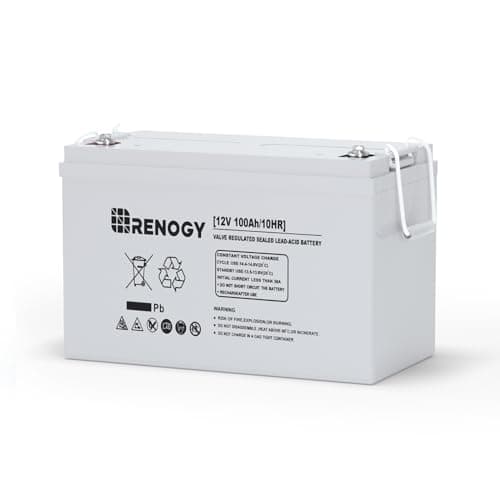
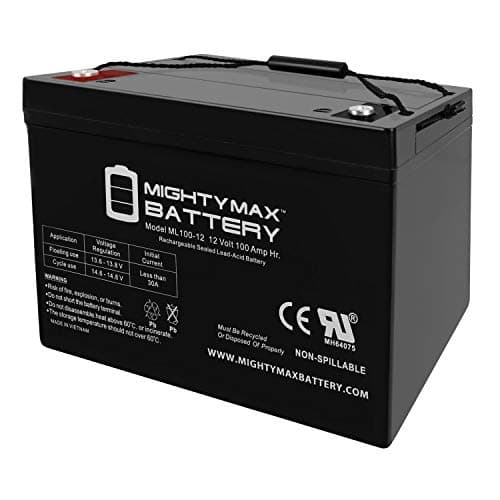
A backup pump system ships with a battery box, and the battery has to go inside it with the lid on. Measure the inside of the box, then compare it with what the listing states. WEIZE gives 12.99 x 6.73 x 8.43 in. Mighty Max gives a group size, 30H, which is a standard case code you can check against your manual. Wayne gives neither, because its battery is named for Wayne systems and fit is the maker's job. Renogy and PumpSpy state no dimensions in their bullets, so open the full listing before ordering. Then look at the terminals. WEIZE puts positive on the left and negative on the right; Mighty Max uses internal-thread posts that take a bolt and ring lug. Your controller's leads end in a ring or a clamp, and they are only so long, so a battery with the posts on the far side can leave a lead that will not reach.
Charging, Temperature and the Replacement Clock
The controller in a backup pump system holds the battery on a float charge between outages, and the battery's own limits decide how well that works in a cold basement. WEIZE states charging from 14°F to 122°F and discharging from 5°F; Renogy states discharge from -4°F to 140°F. A sump pit in an unheated basement can sit near those lower limits in a January storm, which is one reason to keep the box off the slab and away from an exterior wall. Self-discharge matters less, since the charger covers it; WEIZE states 1 to 3 percent a month and Renogy under 3 percent at 77°F. None of the listings states a service life, and the warranties stated run 1 year. The common advice for lead-acid is a new battery every 3 to 5 years, so write the install date on the case, look at the posts for corrosion every six months, and unplug the primary pump twice a year to watch the backup run on the battery alone.
Who Should Not Buy a Battery Alone, and When to Call a Pro
A battery by itself pumps nothing. If your pit has only a primary 120 V pump, you need a backup pump system with its own 12 V pump and charger, or an inverter-type backup that runs the existing pump from the battery; this page's picks go inside those. Outages that run for days are beyond a battery of any size, and a generator is the right purchase there. Where the manual names a specific battery or a maximum amp-hour rating, stay within it rather than buying the biggest case that fits. Call an electrician for a dedicated outlet near the pit, and a plumber for the backup pump's check valve and discharge piping. Once the pit has already overflowed, the battery can wait: EPA advises drying water-damaged areas and items within 24 to 48 hours to prevent mold growth, and a wet finished basement is a drying job before it is a shopping decision.
Free 2-day shipping
Amazon Prime members pay no shipping on restoration equipment
Dehumidifiers, air movers, and moisture meters qualify for free Prime delivery — bulk items that otherwise cost $15–$40 to ship.
Affiliate link — HearthDry earns a bounty if you sign up; costs you nothing extra.