
Quick answer
In the first 24 hours of commercial water damage: make the site safe and stop the source, notify your carrier and start the business interruption clock, photograph everything before cleanup, and protect inventory and records. Commercial policies often cover lost income separately from property, but only with documentation of pre-loss revenue — so start pulling those records the same day. Call (864) 806-2818 to reach a certified water damage restoration company in your area; the line is answered 24/7.
Enter your 5-digit ZIP when asked. The line goes quiet for about half a minute while it connects — that is normal, stay on. If it does not connect, call once more: companies taking calls change minute to minute.
 Serving US homesCertified US companiesCall nowLine answered 24/7

Water moves fast. What you do first decides if it stays a drying job.
Do this first
- Shut off the mainNear the meter or where the line enters.
- Kill power to wet roomsFlip the breaker before you step in.
- Photograph everythingBefore you move or throw anything out.

Written & reviewed by Marcus ReedIICRC WRT
Reviewed August 1, 2026· Next review Feb 2027
For a Business, the Water Is the Smaller Loss
A homeowner's water damage is a repair bill. A business's water damage is a repair bill plus every day the doors are shut — and for most commercial losses, the closure costs more than the restoration. That single fact should reorder how you respond.
The First Hour: Three Parallel Tracks
Unlike a home, a commercial loss has to be managed on three fronts at once.
1. Safety and liability. Get people out of affected areas, kill power to anything wet, and put up signage. Slip hazards in a commercial space are a liability claim waiting to attach itself to your water claim.
2. The physical loss. Shut the source, call restoration. Standard mitigation rules apply — the 24–48 hour mold window does not care that you are a business.
3. The business interruption clock. This starts the moment you close, and it is the number your insurer will scrutinise most. Begin documenting immediately: hours closed, staff sent home, orders cancelled, and your revenue baseline from prior periods.
Business Interruption Coverage Is the Claim That Matters
Most commercial property policies include business interruption (BI) cover — lost income while you cannot operate. It is frequently the largest line in a commercial water claim, and the most commonly under-documented.
What supports a BI claim:
- Revenue records from comparable prior periods — the same weeks last year, recent months
- Payroll continuing during the closure
- Cancelled orders, bookings and contracts
- A dated log of exactly when operations stopped and resumed
- Evidence of steps taken to reduce the loss — partial reopening, temporary premises
That last one is not optional under most policies. Insurers expect mitigation of the income loss, not just the water loss. If you could have opened half the floor and did not, expect the question.
per sq ft, mitigation only
- Category 1Clean supply water
- Category 2Grey water
- Category 3Black water
Extraction and drying only. Rebuilding drywall, floors and cabinets is priced separately.
The mold clock on wet material
- Hour 0Water stopsShut the supply and start getting water out. Drying begins here.
- About 24 hSpores germinateMold spores start growing on wet drywall, carpet pad and wood.
- 48–72 hVisible coloniesGrowth you can see and smell. Drying becomes a mold job.
Serving US homesCertified US companiesCall nowLine answered 24/7Commercial Water Damage 24-Hour Action Plan for Business Owners
- 1Make sure building and employee safety before re-enteringBefore anyone re-enters a water-damaged commercial space, confirm that electricity has been shut off to all affected areas and that a…
- 2Document all damage immediately and comprehensivelyBegin photographing and videoing every affected area, piece of equipment, and inventory item before any cleanup begins.
- 3Notify your insurer and commercial landlord in writing immediatelyCall your commercial property insurer and report the claim on the same day the loss occurs.
- 4Engage a commercial restoration contractor experienced with OSHA complianceHire a restoration company with documented experience in commercial water damage projects.
- 5Track all extra expenses and file for business interruption benefitsFrom the first day of closure, track every expense incurred as a direct result of the water damage event: emergency equipment rental,…
What the restoration company does in your home

1.Finds the water you can't see
Moisture meters and a thermal camera at baseboards, under flooring and behind drywall.
2.Pulls out the standing water
Extraction first, then anything soaked that cannot be dried is removed.
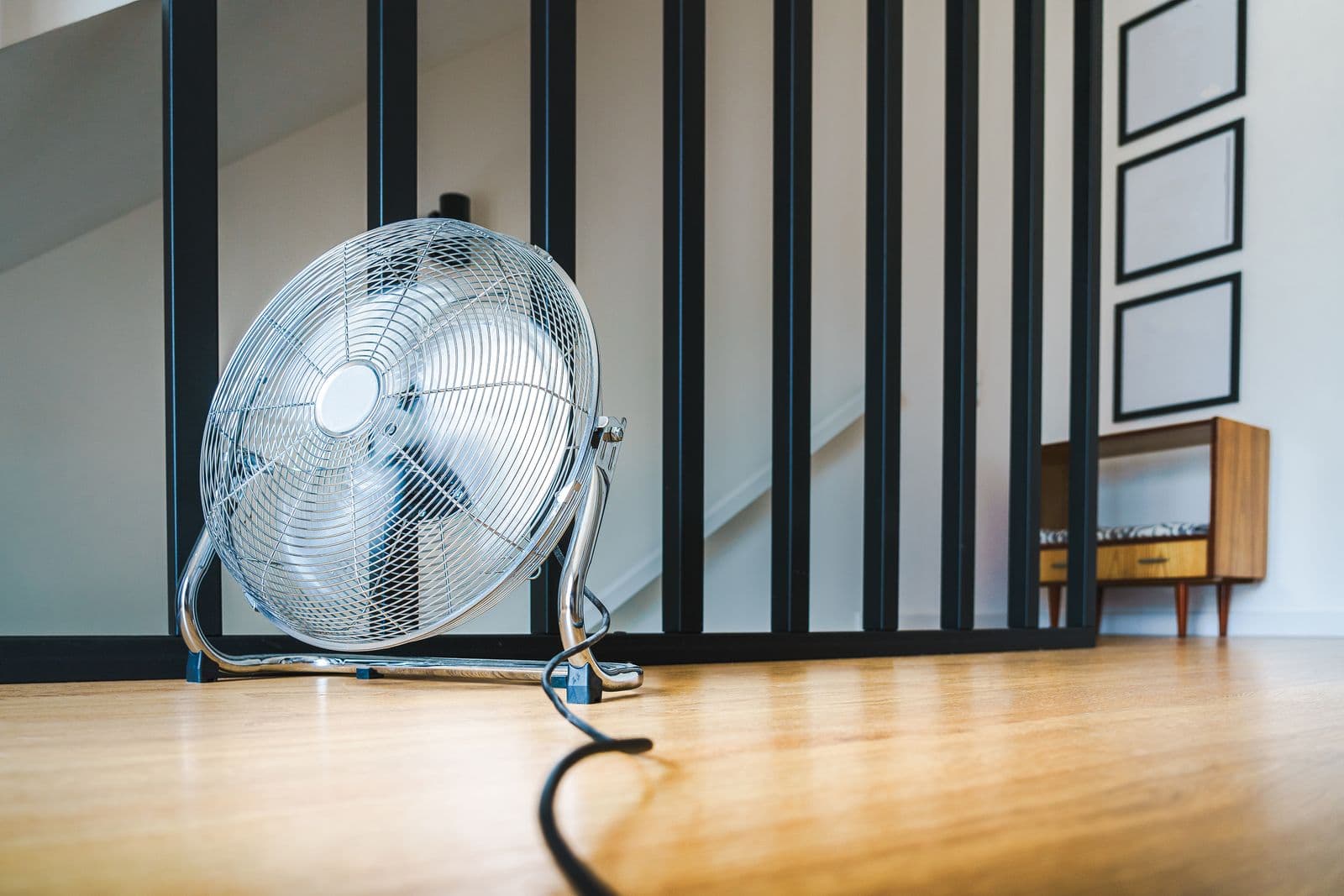
3.Dries it and logs the readings
Air movers and dehumidifiers run until the meter says dry, with a log your insurer can read.
Talk to a water damage pro now
Answered 24/7 · Toll-free · no obligation
(864) 806-2818Mold can establish within 24–48 hours of water exposure — drying started today stays a drying job.
- Enter your ZIP when asked
- Stay on through the short quiet while it connects
- A local certified company explains the job and price
Your Landlord, Your Lease, and Who Pays
For leased premises, the lease decides more than the insurance policy does. Read it for three things before you argue with anyone:
- Structure vs contents — typically the landlord insures the building while you insure your fit-out, equipment and stock
- Notification duty — most leases require prompt written notice of damage, and missing that window can shift liability
- Rent abatement — whether rent pauses while the space is unusable, and on what conditions
Where the water came from someone else's premises — the unit upstairs, a shared riser — their liability insurer may be the payer. Document the source and entry path before restoration disturbs the evidence.
Category Matters More in Commercial Settings
The IICRC water categories carry extra weight in a business:
- Food service — any Category 2 or 3 event triggers health department involvement and usually mandatory disposal of exposed inventory
- Healthcare and childcare — contamination protocols are regulated, not discretionary
- Retail stock — water-exposed goods may be unsellable even when they look fine; document before disposal, because the insurer will ask
- Documents and electronics — specialist recovery exists and is often cheaper than replacement, but only within a short window
Choosing a Commercial Restoration Firm
Commercial losses need capabilities residential crews may not have: enough equipment to dry a large footprint quickly, after-hours working so you can trade during the day, and experience writing scopes commercial adjusters accept. Ask specifically:
- 1Have you handled losses of this size, in this sector?
- 2Can you work overnight so we can operate during business hours?
- 3Do you document in Xactimate for the adjuster?
- 4What is your equipment capacity — can you dry this in days rather than weeks?
The rest of the vetting is the same as any hire: certifications, a written scope, and change orders in writing.
Bottom Line
Run three tracks from the first hour: safety, mitigation, and the business interruption record. The BI claim is usually the biggest number and always the weakest documented, so start the log before the water stops. Read the lease before assuming who pays, and hire a crew sized for a commercial dry-out that can work while you sleep.
Reading to confirm what you already suspect?
Confirm it in two minutes instead — the pro on this line answers questions about YOUR situation all day: what it is, what it should cost, whether you even need service. If you want, they'll set the appointment on the same call.
Toll-free · no obligation · asking costs nothing
Frequently Asked Questions
How is commercial water damage different from residential?
Commercial water damage differs from residential in scale, liability structure, regulatory requirements, and insurance complexity. Commercial properties typically involve larger square footage, which means more affected materials, longer drying times, and higher restoration costs. They also involve multiple stakeholders — property owners, tenants, employees, customers, and lenders — each with different legal interests and insurance obligations.
Commercial insurance policies are negotiated individually rather than issued on standardized forms, so coverage terms vary widely: business interruption provisions, equipment breakdown riders, and tenant improvement coverage differ dramatically from policy to policy. Liability for the water damage itself may be disputed between building owner and tenant depending on lease language and the source of the water. Commercial properties are also subject to OSHA requirements governing when the space is legally safe for employee re-entry — requirements that simply do not apply to residential properties. Finally, commercial claims tend to be larger and more contested, making documentation quality more critical.
What does business interruption insurance cover after water damage?
Business interruption insurance (also called business income insurance) covers the net income your business would have earned during the period it cannot operate due to covered property damage. It also typically covers continuing operating expenses that do not stop during the closure, such as rent, loan payments, and payroll for key employees you need to retain. Coverage is triggered when a covered cause of loss damages insured property and makes the premises uninhabitable or inoperable.
The covered period runs from the date of loss until the property is restored to pre-loss condition, subject to a waiting period (typically 72 hours) and a policy maximum. To successfully claim business interruption benefits, you will need tax returns, profit and loss statements, and bank records documenting revenue for the 12 months prior to the loss. Failure to maintain these financial records is the leading reason business interruption claims are disputed or significantly underpaid by insurers.
Who is liable for water damage in a commercial lease?
Liability for water damage in a commercial lease depends on the source of the water, the specific lease terms, and state landlord-tenant law. As a general rule, landlords are responsible for water damage caused by building systems they control — the roof, exterior walls, building plumbing, and HVAC — and tenants are responsible for damage caused by their own operations or negligence. However, many commercial leases shift these defaults through indemnification clauses, hold-harmless agreements, and insurance requirements.
A triple-net (NNN) lease may require the tenant to maintain systems that would otherwise be the landlord's responsibility. Most commercial leases require both parties to carry their own property insurance and may prohibit subrogation claims between them. Review your lease's 'damage and destruction' clause, which governs both parties' obligations after a casualty event and may provide for rent abatement if the space is rendered unusable. Notify your landlord in writing within the timeframe the lease specifies — missing this window can forfeit abatement rights.
What OSHA requirements apply before employees can return to a water-damaged building?
OSHA does not have a specific standard for water-damaged buildings, but the General Duty Clause (Section 5(a)(1) of the OSH Act) requires employers to provide a workplace free from recognized hazards likely to cause serious harm. After water damage, the primary recognized hazards are mold and microbial contamination, compromised electrical systems, structural instability, contaminated air from sewage-related events, and slip-and-fall risks from wet surfaces.
Before returning employees, make sure that standing water is fully extracted, electrical systems have been inspected and cleared by a licensed electrician, air quality has been assessed by a certified industrial hygienist or mold inspector, and any sewage contamination has been professionally decontaminated. OSHA also recommends consulting NIOSH guidelines for worker protection during flood and water damage cleanup. Failing to clear these hazards before returning employees can result in OSHA citations, workers' compensation claims, and civil liability. Document your clearance process and retain all inspection and clearance reports.
How do I document inventory losses for a commercial water damage insurance claim?
Documenting inventory losses requires systematic, contemporaneous evidence that can withstand scrutiny from both your insurer and potentially a forensic accountant. Begin photographing and videoing all affected inventory before any cleanup begins — capture item-level detail, lot numbers, and storage conditions. Generate a complete inventory list from your point-of-sale system, warehouse management software, or purchase records, noting quantity, unit cost, and condition of each affected item.
Retain invoices and purchase orders that establish the original cost basis. For perishable or regulated inventory, obtain a written statement from the relevant health authority confirming the inventory cannot be sold. For finished goods, document the difference between your cost basis and current market value. Keep all cleanup costs, disposal fees, and emergency service invoices separately itemized — these are distinct from inventory losses and should appear as separate line items in your claim submission.
What commercial policy exclusions should business owners watch for?
Commercial property policies contain several exclusions that frequently surprise business owners after a water damage event. The flood exclusion eliminates coverage for surface water, storm surge, and natural waterway overflow — requiring a separate commercial flood policy. The maintenance exclusion bars coverage for damage resulting from long-term leaks or deferred maintenance, making it essential to demonstrate the loss was sudden and accidental.
Equipment breakdown exclusions may exclude water damage caused by mechanical failure of a specific piece of equipment, which equipment breakdown riders fill. Mold sublimits in commercial policies can be far below actual remediation costs even when water damage is covered. Business personal property — inventory, equipment, and tenant improvements — may have separate coverage limits that prove insufficient for a significant loss. Finally, service interruption losses from utility failures are often excluded unless you have a specific utility interruption endorsement in your policy.
Who do I call right now for water damage?
Call (864) 806-2818. The line is answered 24/7, and connects you with an IICRC-certified water damage restoration company that serves your area. A recorded prompt picks up first: key in your 5-digit ZIP code, and hold through the short silence while the call is passed to the company.
Describe what you can see — where the water is coming from, how long it has been there, and whether it smells — the more specific you are, the faster the right company is on the line. If the source is a pipe or an appliance, shut the main water valve first. Have four things ready and the call goes quickly: the address, when the water started, what is wet now, and whether you have filed an insurance claim.
Still not sure which of these is your situation? (864) 806-2818 · toll-free · answered 24/7
Sources
- OSHA — Flood Preparedness and Response for Employers(retrieved 2026-07-15)
- NIOSH — Worker Safety During Flood Cleanup(retrieved 2026-07-15)
- Insurance Information Institute — Business Interruption Insurance(retrieved 2026-07-15)
- FEMA — Business Disaster Recovery Planning(retrieved 2026-07-15)
Methodology: How we source and verify data · Report an error
Disclaimer: HearthDry is an independent educational resource. This article is for informational purposes only and does not constitute professional, legal, or insurance advice. Consult licensed professionals before making decisions about your property or insurance claims.