
Quick answer
When there is water in the basement and no obvious source, rule out the inside of the house first: read the water meter with everything off for an hour (movement means a supply pipe leak), then check the water heater, washer, AC condensate line, floor drain and sump pit. Then tape a square of foil to the damp spot for a day or two: water on top is condensation, water underneath is moisture coming through the concrete. Water that appears only after heavy rain points to groundwater or surface water outside. Whatever the source, wet carpet, drywall or wood needs drying within a day or two. Call (888) 840-6512 to reach a certified water damage restoration company in your area; the line is answered 24/7.
Press 1 for water damage or 2 for mold, then your 5-digit ZIP. The line goes quiet for about half a minute while it connects — that is normal, stay on. If it does not connect, call once more: companies taking calls change minute to minute.

Written & reviewed by Marcus ReedIICRC WRT
Reviewed October 20, 2026· Next review Apr 2027
Water in a basement with no obvious source comes from one of four places: inside the house (a supply line, a water heater, a drain, an appliance), through the foundation as groundwater, from condensation on cold surfaces, or from outside surface water running toward the walls. You find it by ruling them out in that order, because the inside sources are the ones that keep running and the least costly to stop. This page is about water that is already in the basement. Keeping groundwater out for good is a separate job, and a different trade.
Rule Out the Sources in This Order
- 1Read the water meter with everything off. Use no water for an hour; if the meter moved, a supply pipe is leaking somewhere. In a basement that means the lines along the ceiling joists, the water heater and the laundry hookups. Shut the main between uses until it is found.
- 2Check the appliances and drains that live down there. Look at the base of the water heater, the washer hoses, the furnace or AC condensate line, the floor drain and the sump pit. A water heater or condensate leak shows up on dry days as well as wet ones.
- 3Do the foil test on the wet spot. Tape a square of aluminum foil to the wall or floor where it is damp, sealed on all four sides, and leave it a day or two. Water on the outside of the foil is condensation from humid basement air. Water under the foil is moisture coming through the concrete.
- 4Note when it happens. Write down the date, the weather and where the water was. Water that shows only after heavy rain points outside; water that shows on dry days points inside the house.
What the Pattern Tells You
| Pattern | Most likely source | Who handles it |
|---|---|---|
| Meter moves with everything off | Supply line leak | Plumber |
| Wet on dry days near the water heater or laundry | Appliance, valve or condensate line | Plumber or appliance technician |
| Damp walls in summer, foil wet on the outside | Condensation | A dehumidifier and ventilation; no contractor needed |
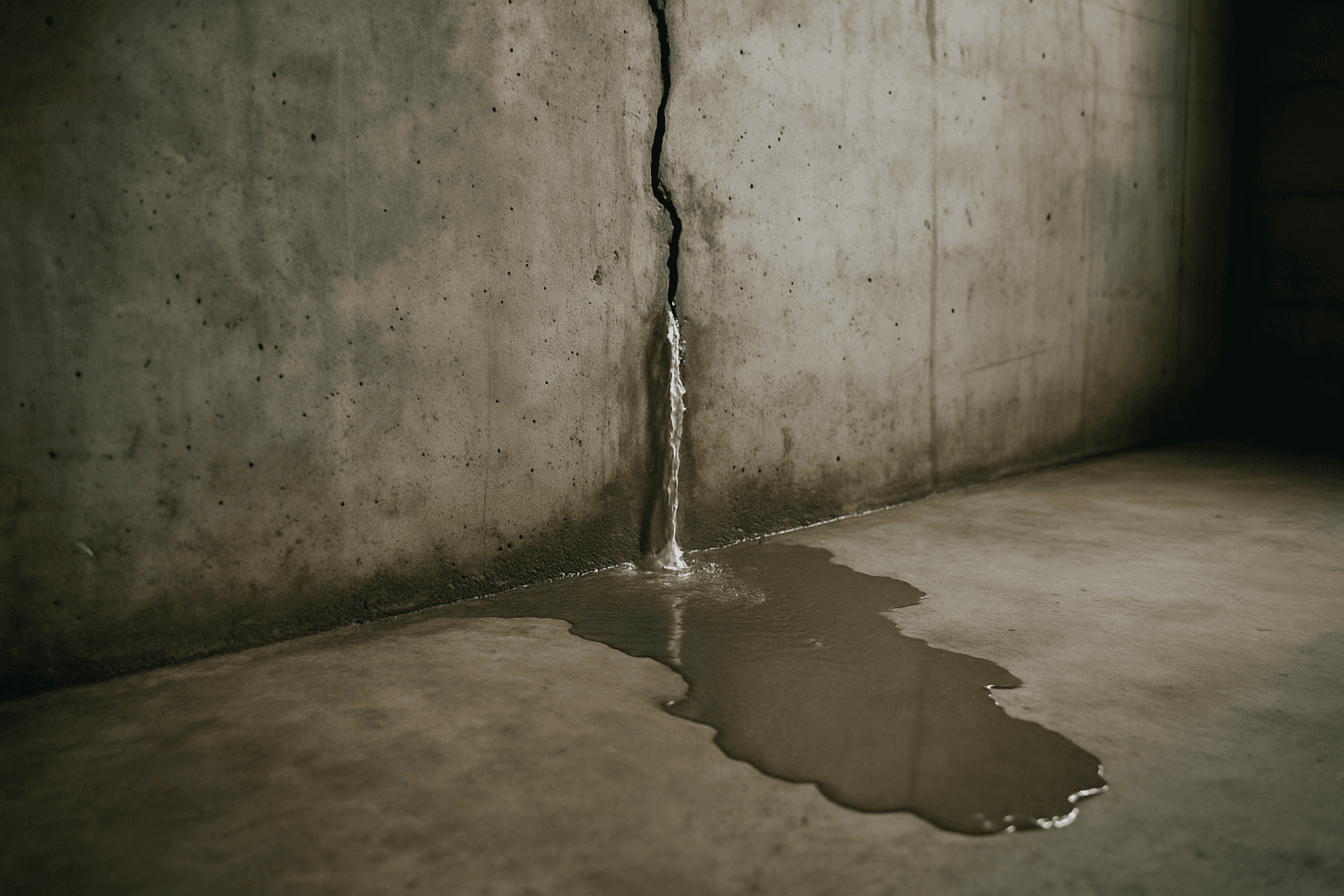
| Water along the wall-floor joint after rain | Groundwater, hydrostatic pressure | Foundation or waterproofing contractor |
| Water at one crack after rain | Foundation crack | Foundation repair |
| Smells like sewage | Floor drain or sewer line backup | Plumber, and a cleanup company for the contamination |
Two of these have their own guides: water in the basement only after rain and foundation cracks letting water in. A basement that smells of sewage is a different hazard: see why sewage backs up into the basement.
Talk to a water damage pro now
Answered 24/7 · Toll-free · no obligation
(888) 840-6512- Press 1 for water damage or 2 for mold, then your ZIP
- Stay on through the short quiet while it connects
- A local certified company explains the job and price
Dealing With the Water That Is Already There
Whatever the source, water that soaked carpet, finished drywall, wood framing or stored boxes needs to be dried within a day or two, before mold starts. Concrete alone dries with fans and a dehumidifier. Finished basements do not: carpet pad holds water, drywall wicks it upward, and the bottom plates of finished walls stay wet out of sight. That drying is a water damage restoration company's job.
(888) 840-6512 is answered 24/7 and connects you to an IICRC-certified water damage restoration company taking calls in your ZIP; there is no charge for the referral. Press 1 for water damage or 2 for mold, enter your 5-digit ZIP, and stay on through about half a minute of quiet while it connects. If it does not connect, call once more: the companies taking calls change minute to minute.
FAQ
Why is there water in my basement when it hasn't rained? On a dry day, look inside the house first: a supply line, the water heater, the washer, the AC condensate line or the floor drain. Condensation in humid weather is the other common cause.
How do I know if water is coming through the basement floor? The foil test: water under a sealed square of foil after a day or two means moisture is coming up through the concrete.
Can a small amount of water in the basement cause mold? Yes, if it soaks something porous. Bare concrete dries; carpet, drywall, cardboard and wood held wet for a couple of days are where mold grows.
Reading to confirm what you already suspect?
Confirm it in two minutes instead — the pro on this line answers questions about YOUR situation all day: what it is, what it should cost, whether you even need service. If you want, they'll set the appointment on the same call.
Toll-free · no obligation · asking costs nothing
Frequently Asked Questions
Why is there water in my basement when it hasn't rained?
On a dry day, look inside the house first: a supply line, the water heater, the washer, the AC condensate line or the floor drain. Condensation in humid weather is the other common cause.
How do I know if water is coming up through the basement floor?
Tape a square of aluminum foil to the floor, sealed on all four sides, for a day or two. Water under the foil means moisture is coming up through the concrete; water on top means condensation.
Can a small amount of water in the basement cause mold?
YesIf it soaks something porous. Bare concrete dries; carpet, drywall, cardboard and wood held wet for a couple of days are where mold grows.
Who do I call for water in the basement?
A plumber for a supply, water heater or drain leak; a foundation or waterproofing contractor for groundwater coming through walls or cracks; a water damage restoration company to dry finished materials that already got wet.
Who do I call right now for water damage?
Call (888) 840-6512. The line is answered 24 hours a day, seven days a week, and connects you with an IICRC-certified water damage restoration company that serves your area. A recorded menu picks up first: choose water damage or mold, key in your 5-digit ZIP code, and hold through the short silence while the call is passed to the company.
Describe what you can see — where the water is coming from, how long it has been there, and whether it smells — the more specific you are, the faster the right company is on the line. If the source is a pipe or an appliance, shut the main water valve first. Have four things ready and the call goes quickly: the address, when the water started, what is wet now, and whether you have filed an insurance claim.
Still not sure which of these is your situation? (888) 840-6512 · toll-free · answered 24/7
Sources
- EPA — A Brief Guide to Mold, Moisture and Your Home
- ANSI/IICRC S500 Standard for Professional Water Damage Restoration
- EPA WaterSense — Fix a Leak Week (checking the meter for leaks)
Methodology: How we source and verify data · Report an error
Disclaimer: HearthDry is an independent educational resource. This article is for informational purposes only and does not constitute professional, legal, or insurance advice. Consult licensed professionals before making decisions about your property or insurance claims.
Free 2-day shipping
Amazon Prime members pay no shipping on restoration equipment
Dehumidifiers, air movers, and moisture meters qualify for free Prime delivery — bulk items that otherwise cost $15–$40 to ship.
Affiliate link — HearthDry earns a bounty if you sign up; costs you nothing extra.
Equipment
What each machine actually does
Removes the moisture the structure is still giving off — the machine that decides how long drying takes
See the picks →Moves air across wet surfaces so the dehumidifier has something to take out of the air
See the picks →Finds water behind walls and under floors, and tells you when a material is actually dry
See the picks →Alerts you the moment a leak starts; a small cost, and the one preventive item here
See the picks →Those pages carry affiliate links. As an Amazon Associate, HearthDry earns from qualifying purchases; it costs you nothing extra.
Our Amazon storefront →Advertisement
