
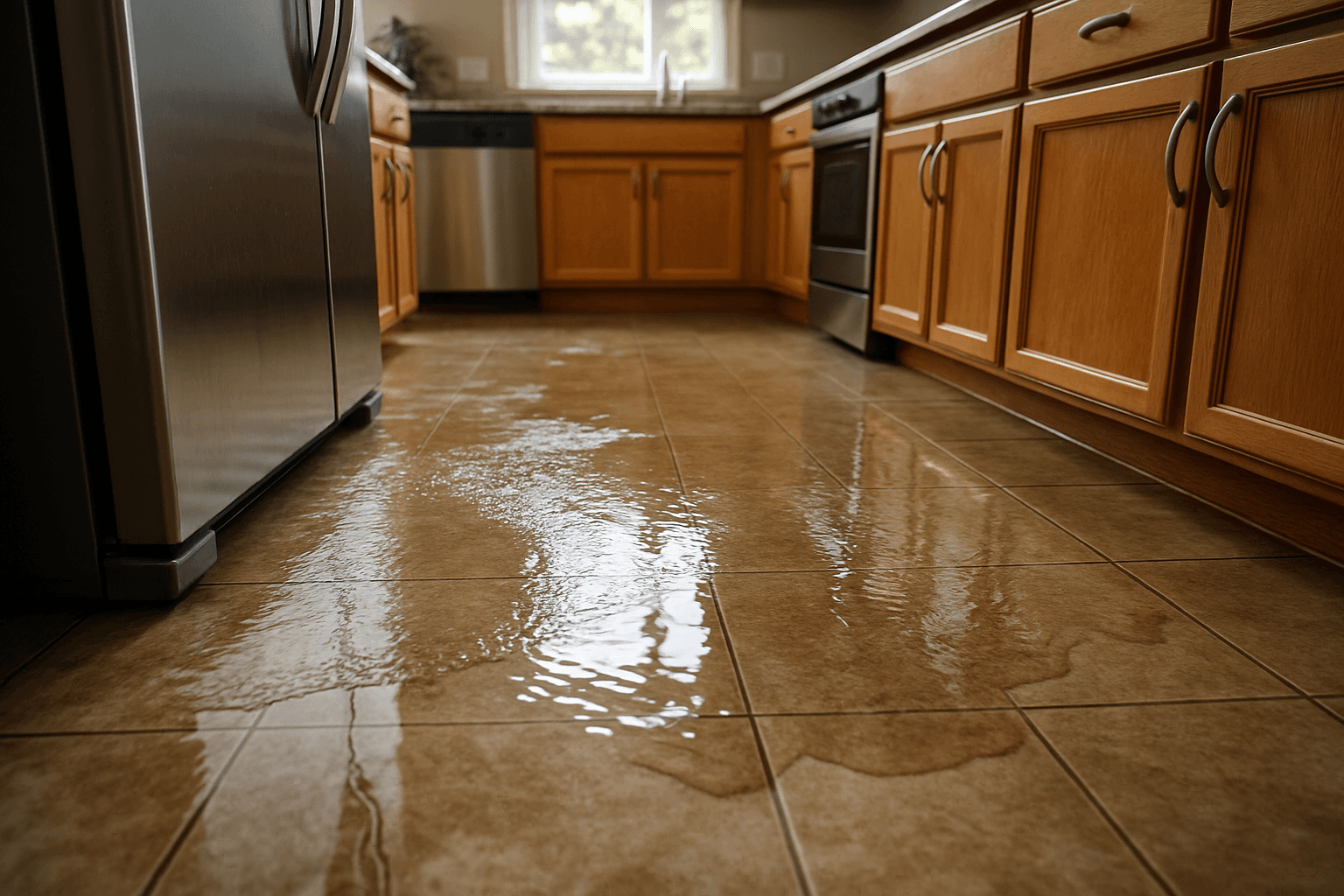
Quick answer
For a leaking refrigerator, close the small water-supply valve behind it or under the sink, then look at where the water is. Water inside the fridge or under the crisper drawers, or at the front with the back dry, is usually a blocked defrost drain or cracked drain pan, an appliance technician's job. Water behind the fridge at the wall valve or along the thin supply line is a plumber's job. If the floor under the fridge is soft, the wood has cupped or there is a stain on the ceiling below, the water has been travelling under the unit and needs a water damage restoration company too. Call (864) 806-2818 to reach a certified water damage restoration company in your area; the line is answered 24/7.
Enter your 5-digit ZIP when asked. The line goes quiet for about half a minute while it connects — that is normal, stay on. If it does not connect, call once more: companies taking calls change minute to minute.
 Serving US homesCertified US companiesCall nowLine answered 24/7

Water moves fast. What you do first decides if it stays a drying job.
Do this first
- Shut off the mainNear the meter or where the line enters.
- Kill power to wet roomsFlip the breaker before you step in.
- Photograph everythingBefore you move or throw anything out.

Written & reviewed by Marcus ReedIICRC WRT
Reviewed October 20, 2026· Next review Apr 2027
A leaking refrigerator needs an appliance technician for the machine, sometimes a plumber for the water line behind it, and a water damage company only if the water got somewhere it cannot be wiped up. Which of those comes first depends on where the water is coming from and how long it has been coming. This page sorts that out in the order you will meet it.
Stop the Water First
- 1Close the water supply to the refrigerator. Pull the fridge out and close the small valve on the wall or under the sink where the thin water line starts. If you cannot find it, close the main.
- 2Find where the water is coming from. Water inside the fresh-food compartment or under the crisper drawers usually means a blocked defrost drain. Water at the front feet with a dry back usually means the drain pan or the defrost drain. Water behind the unit, especially near the wall, usually means the ice-maker line, the inlet valve or the filter housing.
- 3Check what is wet under and behind the unit. Lift the edge of any vinyl, check the baseboard behind the fridge, and look at the ceiling below if the kitchen is upstairs.
- 4Call the trade that matches what you found. The table below is the short version.
Appliance Technician, Plumber or Restoration Company
| What you found | Most likely cause | Who to call |
|---|---|---|
| Water under the crisper drawers or pooling inside | Frozen or clogged defrost drain | Appliance technician (or clear the drain yourself) |
| Water at the front of the unit, dry behind | Cracked drain pan, defrost drain | Appliance technician |
| Water only when the ice maker or dispenser runs | Inlet valve, filter housing, ice-maker fill tube | Appliance technician |
| Drip at the wall valve or along the supply line | Supply line or saddle valve | Plumber |
| Soft floor, cupped wood, swollen baseboard, stain below | Water has been travelling under the unit | Water damage restoration company, as well as the repair |
The supply line is the part most often missed. Older installations used thin plastic tubing and a self-piercing saddle valve, both of which can fail without warning; braided stainless lines and a proper quarter-turn valve are the usual replacement. Our refrigerator water line leak guide goes through that repair, and ice maker leaks covers the other common source.
Serving US homesCertified US companiesCall nowLine answered 24/7Who to Call for a Refrigerator Leak, in Order
- 1Close the water supply to the refrigeratorPull the fridge out and close the valve where its water line starts, on the wall or under the sink; if you cannot find it, close the main.
- 2Find where the water is coming fromInside or under the crisper drawers points to the defrost drain; the front feet with a dry back to the drain pan; behind the unit to the…
- 3Check what is wet under and behind the unitLift the edge of vinyl, check the baseboard behind the fridge and the ceiling below if the kitchen is upstairs.
- 4Call the trade that matches what you foundAppliance technician for the machine, plumber for the supply line and valve, water damage restoration company for wet flooring, subfloor…
What the restoration company does in your home

1.Finds the water you can't see
Moisture meters and a thermal camera at baseboards, under flooring and behind drywall.
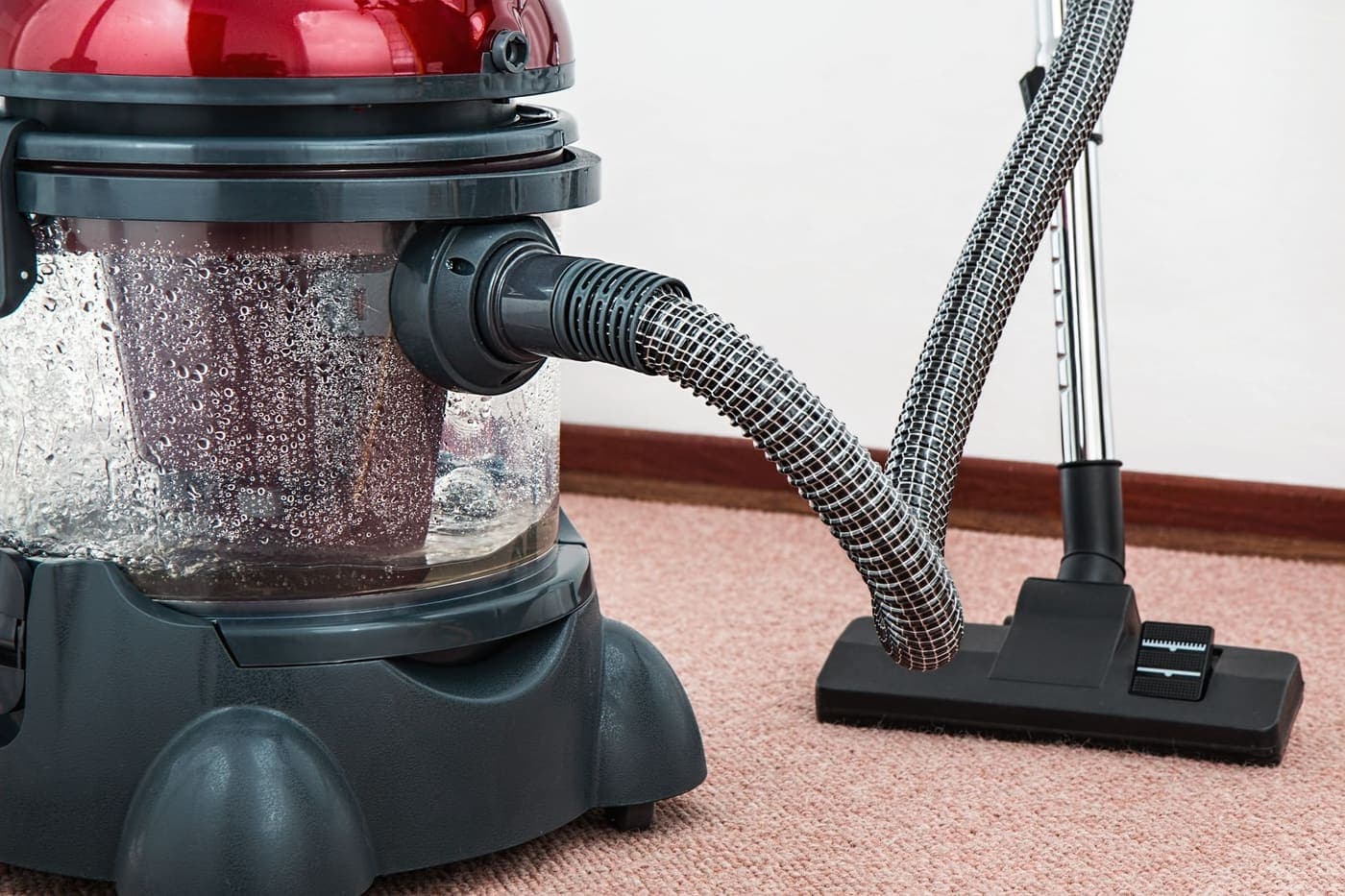
2.Pulls out the standing water
Extraction first, then anything soaked that cannot be dried is removed.
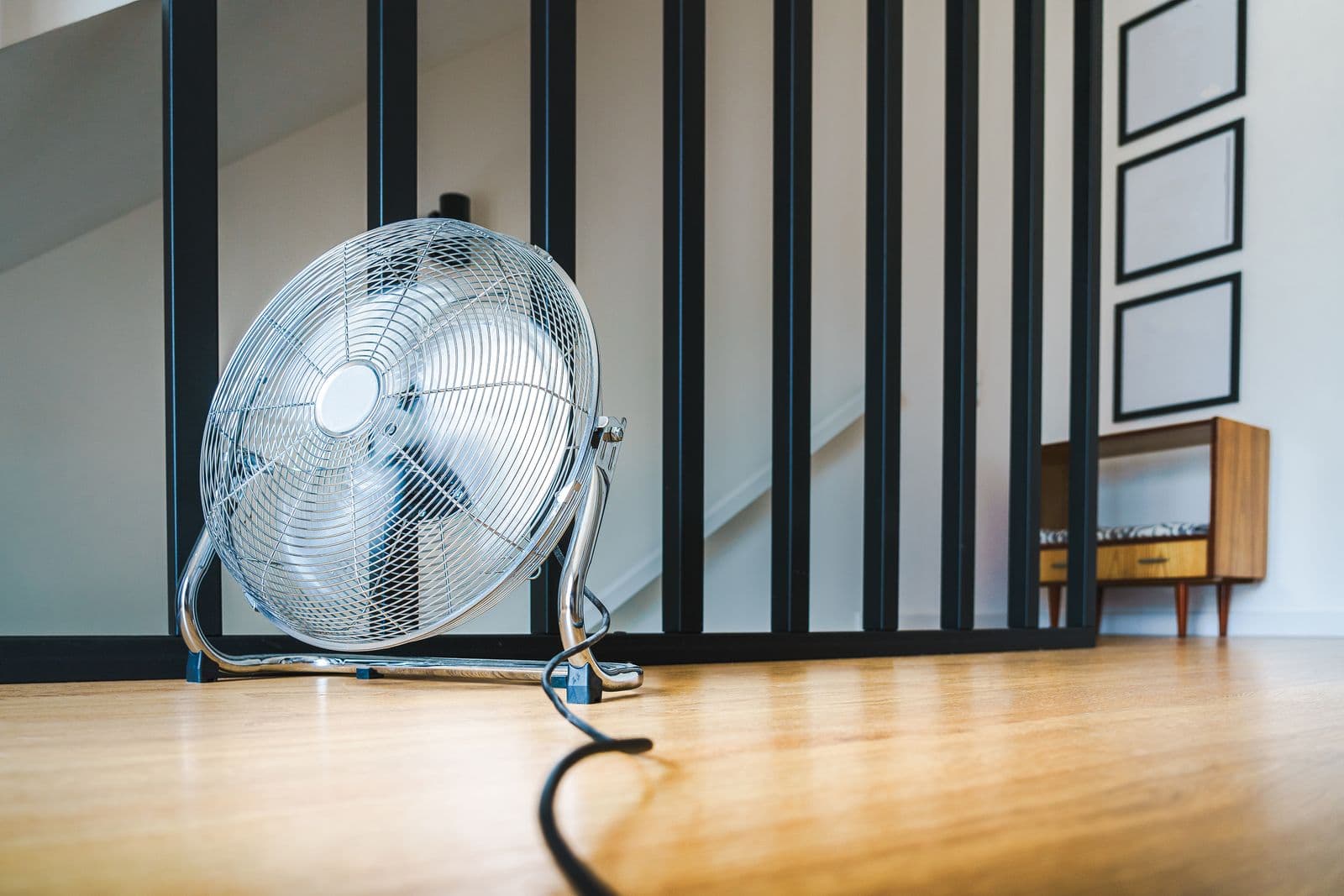
3.Dries it and logs the readings
Air movers and dehumidifiers run until the meter says dry, with a log your insurer can read.
Talk to a water damage pro now
Answered 24/7 · Toll-free · no obligation
(864) 806-2818- Enter your ZIP when asked
- Stay on through the short quiet while it connects
- A local certified company explains the job and price
When the Floor Becomes the Bigger Job
A fridge leak is usually slow, and slow leaks are the ones that get under flooring. Wood and laminate swell and cup at the seams; the subfloor under them stays wet long after the surface looks dry. If the leak had been going on for days, or any flooring near the fridge has lifted, the floor needs moisture readings and drying, and that is a water damage restoration company's work, not the appliance technician's.
(864) 806-2818 is answered 24/7 and connects you to an IICRC-certified water damage restoration company taking calls in your ZIP; there is no charge for the referral. Enter your 5-digit ZIP, and stay on through about half a minute of quiet while it connects. If it does not connect, call once more: the companies taking calls change minute to minute.
Refrigerator Leak FAQ
Is it safe to keep using a leaking refrigerator? Keep it running for the food once the water supply is closed; a fridge without its water line still cools. Unplug it if water is reaching the outlet behind it.
Why is there water under my fridge but not inside? Most often the drain pan under the unit is cracked or the defrost drain tube is pushed out of the pan, or the leak is in the supply line at the back.
Does home insurance cover a refrigerator leak? Sudden water damage to the floor and cabinets is commonly covered; the failed part of the fridge and slow leaks that went on for weeks commonly are not. Read the water damage section of your own policy.
Reading to confirm what you already suspect?
Confirm it in two minutes instead — the pro on this line answers questions about YOUR situation all day: what it is, what it should cost, whether you even need service. If you want, they'll set the appointment on the same call.
Toll-free · no obligation · asking costs nothing
Frequently Asked Questions
Who do I call when my refrigerator is leaking water?
An appliance repair technician if the water comes from the fridge itself (defrost drain, drain pan, ice maker, inlet valve or filter housing). A plumber if it comes from the supply line or the valve at the wall. A water damage restoration company as well if the floor, subfloor or ceiling below got wet.
Why is water under my fridge but not inside it?
Most often the drain pan under the unit is cracked, the defrost drain tube has slipped out of the pan, or the supply line at the back is leaking.
Can I keep using a leaking refrigerator?
YesOnce the water supply is closed; a fridge keeps cooling without its water line. Unplug it if water is reaching the outlet behind it.
Does insurance cover water damage from a refrigerator leak?
Sudden water damage to floors and cabinets is commonly covered; the failed fridge part and damage from slow leaks that went on for weeks commonly are not. Read your own policy's water damage section.
Who do I call right now for water damage?
Call (864) 806-2818. The line is answered 24/7, and connects you with an IICRC-certified water damage restoration company that serves your area. A recorded prompt picks up first: key in your 5-digit ZIP code, and hold through the short silence while the call is passed to the company.
Describe what you can see — where the water is coming from, how long it has been there, and whether it smells — the more specific you are, the faster the right company is on the line. If the source is a pipe or an appliance, shut the main water valve first. Have four things ready and the call goes quickly: the address, when the water started, what is wet now, and whether you have filed an insurance claim.
Still not sure which of these is your situation? (864) 806-2818 · toll-free · answered 24/7
Sources
- ANSI/IICRC S500 Standard for Professional Water Damage Restoration
- EPA — A Brief Guide to Mold, Moisture and Your Home
Methodology: How we source and verify data · Report an error
Disclaimer: HearthDry is an independent educational resource. This article is for informational purposes only and does not constitute professional, legal, or insurance advice. Consult licensed professionals before making decisions about your property or insurance claims.