
Ceiling Water Damage in Chicago, IL
Ceiling leak detection, drying, and restoration. IICRC-certified pros serving Chicago; the line is answered around the clock.
The stain is the last thing to appear. Certified crews find the wet cavity above it and dry it — before the ceiling comes down.
- Locating the source — roof, plumbing, or the bathroom above
- Controlled drainage of a water-heavy ceiling before it collapses
- Drying of the ceiling cavity, insulation and framing
Why Chicago homes see this
- Combined sewer overflow backing into basements
- Frozen pipe bursts in basement units and exterior wall cavities
- Lake Michigan storm wave action and coastal flooding on North Shore lakefront properties
Humboldt Park and Austin (West Side combined sewer overflow epicenter — some blocks flood 3–5 times per year, particularly in basements below grade); Lawndale and North Lawndale (aging clay tile sewer


Answered 24/7
Talk to a company that covers Chicago
Ceiling Water Damage
Call (888) 840-6512Toll-free · no obligation · no charge for the referral
- 1Press 1 for water damage, 2 for mold
- 2Enter your 5-digit ZIP, then stay on through about 30 quiet seconds
- 3A company covering your address picks up and gives you an arrival window
Have ready
- • Address and ZIP
- • When it started
- • What is wet now
- • Claim opened yet?
Covers Chicago & Cook County · 60601 · 60602 · 60603 · 60604 +1
Quick answer
Ceiling water damage repair starts by finding the source above — plumbing, roof, or HVAC condensation — then drying the cavity and insulation before replacing the drywall. Typical cost is $800–$5,000 over about three days. A sagging or bulging ceiling is holding water and should be relieved with a small hole and a bucket rather than left to collapse. In Chicago, IL, the line is answered around the clock and area rates run $2,000–$11,000 for a residential job. Call (888) 840-6512 to reach a certified water damage restoration company serving Chicago, IL; the line is answered 24/7.
Sound like your situation? Skip the rest of the reading — the Chicago line confirms it and gives you an arrival window for your address: (888) 840-6512 · toll-free · no obligation
Not sure who to phone first? Water through the ceiling: who to call first.
Read before you call: Brown Spots on Your Ceiling: What the Stain Is Telling You · Upstairs Bathroom Leaking Through the Ceiling: Find the Source in 30 Minutes · Water Damaged Ceiling Repair Cost: $150–$2,500+ by Tier · Sagging Ceiling From Water Damage: Is It Dangerous and What to Do Now · Water in the Ceiling but No Leak: Condensation, Ducts and Other Hidden Sources · Water Dripping From a Bathroom Exhaust Fan: Condensation or a Roof Leak?.
Is this happening right now? Water coming through the ceiling right now?.
Need a crew in Chicago tonight? Emergency water damage in Chicago, IL.
What Ceiling Water Damage Involves
What causes it
- Roof leaks (missing shingles, damaged flashing)
- Bathroom overflow from upstairs unit
- Burst pipe above ceiling
- AC drip pan overflow
- Skylight seal failure
How the work is done
- 1Place buckets and protect flooring immediately. Set buckets under any dripping or bulging areas. If you see a visible ceiling blister, carefully puncture its lowest point to drain it in a controlled manner — a heavy ceiling bubble can drop 10–20 gallons without warning. Lay towels or plastic sheeting around the area to protect flooring and furniture from secondary water contact.
- 2Identify the most likely source from upstairs or the roof. Go upstairs (or into the attic) with a flashlight to look for the most probable leak sources above the stain location. If the ceiling is under a bathroom: check toilet base, shower pan, and supply lines. If under an HVAC unit or air handler: check the condensate drain pan and drain line. If under the roof: enter the attic and trace wet materials back toward the roof penetrations (plumbing vents, chimney, HVAC stacks). Water travels diagonally along rafters, so the entry point is rarely directly above the stain.
- 3Shut off the source if it is plumbing-related. If the leak originates from a toilet, supply line, or fixture above the ceiling, shut off that fixture's supply valve (under the sink, behind the toilet) or turn off the main supply if you cannot isolate it. If the source is roof-related or HVAC-related and cannot be stopped immediately, limit the active drip damage with your bucket collection while you arrange professional repair.
- 4Document all damage for insurance before touching the ceiling. Photograph the ceiling stain, any blisters, the floor below, and all damaged personal property. Then photograph upstairs to document the probable source. If you made a controlled puncture in a blister, photograph it before and after — this shows what you found and demonstrates that you took protective action. This photo record is your insurance documentation; do not patch or paint over staining before the adjuster sees it.
- 5Call a restoration company for moisture assessment within 24 hours. Even after the visible dripping stops, moisture trapped in the ceiling assembly (insulation, drywall paper, top plate wood) will support mold growth if not measured and dried. A certified restoration technician uses pin-type moisture meters and thermal cameras to assess the extent of hidden moisture and determine whether drill-and-inject drying, ceiling tile replacement, or drywall removal is required. Most insurers require this professional moisture documentation to process a ceiling water damage claim.
Work follows IICRC S500. Typical duration 3 days; national cost range $800–$5,000.
Ceiling Water Damage in Chicago: the numbers
What this work actually costs and takes locally — and what a certified pro confirms for your exact address in one call.
| What | Chicago figure | What it means |
|---|---|---|
| Typical cost range | $2,000 – $11,000 | Chicago homes; your job is quoted on the call |
| Typical duration | 3 days | On site; drying-dependent work can run longer |
| Typical structural drying | 3—5 days | Verified with moisture meters, not guessed |
| Line answered | 24/7 | A short menu asks for your ZIP first |
| Work standard | IICRC S500 | The written industry standard for this work |
| Service area | Chicago, Cook · 5 ZIP codes | Routed to a pro covering your ZIP |
What moves the price
Affected area, how long moisture sat, whether porous materials come out, and equipment days.
What moves the timeline
Daily moisture readings decide the end date — a job ends when materials hit dry standard.
What never changes
Work follows IICRC S500, and costs are explained before anything is agreed.
A range is national. Your number is a two-minute conversation.
Describe the room and what you're seeing — a certified Chicago pro gives you the real figure and arrival window, with no obligation.
Illinois licenses this work through the Illinois Department of Financial and Professional Regulation (IDFPR) — verify any company yourself: IDFPR License Lookup
What to do in Chicago before help arrives
- 1Stop the sourceFixture or appliance valve if you know it, the main shut-off if you don't.
- 2Cut power to wet roomsWater tracks along wiring to outlets and fixtures before it pools.
- 3Photograph before cleanupTimestamped photos of the source, the water line and every wet item.
- 4Lift what's porousRugs up, furniture on blocks or foil, boxes off the floor.
Not sure which of these applies to your situation? Call (888) 840-6512 and describe what you're looking at — the pro walks you through the next ten minutes while a crew is arranged. Full response guide →
Three ways Chicago homeowners handle this
Two of them cost more than they look. Here is the honest comparison.
Calling companies yourself
- You dial down a list until someone answers
- Each company scopes and quotes differently
- License and insurance checks are on you
- Nights and weekends are voicemail roulette
Waiting to see if it dries
- Mold begins within 24–48 hours on wet material
- Hidden moisture keeps spreading behind finishes
- Insurers question delayed mitigation
- A drying job becomes a rebuild job
One call to this Chicago line
- Describe it once — routed to a pro covering your ZIP
- IICRC-certified, licensed and insured companies
- Costs explained before anything is agreed
- Answered 24/7, menu first, then a person
Pros in this network carry




Answered right now — 24/7
Get ceiling water damage answers for your Chicago address
Tonight's emergency or next week's appointment — the same call books whichever you need.
Call (888) 840-6512No obligation · costs explained before any work
Equipment and reading for ceiling water damage
Whether you hire a crew in Chicago or handle part of it yourself, these are the tools the job actually needs and the background worth reading first.

Best Moisture Meters for Homeowners (2026)
Top pick: General Tools MMD7NP Pinless Moisture Meter
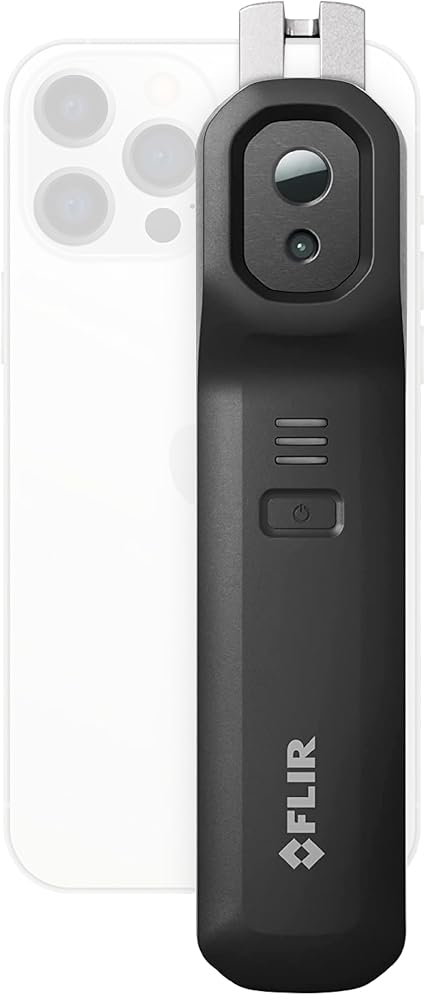
Best Thermal Camera for Water Leak Detection (2026)
Top pick: FLIR ONE Edge Pro Thermal Camera for Smartphones

Best Dehumidifiers for Water Damage (2026)
Top pick: AEOCKY BOREAS-001 50 Pint Dehumidifier (3,500 Sq Ft, Drain Hose)
Why Chicago Homes Face Ceiling Water Damage Risks
Local geography, climate, and housing stock all affect how water damage occurs in Chicago. These are the most common causes our certified teams respond to in this area.
- 1Combined sewer overflow backing into basements during heavy rain (largest single claim type in Chicago)
- 2Frozen pipe bursts in basement units and exterior wall cavities during polar vortex events
- 3Lake Michigan storm wave action and coastal flooding on North Shore lakefront properties
- 4Flat roof drain failure on commercial and two-flat buildings (spring and fall primary season)
- 5Foundation seepage from high water table — Chicago sits on glacial lake bed
- 6Sump pump failure during extended power outages accompanying severe thunderstorms
Local Risk Notes
Humboldt Park and Austin (West Side combined sewer overflow epicenter — some blocks flood 3–5 times per year, particularly in basements below grade); Lawndale and North Lawndale (aging clay tile sewer laterals, high basement flooding frequency); Roseland and West Pullman (Southeast Side, historically underfunded infrastructure, high insurance claim rates); Rogers Park and Edgewater (lakefront storm surge, pier foundation erosion); Logan Square and Pilsen (mixed, gentrifying areas where basement apartment flooding is common and often unreported by tenants); Bridgeport and Back of the Yards (flat terrain, poor drainage, South Branch Chicago River proximity)
IL Insurance Tip
Chicago homeowners: standard HO-3 policies EXCLUDE sewer backup — which is the single most common water damage claim type in Chicago. The sewer backup rider costs $50–150/year and is non-negotiable if you own a home with a basement. Confirm your rider limit is at least $25,000 — many default to $5,000–10,000, which doesn't cover a full basement remediation in Chicago where Category 3 cleanup averages $12,000–35,000. For basement apartments, Illinois landlord-tenant law requires habitable conditions — tenants should document flooding and notify landlords in writing. Chicago's flat terrain means flood insurance is worth evaluating even for properties not in designated flood zones, since street flooding regularly enters homes from grade-level windows and doors.
Ceiling Water Damage in Chicago — FAQs
- ✓National range for ceiling water damage: $800–$5,000
- ✓The spread is size, water category and how long materials stayed wet — no article can price YOUR rooms.
How fast can you get ceiling water damage help in Chicago?
As fast as a crew is free — the line is answered 24/7 and the pro gives you a real arrival window for your Chicago address on the call, because it depends on the hour, the crew load and where you are.
Active water is prioritised over scheduled work; assessments that are not urgent are usually booked same-day or next-day, whenever suits you.
What does ceiling water damage cost in Chicago?
Chicago rates: $2,000–$11,000 for residential projects (3.75–14 per sq ft).
Skip the estimating: the Chicago line quotes your exact job in one call — (888) 840-6512 (toll-free, no obligation).
I see a water stain on my ceiling but no active leak. Should I be worried?
YesA stain means water has already saturated your ceiling material and insulation above it.
Even if the leak stopped, trapped moisture enables mold growth for weeks. Have a restoration professional inspect with moisture meters — the source may be an intermittent leak (e.g., roof leak only during rain, AC drip pan that overflows monthly).
Do I need to open my ceiling to dry it?
Usually yesIndustrial air movers and dehumidifiers can dry exposed surfaces, but trapped moisture inside ceiling cavities (above drywall, in insulation) requires either drill holes for air injection drying or controlled demolition and replacement. A moisture meter confirms whether opening is necessary.
How much does ceiling water damage repair cost?
Small ceiling leaks (1–2 affected ceiling tiles or a 4x4-foot drywall section): $800–$2,000. Moderate damage with insulation replacement needed: $2,000–$4,000. Extensive damage with structural framing involvement: $4,000–$8,000+. Mold remediation adds $1,500–$5,000 if growth is found.
Why is the water stain on my ceiling in a different spot than where the actual leak is?
Water follows the path of least resistance — it runs along roof sheathing, rafters, vapor barriers, and top plates before finding a low point to drip through. The travel distance from entry point to visible stain can be 5–15 feet horizontally. This is why fixing the area directly above the ceiling stain often fails to solve the leak.
The correct diagnosis method: access the attic or roof space during or immediately after rain with a flashlight, and trace wet areas backward (uphill) along structural members. The actual entry point is almost always at a flashing intersection, pipe penetration, or ridge and valley — not the center of a ceiling span where stains commonly appear.
How do I know if a ceiling bubble (blister) is about to burst, and should I puncture it?
A ceiling blister forms when water pools above a paint layer or within a plaster surface. It will burst on its own — often dropping gallons of trapped water onto flooring and furnishings below. If you can see an active blister that is growing or feels heavy when gently touched: place buckets below it, then carefully puncture the lowest point of the blister with a screwdriver or nail to drain it in a controlled fashion rather than waiting for it to burst.
Use a bucket, not a bowl — the water releases quickly. Then photograph the punctured blister and the water volume for insurance documentation. Important: puncturing the blister does not fix the leak — it only controls the immediate water release. The ceiling membrane above must be dried and the leak source addressed.
Is ceiling water damage repair the same as fixing the leak?
NoAnd paying for one without the other is the most common way this job goes wrong. The repair is the ceiling: opening the wet area, drying the cavity and joists to documented readings, and replacing the drywall and finish.
Fixing the leak is upstream — a supply line, a shower pan, a roof penetration, a failed seal around a vent. A ceiling repaired under an unfixed leak stains again within weeks, and the second claim is harder to make than the first.
Why is water leaking from my ceiling?
Water coming through a ceiling has four usual sources, and they are distinguishable before anyone opens anything. A supply line above (clean water, steady, unrelated to weather or use) is the most urgent because it does not stop on its own. A drain or shower pan (appears when the bathroom above is used, then stops) points at the fixture.
A roof or flashing failure (appears during or shortly after rain) is weather-driven. Condensation from a duct or a cold pipe in the cavity (worst in humid weather, no obvious event) is the slow one. Whichever it is, shut the water off at the main if the flow is constant, put a container under it, and do not paint over the stain — the paint traps the moisture in the board.
What does ceiling water damage repair involve?
Repair is three stages and the middle one is the stage homeowners skip. First the source is stopped, because a ceiling repaired under a live leak stains again within weeks. Second the cavity is dried: the affected board is opened, insulation that got wet is removed rather than dried in place, and joists and the subfloor above are dried to documented moisture readings — this is the part that decides whether mold follows.
Third the ceiling is rebuilt: new board, tape, texture matched to the surrounding surface, then prime and paint. Painting over a stain without the middle stage is why so many ceilings are repaired twice.
Should I puncture a bulging ceiling, and how dangerous is it?
A ceiling holding water is a weight problem before it is a water problem — a gallon is over eight pounds, and saturated drywall loses its strength while it holds it. Get people and anything valuable out from underneath first. If the bulge is small and you are confident, a single small hole at its lowest point with a bucket underneath lets it drain in a controlled way rather than collapsing.
If it is large, sagging across a wide area, or anywhere near a light fitting or a ceiling fan, leave it and cut the power to that circuit at the panel: water and a live fixture in the same cavity is the part of this that actually injures people.
Who do I call right now for water damage?
Call (888) 840-6512. The line is answered 24 hours a day, seven days a week, and connects you with an IICRC-certified water damage restoration company that serves your area. Describe what you can see — where the water is coming from, how long it has been there, and whether it smells — the more specific you are, the faster the right company is on the line.
If the source is a pipe or an appliance, shut the main water valve first. Have four things ready and the call goes quickly: the address, when the water started, what is wet now, and whether you have filed an insurance claim.
Still not sure which of these is your situation? (888) 840-6512 · toll-free · answered 24/7
24/7 Emergency Response
We connect you with pros available around the clock — nights, weekends, and holidays.
IICRC-Certified Pros
Referrals go to restoration professionals working to IICRC standards (S500 water, S520 mold).
Ask for License and Insurance
Referred contractors are expected to hold state licensing and liability insurance — ask for both before work starts.
No-Obligation Consultation
Call anytime. Describe the damage, get pointed at the right trade, decide afterwards.
Hiring for ceiling water damage in Chicago? Verify the license first.
Browse our directory of state-licensed mold companies in Chicago — license numbers, contact info, and expiration dates from official records.
HearthDry is an independent resource and does not perform restoration work. All referred contractors are independently licensed and IICRC-certified.