
Quick answer
Water in a ceiling with no leak is almost always condensation. In summer it is usually cold AC ducts sweating in a hot attic. In winter it is warm house air frosting on the roof nails and deck, then melting on a warm day. After showers it is bathroom humidity from a weak exhaust fan. Note when it appears, check the attic with a flashlight, and lower the humidity. If the drywall is soft or the insulation above is wet, it needs to be measured and dried. Call (888) 840-6512 to reach a certified water damage restoration company in your area; the line is answered 24/7.
Written & reviewed by Marcus ReedIICRC WRT
Reviewed September 30, 2026· Next review Mar 2027
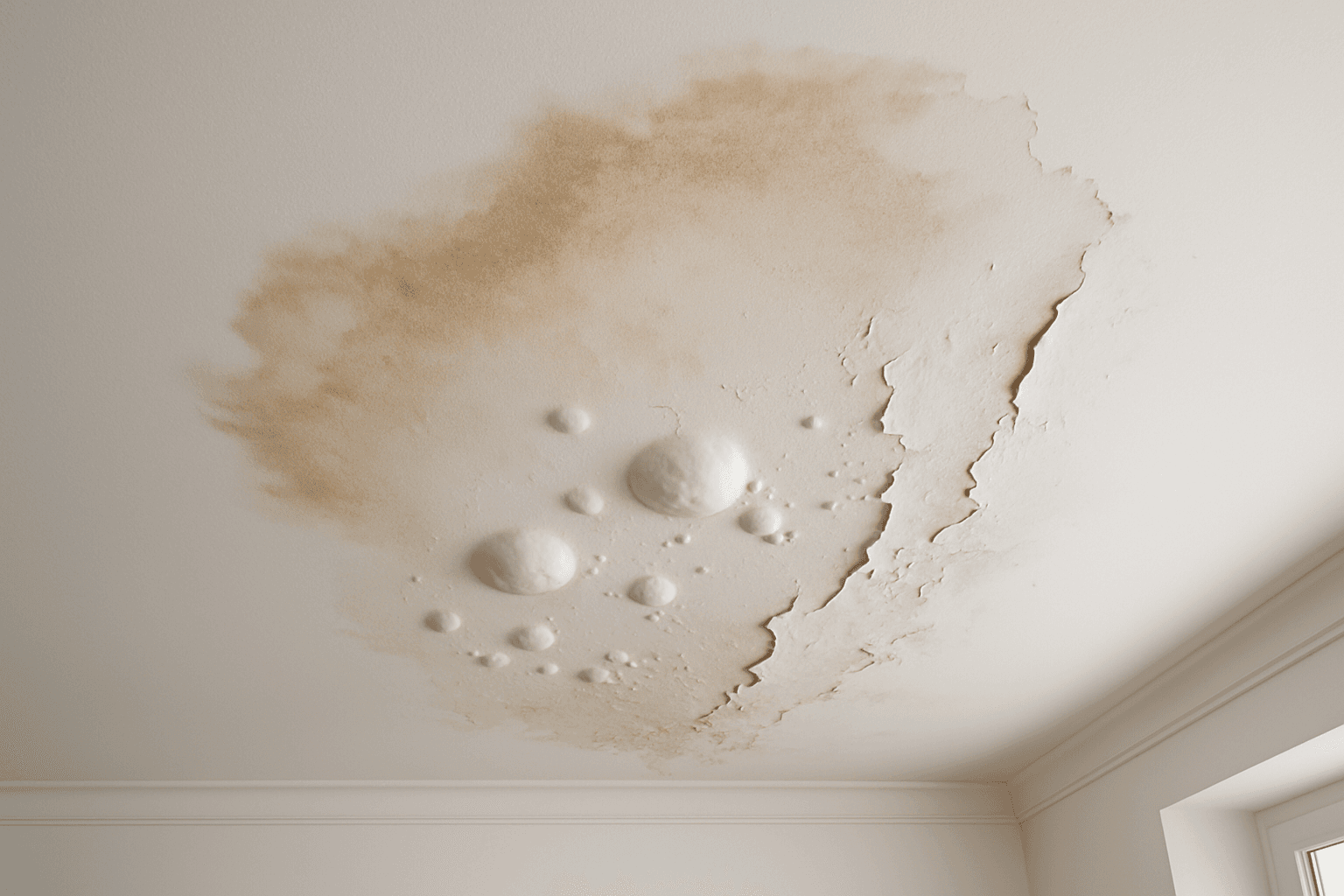
Water on a ceiling with no bathroom above it, no rain, and a dry roof is almost always condensation. Warm, humid air reaches a cold surface and turns back into water. That surface might be a duct, a pipe, the underside of the roof deck, or the ceiling drywall itself. The water is real, and so is the damage it does over time. The difference is that the fix is about air and insulation, not a plumber.
What to Do Now
- 1Note when and where it appears. Write down the time of day, the weather and which rooms. Condensation follows temperature and humidity, and the pattern is the best clue.
- 2Check the attic or the space above. With a flashlight, look for frost or droplets on the roof nails and the underside of the roof deck, sweating ducts, and wet insulation.
- 3Lower the humidity in the house. Run bathroom and kitchen fans for 20 minutes after use, check that the dryer vents outside, and run a dehumidifier if the house stays above about 50% relative humidity.
- 4Measure the ceiling before you paint it. A moisture meter shows whether the drywall is wet now or only stained from before.
Where Ceiling Water Comes From Without a Leak
| When it shows up | Likely source | What is happening |
|---|---|---|
| Summer, around ceiling vents or along duct runs | Sweating AC ducts | Cold ducts in a hot attic, with gaps in the insulation wrap |
| Winter, cold mornings, spots near outside walls | Attic condensation | Warm house air leaks into the attic and freezes on the roof deck |
| Winter, a sudden drip on a warm day | Melting attic frost | The frost from colder nights all melts at once |
| After showers, on the bathroom ceiling | Bathroom humidity | The exhaust fan is too weak, or vents into the attic |
| Near a cold water pipe in the ceiling | Sweating pipe | An uninsulated cold line in a humid space |
The winter pattern fools a lot of people. The drip looks exactly like a roof leak, but it shows up on a sunny day. What is happening is weeks of frost on the roof nails melting at once. The cause is warm, moist air getting into the attic through recessed lights, the attic hatch and bath fans. It is fixed by sealing those gaps and improving attic ventilation, not by roofing.
Talk to a water damage pro now
Answered 24/7 · Toll-free · answered 24/7 · no obligation
(888) 840-6512- Describe the damage & give your ZIP
- You're routed to the on-call local crew
- They quote — you decide, no obligation
When It Might Be a Leak After All
Condensation rarely makes a large, spreading stain in one spot. A stain that grows, drips steadily, or appears when a fixture upstairs runs is more likely a real leak. The brown spots on the ceiling page explains how to read the stain, and an AC unit in the attic can also overflow its drain pan. That version is covered in the AC condensate line guide.
The Damage Condensation Does
Condensation is slow, but it repeats every day. Insulation that stays damp loses most of its value and holds water against the ceiling. Drywall paper that is wet again and again grows mold, and mold starts on wet material in about 24–48 hours. In attics, repeated frost and melt can stain and weaken the roof sheathing. A ceiling that has been wet this way often has more damage above it than the spot suggests. The attic mold remediation page covers that stage.
Who to Call
An HVAC technician fixes sweating ducts and bath fan venting. An insulation or attic contractor handles air sealing and ventilation. If the ceiling is soft, the insulation above is wet, or there is growth on the drywall or the roof deck, a restoration company measures and dries it, and removes what cannot be saved. Clean-water drying runs around $3–$7 per square foot.
If you cannot tell whether it is condensation or a leak, or the ceiling has gone soft, (888) 840-6512 is answered 24/7 and connects you with a certified restoration company that serves your area. The company gives you an arrival window for your address on the call, and there is no charge for the referral.
Reading to confirm what you already suspect?
Confirm it in two minutes instead — the pro on this line answers questions about YOUR situation all day: what it is, what it should cost, whether you even need service. If you want, they'll set the appointment on the same call.
Toll-free · no obligation · asking costs nothing
Frequently Asked Questions
Why is there water in my ceiling but no leak?
Condensation. Warm, humid air meets a cold surface and turns to water: an uninsulated AC duct in summer, the underside of the roof deck in winter, a cold water pipe, or the bathroom ceiling after showers.
Why does my ceiling drip on a sunny winter day?
Frost that built up on the roof nails and deck over cold nights melts all at once. It looks like a roof leak, but the cause is warm house air getting into the attic through lights, the hatch and bath fans.
Can AC ducts leak water into the ceiling?
YesDucts carrying cold air through a hot attic sweat wherever the insulation wrap is torn or loose, and the water drips onto the ceiling drywall, often around vents.
How do I tell condensation from a real leak?
Condensation follows weather and humidity and tends to show in several spots or along ducts and outside walls. A single spot that grows, drips steadily, or appears when an upstairs fixture runs is more likely a leak.
Can condensation in the ceiling cause mold?
YesIt wets the same material day after day. Damp insulation holds water against the drywall, and mold starts on wet material in about 24–48 hours.
Who do I call right now for water damage?
Call (888) 840-6512. The line is answered 24 hours a day, seven days a week, and connects you with an IICRC-certified water damage restoration company that serves your area. Describe what you can see — where the water is coming from, how long it has been there, and whether it smells — the more specific you are, the faster the right company is on the line.
If the source is a pipe or an appliance, shut the main water valve first. Have four things ready and the call goes quickly: the address, when the water started, what is wet now, and whether you have filed an insurance claim.
Still not sure which of these is your situation? (888) 840-6512 · toll-free · answered 24/7
Sources
- IICRC S500 Standard for Professional Water Damage Restoration
- EPA — A Brief Guide to Mold, Moisture and Your Home
- EPA — Moisture Control Guidance for Building Design, Construction and Maintenance
Methodology: How we source and verify data · Report an error
Disclaimer: HearthDry is an independent educational resource. This article is for informational purposes only and does not constitute professional, legal, or insurance advice. Consult licensed professionals before making decisions about your property or insurance claims.
Free 2-day shipping
Amazon Prime members pay no shipping on restoration equipment
Dehumidifiers, air movers, and moisture meters qualify for free Prime delivery — bulk items that otherwise cost $15–$40 to ship.
Affiliate link — HearthDry earns a bounty if you sign up; costs you nothing extra.
Equipment
What each machine actually does
Removes the moisture the structure is still giving off — the machine that decides how long drying takes
See the picks →Moves air across wet surfaces so the dehumidifier has something to take out of the air
See the picks →Finds water behind walls and under floors, and tells you when a material is actually dry
See the picks →Alerts you the moment a leak starts — the cheapest thing on this list and the only preventive one
See the picks →Those pages carry affiliate links. As an Amazon Associate, HearthDry earns from qualifying purchases; it costs you nothing extra.
Our Amazon storefront →Advertisement
