
Quick answer
Yes, a ceiling sagging from water is dangerous: soaked drywall loses its strength and can drop with gallons of water and wet insulation behind it. Switch off the breaker for the room, keep everyone out from under the bulge, set a bucket beneath it and pierce the lowest point with a screwdriver so the water drains where you choose. Then stop the source above. The wet panel and insulation usually have to be cut out and the joists dried before any patching. Call (888) 840-6512 to reach a certified water damage restoration company in your area; the line is answered 24/7.
Written & reviewed by Marcus ReedIICRC WRT
Reviewed September 27, 2026· Next review Mar 2027
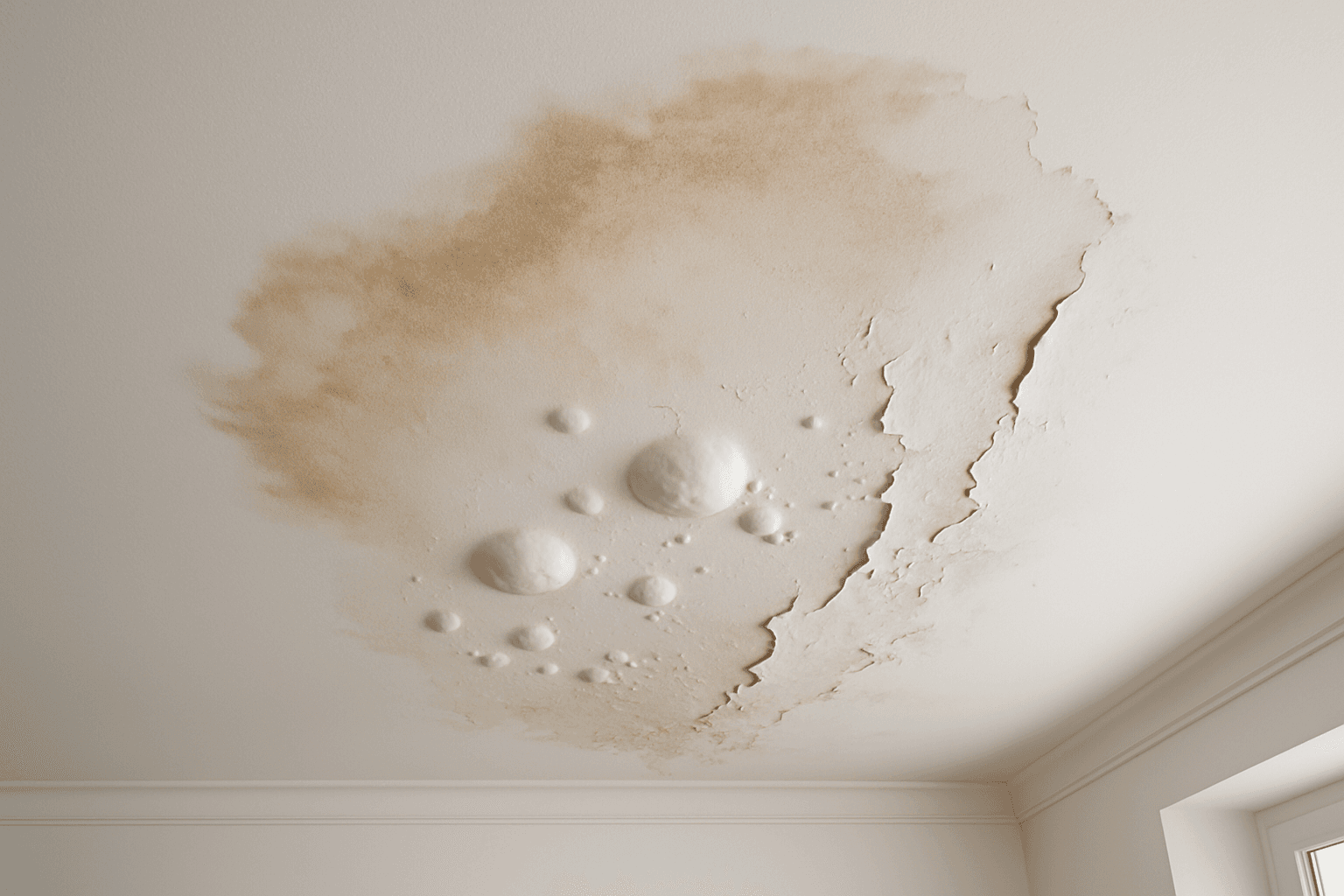
Treat a ceiling that has started to droop after a leak as something that can fall. Drywall that has soaked up water loses most of its strength, and the pocket of water pressing on it adds weight every minute. Keep people and pets out from under it, cut the power to that room, and let the water out in a controlled way before you think about the cause or the repair.
Why a Wet Ceiling Sags
Ceiling drywall is gypsum pressed between two layers of paper, held up by screws or nails into the joists above. Gypsum that gets wet goes soft, and the paper facing is what keeps it in one piece. As water collects above the panel, two things happen at once: the board gets heavier, and the screw heads start pulling through the softened board. The paint on the underside often holds longer than the drywall, which is why many sags look like a smooth balloon hanging from the ceiling. That balloon may be holding several gallons.
A bulge that is swelling, dripping at the edges, or has cracks radiating from it is close to letting go. A panel that comes down brings wet insulation, water and sometimes a light fixture with it.
The Safe Order of Work
- 1Cut power and clear the room. Switch off the breaker for that room and any room next to it that shares a ceiling. Water follows joists to fixtures, fan boxes and recessed cans. Move furniture, electronics and rugs out, and keep everyone from standing under the sag.
- 2Drain the bulge at its lowest point. Set a large bucket or a trash can under the lowest part of the sag and put a tarp around it. Standing off to the side on a stable step stool, push a screwdriver through the center of the bulge. The water will come in a stream; let it run. Relieving the weight is what stops a larger section tearing loose. If the sag is wider than your arms can reach, is near a fixture, or the ceiling is plaster rather than drywall, skip this and stay out of the room.
- 3Stop the water feeding it. If a bathroom, kitchen or laundry sits overhead, close that fixture's valve or the main. If it only drips when it rains, the roof is the likely source; do not go up on a wet roof.
- 4Get the cavity measured before anyone patches. The stain you see is the smallest part. Water spreads across the top of the drywall and into the insulation, and a meter or thermal camera finds where it went.
Is a Sagging Ceiling Dangerous?
Yes, in three ways. It can fall, and a waterlogged panel is heavy enough to injure someone. It can put water into live wiring. And if the wet board and insulation stay in place, mold can start on them in about 24–48 hours, which turns a drying job into a removal job.
| What you see | What it usually means | What to do |
|---|---|---|
| Soft bulge, dripping, cracks spreading from it | Pooled water, drywall failing | Power off, drain it, stay out from under it |
| Firm droop, dry to the touch, no stain | Fasteners or joints failing, not water | Keep clear, have it checked, less urgent |
| Brown ring, flat, no droop | Old or slow leak that soaked in | Find out if it is still active with a meter |
| Droop along a straight seam | Tape joint lifting, often from humidity | Watch it; check the room above |
Talk to a water damage pro now
Answered 24/7 · Toll-free · answered 24/7 · no obligation
(888) 840-6512Mold can establish within 24–48 hours of water exposure — drying started today stays a drying job.
- Describe the damage & give your ZIP
- You're routed to the on-call local crew
- They quote — you decide, no obligation
Sagging Ceiling With No Water Damage
Not every sag is a leak. Drywall hung with too few screws, board that is too thin for the joist spacing, heavy blown insulation added on top, or years of humid air in an attic can all make a ceiling droop without a single stain. So can a cracked joist or a truss that has moved. These sags tend to be long and gradual and follow a seam or a line of fasteners. They still need a look from a contractor, because a ceiling that is sagging without water can also come down, but there is nothing to dry.
If you are not sure which you have, press lightly near the edge of the sag with a broom handle. Soft, cool or damp means water. Firm and room temperature points to the structure or the fasteners.
Finding the Source
The timing tells you who stops it. Drips that start with rain point to the roof, flashing or a vent boot; our roof leak ceiling guide walks through tracing it. Water that shows up when someone showers or flushes upstairs points to a drain, a wax ring or the tub. The bathroom leaking through the ceiling page covers those. Water that keeps coming no matter what is running is usually a pressurized supply line, and the main should be off.
If you cannot tell whether you need a roofer, a plumber or a restoration company first, who to call for a ceiling leak sorts that out.
Drying and Repair
Once the source is stopped, the wet section has to be dealt with before it is closed up. A ceiling that sagged has usually lost its strength and is cut out, not dried in place. The wet insulation above comes out with it, because fiberglass holding water keeps the joists damp for days. The framing is then dried and checked with a moisture meter against a dry area of the same house before new drywall goes up.
Mitigation for clean water typically runs around $3–$7 per square foot before rebuilding. What the patch, texture and paint cost is broken down on the ceiling water damage repair cost page.
The mistake that costs the most is patching and painting a ceiling that is still wet above. It looks fixed for a few weeks, then the stain comes back through the new paint, and whatever was growing in the insulation has had time to spread.
If the ceiling has already sagged, the joists need to be measured and dried before anything is patched. (888) 840-6512 is answered 24/7 and connects you with a certified restoration company that serves your area. The company gives you an arrival window for your address on the call, and there is no charge for the referral.
Reading to confirm what you already suspect?
Confirm it in two minutes instead — the pro on this line answers questions about YOUR situation all day: what it is, what it should cost, whether you even need service. If you want, they'll set the appointment on the same call.
Toll-free · no obligation · asking costs nothing
Frequently Asked Questions
Is a sagging ceiling dangerous?
YesDrywall that has absorbed water is soft and heavy, and the screws holding it can pull through.
A sagging section can fall with water and wet insulation, it can put water into light fixtures and wiring, and wet ceiling material can grow mold if it is not dried or removed.
Should I poke a hole in a sagging ceiling with water?
If the bulge is small enough to reach safely and away from light fixtures, yes. Turn off power to the room, place a bucket and tarp under the lowest point, stand to the side and push a screwdriver through.
Letting the water out on your terms relieves the weight. If the sag is large, near a fixture, or the ceiling is plaster, stay out of the room instead.
Why is my ceiling sagging with no water damage?
A ceiling can sag without a leak when drywall was hung with too few fasteners, is too thin for the joist spacing, carries heavy insulation added later, or has been exposed to humid attic air for years. A cracked joist or a shifted truss can also cause it. It still needs checking, but there is nothing to dry.
Can a water-damaged sagging ceiling be dried instead of replaced?
RarelyDrywall that has sagged has usually lost its strength and fastener hold, so it is cut out.
The insulation above comes out too. What gets dried is the framing and the surrounding ceiling, confirmed with a moisture meter before new drywall goes up.
How do I know if a sagging ceiling is about to collapse?
Warning signs are a bulge that is growing, water dripping from its edges, cracks spreading outward from it, and screw heads popping along the joists. Any of these means keep people and pets out from under it and relieve or clear the area now.
Who do I call right now for water damage?
Call (888) 840-6512. The line is answered 24 hours a day, seven days a week, and connects you with an IICRC-certified water damage restoration company that serves your area. Describe what you can see — where the water is coming from, how long it has been there, and whether it smells — the more specific you are, the faster the right company is on the line.
If the source is a pipe or an appliance, shut the main water valve first. Have four things ready and the call goes quickly: the address, when the water started, what is wet now, and whether you have filed an insurance claim.
Still not sure which of these is your situation? (888) 840-6512 · toll-free · answered 24/7
Sources
- IICRC S500 Standard for Professional Water Damage Restoration
- EPA — A Brief Guide to Mold, Moisture and Your Home
- CDC — About Mold
Methodology: How we source and verify data · Report an error
Disclaimer: HearthDry is an independent educational resource. This article is for informational purposes only and does not constitute professional, legal, or insurance advice. Consult licensed professionals before making decisions about your property or insurance claims.
Free 2-day shipping
Amazon Prime members pay no shipping on restoration equipment
Dehumidifiers, air movers, and moisture meters qualify for free Prime delivery — bulk items that otherwise cost $15–$40 to ship.
Affiliate link — HearthDry earns a bounty if you sign up; costs you nothing extra.
Equipment
What each machine actually does
Removes the moisture the structure is still giving off — the machine that decides how long drying takes
See the picks →Moves air across wet surfaces so the dehumidifier has something to take out of the air
See the picks →Finds water behind walls and under floors, and tells you when a material is actually dry
See the picks →Alerts you the moment a leak starts — the cheapest thing on this list and the only preventive one
See the picks →Those pages carry affiliate links. As an Amazon Associate, HearthDry earns from qualifying purchases; it costs you nothing extra.
Our Amazon storefront →Advertisement
