
Written by Marcus Reed
Reviewed by Elena VargasLicensed Public Adjuster (TX, FL, LA)
Reviewed September 6, 2026· Next review Mar 2027
Quick answer
Yes - a burst pipe is the textbook sudden and accidental water discharge, and standard homeowners policies cover the resulting damage to the structure and your belongings, subject to the deductible. The pipe itself is not covered, and a freeze burst is only covered if reasonable heat was maintained or the system had been drained. Report it the day you find it and start certified drying immediately, because your policy requires you to prevent further damage and the drying record is what keeps the mold portion payable. Call (888) 840-6512 to reach a certified water damage restoration company in your area; the line is answered 24/7.
Sound like your situation? Confirm it in one call instead of ten more minutes of reading — (888) 840-6512 · toll-free · no obligation
Yes — With One Exception That Catches People Every Winter
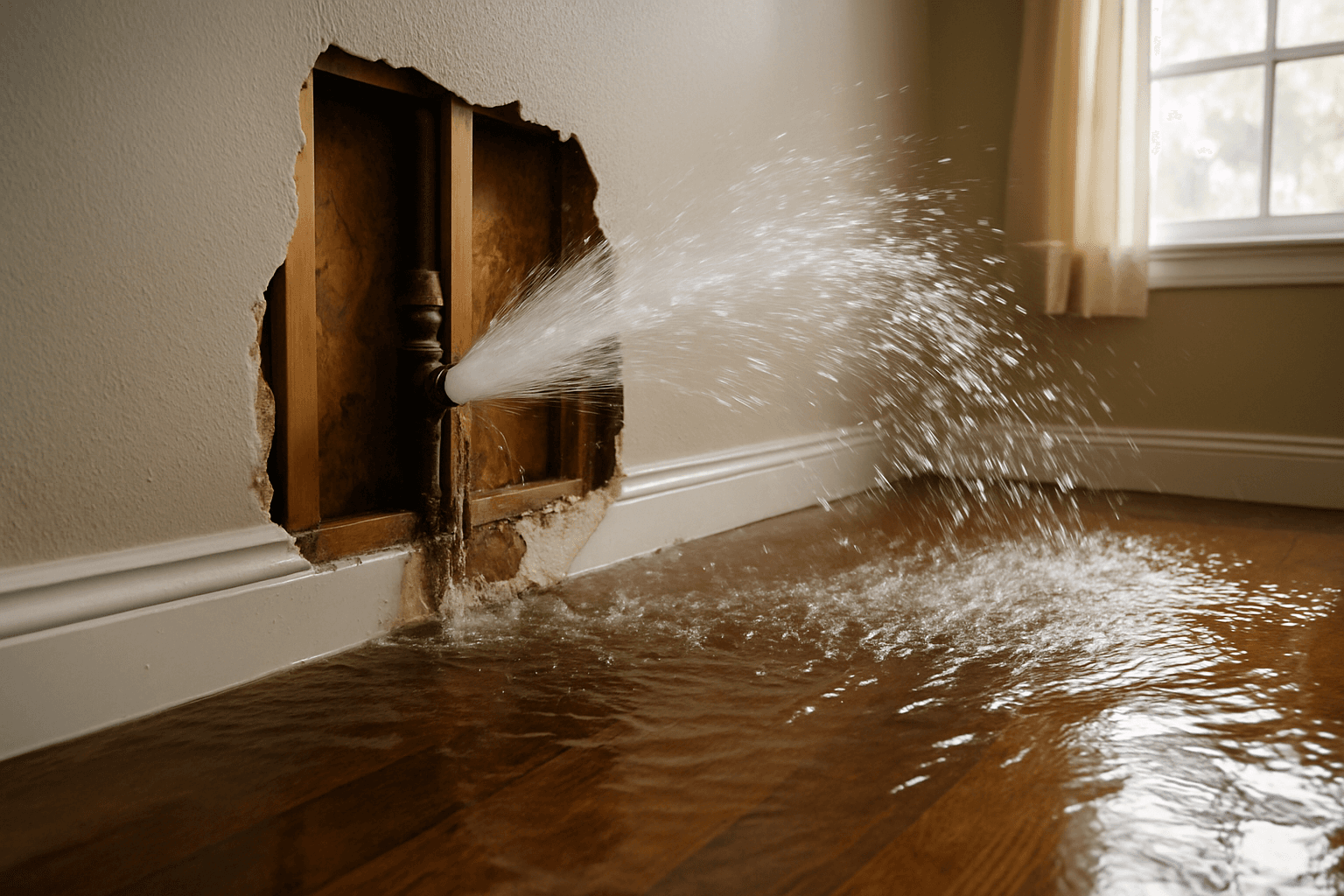
A pipe that splits is the textbook case of sudden and accidental discharge of water from a plumbing system, and every standard HO-3 policy covers it. The insurer pays to dry the structure, repair what the water ruined and replace damaged belongings, subject to your deductible.
The exception is freezing, and it does not turn on the cold. It turns on whether the home was heated.
Most policies cover a freeze burst only if reasonable heat was maintained in the property, or if the water was shut off and the system drained before the property was left. A house left cold over a January trip with the water still on is the classic denial, and it is denied every year.
What Is and Is Not Paid For
| Item | Paid? |
|---|---|
| Drying the structure | Yes |
| Drywall, flooring, insulation, cabinets | Yes |
| Damaged personal belongings | Yes |
| Tearing out and putting back to reach the pipe | Yes — this is *access*, and it is often the biggest line |
| The section of pipe itself | No |
| Additional living expenses if the home is unliveable | Usually yes |
| Mold that followed | Up to the policy's mold sublimit |
| Freeze burst in an unheated, undrained home | Usually no |
Access is the line item to check. Reaching a pipe inside a wall or ceiling means opening it and closing it again, and that work is covered — but it goes missing from estimates more often than any other item. If your estimate does not show it, ask.
The Freeze Question, Answered Properly
If the loss was a freeze, expect the adjuster to ask two things: what was the thermostat set to, and was anyone checking the property.
Being away is not itself a problem. Leaving the heat off is. Some policies name a minimum temperature; some name a period after which an unoccupied home has to be drained. Read yours before winter rather than after.
For a home that was occupied and heated when a pipe in an exterior wall or an unheated crawl space froze anyway, that is a covered loss and should be treated as one. Cold weather is a peril, not negligence — the policy is asking whether you did the reasonable thing, not whether you controlled the weather. Prevention is worth doing on its own merits, and it is also the answer to the adjuster's question.
Need a contractor your insurer accepts?
Claims live or die on documentation. Crews that estimate in Xactimate and log moisture readings give adjusters what they need.
(888) 840-6512- Describe the loss and where the claim stands
- You're routed to a crew that documents for insurers
- They scope it in writing — you decide, no obligation
What to Do in the First Hour
Shut the main off first. Not the fixture, the main. If you do not know where it is, find it now rather than during the emergency — it is usually where the supply enters the house, at the meter, or near the water heater. Locating every valve before you need one takes ten minutes.
Then cut power to any room with standing water at the breaker panel, never at a switch you have to wade to.
Then photograph, before any cleanup: video every affected room, the burst section itself, and the water line on the walls. If the failed piece of pipe gets cut out, keep it. It is the proof the loss was sudden.
Start Drying Before the Adjuster Arrives
This is where homeowners most often go wrong out of caution. Waiting for permission before drying feels responsible and is the opposite.
Your policy imposes a duty to mitigate — to prevent further damage. Drying immediately is not jumping the gun on the claim, it is complying with it. And mold begins establishing within 24 to 48 hours, which matters financially: mold is a capped peril in most policies, commonly between $1,000 and $10,000, while the water damage underneath it is not capped at all. Every hour of delay moves money from the uncapped side of the policy to the capped side.
An IICRC-certified crew's moisture readings and daily drying logs also become part of the claim file, and they are the hardest evidence in it — measured, dated, and produced by someone other than you.
Where the Restoration Call Fits
Water off, power off, photographs taken, certified drying moving the same day, insurer notified with a claim number by evening. That sequence is what a paid burst-pipe claim looks like from the inside.
One call starts it. The crew scopes what is actually wet — which is nearly always a larger area than the visible damage, because water travels along joists and into cavities — and explains costs before anything is agreed.
If the settlement comes back short, that is usually a scope disagreement rather than a denial, and the claim guide covers supplements and the appraisal clause. Compare line by line rather than total to total; the gap is almost always missing items, not disputed prices.
Reading to confirm what you already suspect?
Confirm it in two minutes instead — the pro on this line answers questions about YOUR situation all day: what it is, what it should cost, whether you even need service. If you want, they'll set the appointment on the same call.
Toll-free · no obligation · asking costs nothing
Frequently Asked Questions
Does homeowners insurance cover a burst pipe?
Normally yes. A pipe that splits is the textbook case of sudden and accidental discharge of water from a plumbing system, which every standard HO-3 policy covers. The policy pays to dry the structure, repair the damage and replace ruined belongings, subject to your deductible.
What it does not pay for is the pipe itself - that is treated as the repair of the failed component, the same way a policy pays for what a broken appliance ruined but not for the appliance.
Are frozen pipes covered by insurance?
Usually, with one condition that catches people out every winter. Most policies cover a freeze burst only if reasonable heat was maintained in the property, or if you shut off the water and drained the system before leaving.
A vacant house left cold with the water on is the classic denial. If the home was occupied and heated and a pipe in an exterior wall or unheated crawl space still froze, that is a covered loss.
What if I was away when the pipe burst?
Being away is not itself a problem - leaving the heat off is. Insurers ask what the thermostat was set to and whether anyone was checking the property, and some policies name a minimum temperature or a period after which an unoccupied home has to be drained.
If you travel in winter, the two things that protect the claim are keeping the heat on at a reasonable setting and having someone look in, or shutting the main and draining the lines before you go.
Will insurance cover the pipe repair itself?
Generally noAnd this surprises people who assume a plumbing claim pays the plumber. The policy pays for the resulting damage - the ceiling, the flooring, the drywall, the contents.
It pays for access, meaning tearing out and putting back what had to be opened to reach the pipe, which is often the larger sum. The section of pipe itself is yours. Ask for the estimate to show access as its own line item, because it is frequently the one that goes missing.
How long do I have to file a burst pipe claim?
Report it the day you find it. Policies require prompt notice and most set an outer limit on how long you have to bring a claim, but the practical deadline is much shorter than the contractual one: every day between the loss and the report is a day an adjuster can argue the damage got worse through your delay.
Start mitigation immediately - that is a duty under the policy, not a courtesy - and keep every invoice.
Does insurance cover mold after a burst pipe?
Conditionally and with a cap. Mold from a covered sudden loss is normally paid up to a sublimit, commonly between $1,000 and $10,000; mold from a leak that ran unnoticed for months is usually excluded.
Since mold begins establishing within 24 to 48 hours in the right conditions, the single most useful thing you can do for the claim is get certified drying started the same day rather than waiting for the adjuster to visit.
Who do I call right now for water damage?
Call (888) 840-6512. The line is answered 24 hours a day, seven days a week, and connects you with an IICRC-certified water damage restoration company that serves your area.
Describe what you can see — where the water is coming from, how long it has been there, and whether it smells — and the dispatcher routes you to a crew that handles that kind of loss. If the source is a pipe or an appliance, shut the main water valve first; the call itself takes under two minutes.
Sources
- Insurance Information Institute — Preventing and claiming frozen pipe damage
- NAIC — Homeowners insurance consumer guide
Methodology: How we source and verify data · Report an error
Disclaimer: HearthDry is an independent educational resource. This article is for informational purposes only and does not constitute professional, legal, or insurance advice. Consult licensed professionals before making decisions about your property or insurance claims.
Equipment
What each machine actually does
Removes the moisture the structure is still giving off — the machine that decides how long drying takes
See the picks →Moves air across wet surfaces so the dehumidifier has something to take out of the air
See the picks →Finds water behind walls and under floors, and tells you when a material is actually dry
See the picks →Alerts you the moment a leak starts — the cheapest thing on this list and the only preventive one
See the picks →Those pages carry affiliate links. As an Amazon Associate, HearthDry earns from qualifying purchases; it costs you nothing extra.
Advertisement
